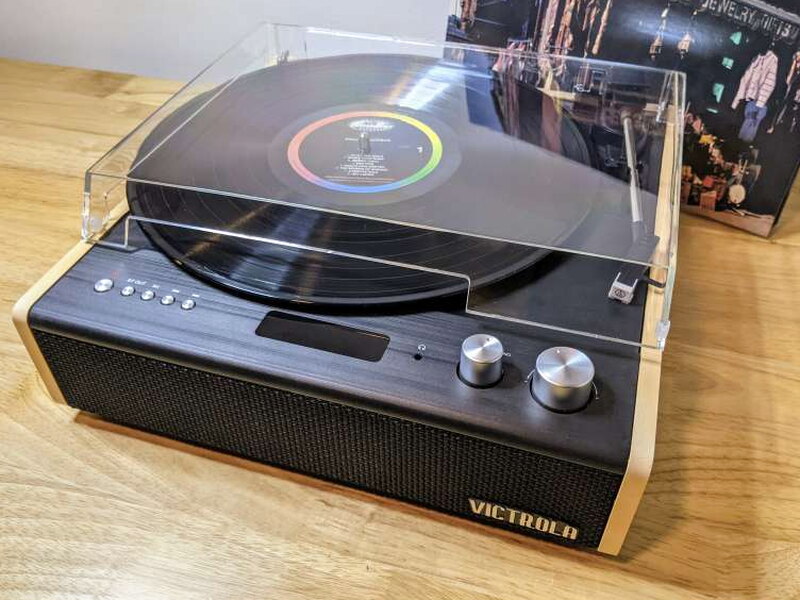
REVIEW – For years I talked myself out of buying another turntable. The vinyl comeback started around 2007, and every so often I would get tempted, then remember my usual objections: a decent player cost more than I wanted to spend, the cheaper ones felt too limited, and none of them fit well in my small apartment. The Victrola Eastwood finally got past those objections. It is compact, it looks much nicer than a $99 turntable has any right to look, and its Dual-Bluetooth setup lets me send records to Bluetooth headphones or speakers. It is not flawless, but it brought back that first-drop-of-the-needle feeling I remember from growing up with LPs and 45s in the 70s and 80s.
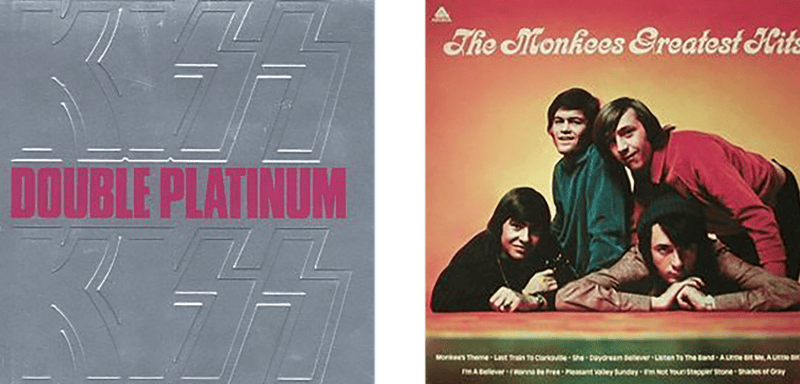
My earliest records were KISS Double Platinum and The Monkees Greatest Hits, and I played them until every click, pop, and hiss became part of the songs. That memory is a big reason the Eastwood appealed to me. It is not trying to be a serious audiophile deck. It is trying to be an affordable, good-looking way to play records again without taking over a room.
What the Eastwood Is
The Eastwood is a 3-speed record player with built-in speakers, RCA outputs, a headphone jack, Bluetooth In, and Bluetooth Out. Bluetooth Out is the important part for me. Many inexpensive Bluetooth turntables only let you stream from a phone to the turntable speakers. Since speakers built into turntables at this price are rarely great, including these, that feature is not very exciting by itself. The Eastwood can also stream the record you are playing to Bluetooth headphones or an external Bluetooth speaker, which is much more useful.
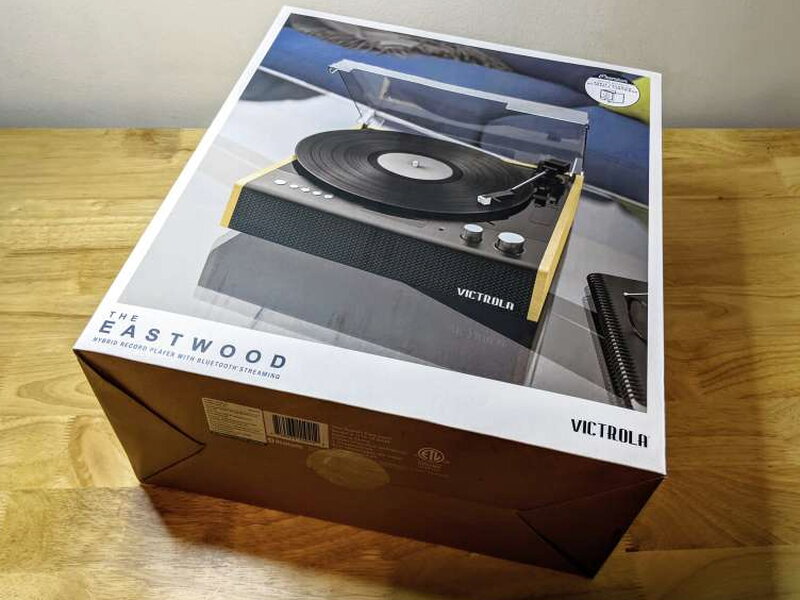
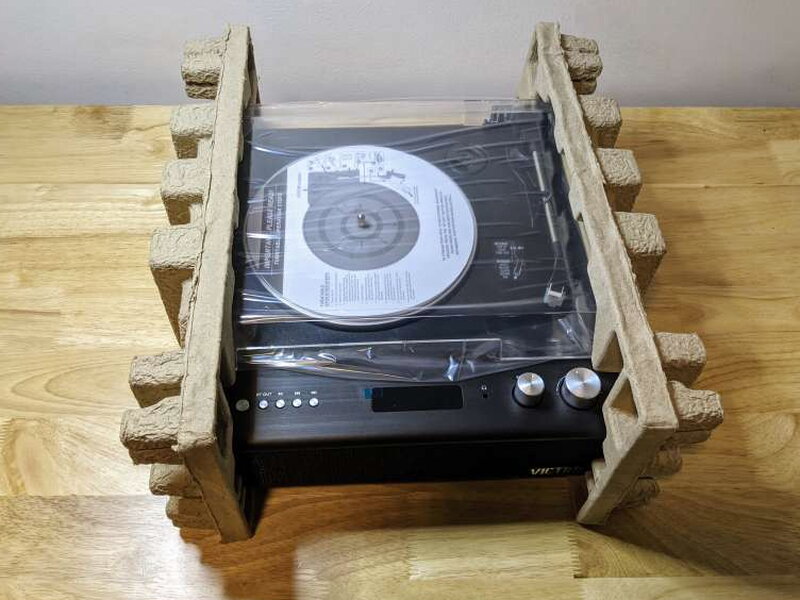
Victrola ships the unit already assembled and well protected, so there is very little to build before you can start listening.
In the Box
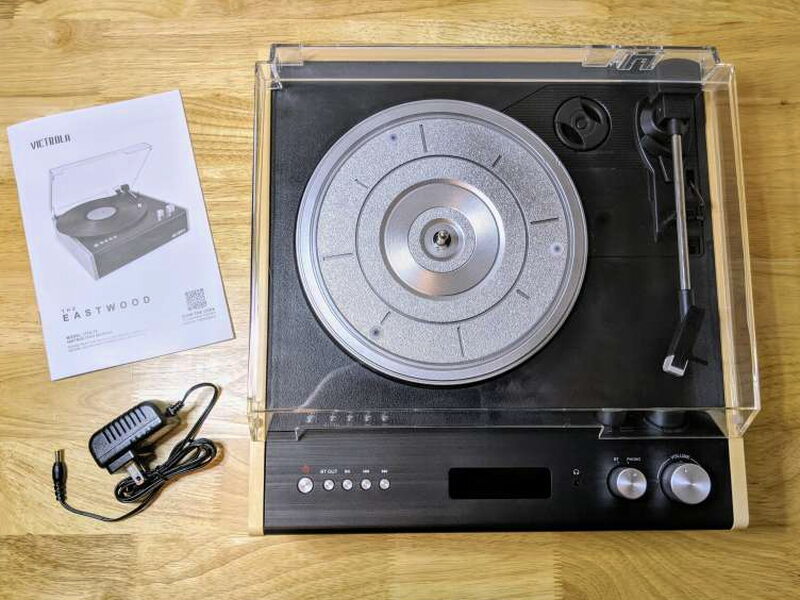
- Victrola Eastwood turntable
- 5V power supply
- User manual
Key Specs
- Size: 12.7" (322mm) W x 12.3" (312mm) D x 5.2" (131mm) H
- Weight: 4.5 lbs (2kg)
- Operating temperature: 5°C to +40°C
- Turntable speeds: 33-1/3 RPM, 45 RPM, and 78 RPM
- Ports: RCA Out and 1/8" (3.5mm) headphone
- Bluetooth version: V4.0
- Bluetooth profiles: A2DP, AVRCP
- Bluetooth frequency range: 2.402GHz to 2.480GHz
- Bluetooth operating distance: 33 ft (10m)
- Power adapter: DC 5V/1A
- Power consumption: 5W
- Power output: 2 x 2W
- Cartridge: Audio-Technica AT-3600LA
- Replacement stylus: ATN3600L
- Output voltage: 4.2 mV
- Frequency response: 20Hz-20kHz
- Channel balance: 1.5dB
- Channel separation @ 1kHz/10kHz: 24/15dB
- Tracking force: 2.5 to 3.5 g
- Stylus type: highly polished and shaped .0006 inch conical diamond
- Stylus construction: bonded round shank
Design and Build
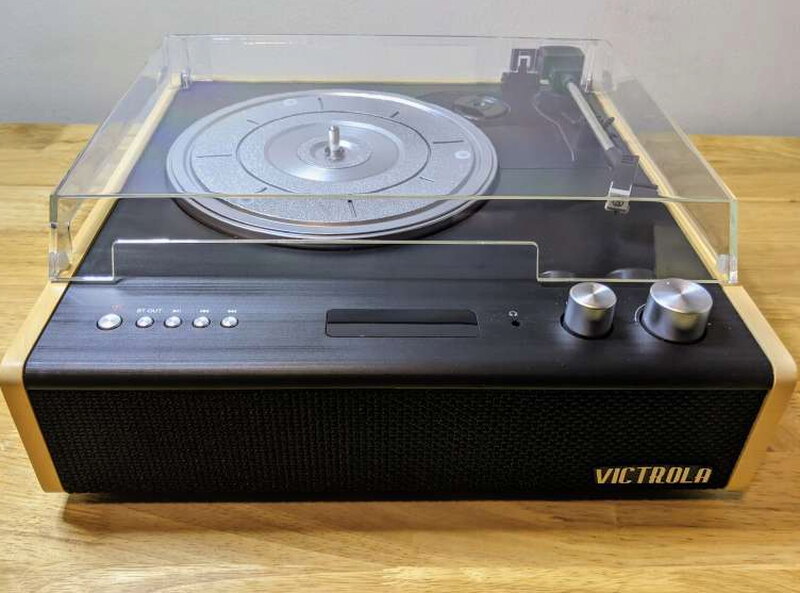
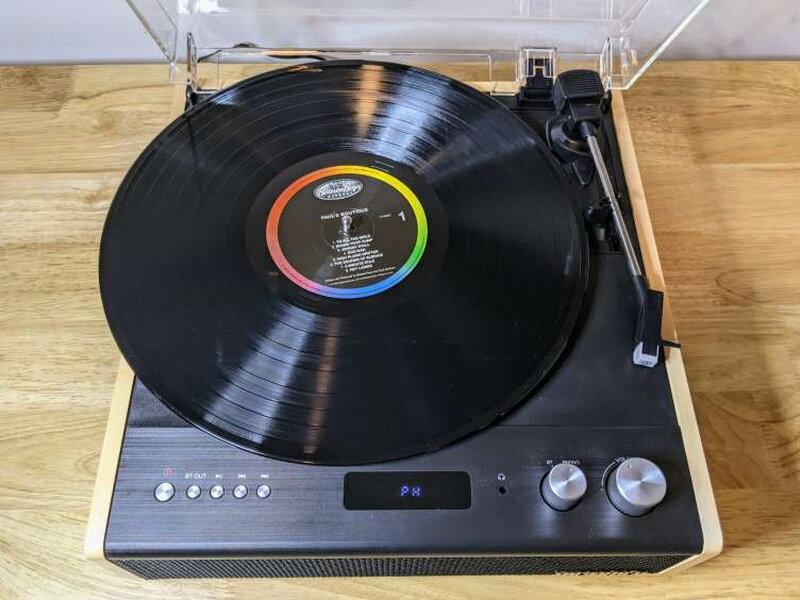
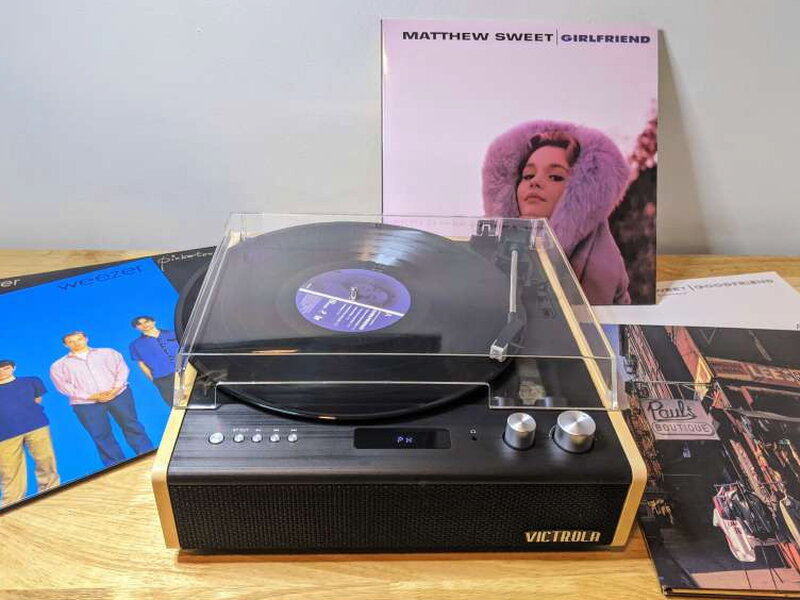
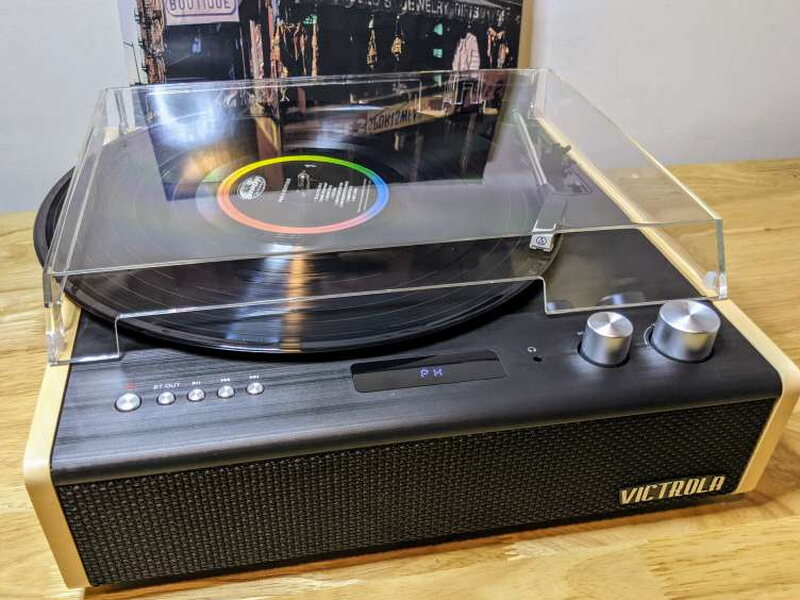
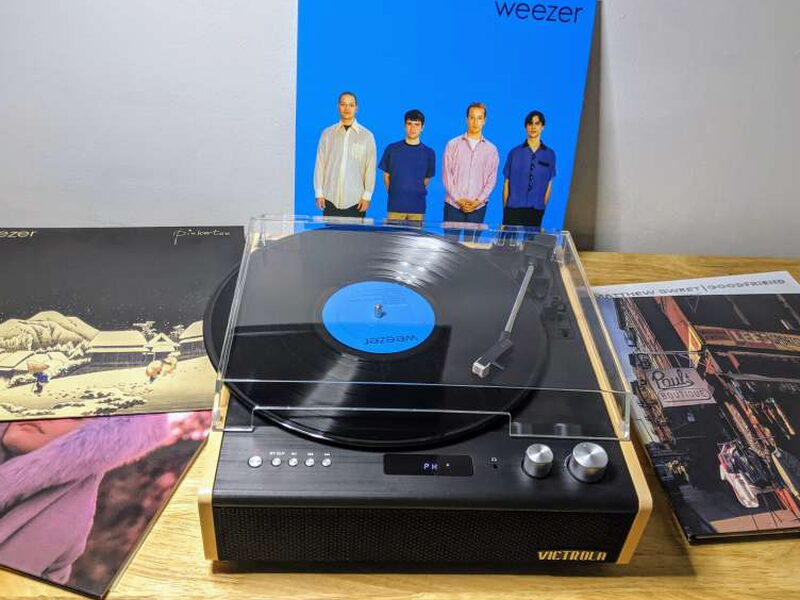
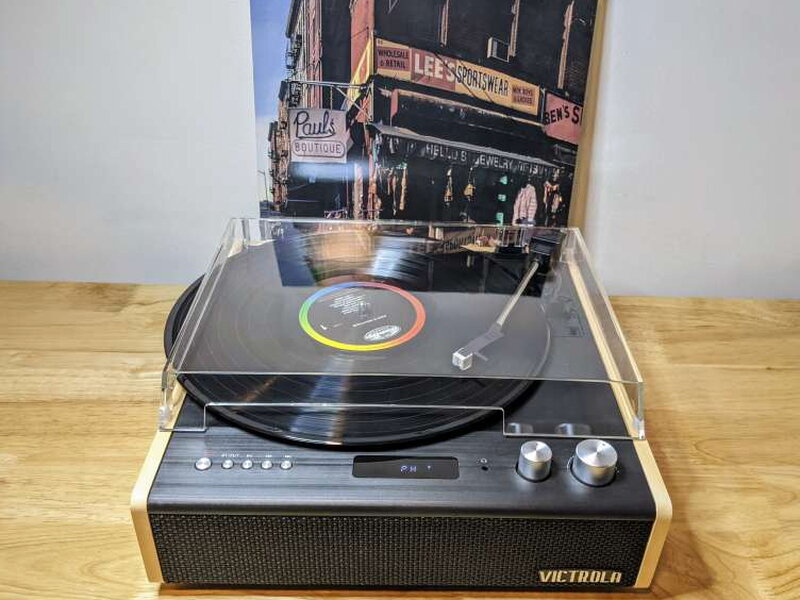
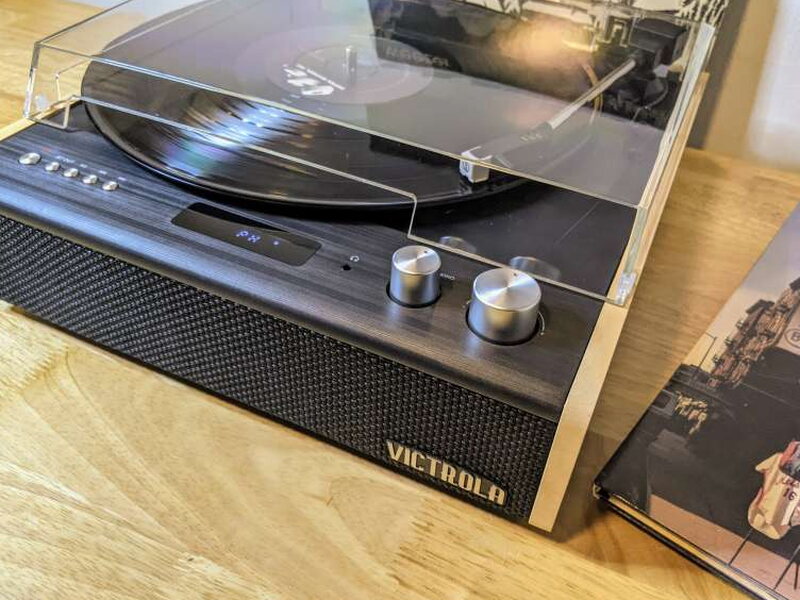
The best thing about the Eastwood at first glance is that it does not look like a budget turntable. The bamboo-look sides, dark front panel, clean buttons, and silver-look platter all help it blend in with nicer AV gear.
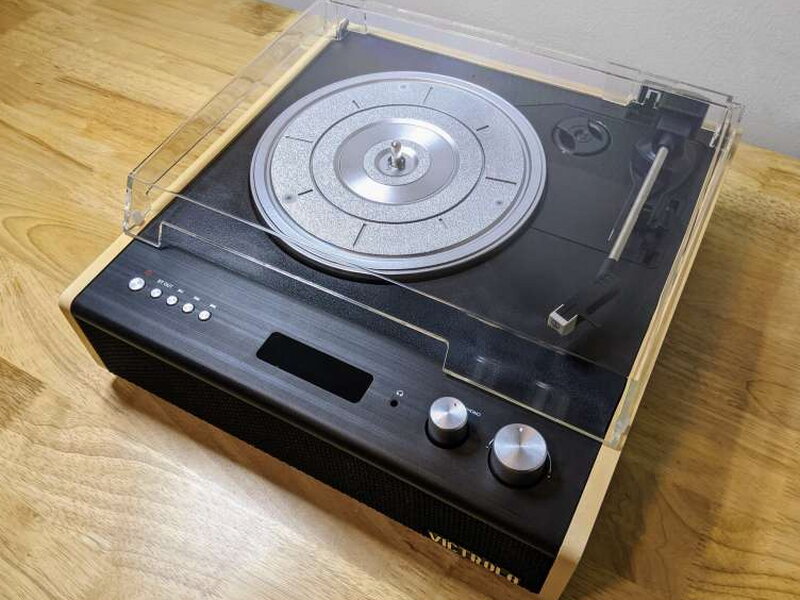
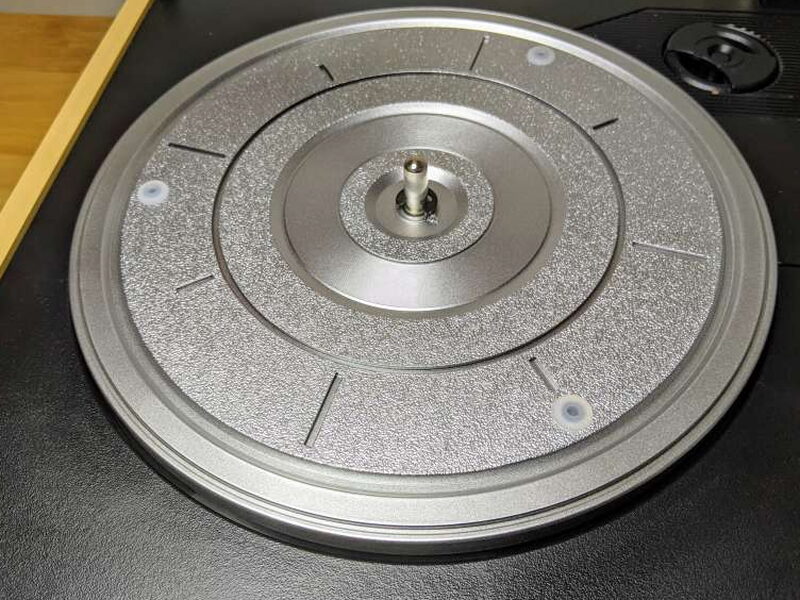
Look closer and the cost-saving choices are obvious. The platter, buttons, knobs, and faceplate are plastic, even though the textured finish does a good job imitating metal. For $99, I can live with that tradeoff because the overall appearance is still clean and attractive.
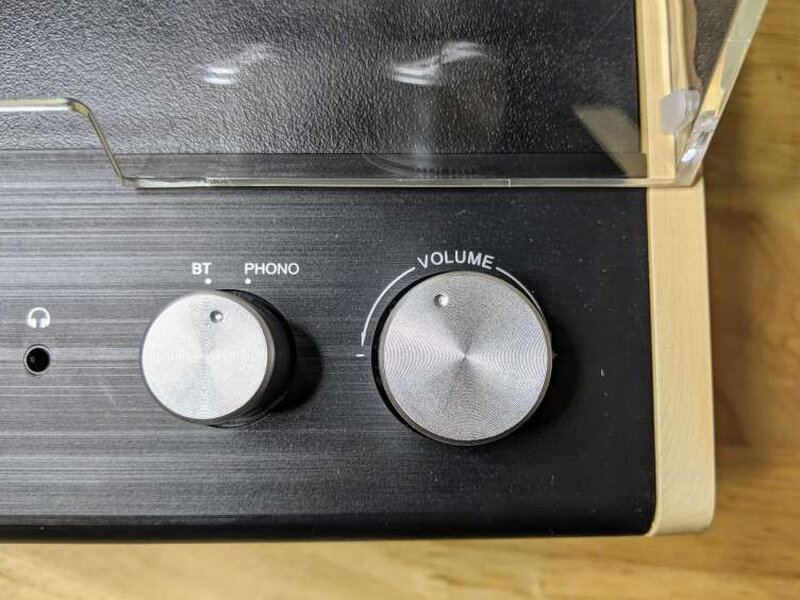
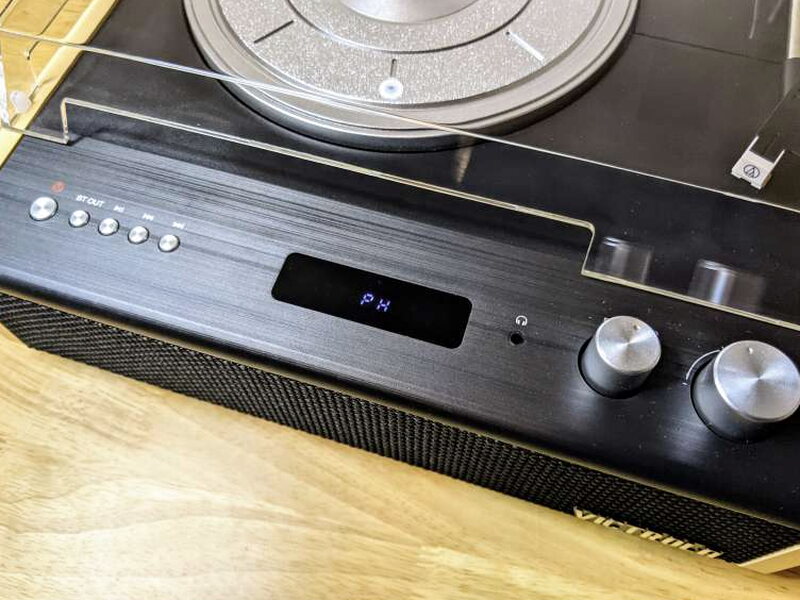
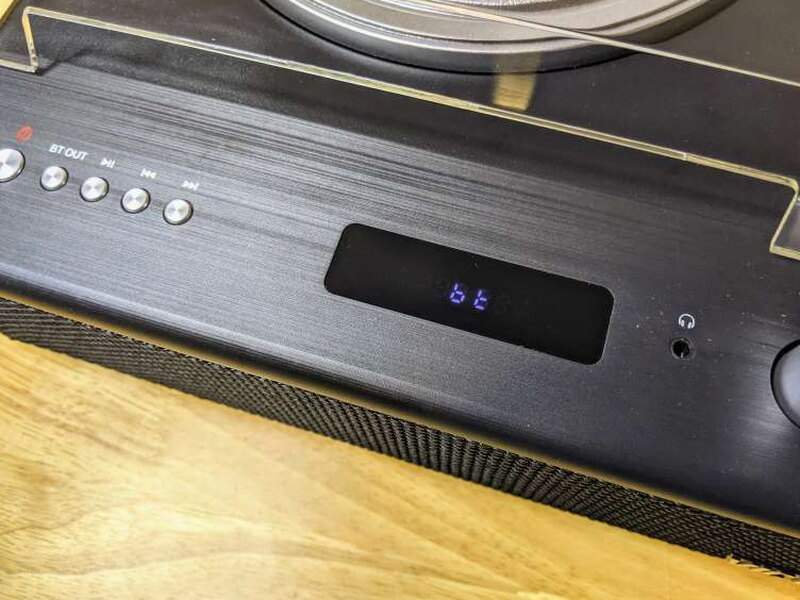
The main control area gives you five buttons, two knobs, a small display, and a 1/8" headphone jack. The buttons handle power, playback, and Bluetooth Out pairing. The knobs control volume and switch between phono playback and Bluetooth In.
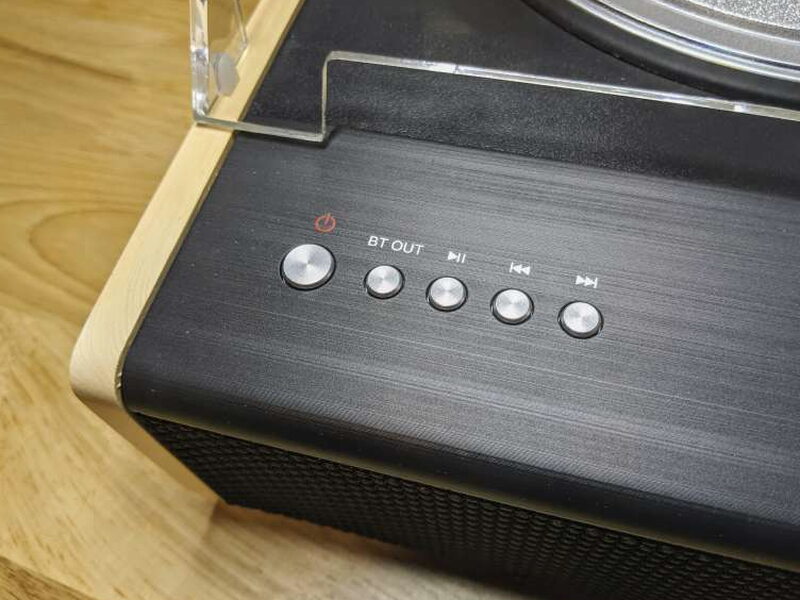
That minimal layout looks good, but it also creates some friction. When Bluetooth pairing did not behave, I wished Victrola had given the Eastwood more status information or more direct controls.
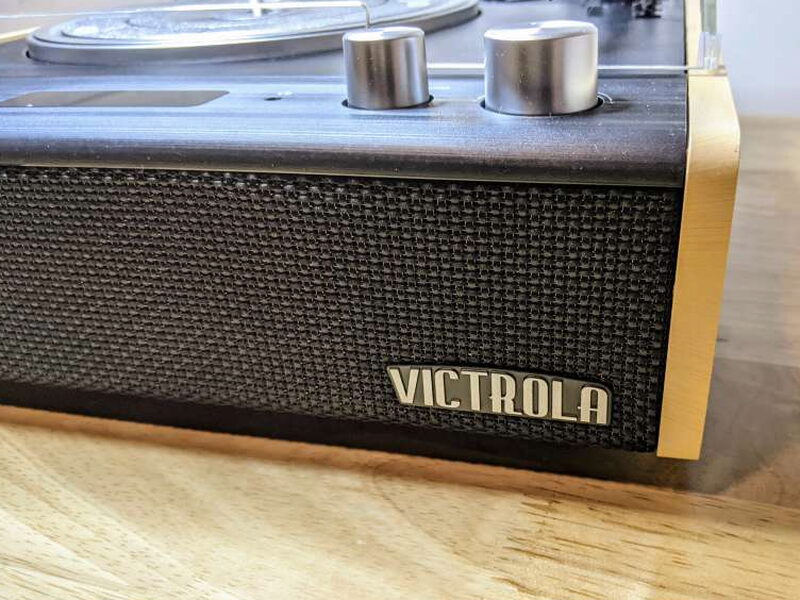
The two 2W speakers fire from the front behind a black grille with a Victrola badge. They are convenient, but they are not the reason to buy this player.
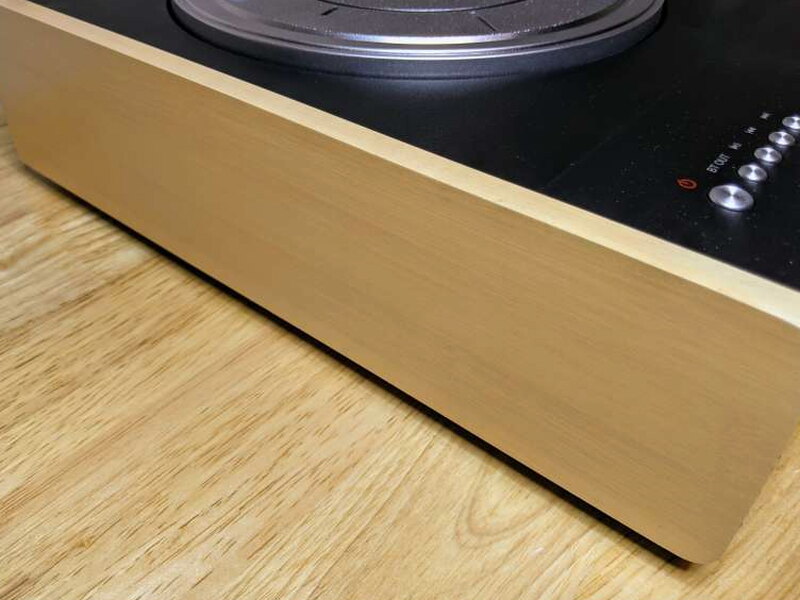
The bamboo-look finish continues around the sides and back, which helps the whole thing look more expensive than it is.
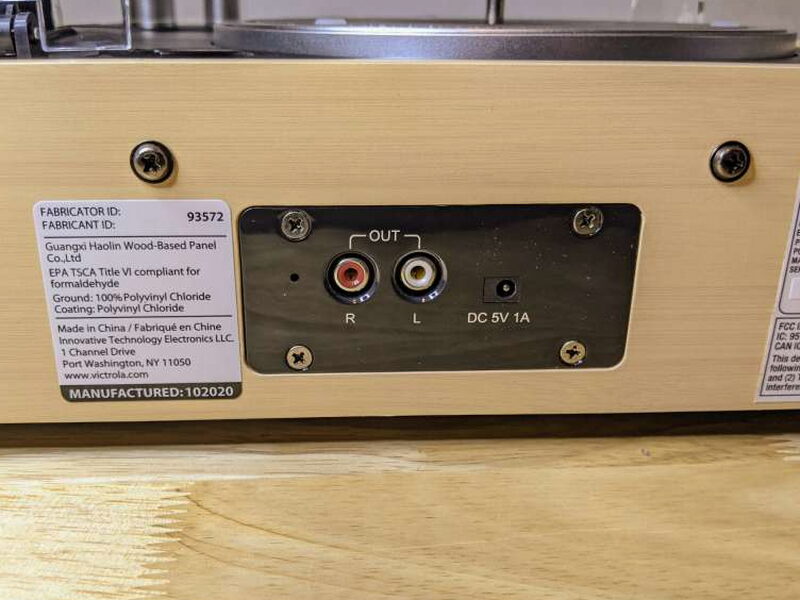
Around back are the power input and RCA outputs. If you have a receiver or powered speakers, those RCA ports make the Eastwood far more capable than its internal speakers suggest.
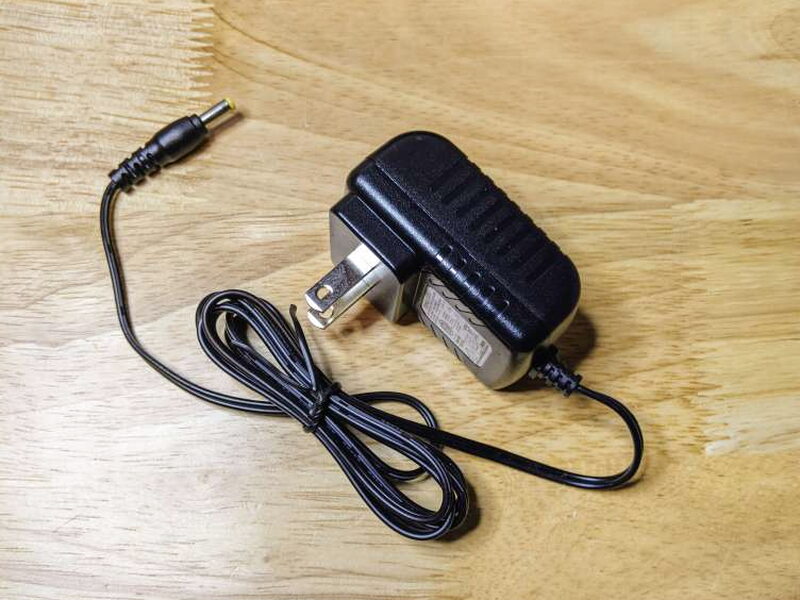
The power brick is external, which is expected at this price. Pricier turntables may hide the power supply inside the chassis, but this arrangement works fine.
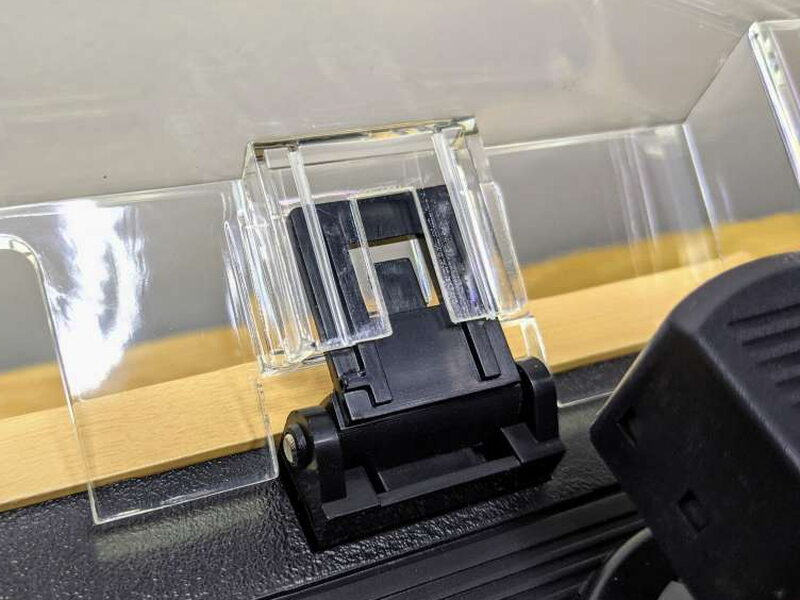
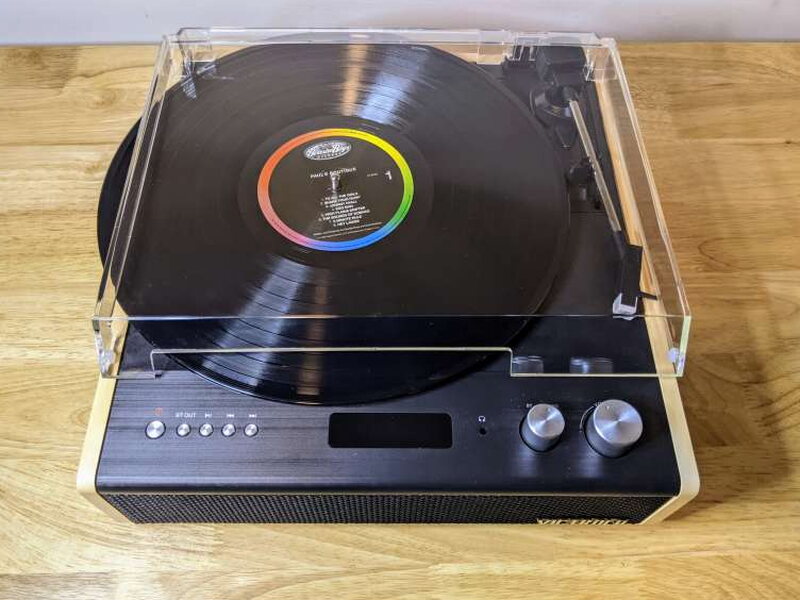
The plastic dust cover attaches with two tabbed hinges. You can pop it off if you prefer using the player without a cover, and I like having that option.
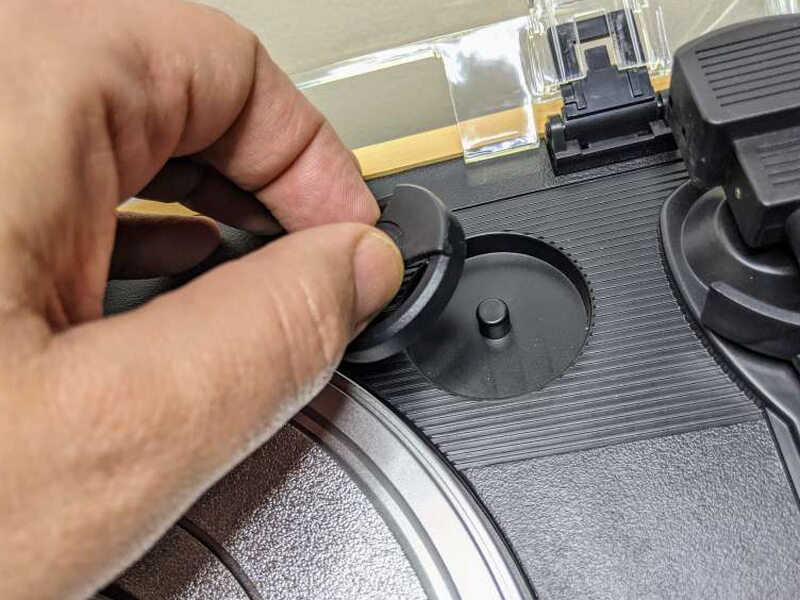
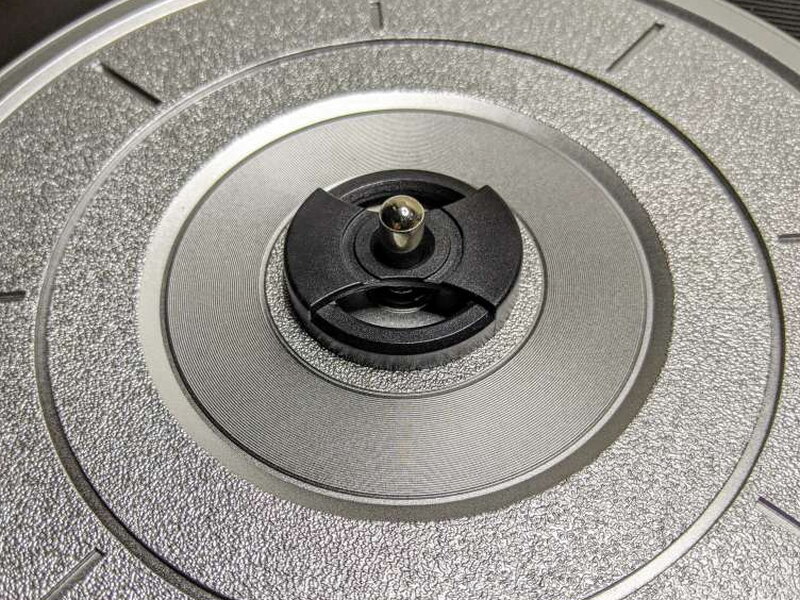
A 45 rpm adapter stores neatly in the top of the deck, so it is always available when you need it.
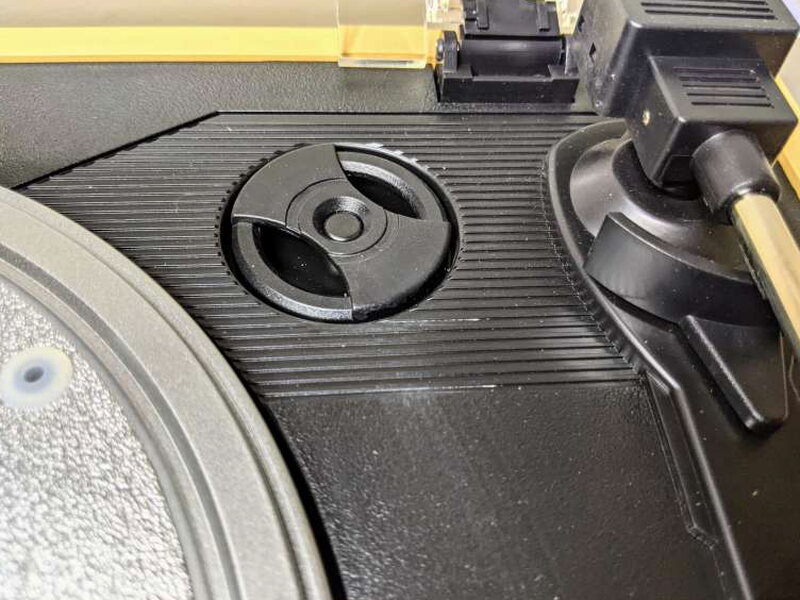
The adapter lifts out easily and fits over the spindle for playing 45 rpm records.
The tonearm is straight and uses a basic plastic lock to hold it in place when the turntable is not being used.
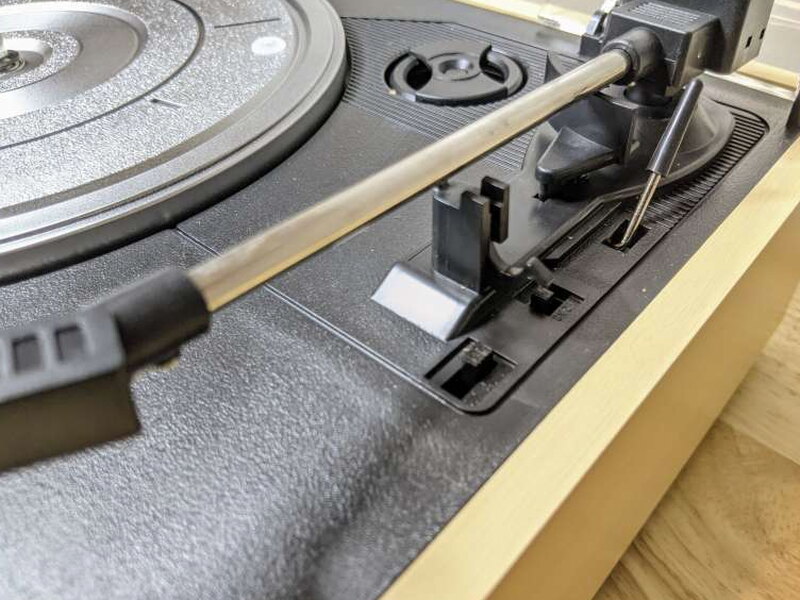
A cueing lever raises and lowers the tonearm gently. I always appreciate this on an inexpensive turntable because it makes playing records feel a little safer and less clumsy.
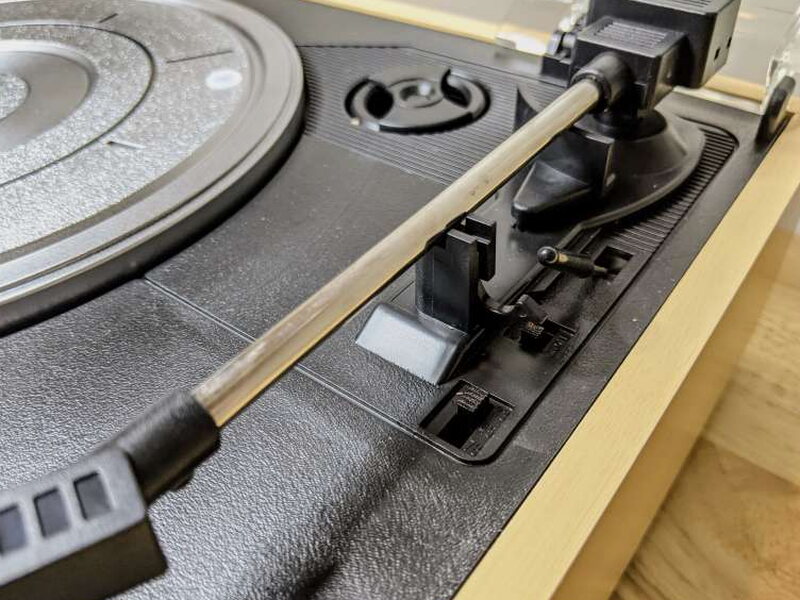
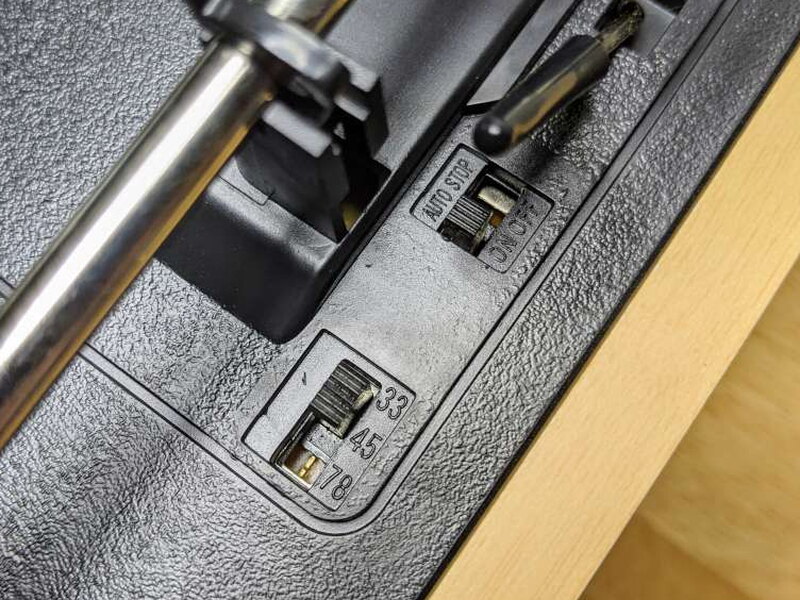
Next to the arm are the speed selector and auto stop switch. You can choose 33 1/3, 45, or 78 rpm, and auto stop keeps the needle from endlessly repeating at the end of a side.
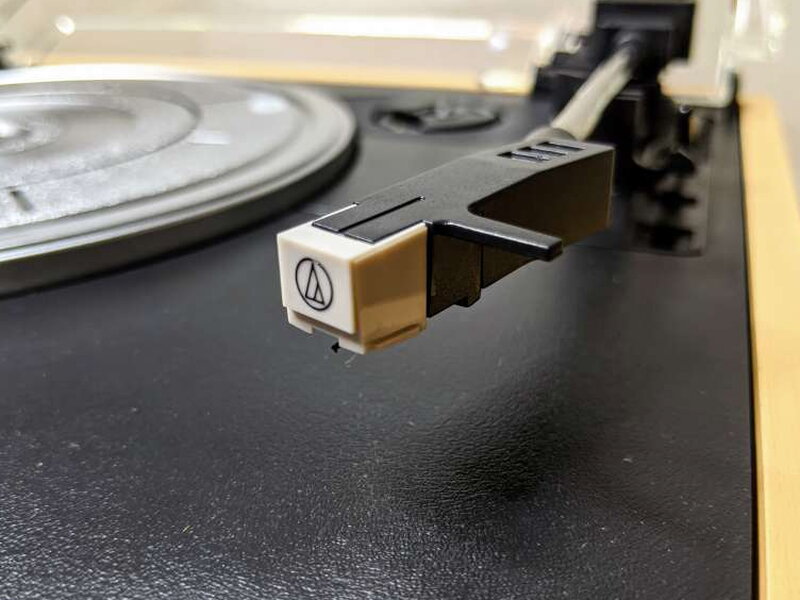
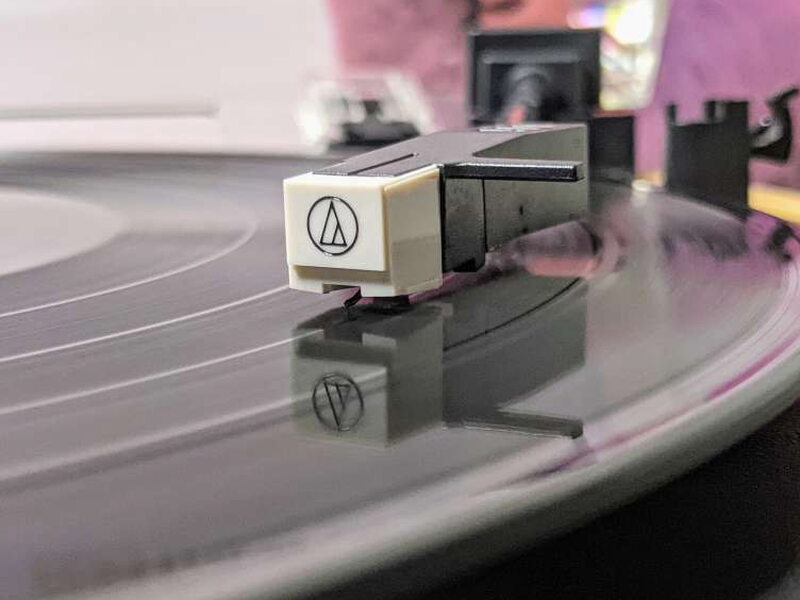
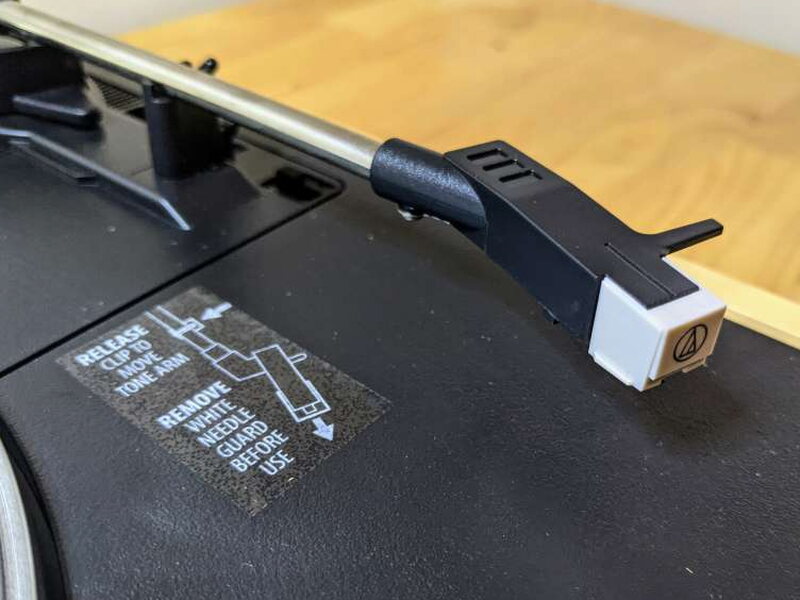
Victrola uses an Audio-Technica AT-3600LA magnetic cartridge here, which is a very welcome part choice for an affordable player.
The AT-3600LA sounds good for this class of turntable, and replacement ATN3600L styli are easy to find. They usually cost about $20 to $25, so wearing one out does not become a major expense.
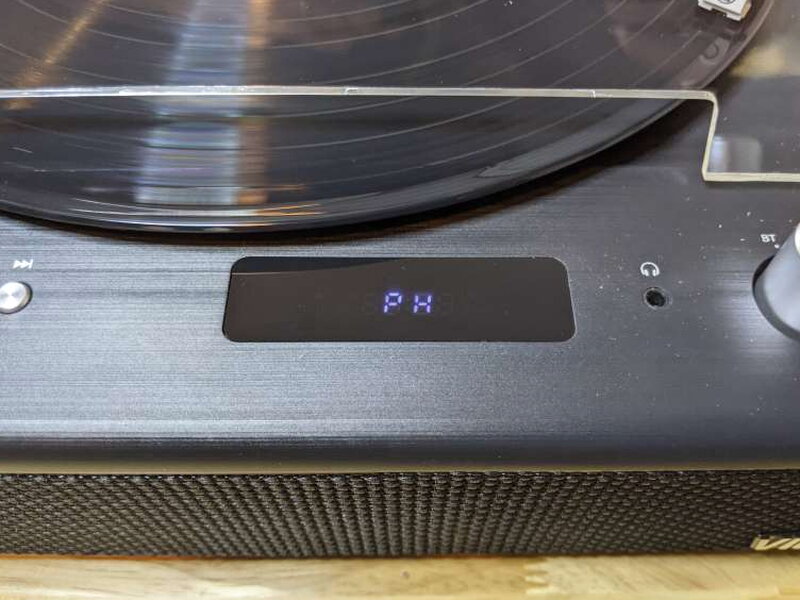
The display is extremely simple. It shows PH for phono, BT for Bluetooth, and a Bluetooth icon during pairing. It also flashes HI for a second at startup, which is a small but charming touch.
You can play a record with the dust cover open or closed. That sounds convenient until you remember to close the cover slowly.
I almost damaged my Beastie Boys Paul’s Boutique album by moving the cover too quickly. The cover has enough clearance, but you still need to be careful around records you care about.
Setup and Pairing
Basic setup is easy. Remove the instructions from the platter, untwist the tie holding the tonearm, unlock the arm, peel off the protective stickers, and carefully remove the plastic needle guard from the cartridge.
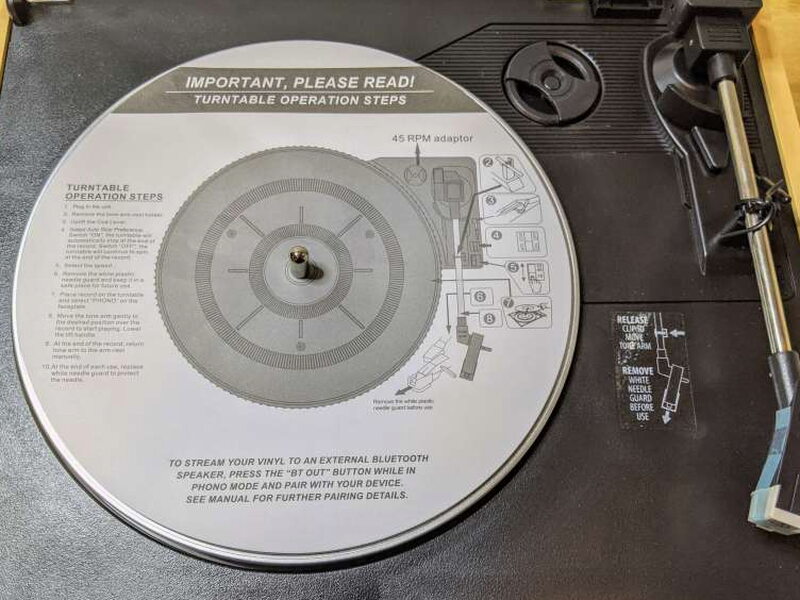
For normal record playback, place an album on the platter, turn the Eastwood on, set the BT/PHONO knob to PHONO, and wait for PH to appear on the display. Press play, lower the tonearm, and set the volume once the music starts. Headphones should mute the internal speakers, although that did not work consistently for me.
Bluetooth Out takes more patience. The key detail I learned is that the record needs to be playing before you try to stream it to Bluetooth headphones or a Bluetooth speaker. Start the record, press the BT OUT button, put your Bluetooth device into pairing mode, and wait about 10 to 20 seconds. When pairing works, the Bluetooth icon stops flashing and the sound moves from the Eastwood speakers to the paired device. After that, volume is controlled from the Bluetooth device, not the turntable.
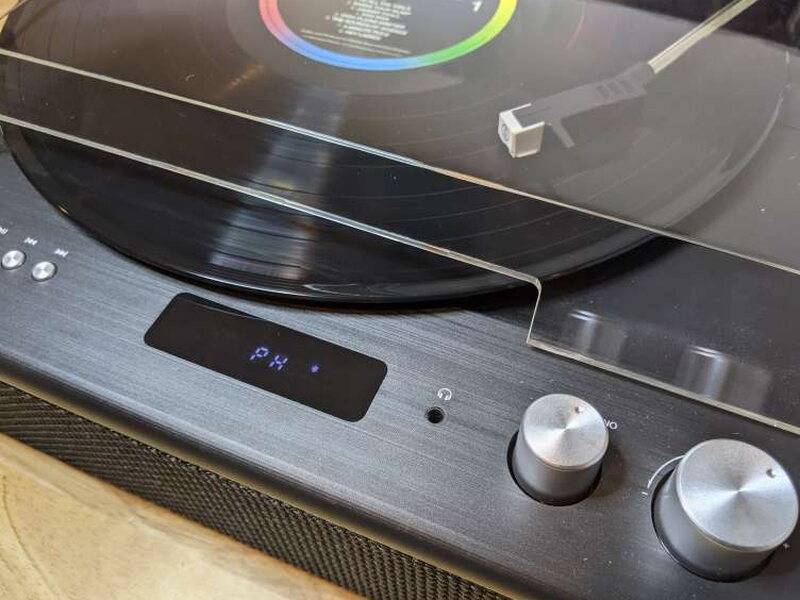
That process was hit or miss for me. It eventually worked, but the limited display and limited controls made the failures more frustrating than they needed to be. Bluetooth In, on the other hand, was simple. Turn the knob to BT, choose Victrola Eastwood from your phone or tablet, and start streaming. It worked every time, even though it is the feature I expect to use least.
Listening Experience
Once I understood the setup quirks, I pulled out a few favorite albums: Matthew Sweet’s Girlfriend, Beastie Boys’ Paul’s Boutique, and Weezer’s Blue Album. I played them through the built-in speakers, wired headphones, the RCA outputs into my Yamaha home theater receiver and Sony speakers, and two different sets of Bluetooth headphones.
The RCA outputs worked great with my receiver and Sony speakers, and wired headphones sounded good too. The problem with wired headphones was that the internal speakers did not always shut off completely, which hurt the experience. The built-in speakers were the weakest option overall. They are thin, short on bass, and not able to bring out much depth or nuance.
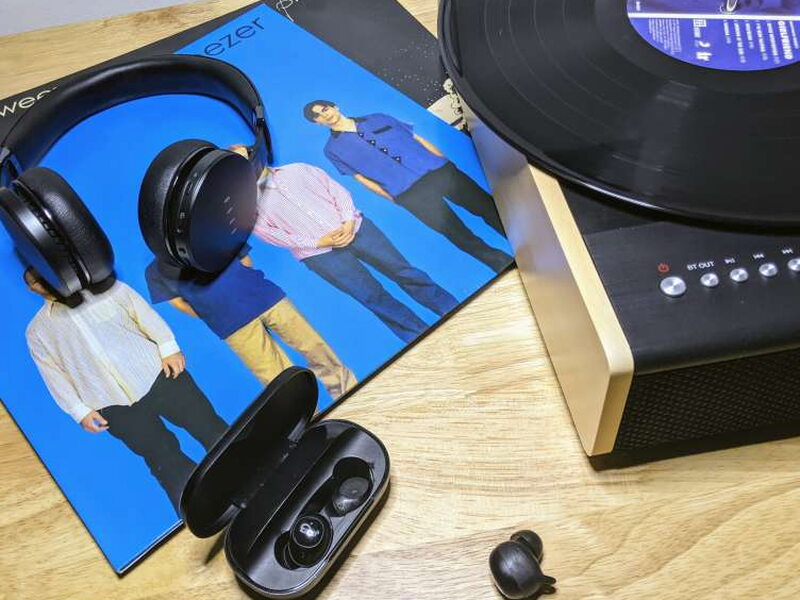
Bluetooth headphones were where the Eastwood made the most sense to me. With my FIIL headphones, I could hear the background samples on Paul’s Boutique, guitar finger squeaks on Girlfriend, and small vocal breaths on the Blue Album. That was the moment the Eastwood stopped feeling like a compromise and started feeling like a fun way back into vinyl.
The Eastwood can sound very good when you use the right output. I would not buy it for the internal speakers, but I would buy it for RCA playback and especially for Bluetooth Out. For such an inexpensive turntable, that combination impressed me.
What I Liked
- Affordable price
- Dual-Bluetooth connectivity, especially Bluetooth Out
- Modern design and compact footprint
- Replaceable Audio-Technica stylus
What I Did Not Like
- Internal speakers sound weak and tinny
- Bluetooth Out pairing can be difficult
- Headphones did not always fully mute the speakers
- Closing the dust cover too quickly can put a record at risk
Quick Questions
Q: Can it stream audio to Bluetooth headphones while playing a record?
A: Yes, that’s the Bluetooth Out feature – it streams whatever record is playing to Bluetooth headphones or an external speaker, not just from a phone to the turntable.
Q: Is Bluetooth pairing reliable?
A: Bluetooth Out could be hit or miss – the record needs to already be playing before you start pairing, and the limited display made troubleshooting failures frustrating.
Q: How’s the sound from the built-in speakers?
A: Weak – the internal speakers are thin, short on bass, and were the weakest way to listen to it.
Q: What cartridge does it use?
A: An Audio-Technica AT-3600LA magnetic cartridge, with replacement ATN3600L styli readily available for about $20 to $25.
Verdict
The Victrola Eastwood is the turntable I had been waiting for because it solves my three biggest problems at once: price, space, and modern listening options. At $99, Bluetooth Out alone makes it worthwhile for me. The internal speakers are not impressive, and pairing can be more stubborn than it should be, but the Eastwood looks good, fits easily in a small apartment, connects to real speakers, and lets me listen to records through Bluetooth headphones. It also gives me some comfort knowing the stylus is cheap and easy to replace after I wear it down with too many late-night record sessions.
Price: $99.99
Product Link: Victrola
You can also find it at Newegg for $71.00 or eBay for $90.00.
Source: The sample of this product was provided by Victrola.


