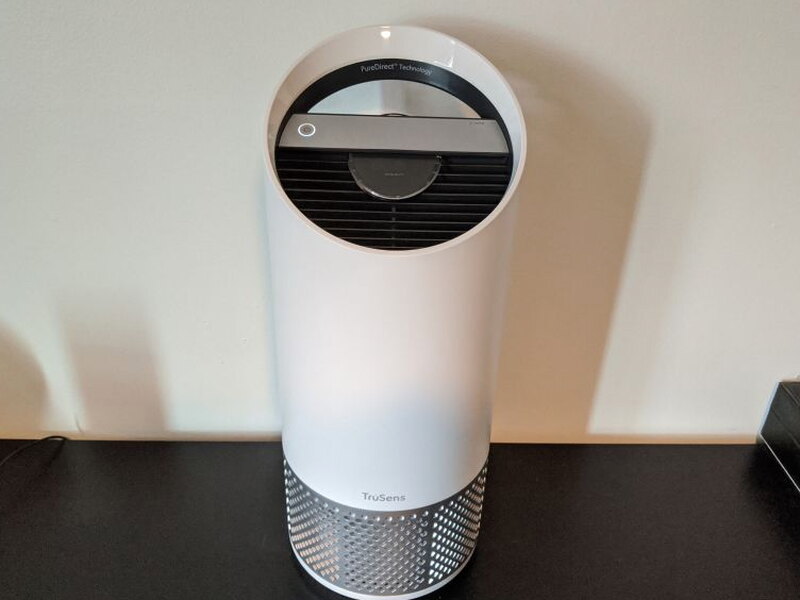
REVIEW – Wildfire season is peaking right now, and the air quality here in my city of Seattle has dropped drastically. With all that smoke blowing into town, it was the perfect moment to review a device built specifically to ease some of the discomfort from the toxic haze, along with my seasonal pollen allergies. Luckily, the TruSens Z-2000 Air Purifier came to my rescue. At $249 it definitely sits at the high end of the field, but it has a few features that help justify the steep price tag.
The Z-2000 packs in 360-degree coverage, a DuPont HEPA Type filter, a UV-C light, and a separate air quality monitor, and it sits in the middle of TruSens’ lineup, rated for rooms around 375 sq. ft. There’s a smaller model good for 250 sq. ft. and a bigger one that handles up to 750 sq. ft.
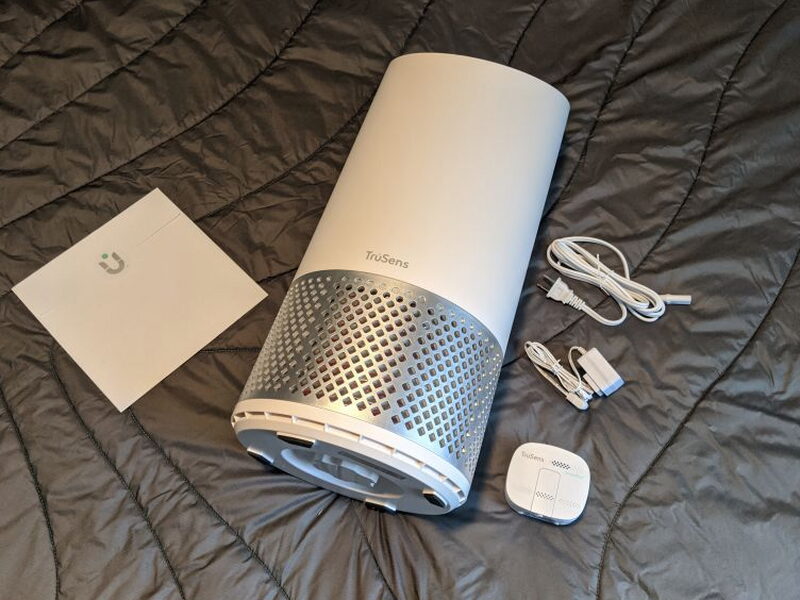
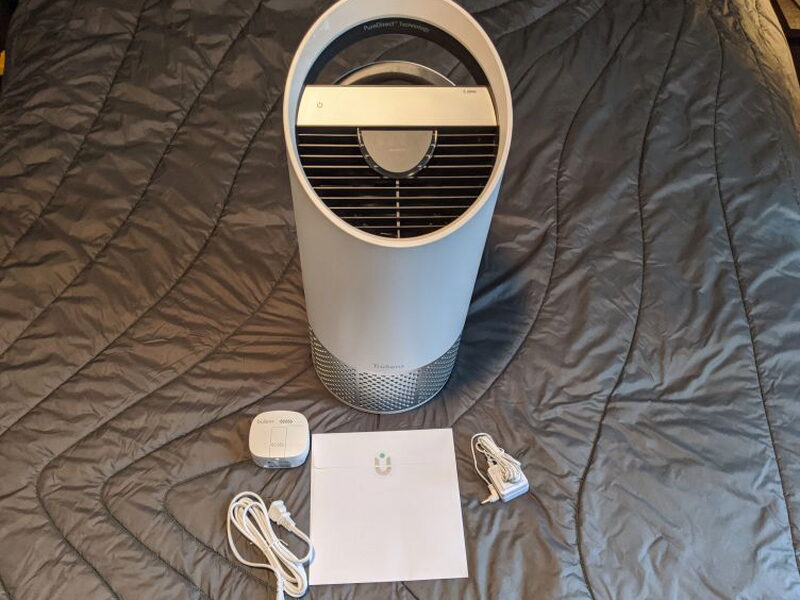
What’s in the Box
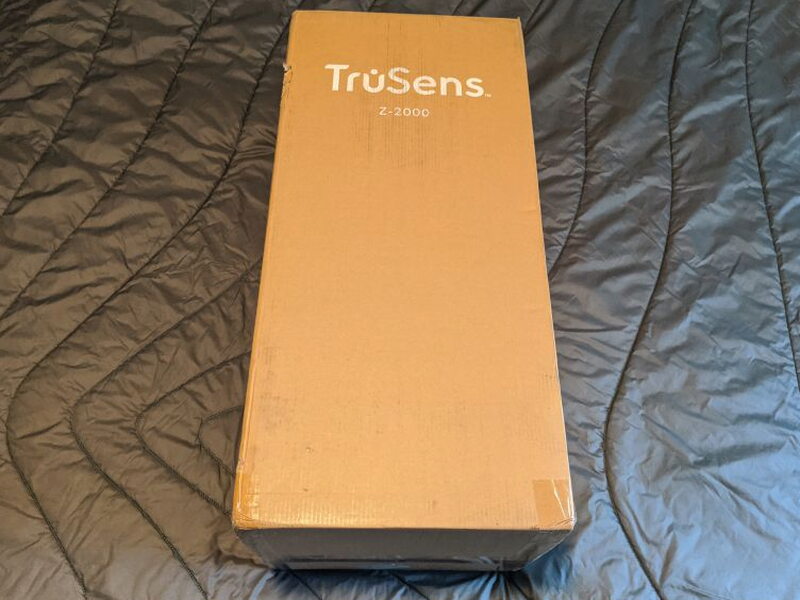
- TruSens Air Purifier
- SensorPod Air Quality Monitor
- Air Purifier power cord
- SensorPod power cord
- Instruction Manual
By the Numbers
- Room Coverage: 375 sq ft / 35 sq m
- AQI Indicator: Numeric & Color Display
- Purification Levels: Washable Prefilter, Carbon Filter, HEPA Type Filter, UV
- Fan Speeds: 4
- Auto Mode: Yes
- Night Mode: Yes
- Timer Settings: 2/4/8/12 hours
- Filter Change Indicator Type: Carbon, HEPA, UV
- Dimensions: 8 x 8 x 22 in (223 x 223 x 567 mm)
- Watts: 28
- Noise Level: 33 – 64 dB
- Weight: 8.8 lbs / 4 kg
- Warranty: 2 years
- Hertz: 60
- Volts: 120
Design
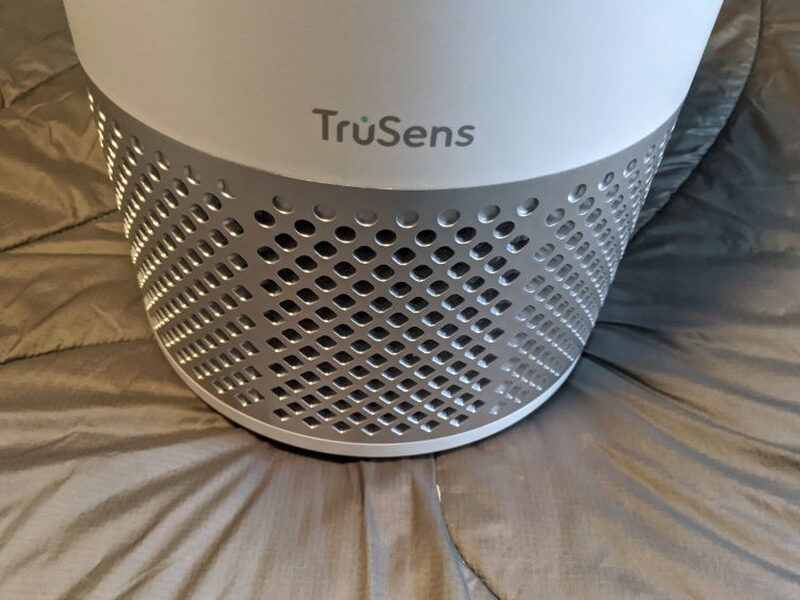
The design really works for me. Unlike your typical boxy air purifier, the sleek, cylindrical TruSens blends right into any modern space, and that arch across the top looks sharp while doubling as a carrying handle.
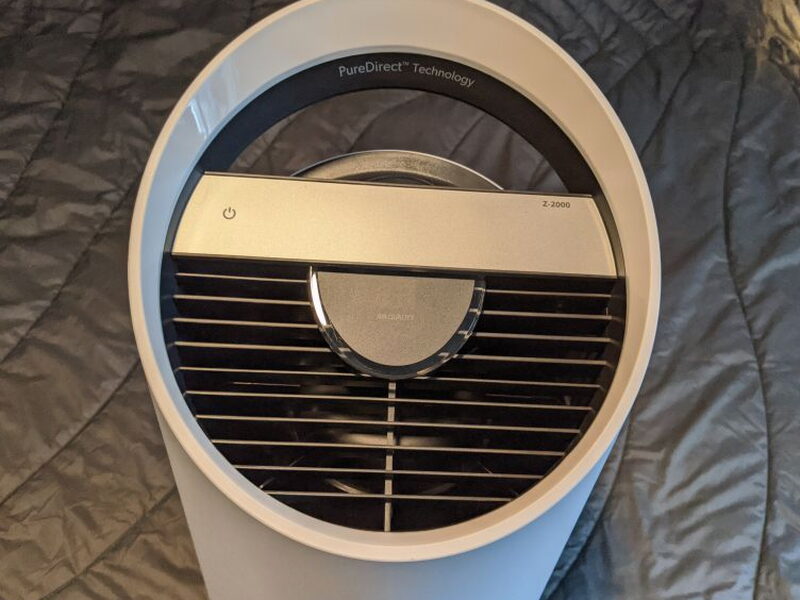
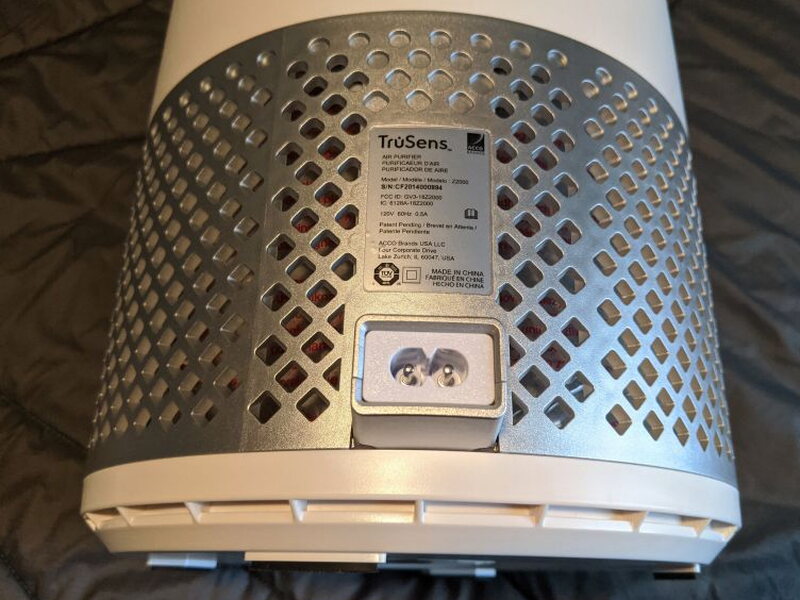
The intake vent down at the base looks like brushed aluminum at a glance, but it’s really just textured plastic.
The Filter and UV Light
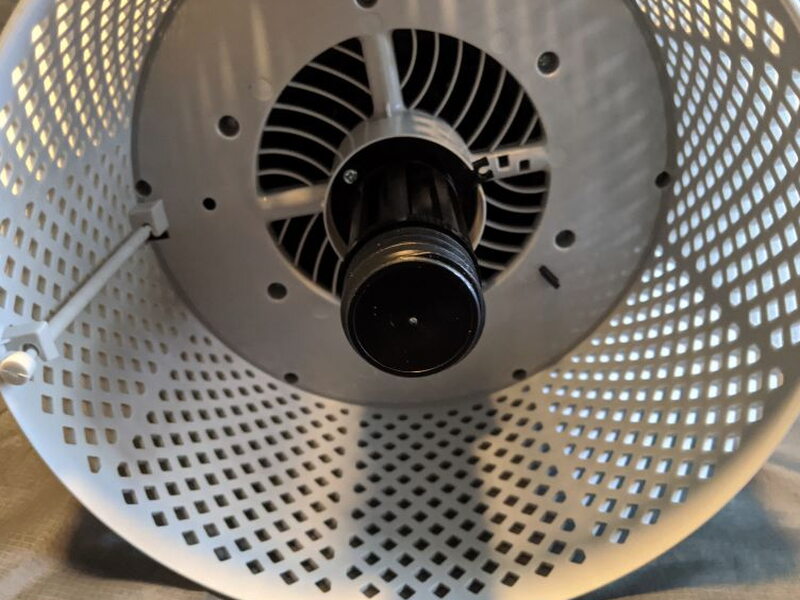
Flip the TruSens over and you’ll find a knob that releases the filter drum so you can swap it out or clean it. Before firing it up for the first time, twist off that knob, slide the drum out, and peel away the plastic bag wrapped around the filter.
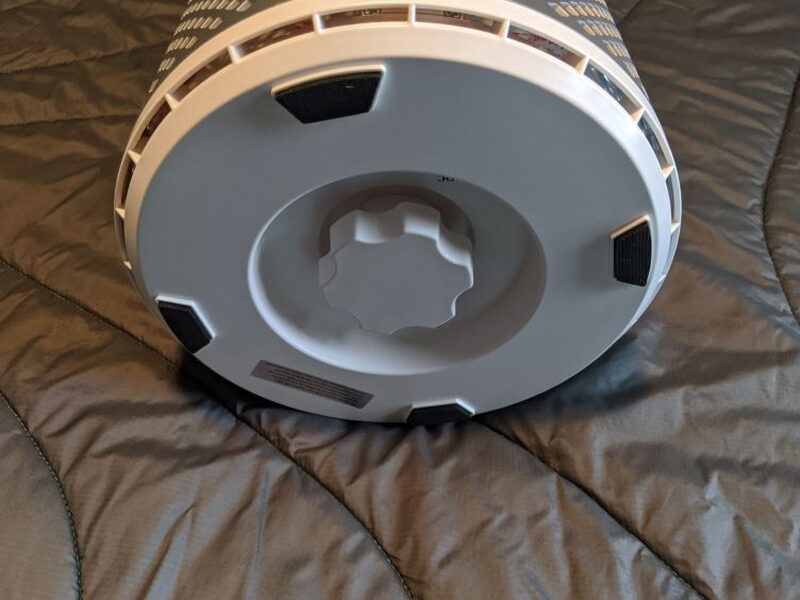
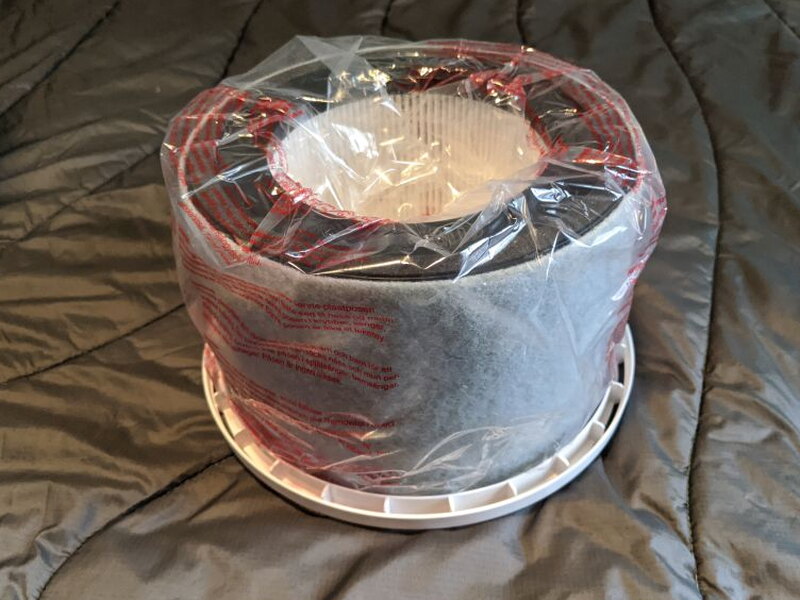
The filter itself is a 3-in-1 setup combining a washable prefilter, a carbon filter, and a HEPA Type filter. Worth flagging: this unit uses a HEPA Type filter rather than a True HEPA filter. For some people that gap matters a lot. A HEPA Type filter catches 99% of particles down to 2 microns, while a True HEPA filter grabs 99.97% of particles as tiny as 0.3 microns. The bigger model in the family, the TruSens Z-3000 at $349, actually ships with a True HEPA filter.
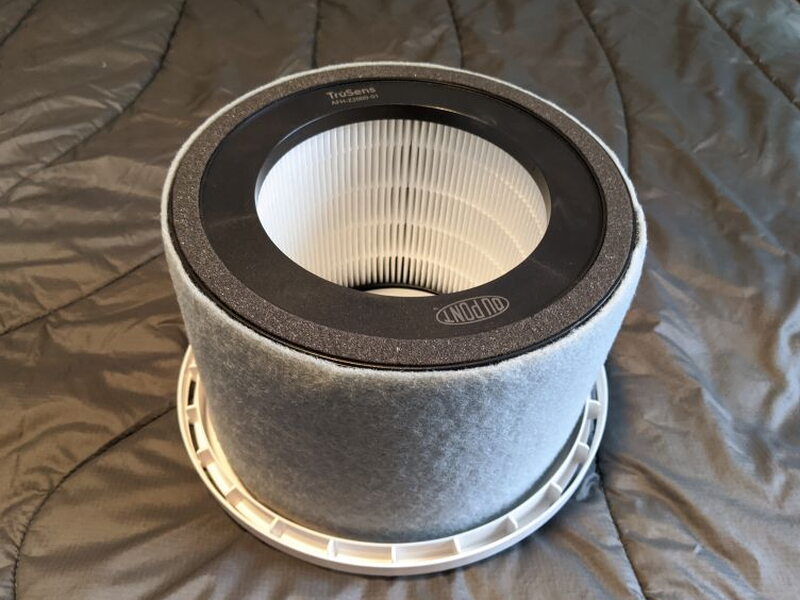
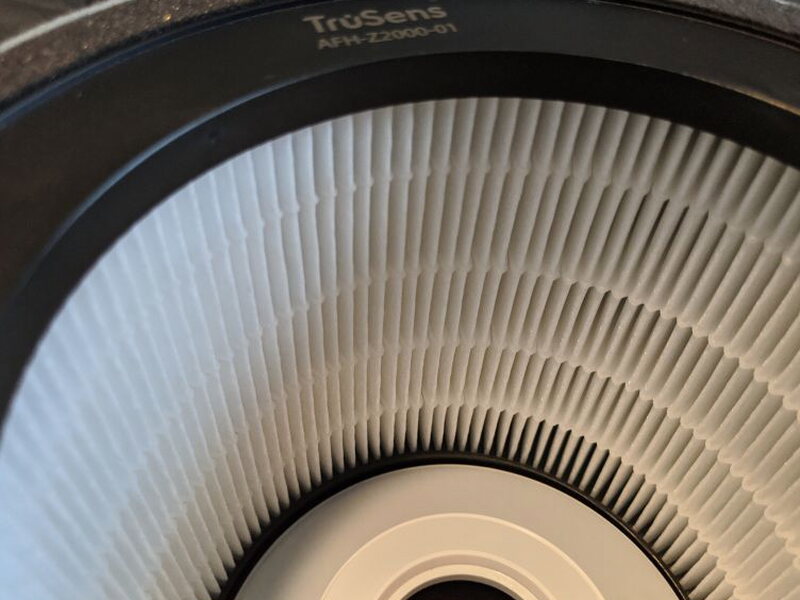
You can pop off the outer prefilter and rinse it whenever it needs it, while the carbon and HEPA Type filter inside, plus the UV bulb, get swapped out on their own schedule: the carbon filter every three to four months, the HEPA Type filter every twelve to fifteen months, and the UV bulb somewhere between one and three years. That bulb tucks away inside the hub where the filter drum locks into place.
The SensorPod
The true star of the TruSens is the SensorPod, a small remote sensor you set on the other side of the room where the purifier can see it.
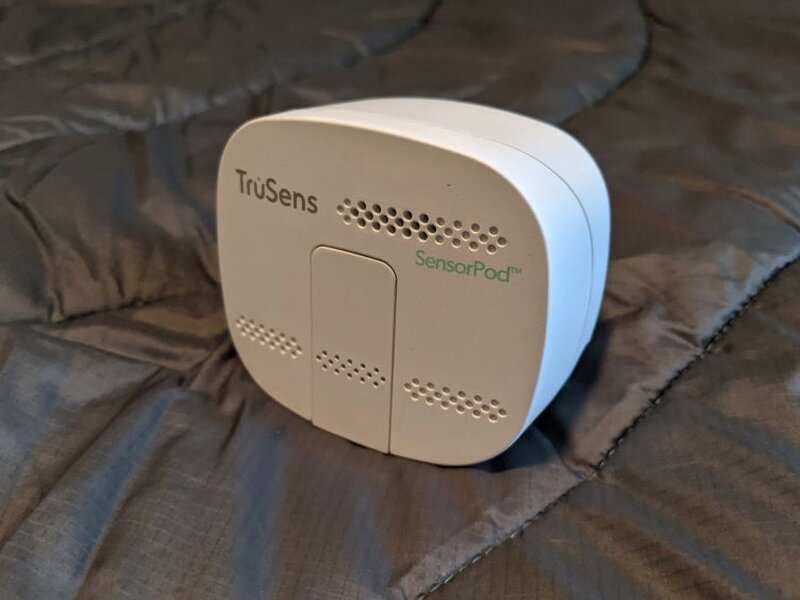
It runs on its own power cord and can sit as far as 49 feet from the main unit. Here’s why that wins me over: the TruSens cleans your room based on the air quality it reads at the SensorPod’s spot, not the air right next to the purifier, which is exactly how most cheaper units end up working.
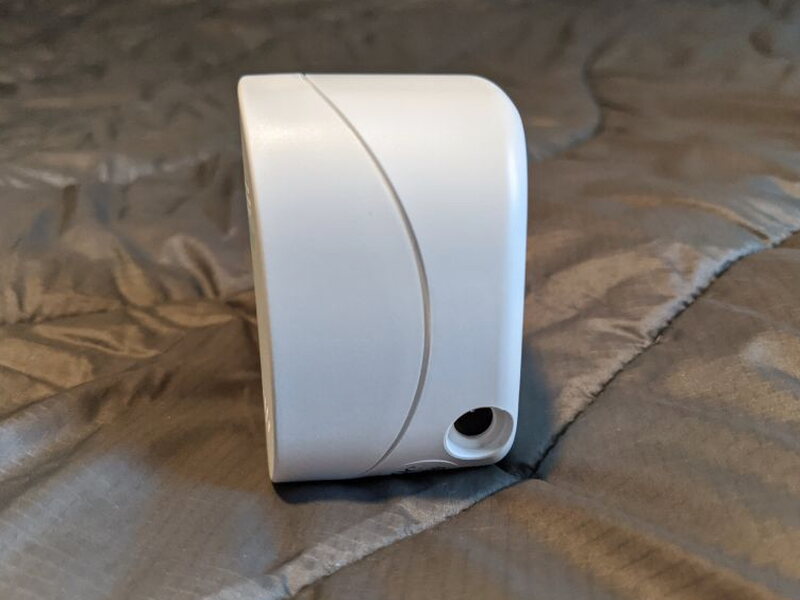
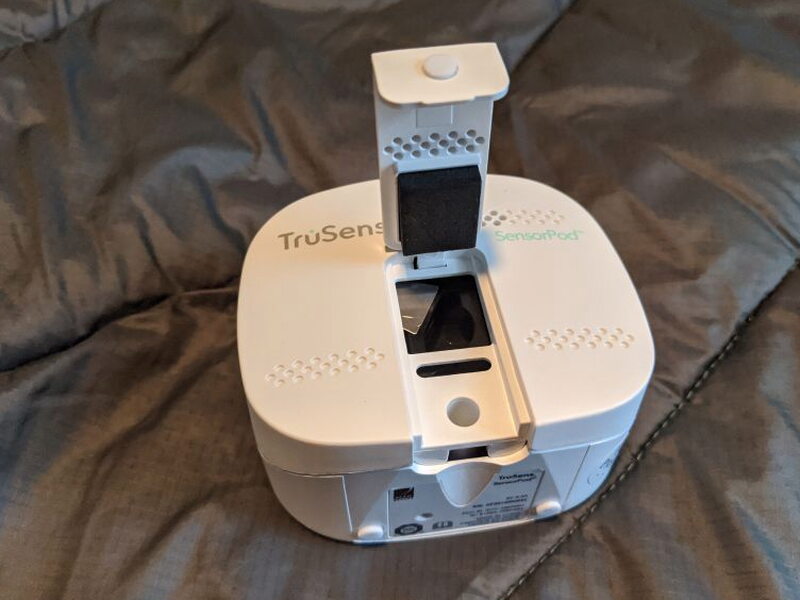
An infrared light inside is what actually spots the particulate matter, and you’ll want to wipe it down every one to two months so dust and buildup don’t throw off the readings.
Controls and Display
The touch panel packs a handful of settings and indicators to keep you in the loop: buttons for fan speed, dimming the lights, setting a timer, and flipping the UV light on or off, plus a light that flags when a filter or the UV bulb is due for a change. Underneath sits the air quality indicator alongside a light showing whether the SensorPod is connected.
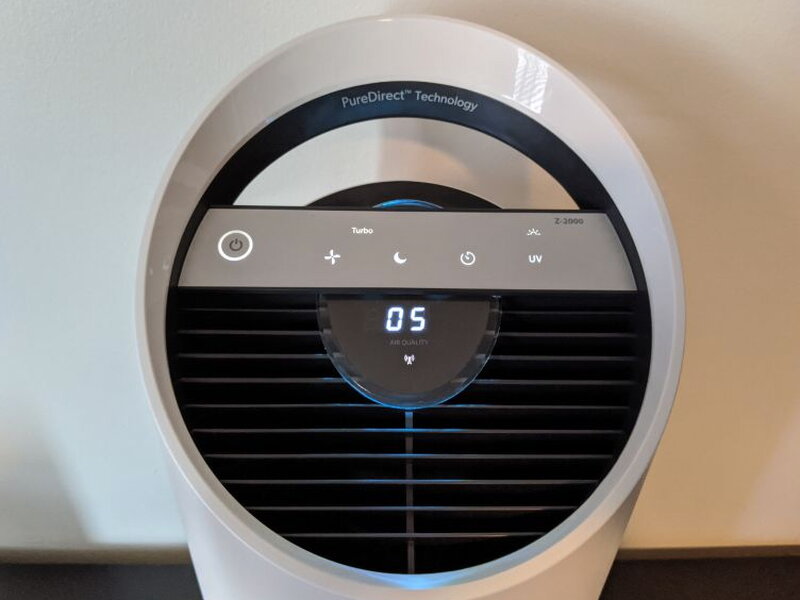
Even with the unit switched off, a white ring glows around the power button, something I came to appreciate every night in my dimly lit bedroom. Turn it on and a pleasant chime greets you as the TruSens runs through its indicator colors. Every one of these lights is pretty bright in a dark room, so the dimming button got a serious workout.
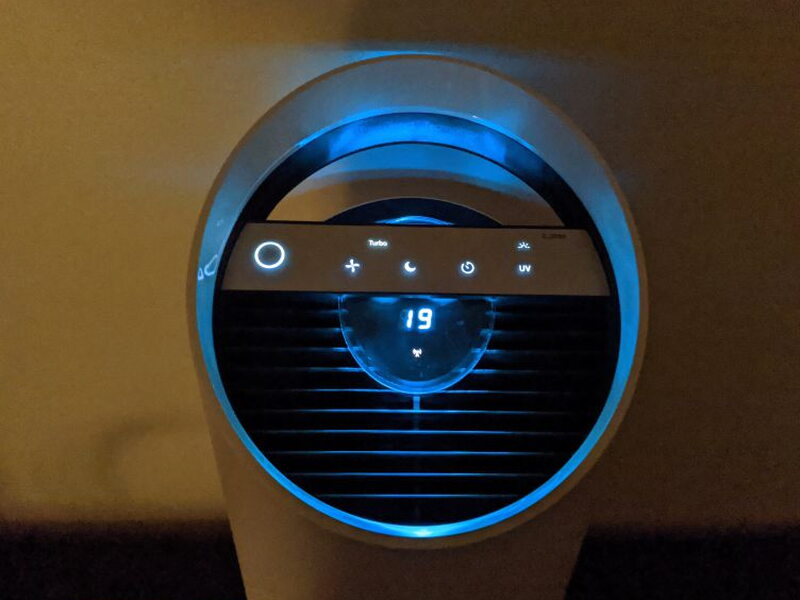
It genuinely caught me off guard that a pricey unit like this shipped without a remote control. Most air purifiers toss one in, and there were plenty of nights I muttered about the missing remote as I dragged myself out of bed to bump the fan speed or dim the lights because I’d forgotten to do it beforehand.
Living With It
Something about the air in my apartment always seems to set off my allergies, even long after allergy season has come and gone. My old air purifier could only tell me whether the air right around it was good, fair, or poor, and I never quite believed it. The TruSens painted a far clearer picture of what I was actually breathing, leaning on a three-tiered system paired with a 1-500 air quality rating: a blue light and a score of 0-50 mean good air, orange with 50-100 means moderate, and red with 100-500 means poor.
Across the weeks I spent putting the TruSens through its paces, I saw the air quality in my living space climb from a fairly decent 19 all the way to an alarming 143, most of it from smoke drifting in off wildfires burning in Oregon, California, and my own home state of Washington.
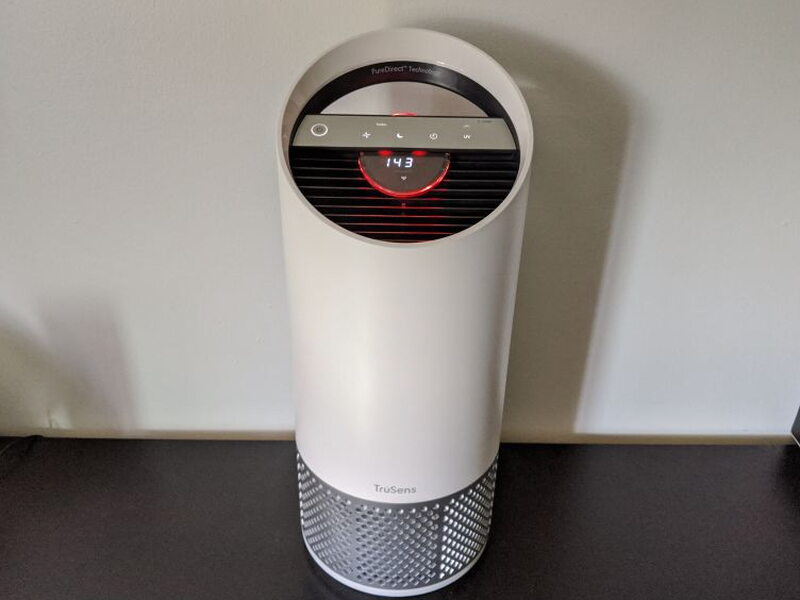
The silver lining was watching how much the TruSens knocked those frightening starting numbers down once I ran it in my bedroom every night with the windows and doors shut tight. I went from tossing and turning all night and waking up with itchy, burning eyes to sleeping straight through and greeting the morning clear-eyed and free of congestion.
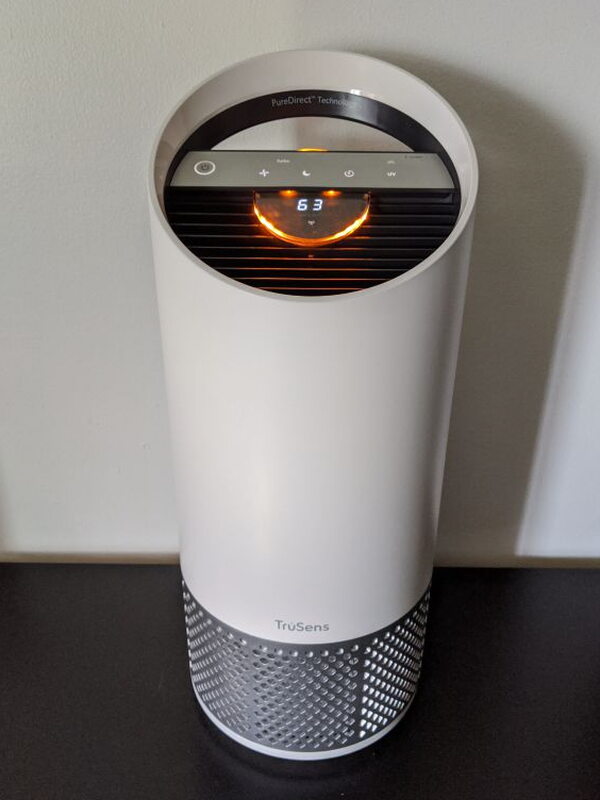

Left in Auto mode, it was reassuring to hear the TruSens spin the fan up whenever the air got bad and wind back down once things settled to a decent level. Across those weeks the air quality started off a touch better each day, apart from the handful of days when conditions outside were truly at their worst.
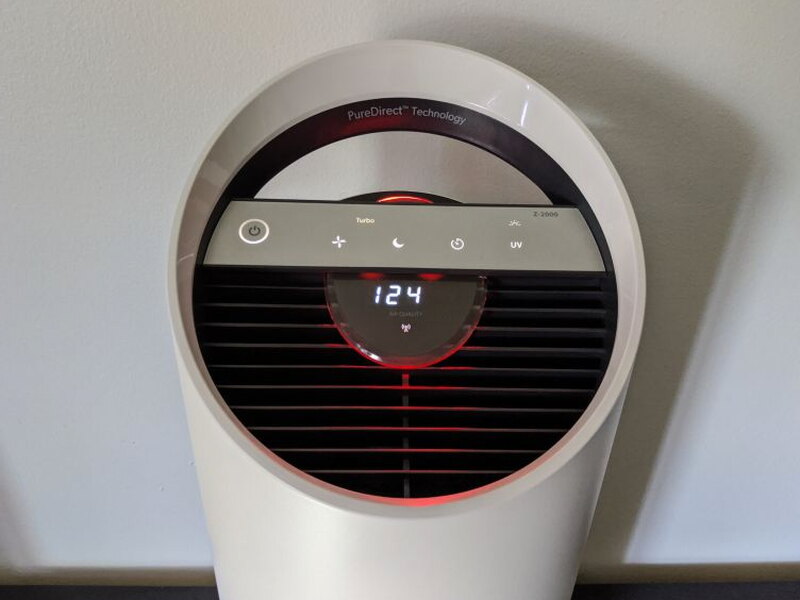
As someone who loves data, having an actual number tied to the air quality of my home, then watching and physically feeling that number get better over time, was hugely reassuring and made the steeper price feel worth it.
The Good
- Sleek design
- Easy to clean and use
- Remote air quality monitor
The Not So Good
- Pricey
- Should come with a remote
- Need to replace two filters and UV light at certain intervals
Quick Questions
Q: Does it use a True HEPA filter?
A: No, it uses a HEPA Type filter, which catches 99% of particles down to 2 microns rather than the 99.97% down to 0.3 microns a True HEPA filter catches; the pricier Z-3000 model has True HEPA.
Q: Does it come with a remote control?
A: No, despite the price, there’s no remote included.
Q: How far can the SensorPod sit from the main unit?
A: Up to 49 feet away, and the purifier adjusts based on the air quality reading at the SensorPod’s location, not next to the unit itself.
Q: How often do the filters need replacing?
A: The carbon filter every 3-4 months, the HEPA Type filter every 12-15 months, and the UV bulb every 1-3 years; the outer prefilter is washable and reusable.
The Verdict
I’m a big fan of the TruSens Z-2000, and it’s earned a permanent spot in my apartment. The SensorPod does a great job of reading the air right where I happen to be instead of just where the TruSens is parked. The controls are simple to figure out, and the display really shows off how hard the unit is grinding away. A few weeks of running it in my bedroom left me feeling and sleeping noticeably better. The TruSens sits at a steep $249, and honestly at that price I feel it ought to include a remote. But based on how it performs, even without one the TruSens Z-2000 is a solid buy, with its 3-in-1 filter, SensorPod, and UV light all pulling together to keep your air clear of impurities and contaminants.
Price: $249.00
Product Link: TruSens
You can also grab it at Walmart for $239.20 or Target for $259.99.
Source: The sample of this product was provided by TruSens.


