
REVIEW – Overlanding has taught me that every piece of gear has to justify its space, weight, and usefulness. Cooking gear is one of the harder categories to simplify because fuel planning is messy. I almost always came home with spare propane bottles, half used propane bottles, or both. The Stoke Voltaics Nomad Cooking System caught my attention because it removes propane from that calculation and cooks entirely from electricity.
The Nomad sells for $249.99 and is aimed at the same outdoor cooking problem as the better known Jetboil Genesis Basecamp System. It is not as polished or rugged as the Genesis, and it can only cook with one vessel at a time, but it costs $150 less and can run from the electrical sources I already bring on trips, such as a portable power station or a vehicle inverter.
Overview
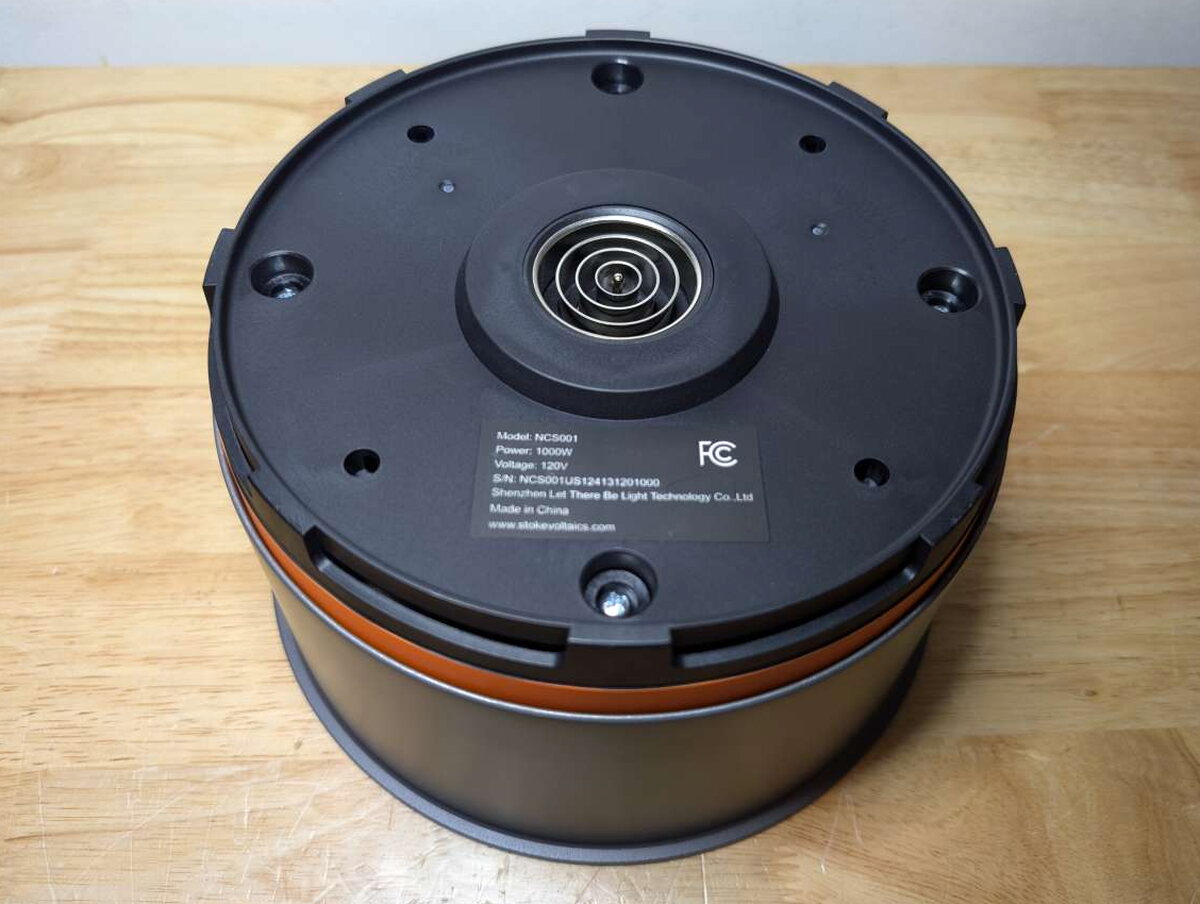
Stoke Voltaics describes the heating base as the Cooking Reactor. The kit also includes a Sizzling Pan, a Bubbling Pot, one lid that fits both, a detachable handle, a power cable, and a user manual. Instead of burning propane, the system accepts power from 200W to 1000W, which lets it work with car inverters, fuel generators, and portable power stations when those sources can supply enough wattage.


The outer packaging was plain, while the product box looked much more finished with lifestyle photos and specifications printed around it. Inside, the components were protected in shaped foam.

Kit contents
- Cooking Reactor
- Sizzling Pan
- Bubbling Pot
- Interchangeable Lid
- Detachable handle
- Power Cable
- User manual

Specs
- Model: NCS001
- Power: 1000W
- Voltage: 120V
- Materials:
- Pot, pan, and lid: Aluminum alloy
- Reactor body: ABS+PC
- Bases: PA66+30%GF
- Heating Levels:
- 200W: Simmer
- 400W: Low
- 600W: Medium
- 800W: Medium High
- 1000W: High
- Product Dimensions:
- Pan: 8.65 in. x 3.5 in.
- Pot: 8.56 in. x 5.55 in.
- Reactor: 6.8 in. x 2.5 in.
- Capacity:
- Pan: 45 oz. (1400ml)
- Pot: 50 oz. (2400ml)
- System Weight: 6lbs (3kg)

Design and build
The whole system has a clean gray and orange look. It is attractive, although the visual resemblance to the Jetboil Genesis Basecamp System is hard to miss. I understand why Stoke Voltaics would want shoppers to make that comparison, but I would have preferred a design with more of its own identity.


The Sizzling Pan is a deep aluminum alloy vessel with a nonstick interior rated for heat up to 482 degrees F. The raised ridges help with grilling and keep oil from pooling directly under the food. Underneath, the PA66+30%GF base combines heat resistant Polyamide 66 with 30 percent glass fiber reinforcement, and the round metal contact point connects to the reactor.



The Bubbling Pot repeats the same base design in a taller shape. Its total capacity is about 50 oz., with a 34 oz. safe fill line, so it is more useful for boiling water, soups, and stews. I also like the small spout, which makes pouring easier than it would be from a plain round rim.


One lid fits both vessels. It has five vent holes and the same matte finish, but the knob is not my favorite part of the design. The raised center area gets too close to my hand when I grab the knob, so a taller or longer handle would have been safer and more comfortable. The notch is not for the pot spout as I first assumed. It is there so the detachable handle can stay attached while the lid is in place.


The detachable handle is clever and useful. A switch locks the clamp, and thick rubber ridges give it a secure bite on the rim. Since it can be attached anywhere around the pot or pan, it is easy to position for lifting, stirring, or serving.


The Cooking Reactor is the heart of the system. It is made from textured black ABS plastic and has a raised center section that lines up with the cookware bases. The front knob includes an LED display for status, time, and temperature information. Pressing the knob pauses or resumes cooking, while turning it adjusts power from a 200W simmer to 1000W high heat.
Stoke Voltaics also built in several safety features. The reactor automatically pauses when the pot or pan is lifted, resumes when it is replaced, shuts off if cookware is not returned within 60 seconds, and powers down after any three minute pause during cooking. Each piece also uses dual temperature sensors and a fuse for overheating protection.


Portability is one of the Nomad ideas I like most, but the execution is not complete. The parts mostly nest inside each other, yet I could not arrange them so the lid closed cleanly. There is also no carrying case or strap included. For trail gear, that feels like a missed opportunity.
Setup and cooking
Setup is simple. Wash the pot, pan, and lid with warm soapy water, then place the chosen vessel on the reactor and plug it in. Stoke Voltaics warns against steel wool, dishwashers, and dunking the cookware in water because those can damage the system.


Once the vents are clear and the cookware is seated, the knob starts the reactor and the timer begins automatically. From there, cooking is just a matter of picking the wattage.


I started with boiling water because many trail meals only need hot water. A full 34 oz. safe fill of water reached a boil surprisingly quickly. The handle got hottest near the pot, which was expected, but the outer end stayed cool enough to hold safely.


Breakfast was bacon, eggs, and thick cut bread. At the 1000W setting, the pan heated fast and fit about four thick cut strips of bacon. I did find that some areas ran hotter than others, probably because of the internal coil layout, so I moved the bacon around as it cooked. The result was still crisp bacon, properly cooked eggs, and toasted bread.


The toughest test was steak cooked from my Bluetti AC200MAX Power Station, which I reviewed in August 2023 and use as my main trail power source. The power station started at about 80 percent. With the Nomad set to 1000W, the AC200MAX showed a draw around 960W, moving a little but never actually displaying the full 1000W.
I preheated the pan with the lid on until my temperature scanner showed just over 450 degrees F, then seared the steak for about four minutes per side. The pan was deep enough to control oil splatter while still giving me good access to the food. After roughly ten minutes at 1000W, the AC200MAX dropped from 80 percent to 73 percent. That is not shocking for this much heat, but it does mean longer trips will require some power planning.
What worked
- Portable, modular design
- Consistently heats up very fast
- Useful where flame based cooking is not appropriate
What needs work
- No included carrying case
- Lid design makes the knob awkward when hot
- Only one pot or pan can be used at a time
Quick Questions
Q: Does the Nomad Cooking System include a carrying case?
A: No, that’s a real gap noted in the review; the pieces nest together but not neatly, and no case or strap is included.
Q: Can it cook two things at once?
A: No, only one pot or pan can be used on the reactor at a time.
Q: What power sources can run it?
A: Anything supplying 200W to 1000W, including car inverters, generators, and portable power stations.
Q: Does it have safety shutoff features?
A: Yes, it pauses automatically when the cookware is lifted and shuts off if it isn’t replaced within 60 seconds, or after a 3-minute pause during cooking.
Final thoughts
The Stoke Voltaics Nomad Cooking System is a strong propane alternative for overlanding, camp cooking, indoor friendly cooking situations, and areas where open flame is not allowed. It is not a full replacement for every camp stove, and compared with the Jetboil Genesis Basecamp System it gives up dual burner cooking, a better packed kit, and an included case. Still, at $249.99, it is much less expensive than the Genesis and gives me a flexible electric cooking option that works with the power gear I already carry.
For my own kit, the Nomad has earned a place. It cooked water, breakfast, and steak quickly, and the food results were excellent. I just wish Stoke Voltaics had solved the lid and storage details with the same care it put into the cooking performance.
Price: $249.99
Product Link: Stoke Voltaics
Source: The sample of this product was provided for free by Stoke Voltaics
Stoke Voltaics did not have a final say on the review and did not preview the review before it was published.


