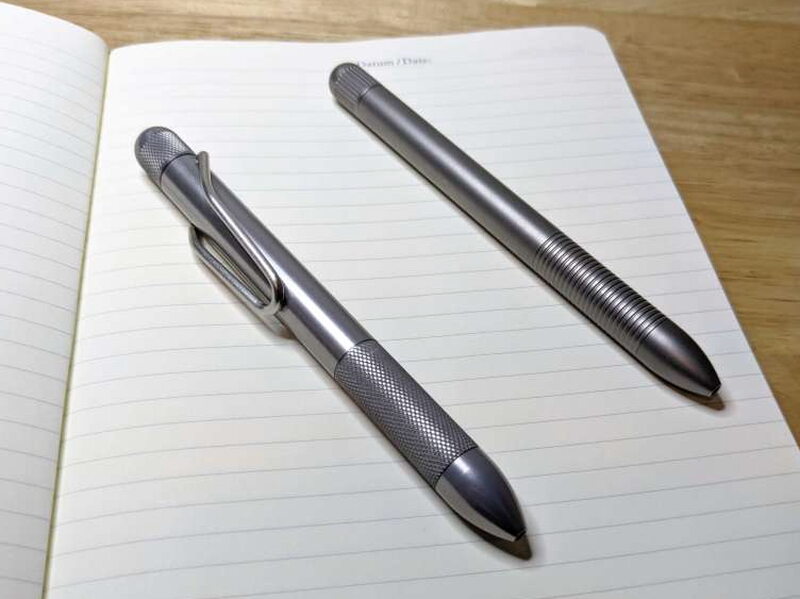
REVIEW – I’m a Bullet Journal guy, which means I go through notebooks and ink refills at a rate that would probably embarrass a normal person. Somewhere along the way I decided that if I was going to write that much, I should at least be writing with something nice, so right after starting my current job I bought myself a well-reviewed bolt-action pen to mark the occasion. It’s still my daily carry, and it’s outlasted every cheaper pen I’ve tried to replace it with.
The only pen that’s ever made me consider cheating on that one is the RIIND Pen. So when the chance came up to try RIIND’s newest releases, the Compact and Slim, both currently live on Kickstarter, I jumped on it. Both are well-engineered, thoughtfully designed, and genuinely nice to write with for long stretches. Pricing lines up with what comparable pens cost: $69 for the Slim, $89 for the Compact, $119 for the titanium Slim I ended up testing.
Unboxing
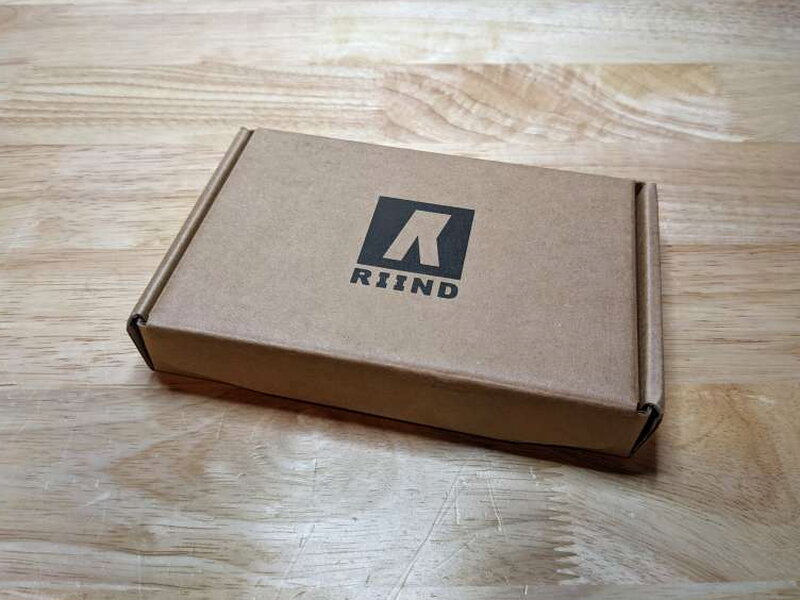
Both pens ship in a thick cardboard box with nothing on it but the RIIND logo.
Open it up and each pen has its own dedicated plastic case sitting on top of an info card.
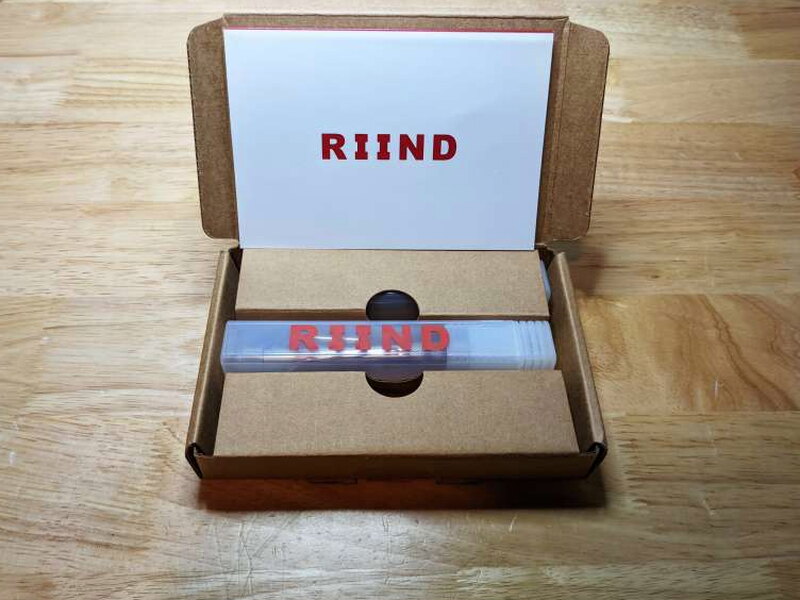
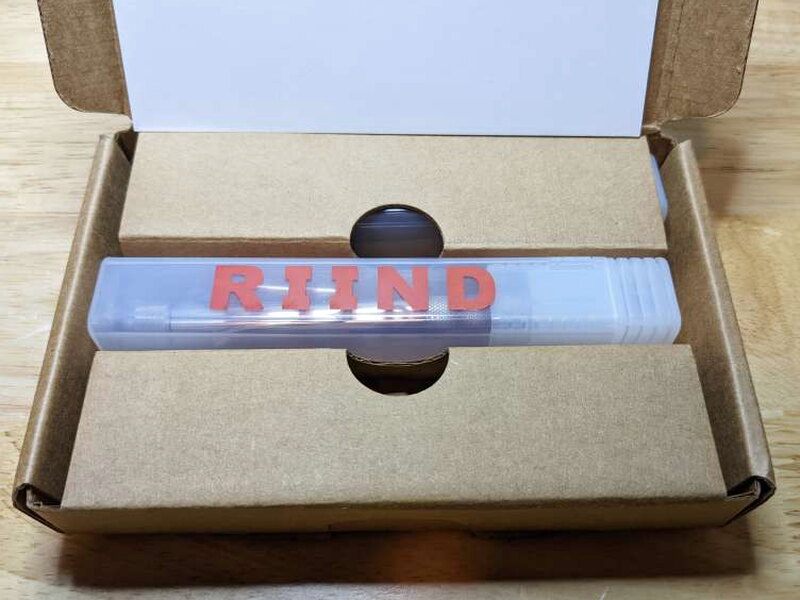
I’m a bigger fan of these little plastic cases than I probably should be. I keep trying to think of other things I could store in them.
What You Get
- The Slim Pen (Titanium)
- The Compact Pen
- Information card
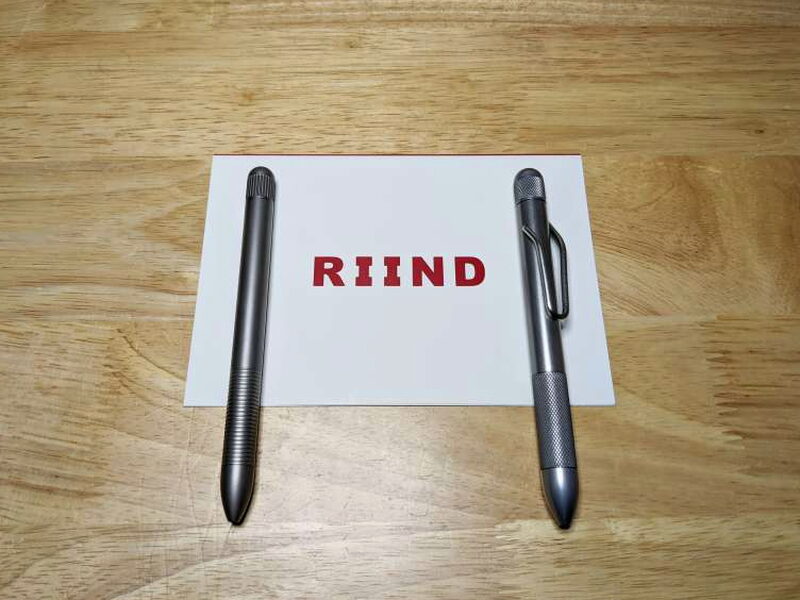
Specs at a Glance
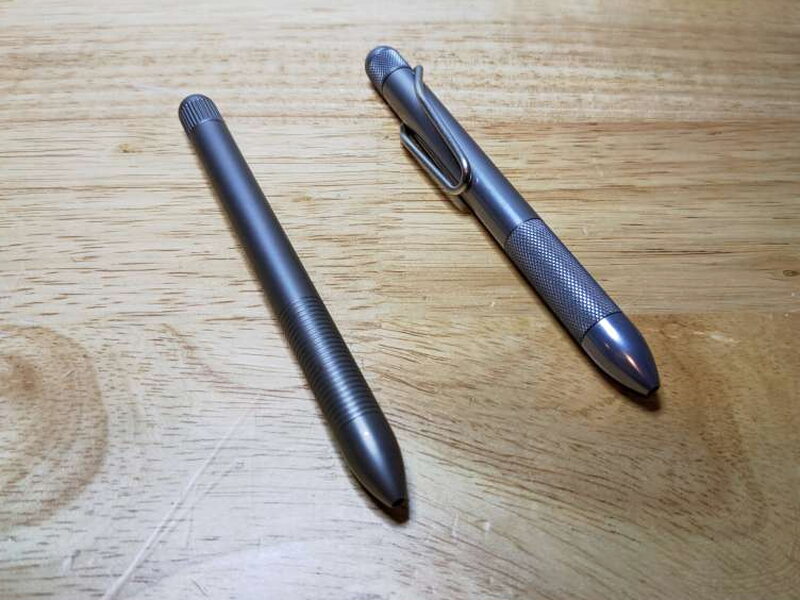
The Slim Pen:
- Material: Anodized Aluminum or Titanium
- Color Options:
- Gray (Aluminum)
- Rose (Aluminum)
- Navy (Aluminum)
- Black (Aluminum)
- Raw (Titanium)
- Dimensions:
- Length: 5.1 in (129.5 mm)
- Diameter:.41 in (10.4 mm)
- Weight: (Titanium) 30 g
The Compact Pen:
- Material: Anodized Aluminum
- Color Options:
- Gray with Polished Clip
- Black with Polished Clip
- Black with Black Clip
- Dimensions:
- Length: 5.1 in (129.5 mm)
- Diameter:.45 in (11.4 mm)
- Weight: 30 g
Current Refill Compatibility:
- Parker
- Cartier M
- Visconti AA38
- Fisher Space Pen
- ST. Dupont
- Schmidt Easyflow 9000 (509)
- Schmidt P900
- Stabilo
- Parker Quinkflow
- Pelikan 337
- American Pen Company Gel Ballpoint
- American Pen Company Liquid Ink Ballpoint
- Montverde P11 SoftRoll Ballpoint
- Montverde P13 SoftRoll Ballpoint
- Montverde P15 SoftRoll Ballpoint
- Montverde P42 Ceramic Gel
- Montverde P44 Ceramic Gel
- Montverde P152 One Touch
- Private Reserve P900 Ballpoint
- Private Reserve Gel
- Schmidt P950 Megaline Pressurized
- Unibene Gel Ink Ballpoint
- Jaymo Gel
- Rite in the Rain
- Zutan Luxury Ballpoint Pen Refills
- DunBong Refill
- Rotring Giant Ballpoint
- Stilform
- Faber-Castell
- Retro 51 Tornado
- Staedtler 458
- Kaweco Sport Gel
- Uni SXR-600 Jetstream
- Ohto Flash Dry Gel
The Compact, Up Close
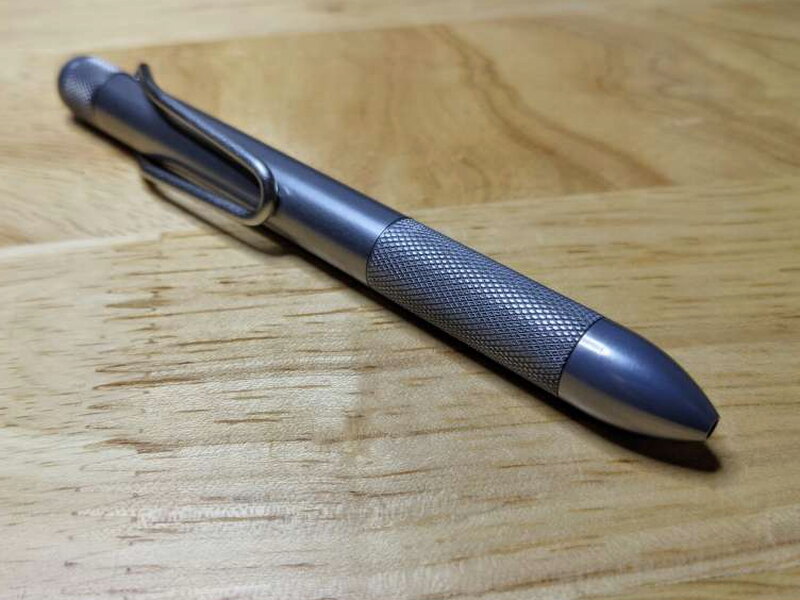
The original RIIND Pen had an industrial look, a heavily knurled grip, and an asymmetrical clip that stuck with me the first time I saw it — futuristic and utilitarian at the same time. The Compact is basically a shorter take on that same formula.
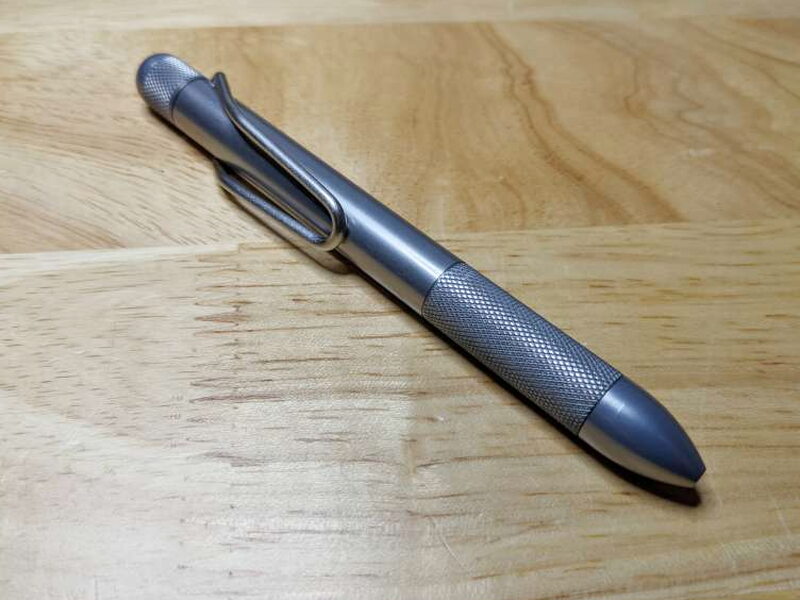
That cross-hatched knurling isn’t subtle. My first reaction was that it might get uncomfortable over a long writing session, but that worry never actually played out.
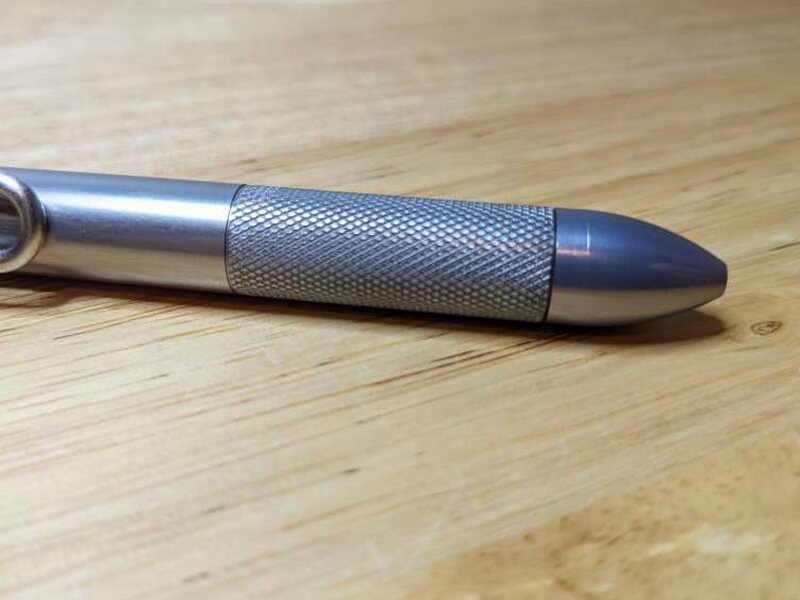
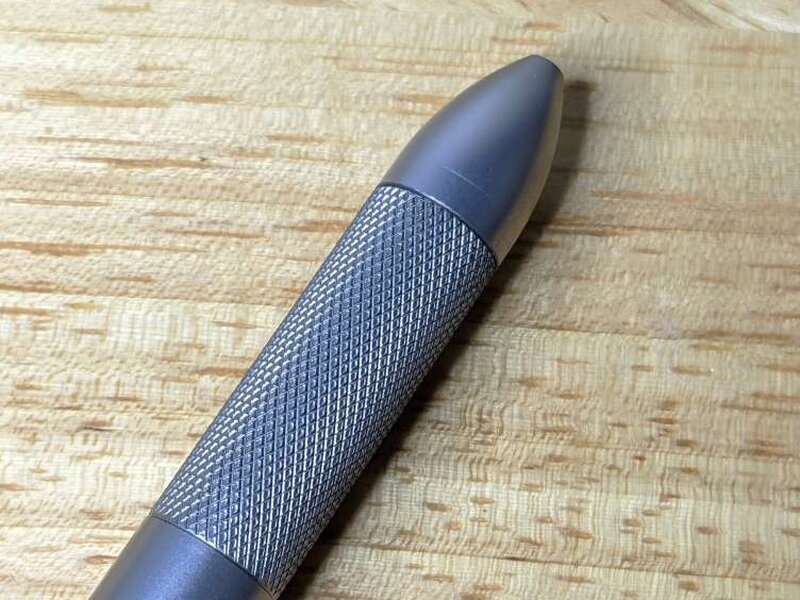
Twist the cap and you’re working RIIND’s Continuous Cam, which opens or closes no matter which direction you turn it. It gives off a satisfying click that had me fidgeting with the pen more than I do with my own bolt-action.
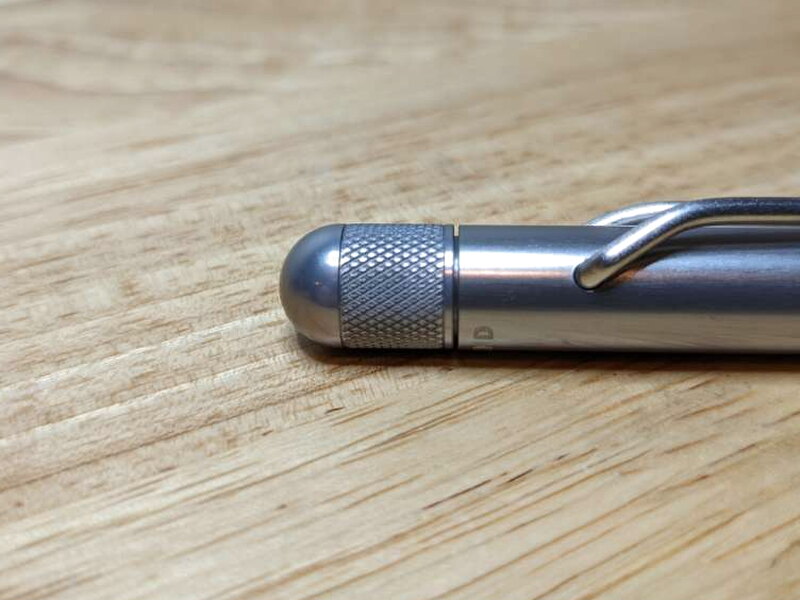
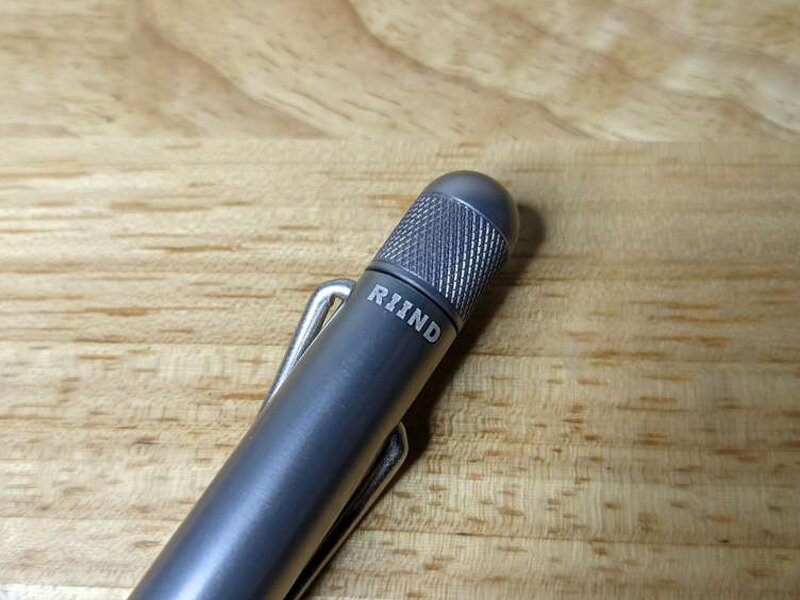
The Compact’s real headline feature is the Super Clip. The first time I saw its odd, asymmetrical shape, it bugged me — I like things that look intentional and orderly, and this looked neither.
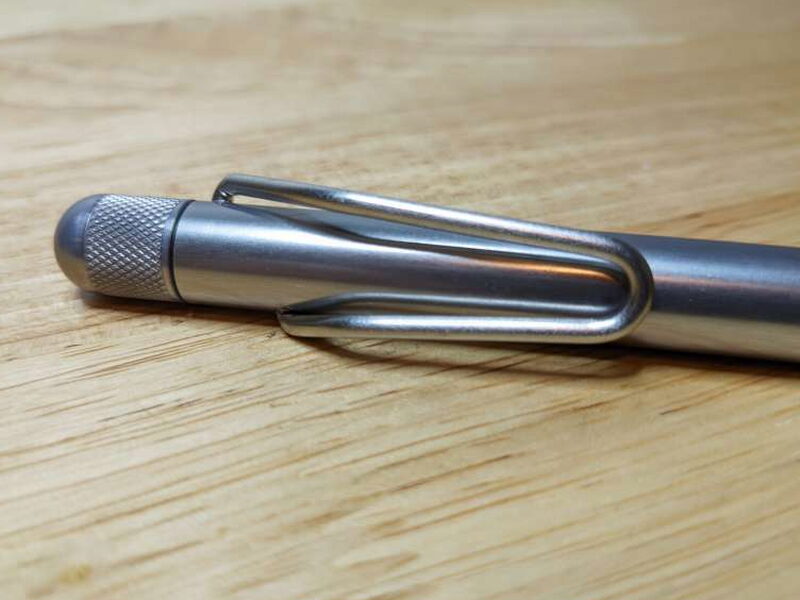
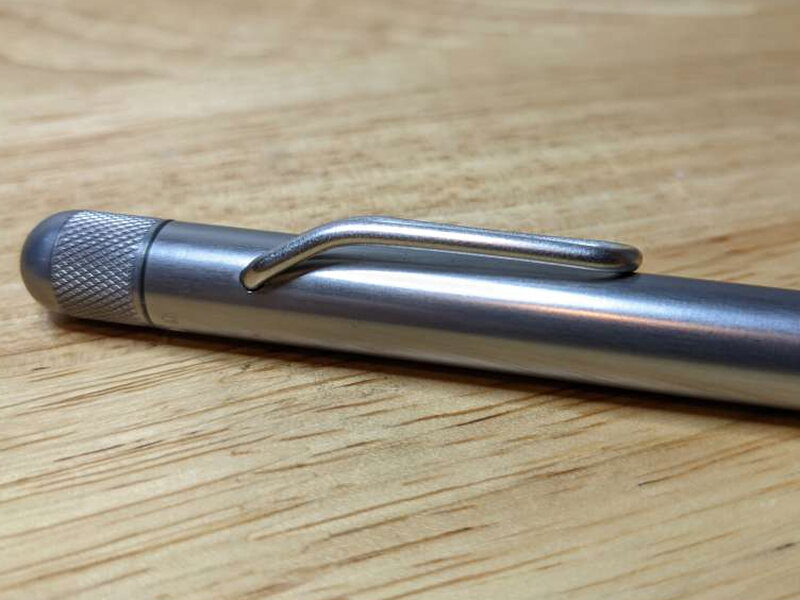
After enough time with the Compact, though, the Super Clip won me over completely. Same as the cap, I catch myself absently flicking it all day. My one real complaint is that thickness — clipping the Compact to the front cover of a notebook isn’t as smooth as it is with pens that use a thinner, flatter clip.
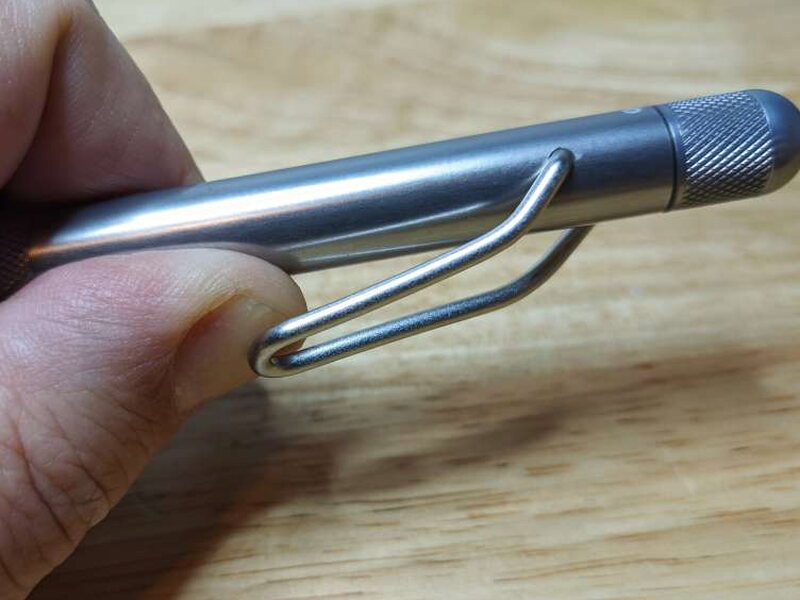
Then again, this clip clearly wasn’t designed for a notebook cover. It looks built to lock onto the side of a fighter jet without a second thought.
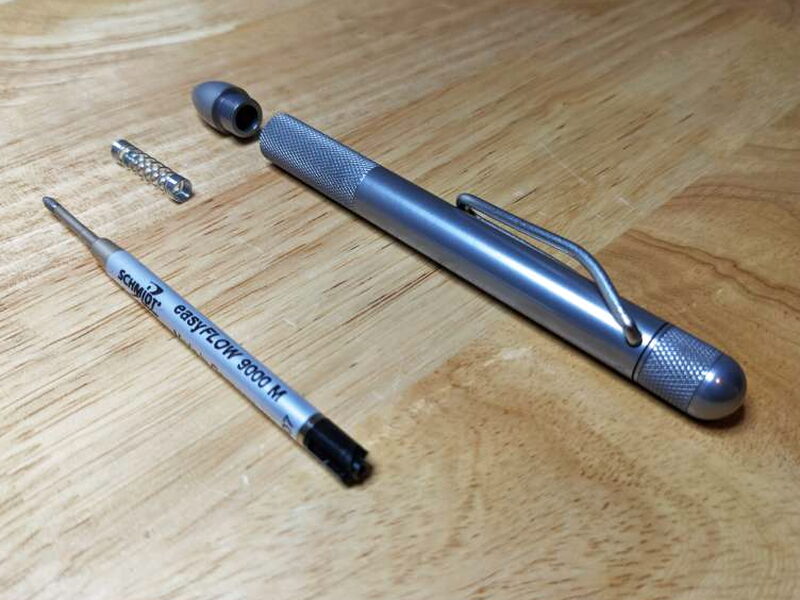
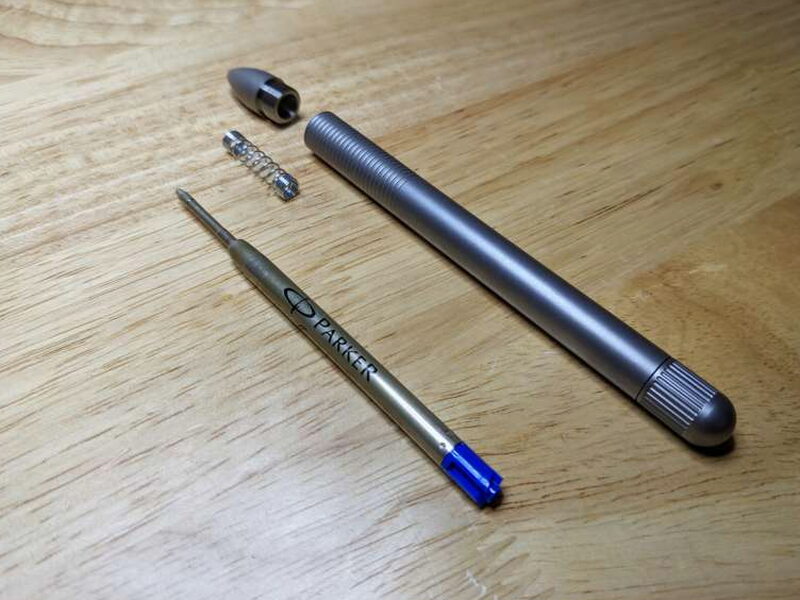
Take the Compact apart and the machining quality shows. The front tip has long, hefty threads that keep it locked down so it can’t work loose mid-write, and even the little spring inside is overbuilt, with tight coils on both ends. Mine arrived loaded with a black Schmidt easyFLOW 9000 refill, my personal favorite of the bunch.
The Slim, Up Close
The Slim borrows the same DNA as the original Pen and the Compact, just thinner, with a gentler grip, and no clip at all.
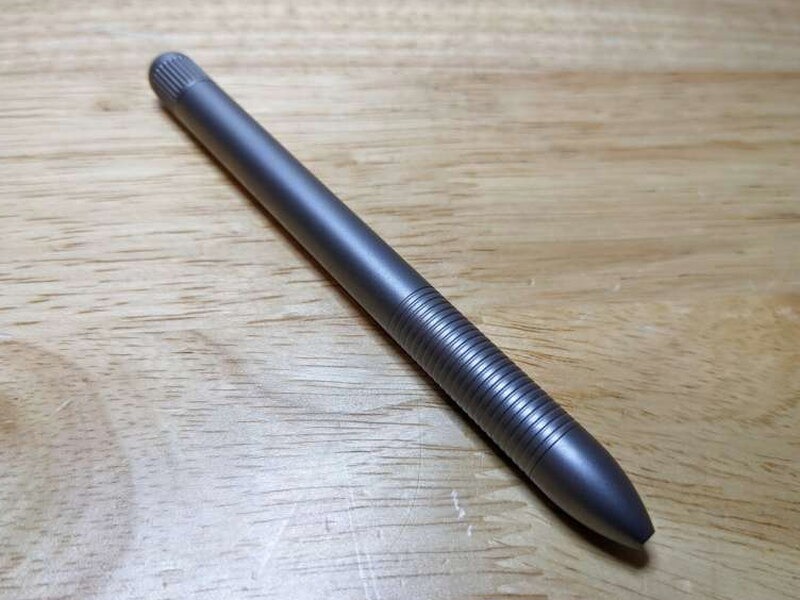
Instead of the Compact’s aggressive cross-hatch, the Slim keeps things simple with horizontal ridges circling the tip.
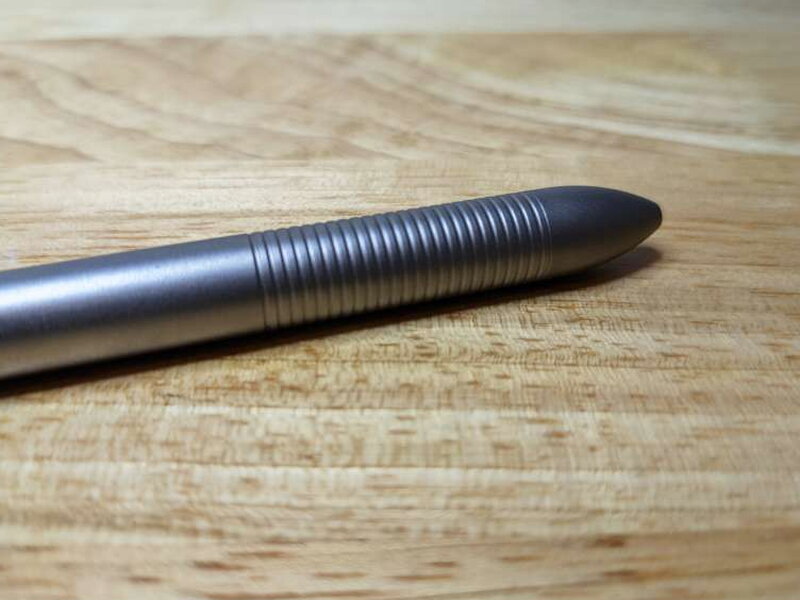
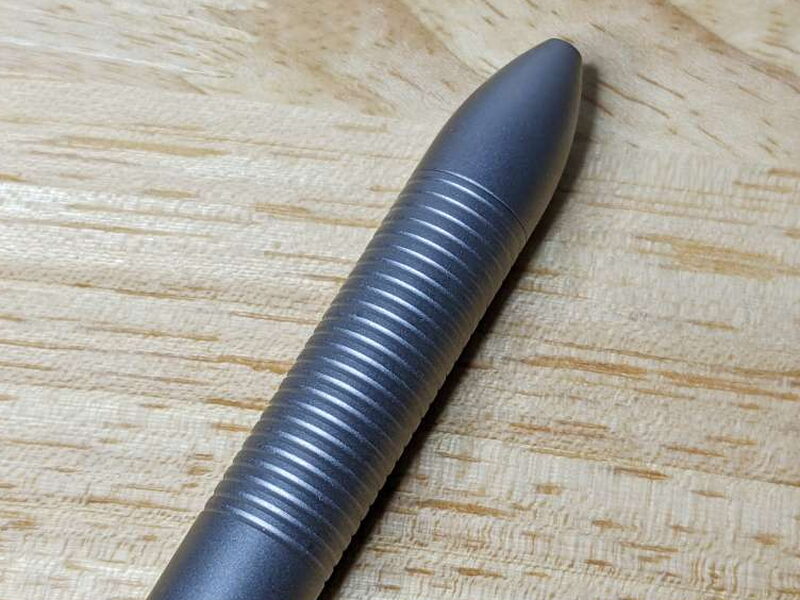
That grip turned out to be both comfortable and effective, especially the longer I wrote with it. The cap wears the same texture, except the ridges run vertically here to give some purchase when working the Continuous Cam.
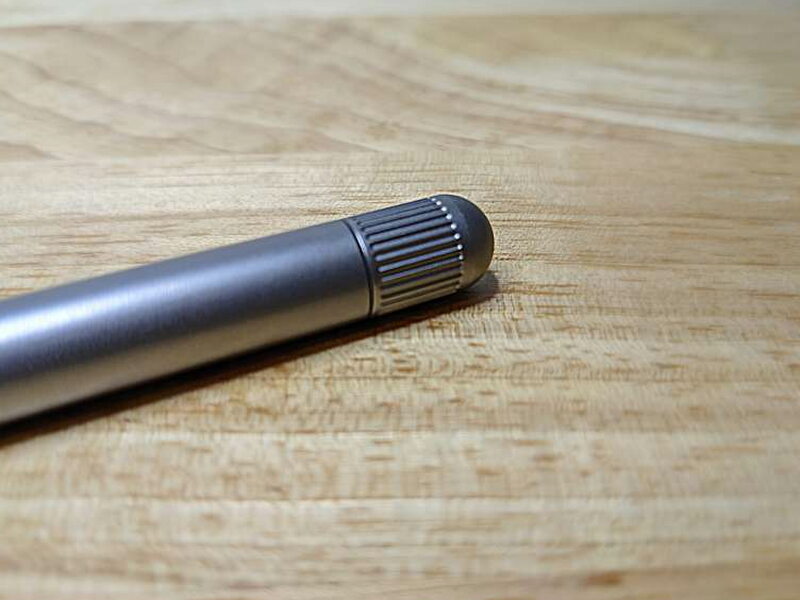
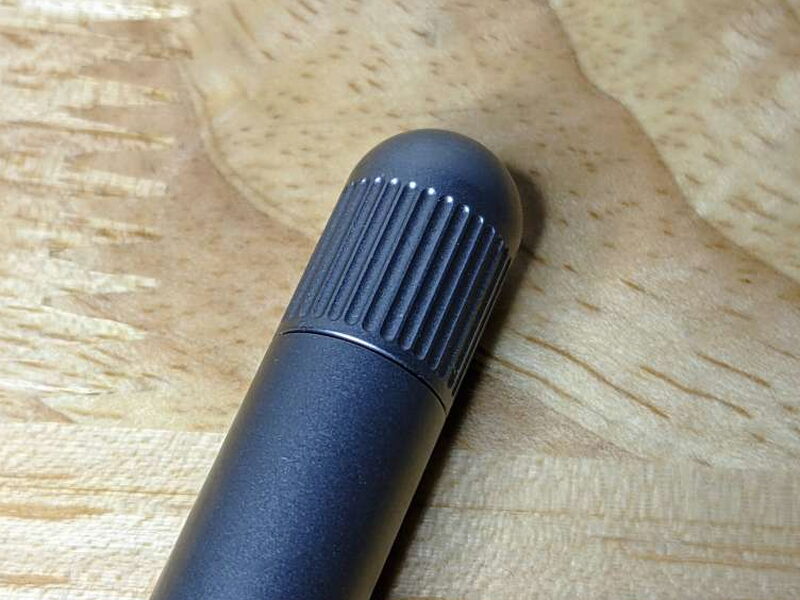
The titanium build I tested skips the glossy anodized finish the Compact and other Slim colorways use in favor of a matte surface that, to me, actually grips better than the shinier aluminum. At 30 grams both pens feel almost weightless in hand, which still catches me off guard given how substantial they look sitting on a desk.
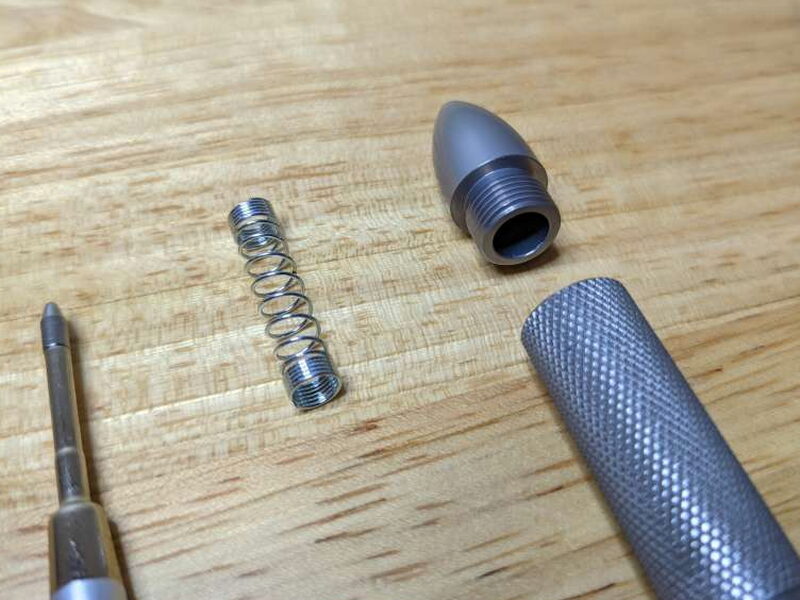
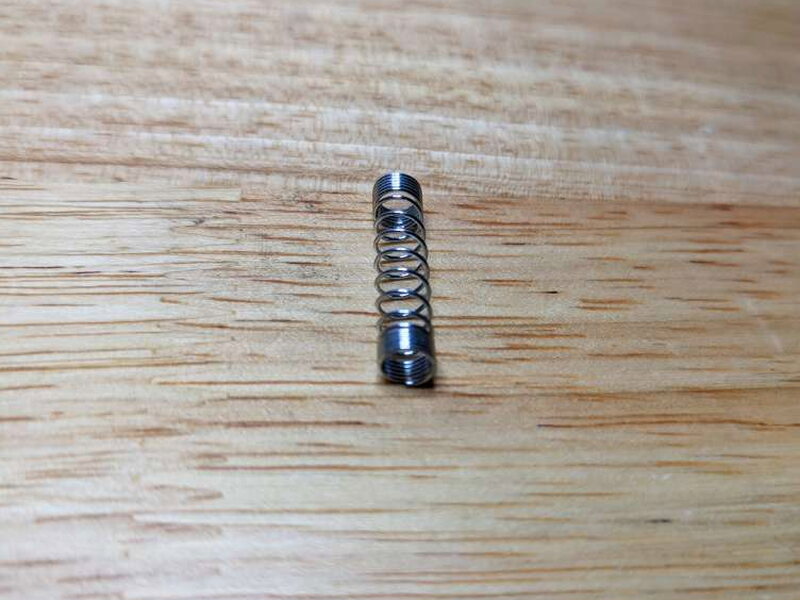
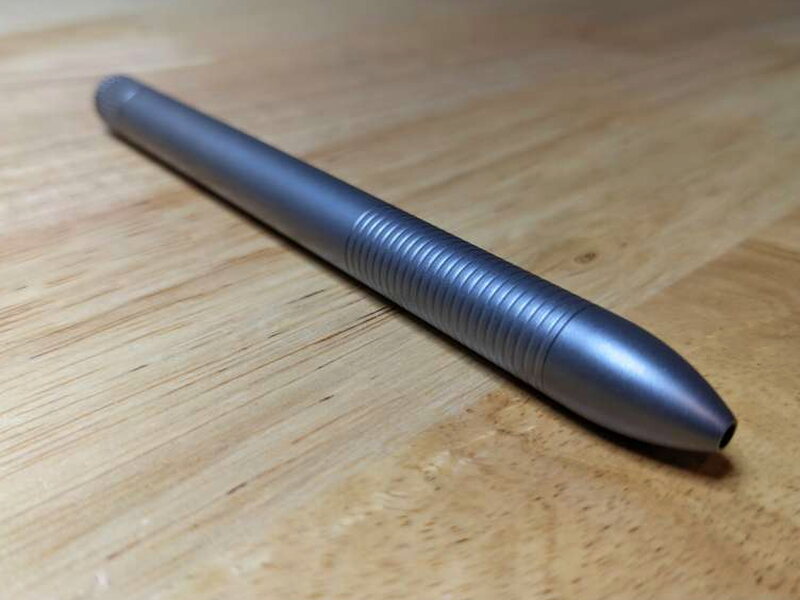
Inside, the Slim is identical to the Compact. Mine came loaded with a blue Parker-style refill.
Writing With Both
Both pens feel almost weightless once you’re actually writing with them, and pairing that lightness with a good refill makes a real difference. The Compact, running that Schmidt refill, practically floated across the page.
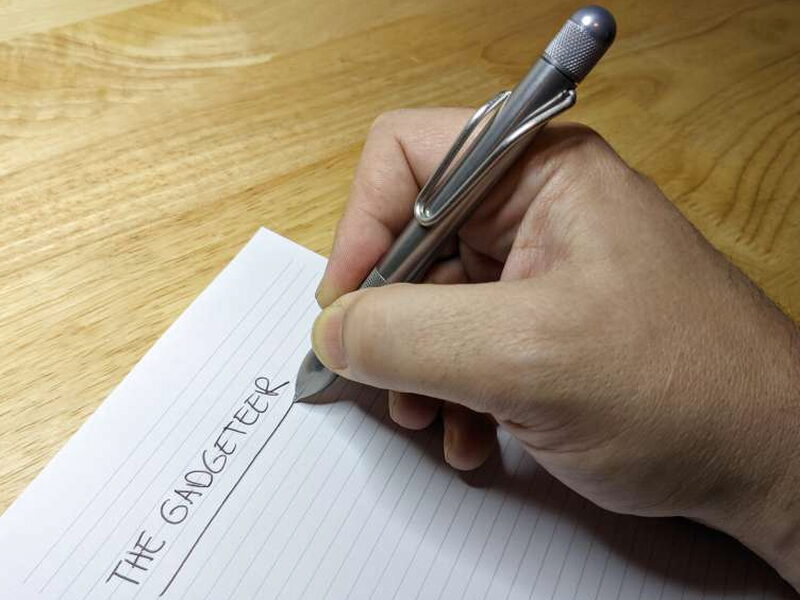
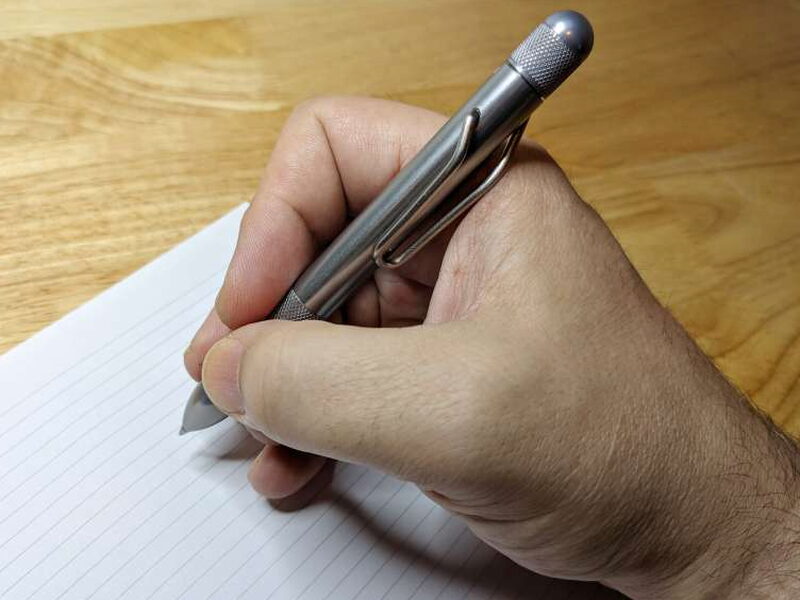
Big as it is, the Super Clip never got in the way of my grip, and the Compact’s aggressive texture let me hold it with noticeably less pressure than I’m used to. I never ended up with the deep finger indentations that a poorly designed pen leaves after a long stretch of note-taking, and the Compact’s length suited me fine since I already lean toward shorter, lighter pens.
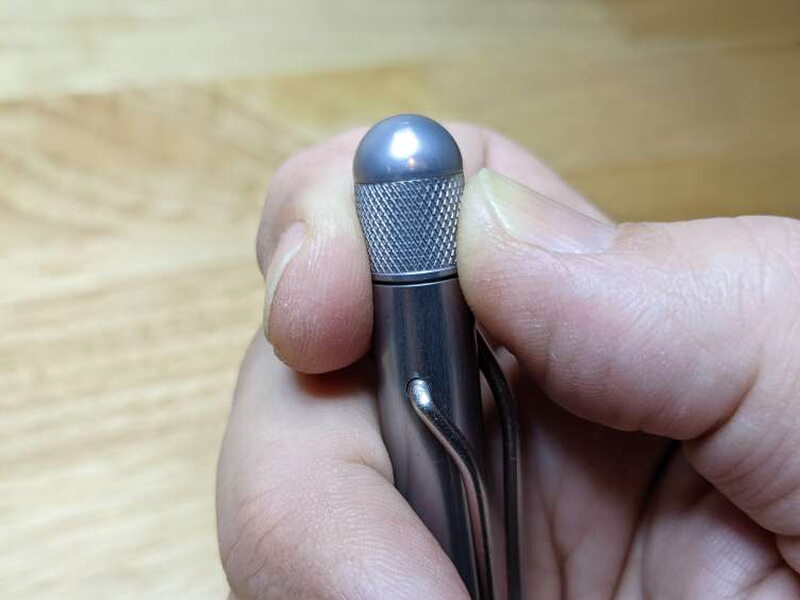
The cap itself was always easy to trigger but never so loose that it popped open or closed on its own in my pocket.
The Slim with its Parker refill was just as enjoyable to write with as the Compact. The narrower diameter paired well with the gentler texture, needing even less pressure to stay in control, and the titanium body stayed cool and grippy without ever turning slick. It’s the right weight and length for a long writing session and never once felt like a burden.
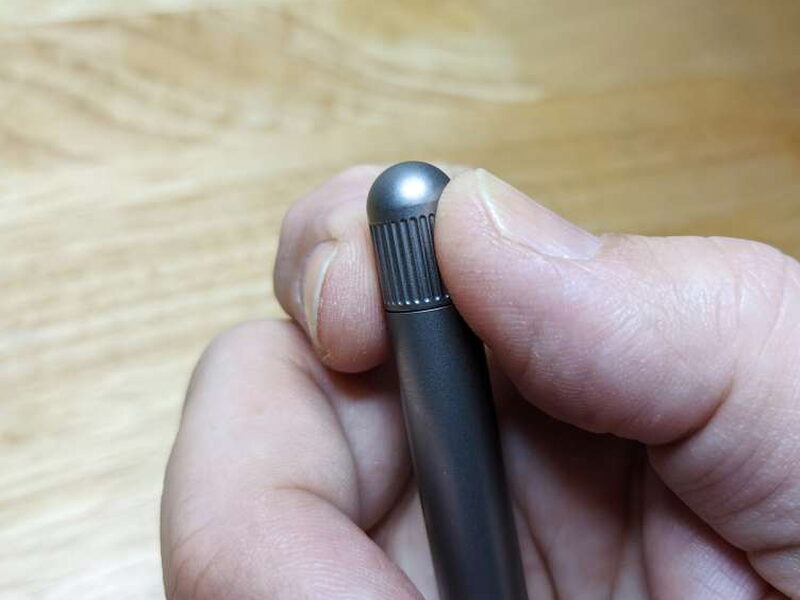
Fiddling with that cap is fun, but without the Super Clip the whole pen tends to rotate in your hand unless you’re gripping it deliberately, and it’ll roll off an uneven surface if you’re not paying attention.
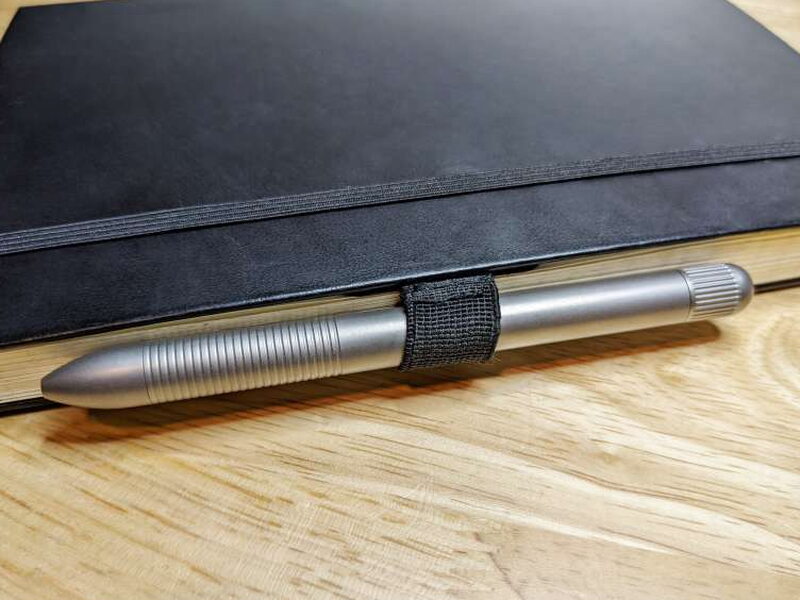
The upside of going clip-free is that the Slim slides right into my notebook’s elastic pen loop, something the thicker, clip-equipped Compact can’t manage.
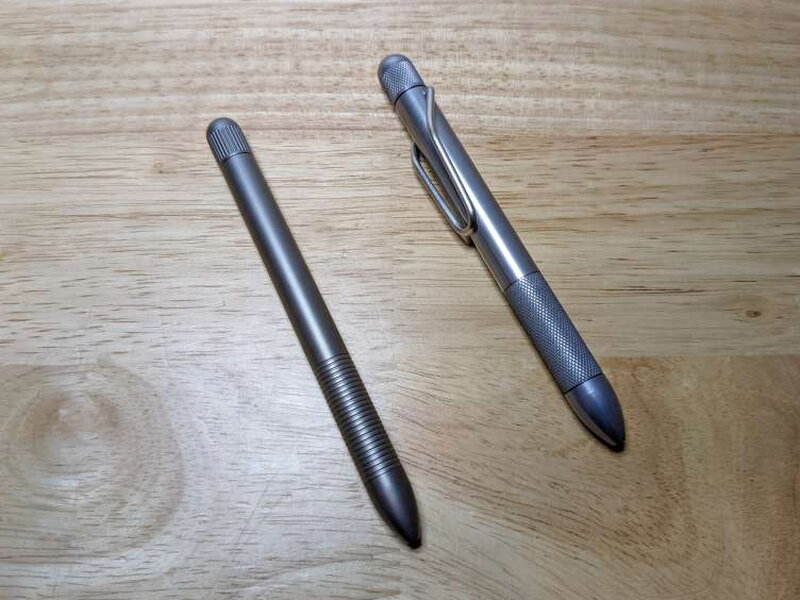
After spending real time with both, my only actual problem is deciding which one to reach for on a given day.
The Good
- Outstanding workmanship
- Incredibly light
- Compatible with many popular refills
The Not So Good
- Compact’s Super Clip is a bit too large
- Clipless Slim Pen tends to roll
- Might be expensive for some
Quick Questions
Q: Does the Slim Pen have a pocket clip?
A: No, the Slim skips the clip entirely, which lets it slide into a notebook’s elastic pen loop but also means it can roll off an uneven surface.
Q: What refills are compatible?
A: A long list including Parker, Fisher Space Pen, Schmidt easyFLOW 9000, Retro 51 Tornado, and roughly two dozen other popular refill types.
Q: How much do the pens weigh?
A: Both the Compact and Slim weigh about 30 grams.
Q: What’s the mechanism for opening and closing the pen?
A: RIIND’s Continuous Cam, which opens or closes the pen no matter which direction you twist it.
The Verdict
The RIIND Compact and Slim both earn their place next to the original RIIND Pen. Dropping the clip and trimming the diameter makes the Slim the better call for smaller hands or anyone who’d rather skip a clip altogether. The Compact keeps everything that made the original a favorite — clip included — in a slightly shorter package. Between the light anodized aluminum, the titanium option, and refill compatibility this wide, either pen holds up during long writing sessions. And since the Compact and standard Slim both undercut the original Pen’s price, that’s one more reason to pick one up.
Price: The Slim Pen $69 / The Slim Pen (Titanium) $119 / The Compact Pen $89
Product Link: Kickstarter
Source: The sample of this product was provided by RIIND.


