
REVIEW – My soft spot for Midland gear goes way back. When I was a kid, my dad would let me grab the microphone in his 1966 Volkswagen Beetle and ask passing truckers for a radio check. It felt like a tiny cameo in Smokey and the Bandit, and it permanently wired me to enjoy radios, push-to-talk buttons, and the simple magic of talking without a phone tower in the middle.
The Midland GXT67 Pro GMRS 5-Watt Two-Way Radio taps directly into that same feeling, but with a much more modern, rugged package. It is a compact GMRS handheld with a practical accessory bundle, weather features, repeater support, and a design that does not feel like it requires a radio hobbyist manual just to change a setting. At $199.99, it is not a budget impulse buy, but the radio, chargers, case, and overall build quality make the price easier to understand.
The Basics
The Midland GXT67 Pro is a 5-watt GMRS two-way radio with 22 channels, privacy codes, NOAA weather channels, weather alerts, and an IP67 waterproof and dustproof rating. Midland advertises up to a 50-mile range, though, as with any handheld radio, real-world distance depends heavily on terrain, buildings, trees, and elevation.
One important note before anyone starts transmitting: GMRS radios require an FCC license in the United States. The license is easy to apply for through the FCC, and it covers a family rather than only one radio, but you still need to have it before using the GXT67 Pro on GMRS frequencies.

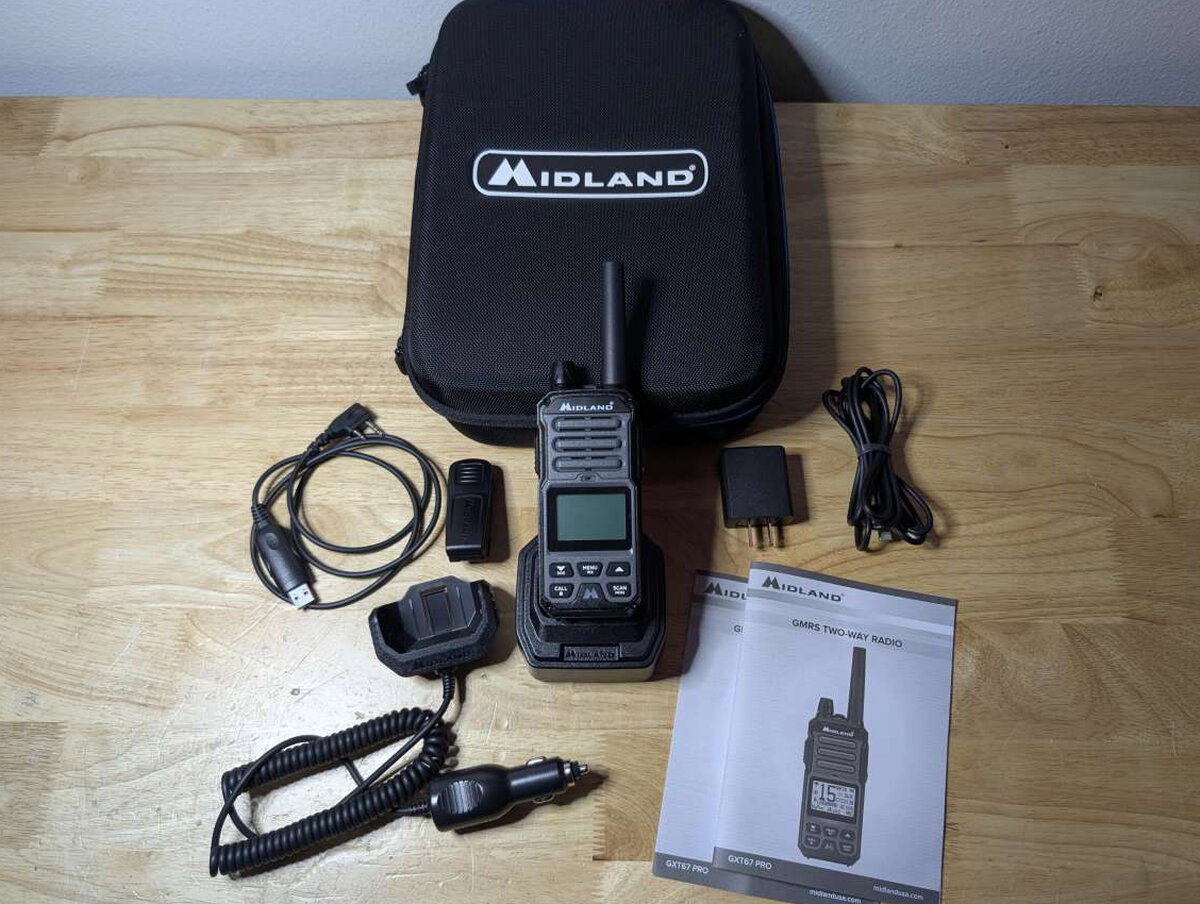
What You Get
- Midland GXT67 Pro GMRS 5-Watt Two-Way Radio
- Belt clip
- Desktop charger
- AC wall adapter
- USB-C charging cable
- Snap-on DC vehicle charger
- Owner’s manual and quick-start guide
- Carrying case
By the Numbers
- 22 GMRS Channels + 142 Privacy Codes
- 28 Midland Preset Channels
- 8 Repeater Channels
- “Split tone” capable for repeaters that have a different privacy code for input and output
- 10 NOAA Weather (WX) Band Channels
- 38 CTCSS (Continuous Tone-Coded Squelch System)
- 104 DCS (Digital Coded Squelch)
- 10 groups, 143 group codes
- Microphone Automatic Noise Canceling (ANC)
- 16-hour battery life based on average operating cycle
- Operating Frequency: UHF 462.5500 ~ 467.7125 MHz
- Power Source: 7.4V 2500mAh Li-Ion Battery
- USB-C and 12VDC socket recharging
- IP67 waterproof and dustproof
- VOX hands free
- Group and direct call
- 10 selectable call alert tones
- Vibrate alert and whisper talk
- SOS siren
- High / Medium / Low TX Power Settings
- Selected channel scan and Dual Watch Pro
- Backlight off or 5 brightness levels plus, 7 backlight colors
- Battery Level Meter with Low Battery Indicator
- Narrow and wide band operation
- Silent operation, keypad lock, monitor and roger beep
- Dimensions: 1.5″D x 2.2″W x 4.9″H
- Weight: 9.6 ounces
Design and Build
The first thing I noticed about the GXT67 Pro is that it looks more approachable than many GMRS handhelds. The shape is clean, the body is chunky without feeling oversized, and the controls are arranged in a way that makes sense right away. Midland also made the smart choice to put the display below the speaker, so the radio lines up more naturally with your mouth while you are talking.
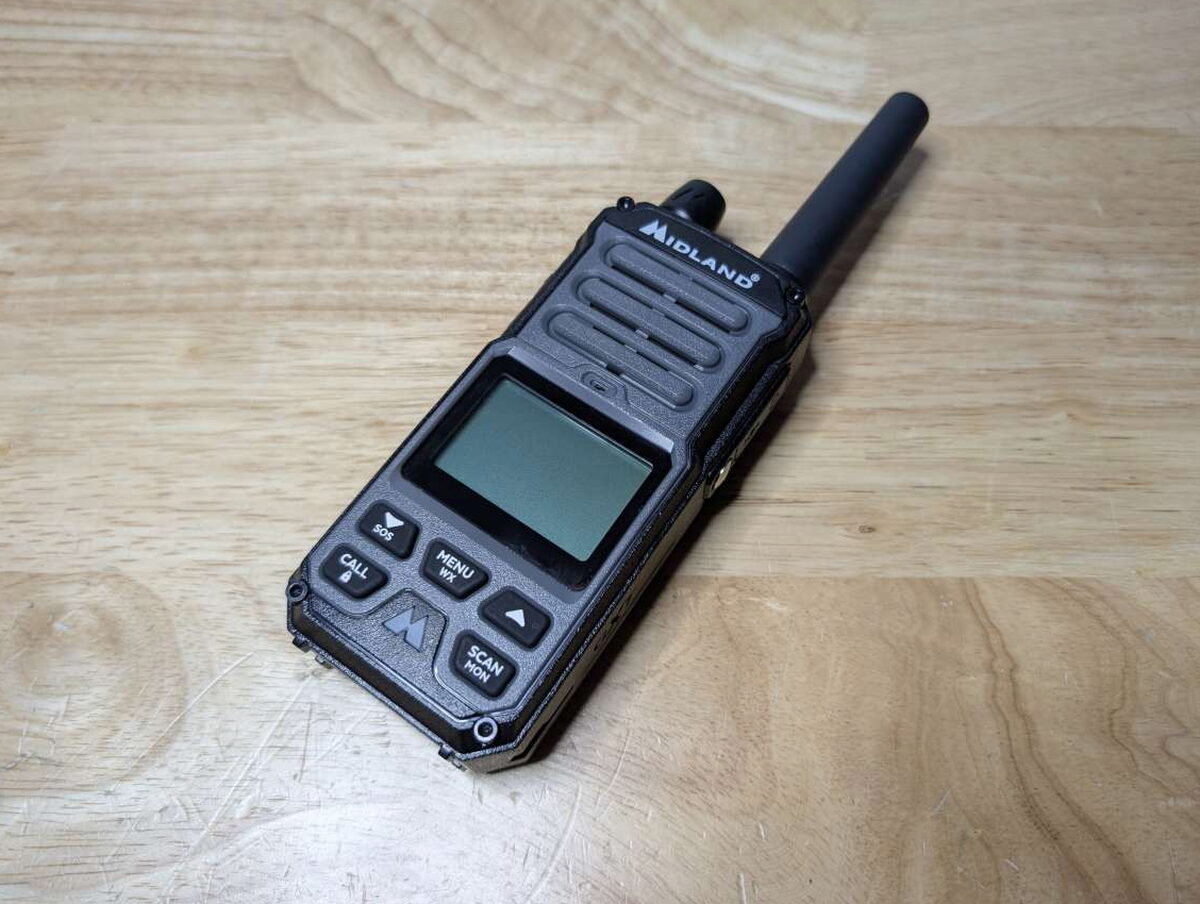
The shell is made from two-tone textured ABS plastic. That texture matters because a radio like this is likely to be used with dusty hands, wet gloves, or while bouncing around outside. The raised edges and rubberized feel give it more confidence in the hand than a slick plastic walkie-talkie.
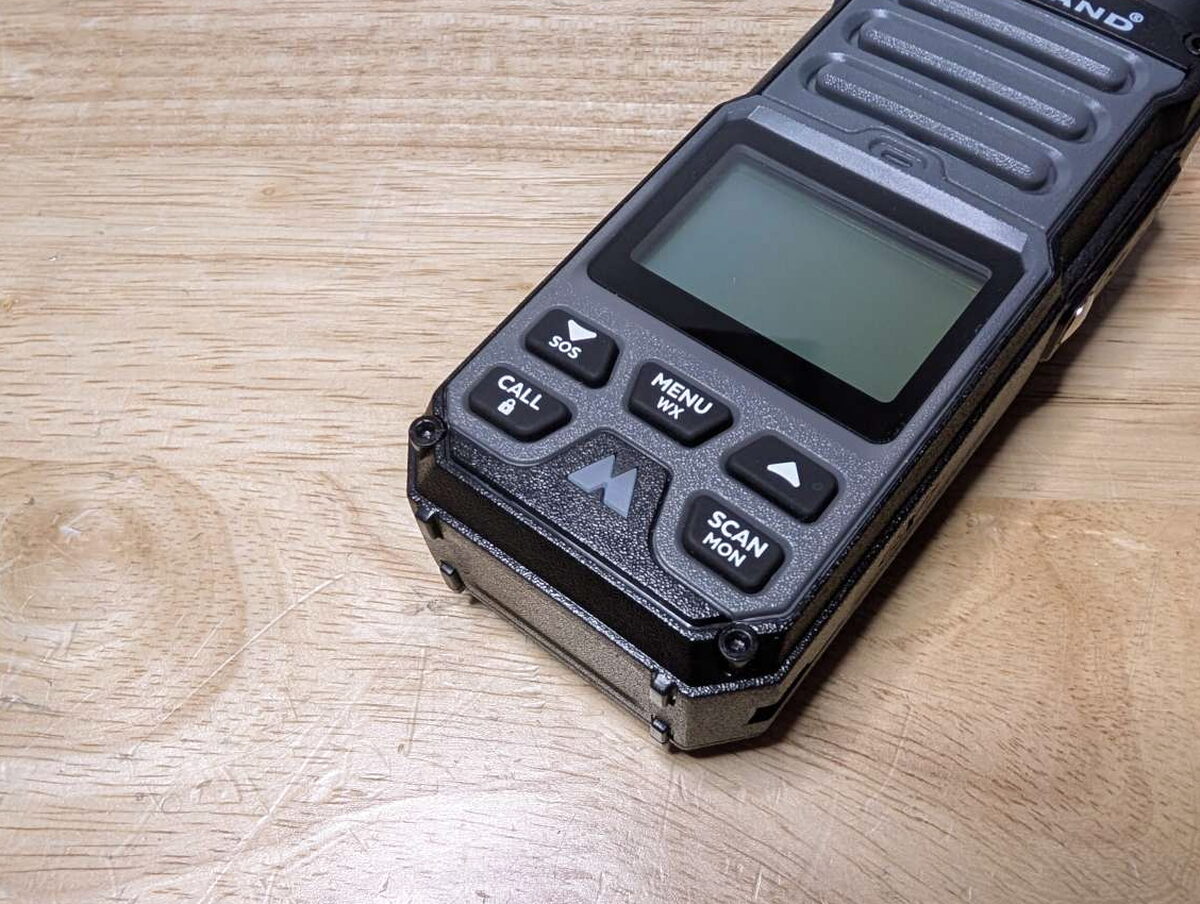
The front buttons are large, rubbery, clearly marked, and easy to press. They have enough click to confirm an input without feeling mushy, which is exactly what I want on a radio that may be used without staring at it every second.
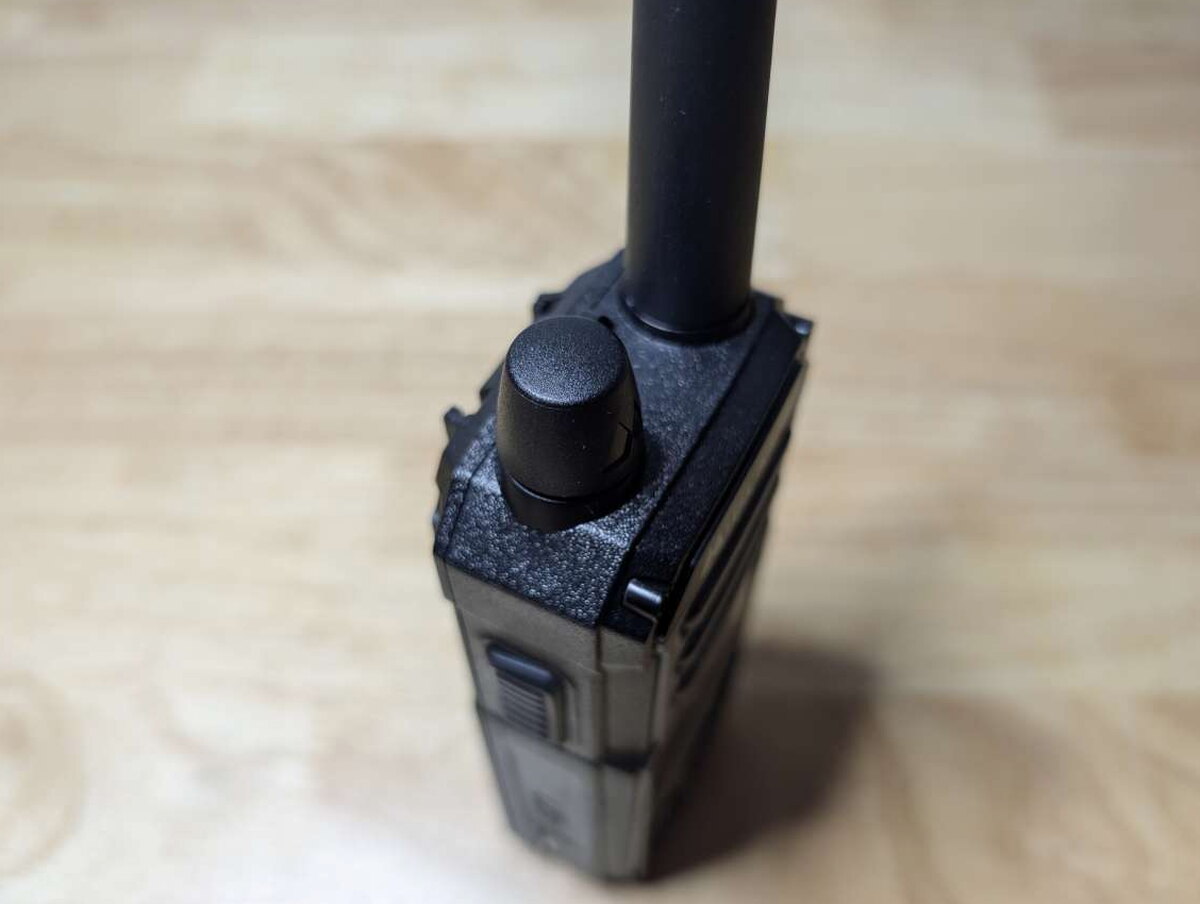
On top, the large rotary control handles power and volume. The antenna is also up there, and it is thick, sturdy, and permanently attached. That fixed antenna helps keep the design simple, but it also means you cannot swap antennas later if you want a different setup.
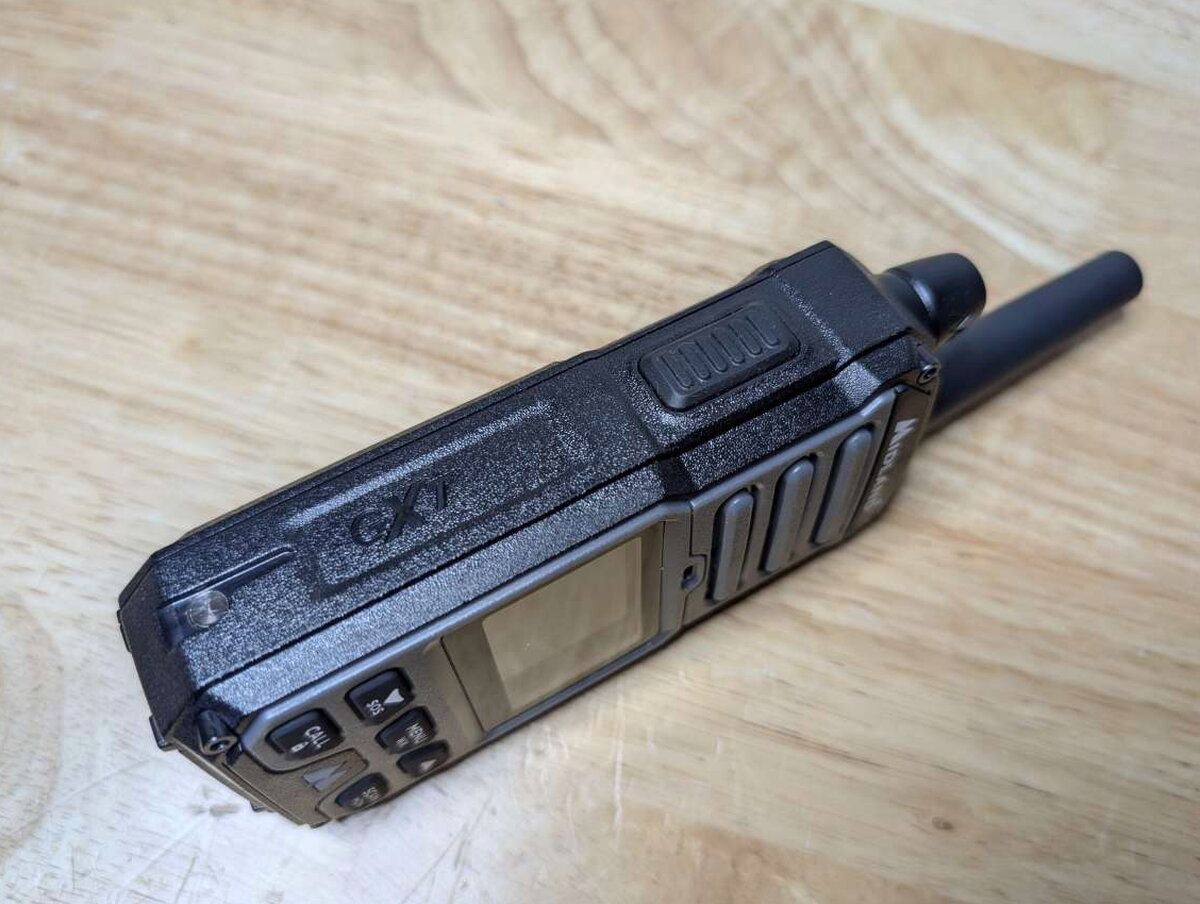
The side-mounted Push-to-Talk button is easy to find by feel. It is big, textured, and placed where my thumb naturally landed when holding the radio.
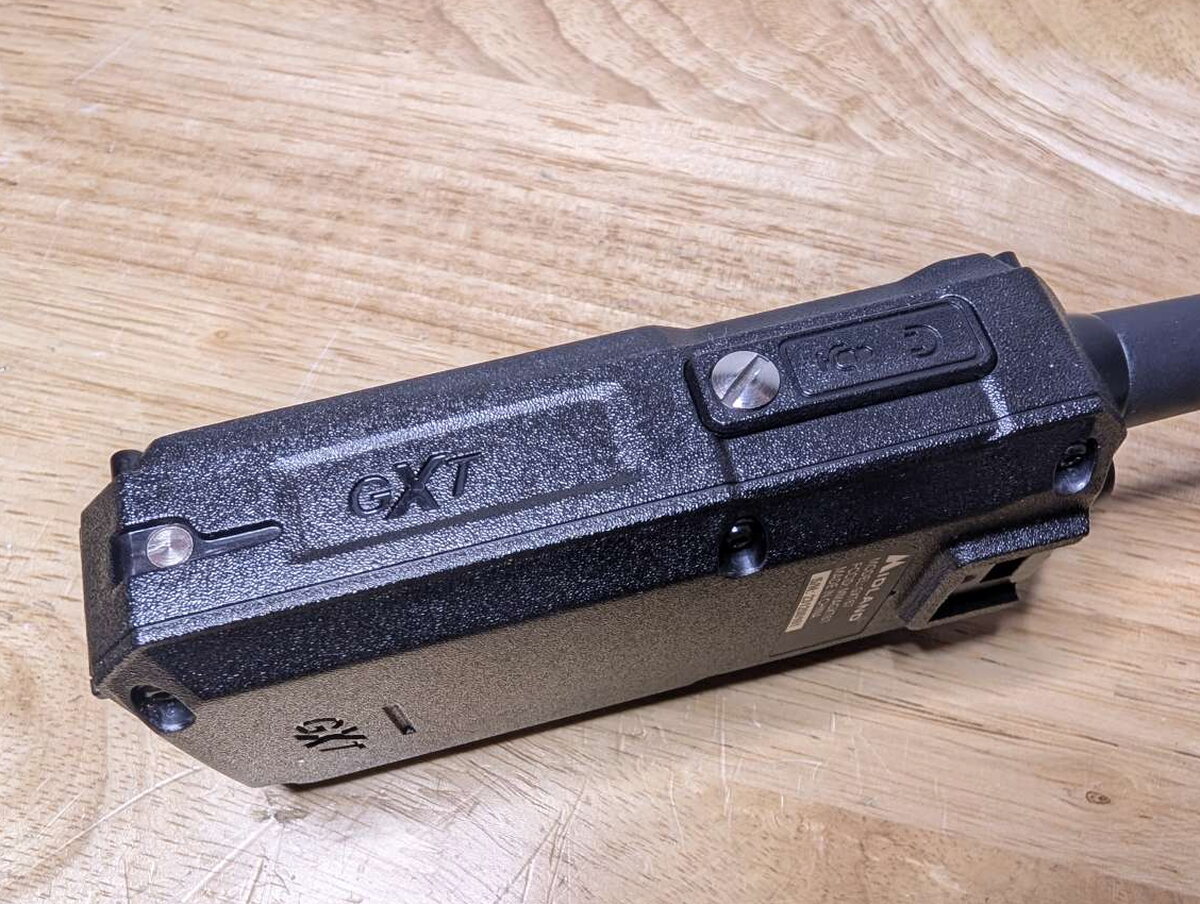
The opposite side houses the external microphone and headphone ports. Midland protects them with a removable cover that helps preserve the radio’s IP67 rating.
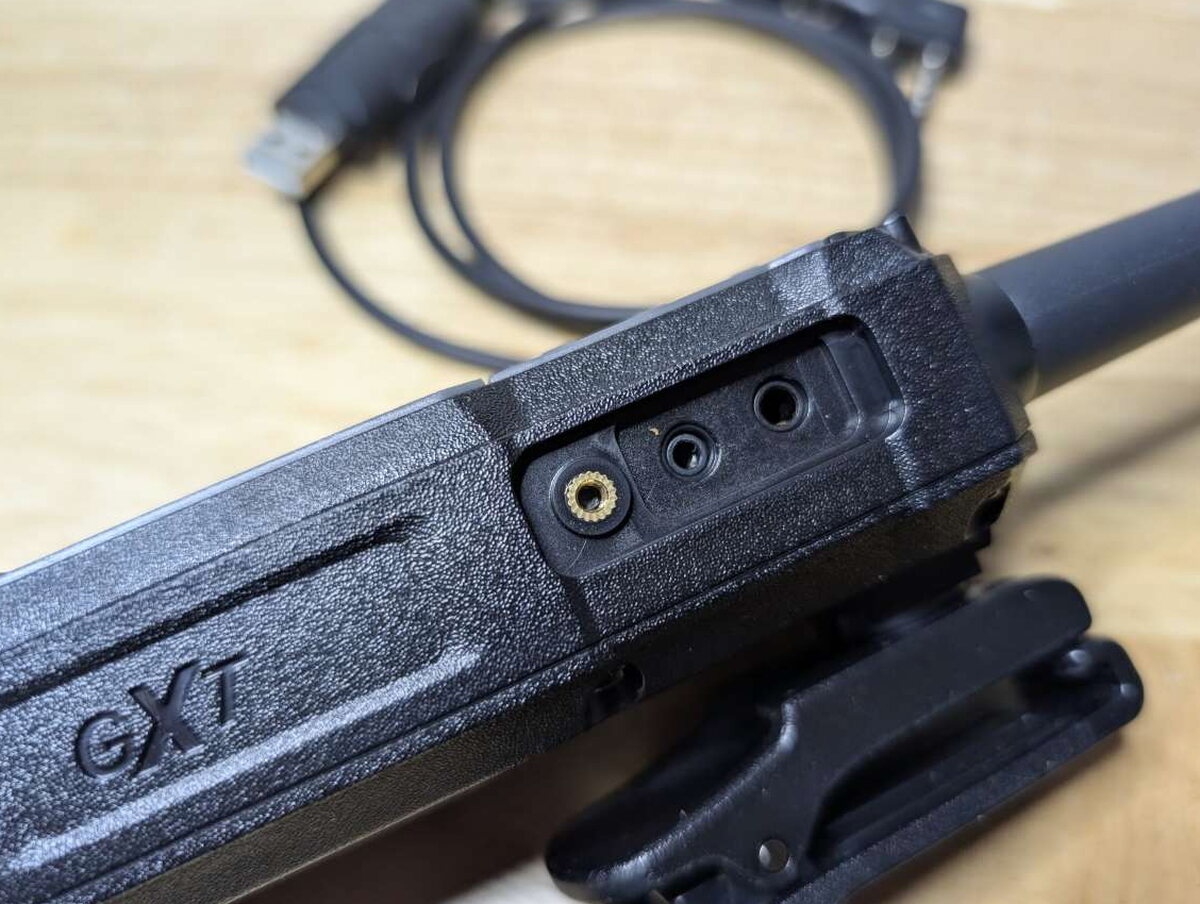
That cover is held in place with a small flathead screw. I like the security of the seal, but I do not love that the cover is not tethered. A loose waterproofing cover is exactly the sort of small part that can disappear at camp or roll under a vehicle seat.
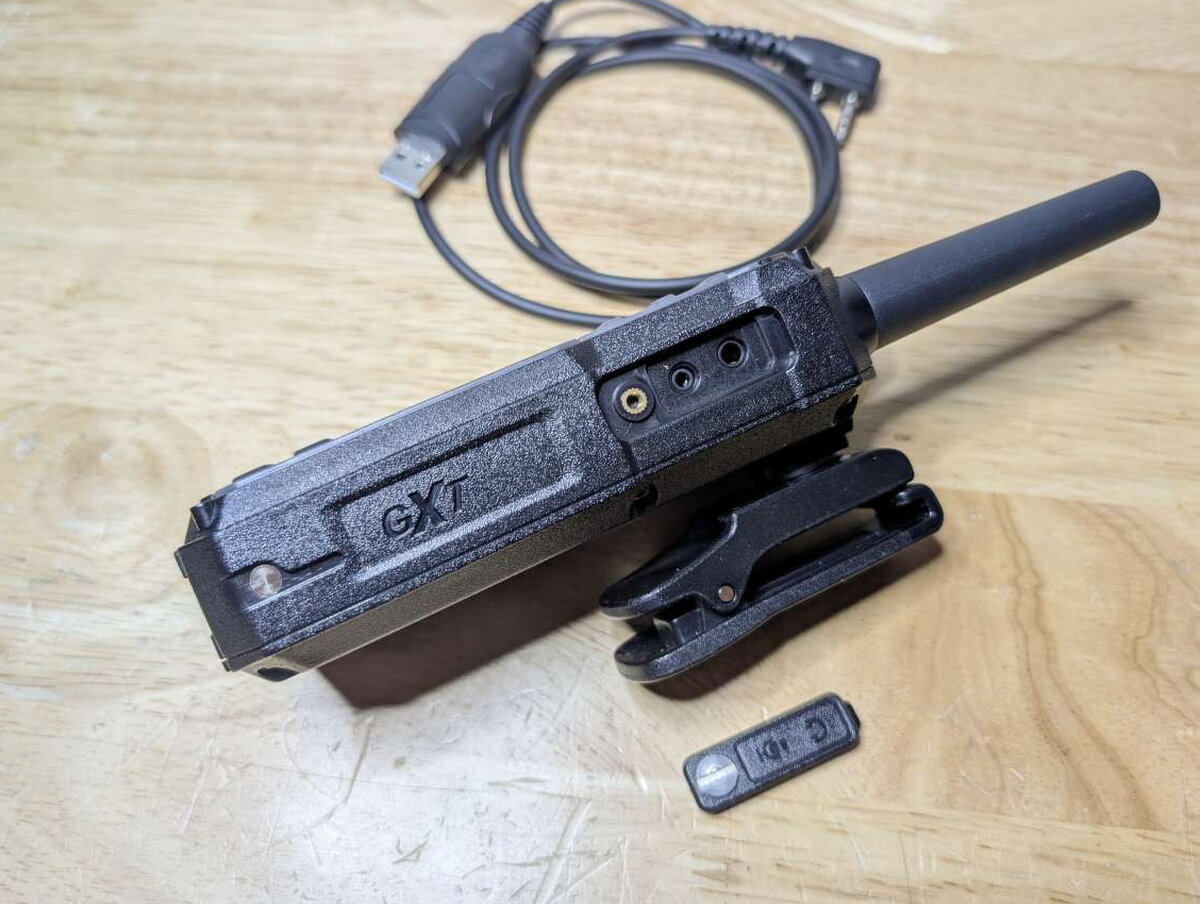
Once removed, the port cover exposes the connector area used for audio accessories and computer programming. It works, but keep track of that small cover if you want the radio to stay properly sealed.
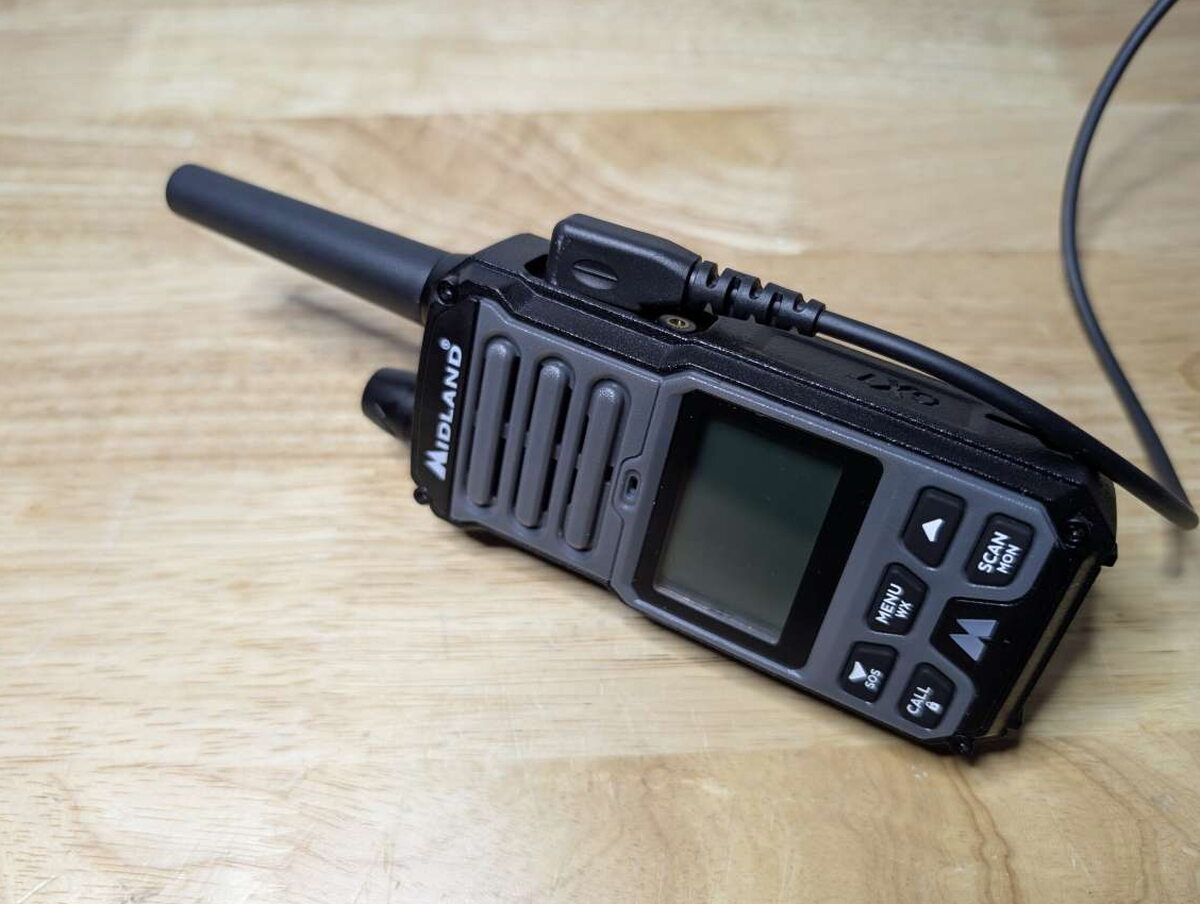
Programming requires Midland’s optional GXT67 Pro Programming Cable. With the cable and the Midland software on a PC, you can save configurations, reload setups, create up to 49 custom channels, and assign channel names up to 8 letters or numbers. That extra control is especially helpful if you are matching radios across a vehicle group or family setup.

The software side is not required for basic use, but it is nice to have. It turns the GXT67 Pro from a simple handheld into something that can be tailored more neatly for regular use with repeaters, named channels, or multiple radio users.
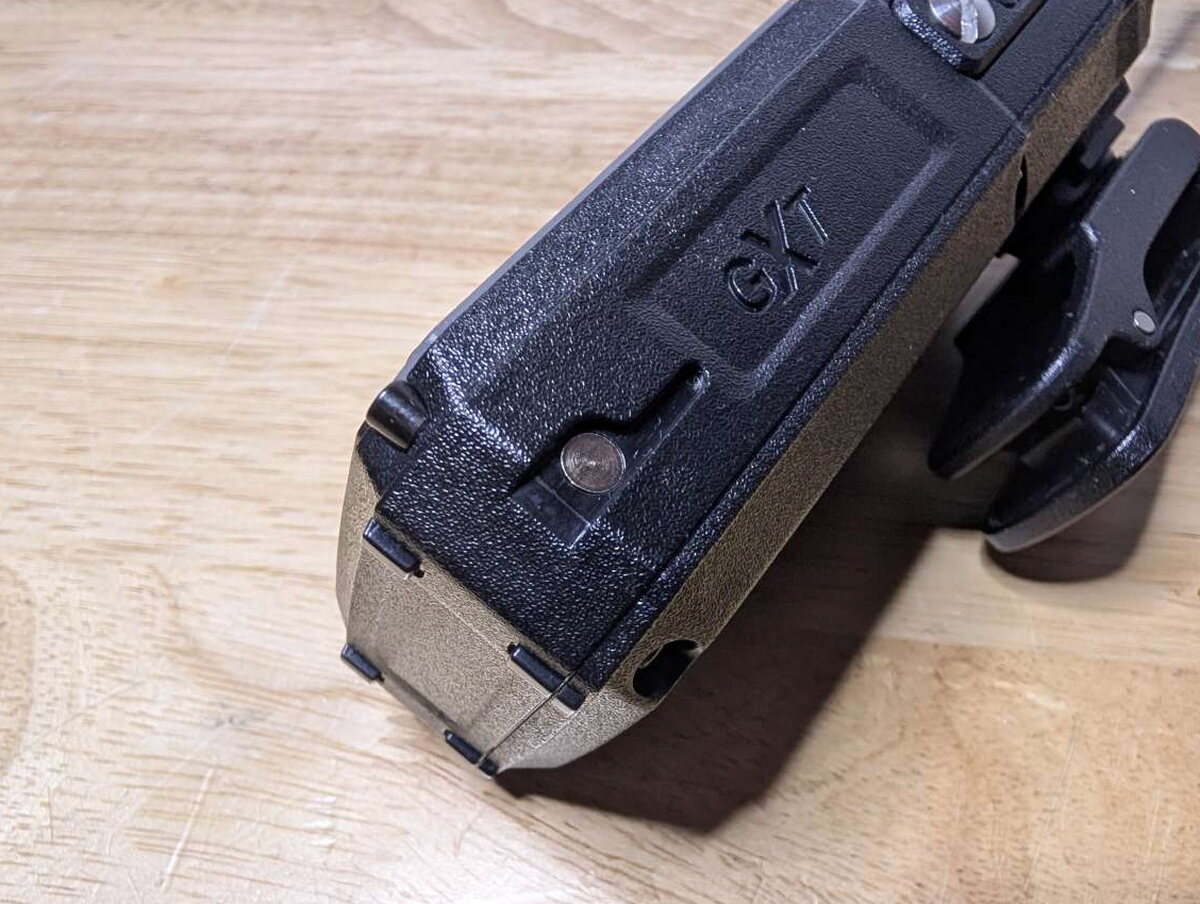
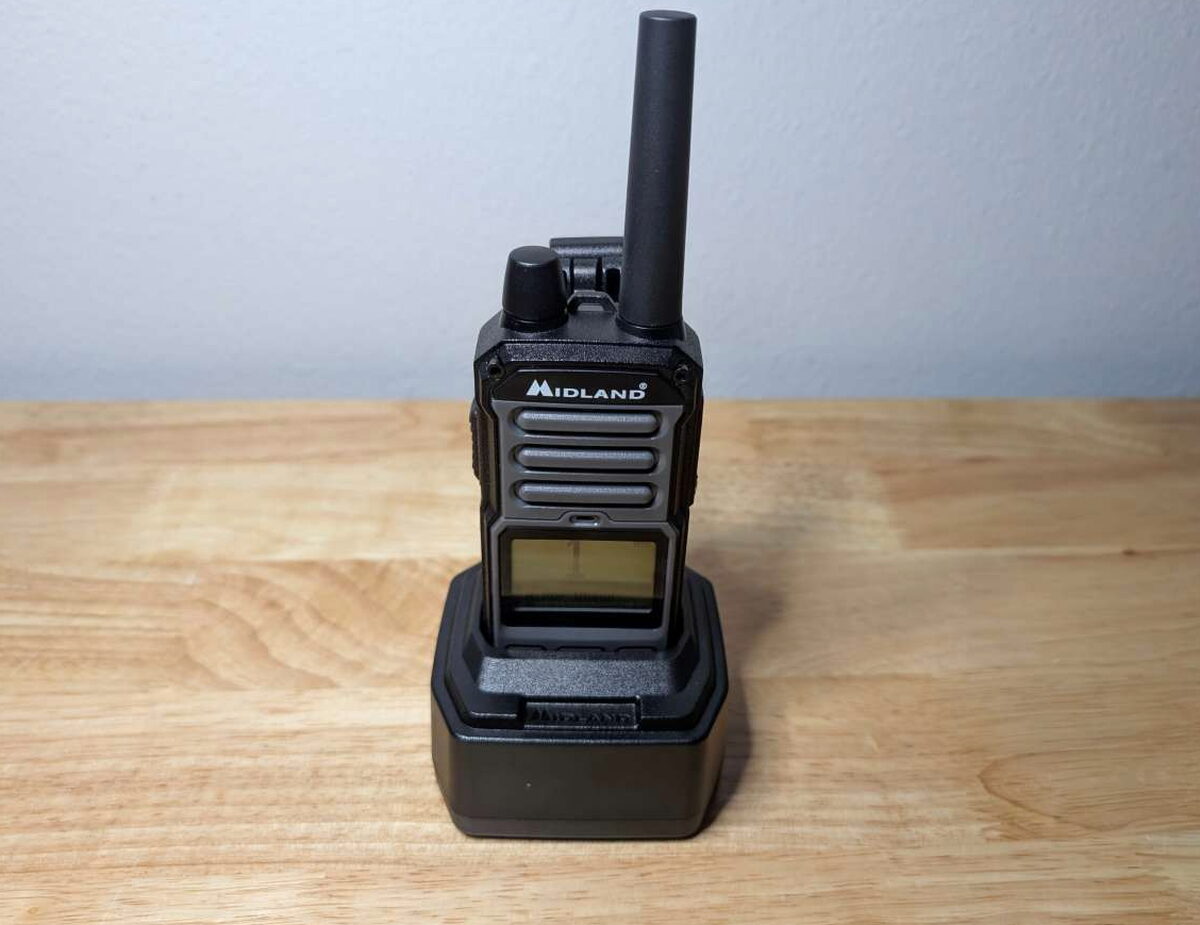
Charging contacts are located low on the radio so the included docks can make a solid connection. The recessed channels around the contacts are deep enough that the radio seats confidently instead of wobbling around on the charger.
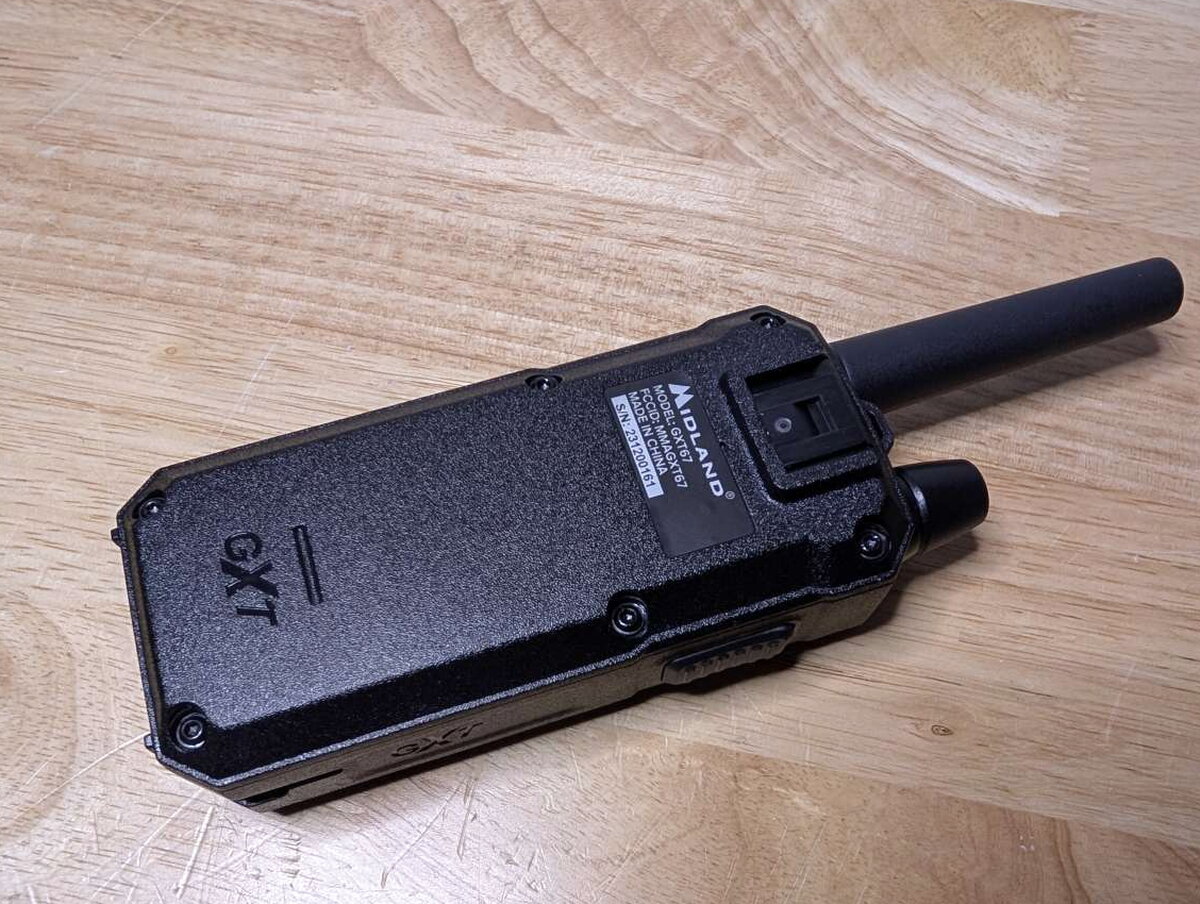
The back of the radio is fairly plain, with the serial number area and the belt-clip mounting slot doing most of the work.
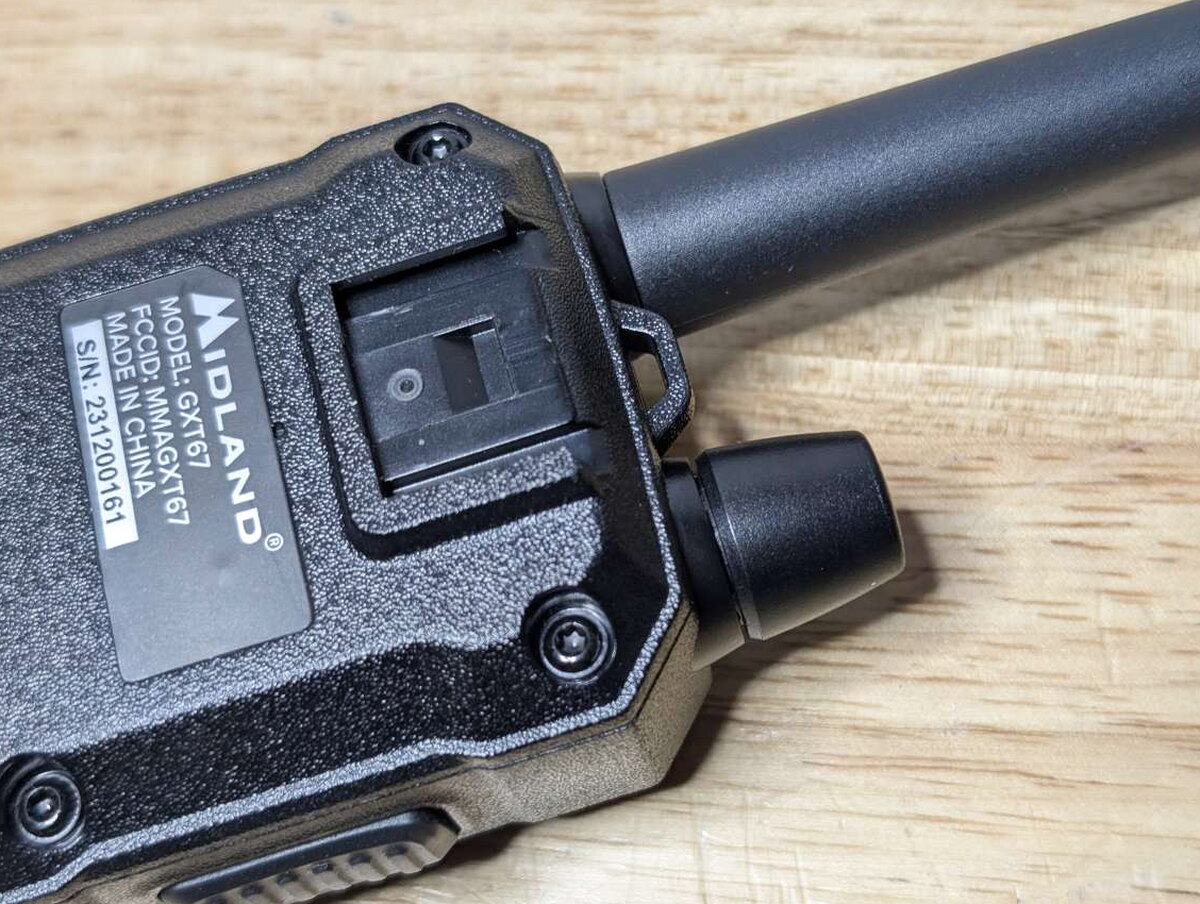
There is also a small lanyard loop above the belt-clip slot. It is a small detail, but a wrist strap or lanyard can be useful when climbing in and out of vehicles or walking around camp.
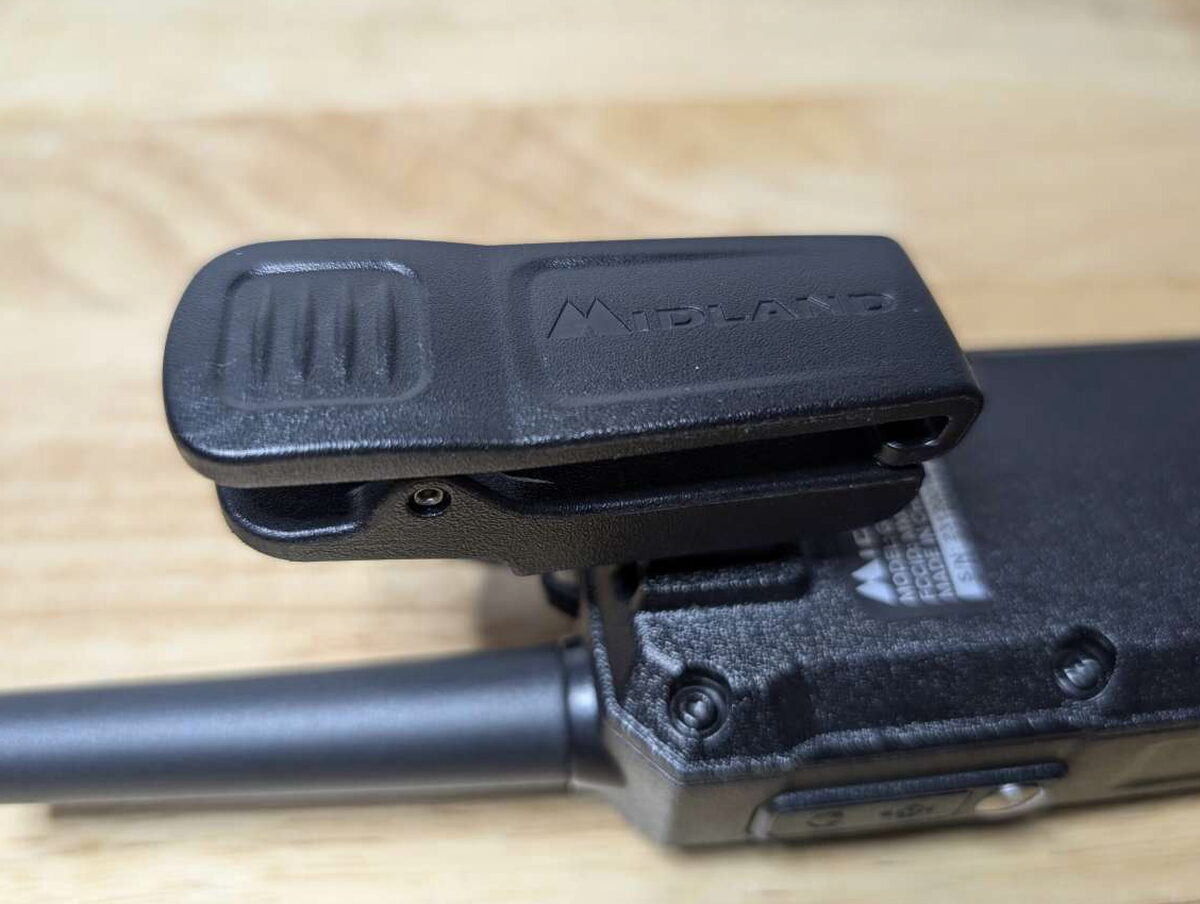
The included belt clip snaps on quickly and rotates, giving you several carry positions. I like that it feels like a real accessory rather than an afterthought.

The carrying case is one of the better surprises in the package. Instead of a flimsy pouch, Midland includes a structured zip case that holds the radio, chargers, cords, and accessories with room left over.
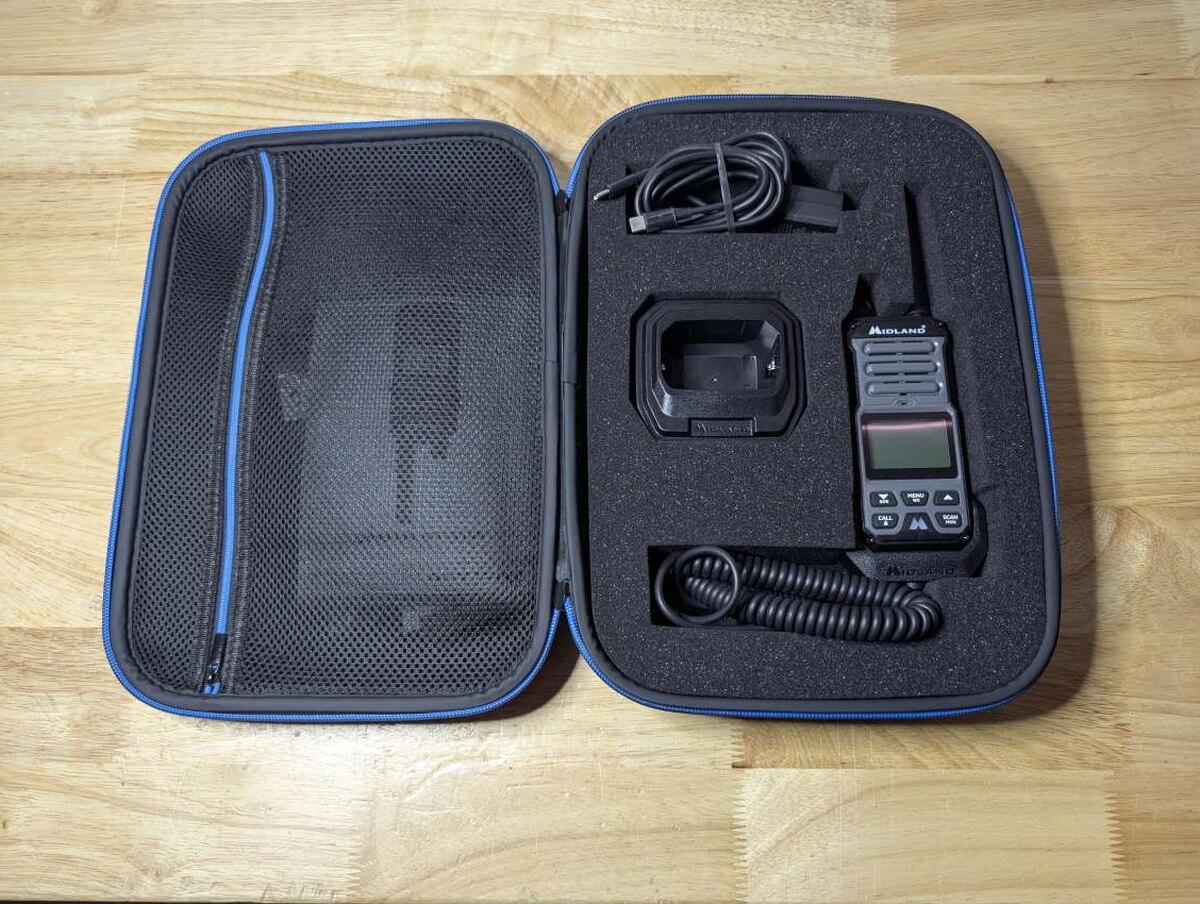
Inside, foam cutouts keep the main pieces from bouncing into each other, and a zippered pocket handles the smaller bits. For anyone who stores communication gear in a vehicle or overlanding bin, this case is genuinely useful.
Charging and Battery
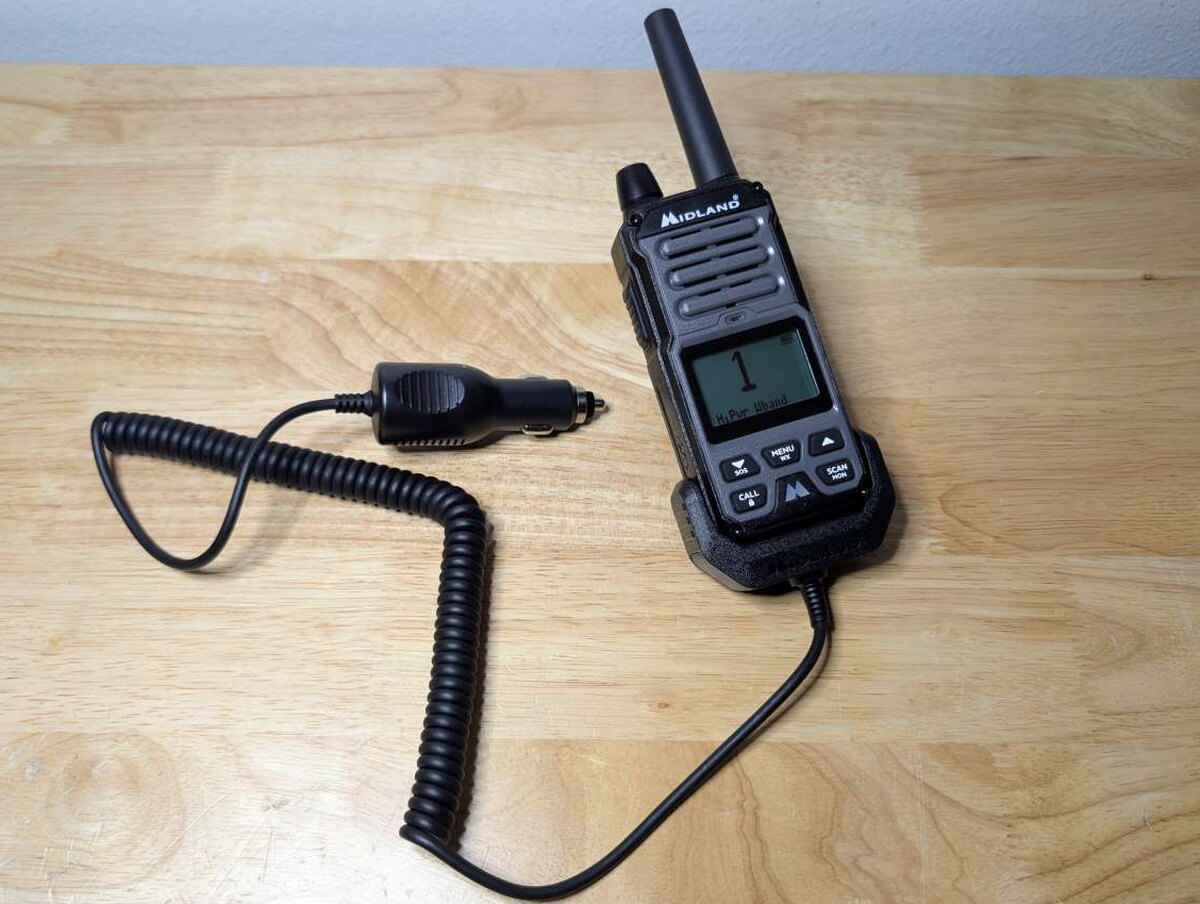
The GXT67 Pro uses an internal rechargeable battery. You can charge it with the desktop charger or with the included vehicle charger, which means it works at home, in the garage, or while traveling.
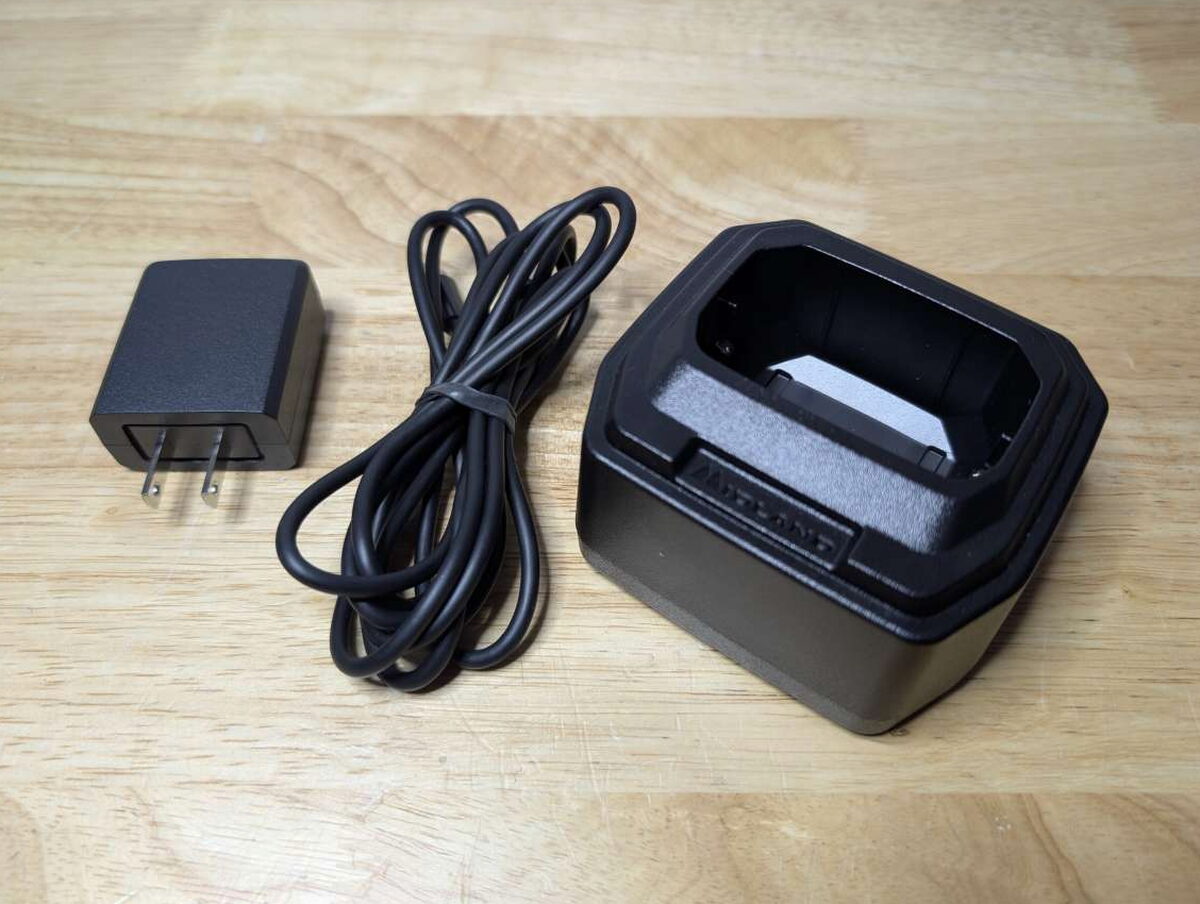
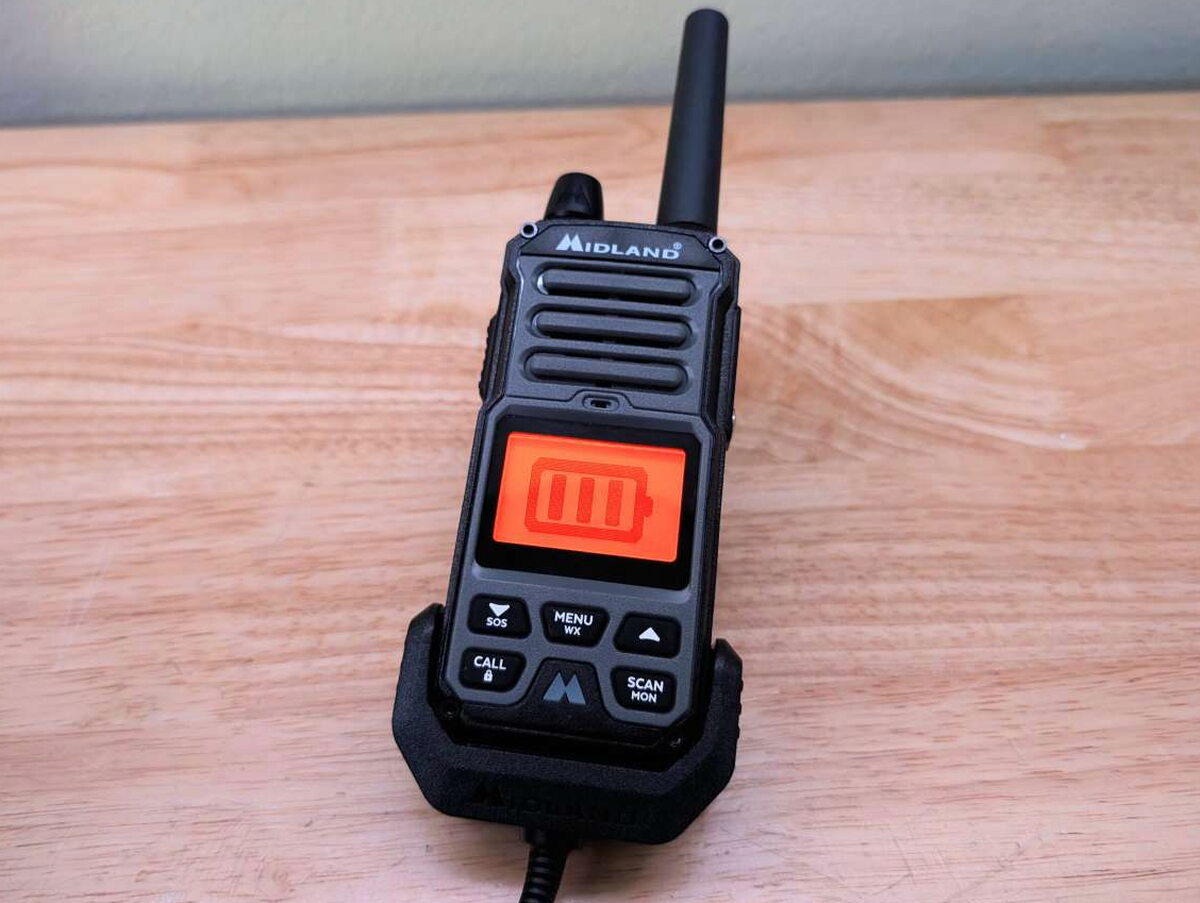
The desktop setup includes a USB wall adapter and USB-C cable. Midland rates the radio for up to 16 hours of operation based on an average duty cycle, up to 4 days on standby, and about a 4-hour rapid charge time. You can charge it while the radio is powered on, but charging takes longer that way.
The sealed battery is also my biggest complaint. Midland says the battery is designed to last for the radio’s serviceable life, described as several years, and the sealed compartment helps maintain waterproofing. Still, I strongly prefer radios with batteries I can replace, especially for gear I plan to keep in an emergency or overlanding kit.
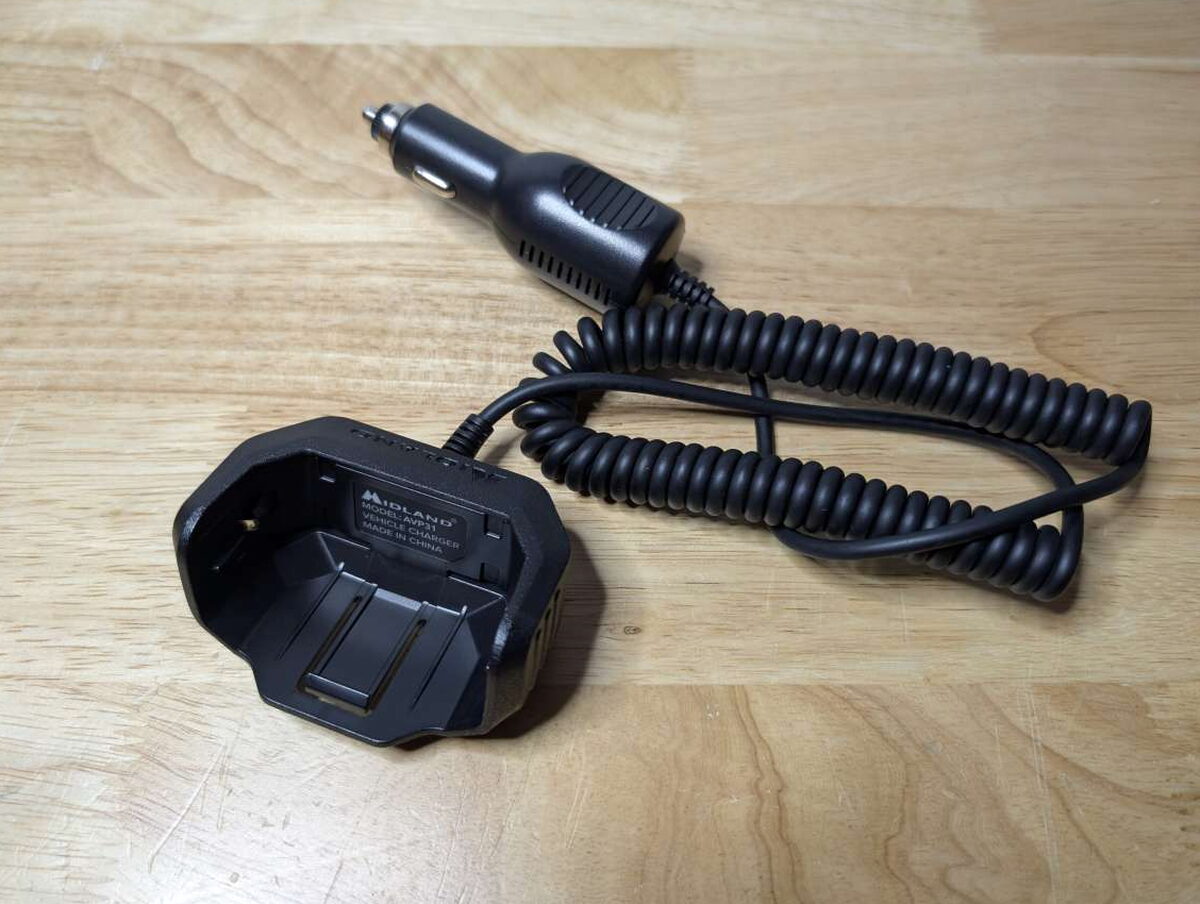
The vehicle charger includes a small dock connected to a coiled cord and a standard 12V DC plug. It is a smart inclusion because handheld radios are often most useful when you are already away from a wall outlet.
Setup
Getting started with the GXT67 Pro is straightforward. Charge the battery, power the radio on, choose your channel and privacy settings, and adjust the preferences you care about. I turned off the menu beep almost immediately and spent a little time dialing in the screen color and brightness.
The menus are much more welcoming than the nested settings on many cheaper radios. That matters if you are handing radios to friends or family who need communication, not a crash course in radio programming.
Using the GXT67 Pro
In daily use, the GXT67 Pro feels like a radio designed for people who want reliable communication more than endless tinkering. The buttons are obvious, the menus are readable, and the 5-watt output gives it enough punch for real outdoor and vehicle use.
On open, flat ground, I found that several miles of clear communication is realistic. Midland’s maximum range number is best understood as an ideal-condition figure, not what you should expect in woods, neighborhoods, hills, or cities. Trees, buildings, and terrain cut range quickly, but the GXT67 Pro still sounded clear and dependable in the conditions where I used it.
It paired well with my Midland MXT500 MicroMobile radio, which is exactly how I would use it on trips. The vehicle-mounted radio can handle base or lead-vehicle duty, while the GXT67 Pro is easy to hand to someone walking around camp, spotting a trail obstacle, or riding in another vehicle.
The 8 repeater-capable channels are also a big advantage. If you have access to a compatible GMRS repeater, the radio can reach much farther than direct handheld-to-handheld communication. The split-tone capability is especially useful because many repeaters use different privacy tones for input and output.
Group mode is handy when more than two people are using radios. You can organize users into groups and send alerts to one group or all users sharing the same group code. For a family trip, work crew, or overlanding convoy, that kind of organization can keep radio chatter more manageable.
The built-in NOAA weather radio became one of those features I used more than expected. You can listen to current weather information or leave the radio ready to warn you about severe weather and civil alerts. For outdoor travel, that is not a gimmick; it is practical situational awareness.
The Good
- Menus and controls are easy to understand
- Rugged IP67 build feels ready for outdoor use
- Desktop charger, vehicle charger, and case are included
- NOAA weather, repeater support, and group functions add real utility
The Not So Good
- Battery is not removable or replaceable
- Antenna is not removable or replaceable
- Optional programming cable costs extra
- Price is higher than many basic GMRS handhelds
Quick Questions
Q: Is a license required to use the Midland GXT67 Pro?
A: Yes, GMRS radios require an FCC license in the US, though it covers a whole family rather than just one radio.
Q: Can the battery be replaced?
A: No, that’s a real complaint in the review; the battery is sealed and not user-swappable.
Q: What’s the claimed battery life?
A: Up to 16 hours of operation on an average duty cycle, with about a 4-hour rapid charge time.
Q: Does it support repeaters?
A: Yes, 8 repeater-capable channels, including split-tone support for repeaters that use different privacy codes for input and output.
The Verdict
The Midland GXT67 Pro GMRS 5-Watt Two-Way Radio is a polished, beginner-friendly handheld that still has enough capability to earn a spot with more serious outdoor gear. It is easy to operate, feels rugged, includes accessories I would actually use, and works well alongside other Midland GMRS radios like the MXT500 MicroMobile.
I wish Midland had made the battery and antenna replaceable, and the price will push some buyers toward cheaper radios. Even so, the overall package is strong. If you want a GMRS handheld for camping, overlanding, family travel, emergency prep, or keeping a crew connected without making everyone learn radio programming, the GXT67 Pro is an excellent option.
Price: $199.99
Product Link: Midland
Source: The sample of this product was provided for free by Midland.
Midland did not have a final say on the review and did not preview the review before it was published.


