
REVIEW – Repairing your own gear has only become more appealing as prices rise and parts get harder to find. I already do a fair amount of automotive work myself, but the right tool can be the difference between a quick afternoon job and a lot of scraped knuckles. An electric ratchet wrench has been on my list for exactly that reason. These tools are made to speed through long fasteners in tight places, and the Hammerest Electric Ratchet Wrench did help with that. The problem is that the $89.99 kit felt rougher, cheaper, and more used than I expected from something sold as new.
Why an Electric Ratchet Helps
The Hammerest is a 12 V battery-powered ratchet with a 3/8 in. drive. Think of it as a normal socket wrench with a powered head. You still use hand tools to break stubborn hardware loose, but once a bolt is moving, the Hammerest spins it off far faster than a standard ratchet in places where there is not enough room to swing a handle.

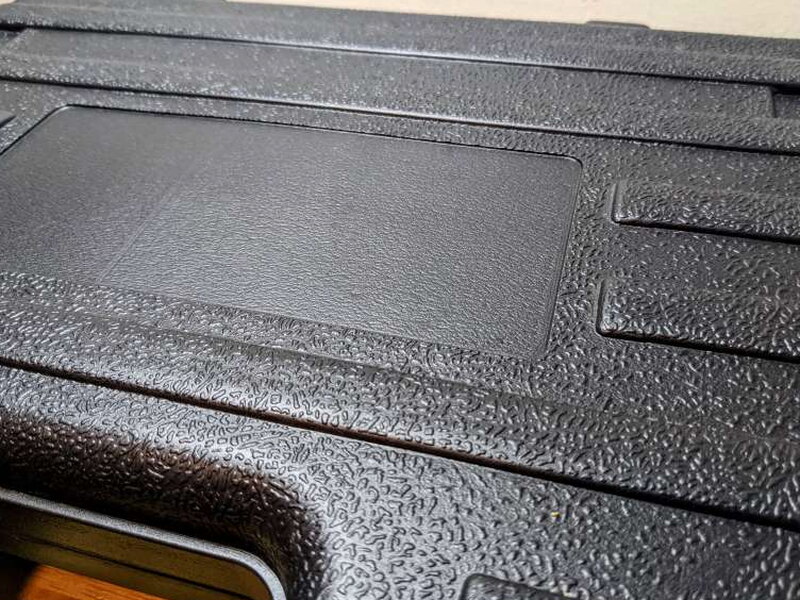
The first impression is unusually plain. The wrench arrived in a basic cardboard shipping box, and the molded plastic case inside had no Hammerest branding or markings on the outside.

In the Case
Inside the case you get the wrench itself, a 12 V lithium-ion battery, a 12 V power supply, seven six-point metric sockets, and a 1/4 in. adapter. The included sockets are 10 mm, 11 mm, 12 mm, 13 mm, 14 mm, 15 mm, and 17 mm.

Specs and Claims
- Voltage: 12 V
- Stated torque: 40 ft-lb.
- Rotational head speed: 280 rpm
- Handle size: 12 x 10 x 3.5 in.
- Weight with battery: 1 lb. 14 oz.
- Battery life: 45 min to 60 min
- Charging time: 90 min

Hardware Tour
The design is familiar if you have handled other electric ratchets. The body is plastic, the head is steel, and the overall shape is narrow enough for automotive work around brackets, rails, and other tight areas.

The 3/8 in. head is the most useful size for a lot of car work, and it accepts the included sockets without needing extra adapters.

On the back of the head is the direction selector. Move it one way and the head turns clockwise for tightening. Move it the other way and it turns counterclockwise for loosening.

A spring ball on the drive helps hold sockets in place. It works like the retainer on a regular ratchet.

The sockets snap on firmly enough that they take some effort to remove. Under heavy strain, though, I did have a socket occasionally come loose from the head.

Four Allen bolts fasten the head assembly to the main body. Nothing about that attachment felt loose during use.

The grip is comfortable, especially once the battery is installed and the tool has a little more balance at the rear.

Controls are minimal. There is a trigger for the motor and an on/off slider that also acts as a safety lock by blocking the trigger.

When you pull the trigger, three colored LEDs on the handle show the remaining battery level.

Sockets and Storage
The molded case gives each accessory its own spot, including the seven metric sockets and the 1/4 in. adapter.

The metric sockets cover several common sizes, but the kit skips some other useful options.

The 1/4 in. adapter is included for smaller sockets, while the included sockets all connect to the 3/8 in. drive.

At $89.99, I would have liked to see more in the box. Common sizes such as 1/4 in., 3/8 in., 1/2 in., and 3/4 in. sockets, or at least an extension, would have made the package feel more complete.

The case also has dedicated molded sections for the wrench, charger, and battery.

Unfortunately, the case itself does not inspire much confidence. The red latches feel cheap, and the plastic seems easy to damage.

The outside has a textured finish, but again there is no visible branding anywhere on the shell.
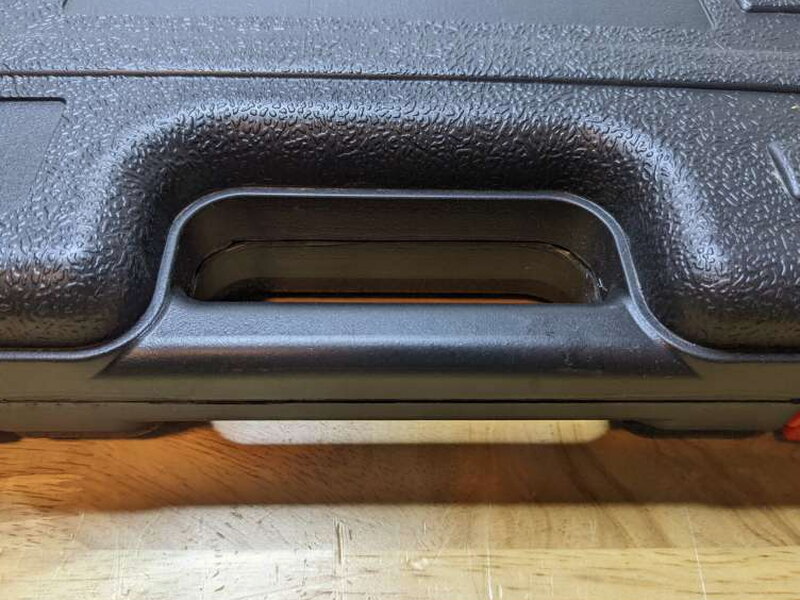
A molded handle makes the kit easy to carry from a shelf to the garage or out to the vehicle.
Battery and Charging
Hammerest includes a basic 12 V wall power supply with a barrel-style plug for charging the battery pack.

The charger plugs into a small port on the top of the removable battery.
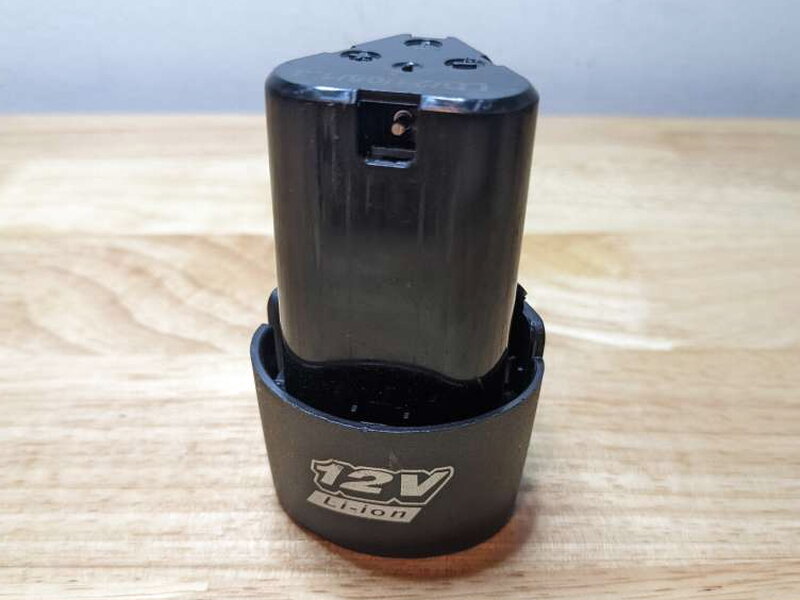
The battery slides into the end of the tool and locks with two side tabs. Its three-sided shape makes the insertion less obvious than it should be, and I found myself rotating it more than once before it seated correctly.

Condition Out of the Box
The biggest disappointment was not performance. It was condition. Every part of my supposedly new kit looked like it had already lived another life.

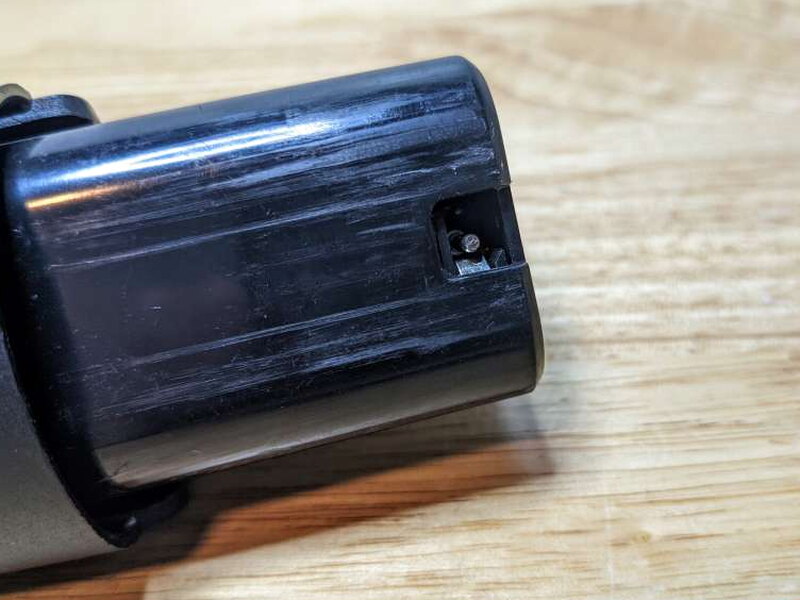
The interior of the case had visible wear and a broken section. The battery pack also showed plenty of scratches, as if it had been inserted and removed repeatedly.
The wrench itself had scuffs, scratches, and grease marks right away. For an $89.99 tool sold as brand new, that is not acceptable.

Setup
There is not much setup involved. Charge the battery, slide it into the handle, choose a socket, set the direction, and start working.

Using the included power supply, a full recharge from empty averaged about 90 minutes, which matched the stated charge time.
Garage Use
I used the Hammerest Electric Ratchet Wrench for about a month across several jobs. The main test was removing a pair of old rusty rock rails from my FJ Cruiser, a job I had avoided because the bolts were long, rusty, and tucked into cramped spots.

This was exactly the sort of task an electric ratchet is meant to handle. I still needed a regular socket wrench to crack the rusted bolts loose first, since the Hammerest is a low-torque tool rather than a breaker bar replacement.

Once the bolts were moving, the Hammerest fit into the space much better than my regular ratchet and spun the long fasteners out quickly.

Only the head needs clearance to rotate, which makes the tool useful under a vehicle. The built-in LED also helped in the dim space, although I wish the light could be turned on without also running the head.

The first rail came off smoothly, and the powered head saved a lot of repetitive hand motion.

The opposite side of the vehicle was tighter and more awkward, but the Hammerest still fit where I needed it.

After loosening the bolts by hand, I used the Hammerest to finish removing them from the restricted area.

By the end of the job, the tool had done what I wanted. It cut time, fit into awkward spaces, and the battery life felt in line with the 45 min to 60 min claim. The torque also felt comparable to similar low-torque electric ratchets I have used.

What Worked
- Fits well in tight automotive spaces
- Easy to operate after the battery is installed
- LED light is useful under a vehicle
- Battery life and charge time matched the stated claims
What Did Not
- The kit should include more sockets and ideally an extension
- The carrying case feels flimsy and had damage
- The battery and wrench appeared previously used
- The LED cannot be used separately from the powered head
Quick Questions
Q: How long does the battery last on a charge?
A: About 45 to 60 minutes of use, with a full recharge taking around 90 minutes.
Q: What size sockets are included?
A: Seven metric six-point sockets (10mm through 17mm) plus a 1/4 inch adapter, all fitting the 3/8 inch drive.
Q: Does it arrive in new condition?
A: Not in this review’s experience – the case, battery, and wrench all showed visible wear, scuffs, and scratches out of the box.
Q: Can it break loose a rusted, stuck bolt?
A: No, it’s a low-torque tool for spinning fasteners once they’re already moving, not a substitute for cracking a stuck bolt with a standard ratchet first.
Final Verdict
The Hammerest Electric Ratchet Wrench is useful in the way an electric ratchet should be. It gets into tight spots, saves time on long fasteners, includes a safety lock, shows battery level, and adds an LED for dark work areas. I just cannot get past the value and condition issues. For $89.99, the kit should feel new, the case should be sturdier, and the accessory selection should be stronger. It worked on my FJ Cruiser and handled the other tasks I tried, but there are cheaper options with better build quality from more recognizable brands.
Price: $89.99
Product Link: Hammerest
Source: The sample of this product was provided by Hammerest.


