REVIEW – The Goal Zero Yeti 1000 Core Portable Power Station is the kind of backup power gear that makes sense even before anything goes wrong. I already had a collection of portable batteries around my apartment, from small pocket chargers to larger packs saved for outages, but this one sits in a more useful middle ground. It is strong enough to run appliances, flexible enough for everyday electronics, and less expensive than the Yeti 1000X because Goal Zero trimmed features that mostly matter to advanced users. Sold through an exclusive Amazon partnership, the Yeti 1000 Core lands at $999.95, which is $300 less than the 1000X and, for once, feels like a Goal Zero product priced exactly where it should be.
Why This Yeti Matters
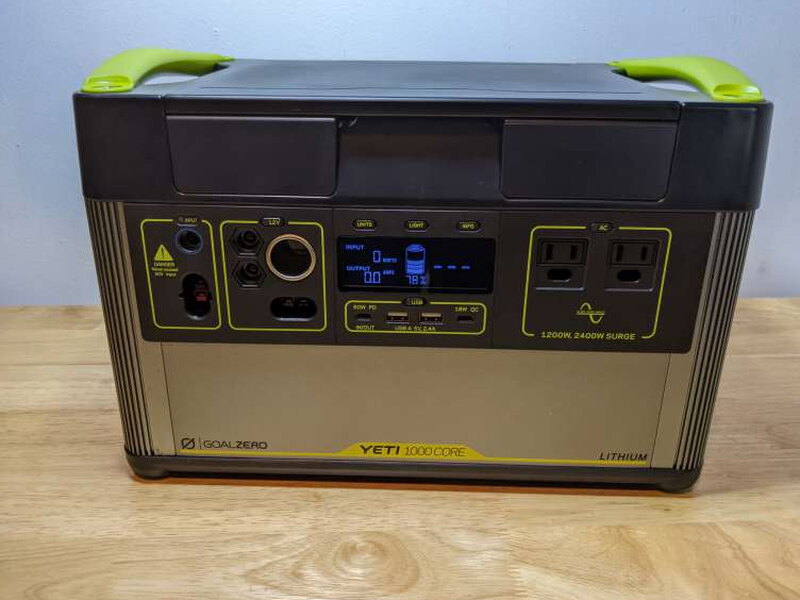
The Yeti 1000 Core is a lithium-ion battery power station that can handle small appliances, refrigerators, air conditioners, lights, coolers, laptops, phones, cameras, and plenty of other gear. It has USB-C, USB-A, 12V car power, 6mm 12V outputs, High Power Port connections, and two standard 120V AC outlets. That makes it more than a blackout box for the closet. It is also a useful camping, road trip, garage, driveway, and workbench companion.
The important part is the balance. The $1299.95 Yeti 1000X offers more advanced capability, including Yeti Link support for battery expansion, stronger 600W charging input, a slightly stronger AC inverter, and compatibility with the Goal Zero Yeti App on higher-tier units like the 1500x and 3000x. The Yeti 1000 Core skips those extras, limits input to 300W, and still keeps the features most people will actually use.
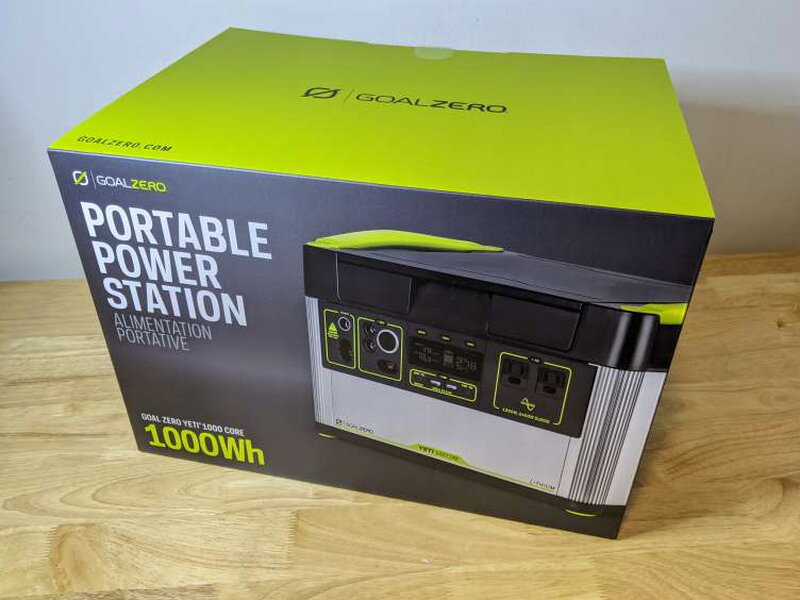
Amazon delivered the unit in a sturdy, well-designed box with Goal Zero’s familiar bright green branding. The outside of the box calls out the main specs and features, which is helpful because this is serious power gear, not just another battery accessory.
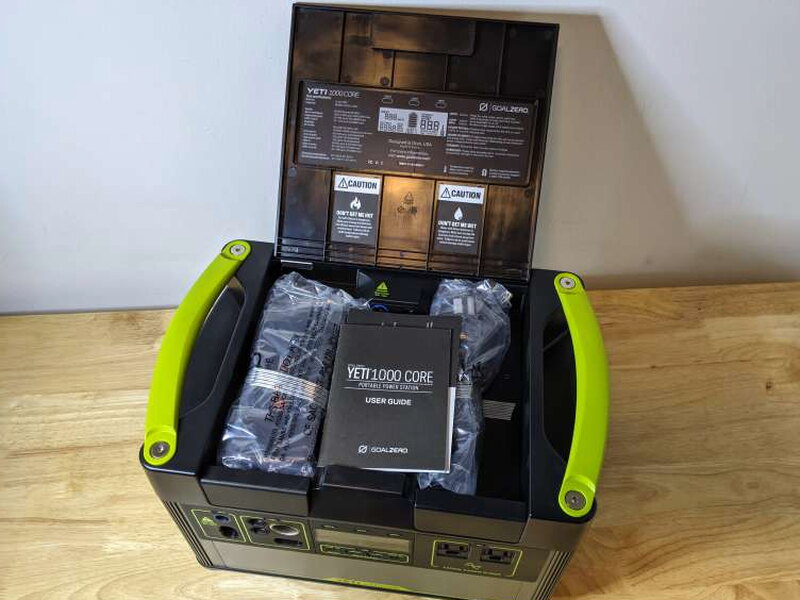
The accessories ship tucked into the Yeti’s own top storage area. That immediately shows off one of the best design choices here: the charger and cable can stay with the power station instead of disappearing into a drawer or bag.
In the Box
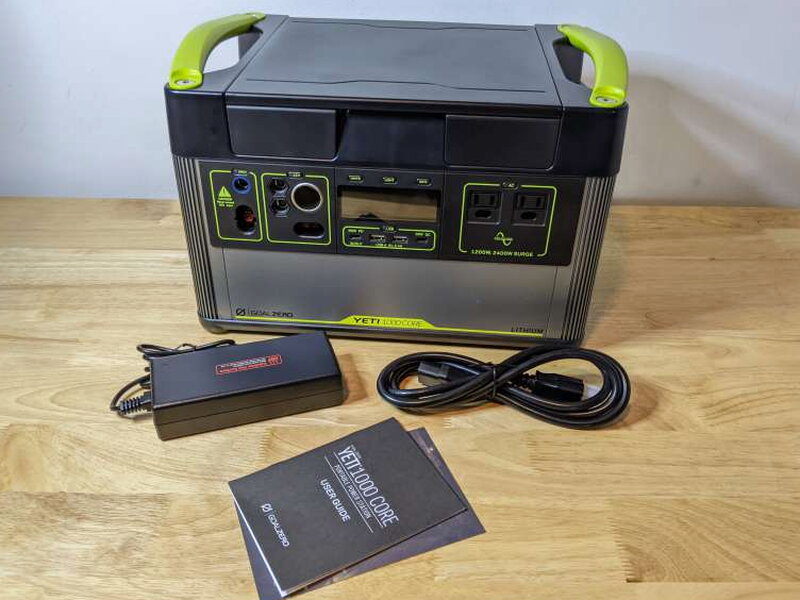
- Goal Zero Yeti 1000 Core Portable Power Station
- Power supply
- Power cable
- User Guide
Specs and Ports
- Battery Cell Type: Li-ion NMC (Lithium-ion Nickel Manganese Cobalt)
- Cell Capacity: 983Wh (10.8V, 91Ah)
- Single Cell Equivalent Capacity: 273Ah @ 3.6V
- Lifecycles: 500 Cycles to 80% capacity (Discharge rate: 1C, Full charge/discharge, Temp: 25C)
- Inverter Size: 1200W, 2400W surge
- Input Max: 300 Watts
- Shelf-life: Charge every 3-6 months
- Power Management System: Maximum Power Point Tracking (MPPT) charge controller
- Weight: 31.68 lbs (14.37 kg)
- Dimensions: 15.25 x 10.23 x 9.86 in (38.74 x 25.98 x 2504 cm)
- Operating Usage Temp: 32-104 F (0-40 C)
- Ports:
- 2 USB-A Ports (output): 5V, up to 2.4A (12W max), regulated
- 1 USB-C Port (output): 5-12V, up to 3.0A (18W max), regulated
- 1 USB-C PD Port (input/output): 5-20V, up to 3.0A (60W max), regulated
- 3 6mm Ports (output, 6mm): 12V, up to 10A (120W max), regulated
- 1 12V Car Port (output): 12V, up to 15A (180W max), regulated
- 1 High Power Port (HPP) (output): 12V, up to 15A (180W max), regulated
- 1 High Power Port (HPP) (input): 14-50V, up to 50A (300W max)
- 2 120V AC Ports (output, pure sine wave): 120VAC 60Hz, 10A (1200W, 2400W surge)
- 2 Charging Ports (input, 8mm): 14-50V, up to 10A (150W max)
- Charge times:
- Wall Charger (120W): 9 hrs
- Car Charger (120W): 9 hrs
- Goal Zero Boulder 50: 24-48 hrs
- Goal Zero Boulder 100: 12-24 hrs
- Goal Zero Boulder 200 briefcase: 6-12 hrs
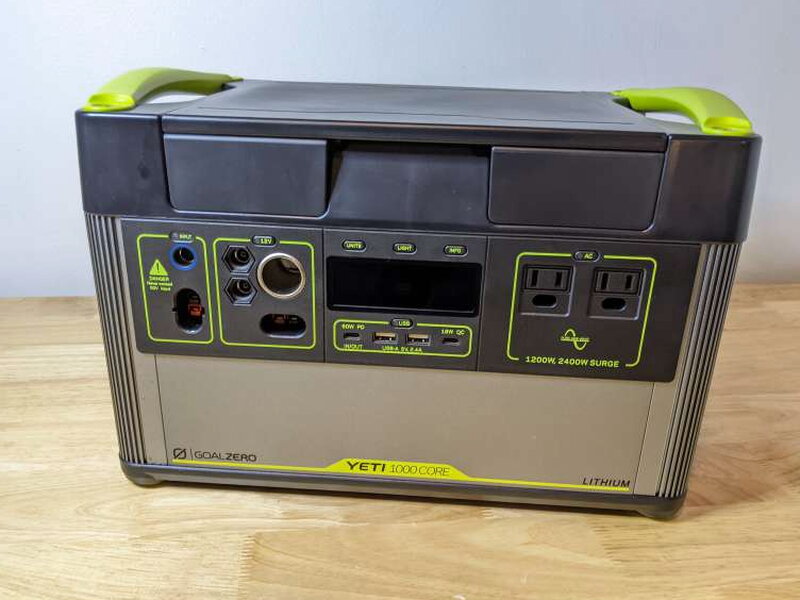
Core Instead of Complicated
The name fits the product. The Yeti 1000 Core keeps the core promise of a portable power station and cuts features that would raise the price for users who may never need them. No Yeti Link expansion, no app support, lower maximum input than the 1000X, and a slightly weaker AC inverter are reasonable compromises at this price.
That tradeoff works because the build and everyday usability still feel like Goal Zero. The aluminum body is rugged, the layout is easy to understand, the display is useful, and the ports cover a lot of use cases. My usual complaint with Goal Zero products is cost, but the 1000 Core is the first one I have used that feels priced right against close competitors.
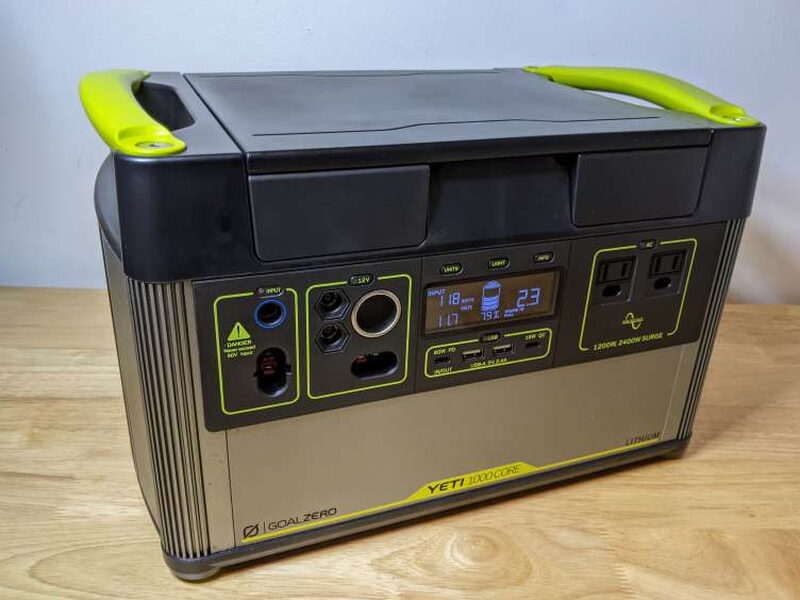
The case is built around the familiar Goal Zero aluminum shell. It feels durable enough to ride in a vehicle, sit on a garage floor, or move around camp without needing special care.
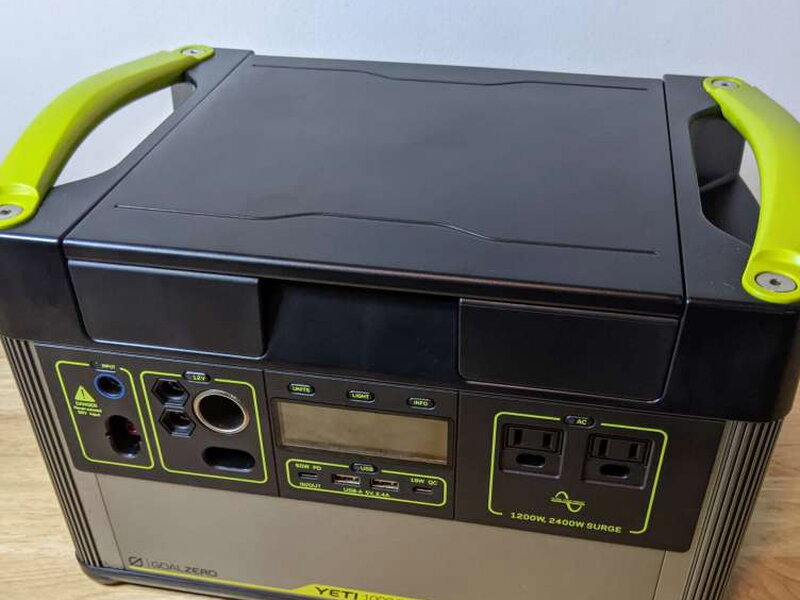
The black plastic top and front are offset by bright green side handles. At 31.68 lbs, this is not a featherweight battery, but the handles make moving it around manageable.
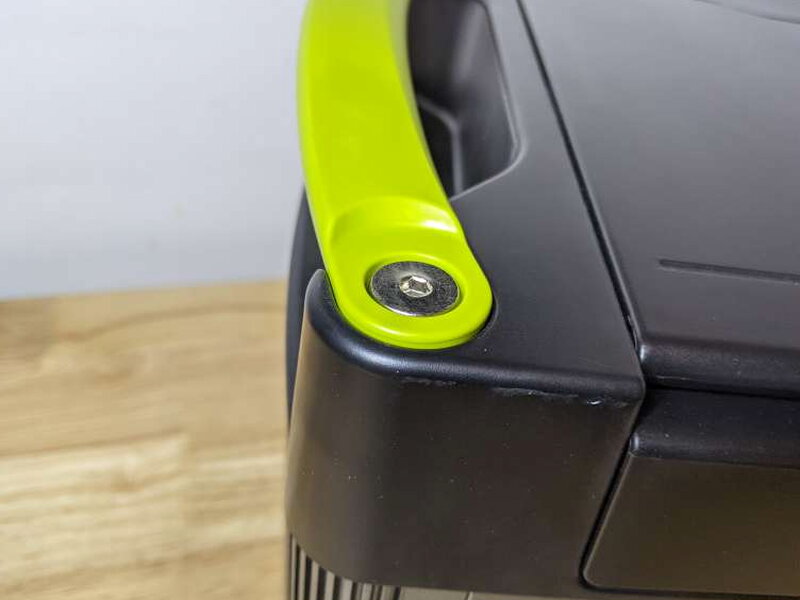
Goal Zero also shaped the handles with stacking in mind. The notches match the rubber feet on the bottom of another compatible Yeti 1000 unit, so multiple stations can sit together more securely.
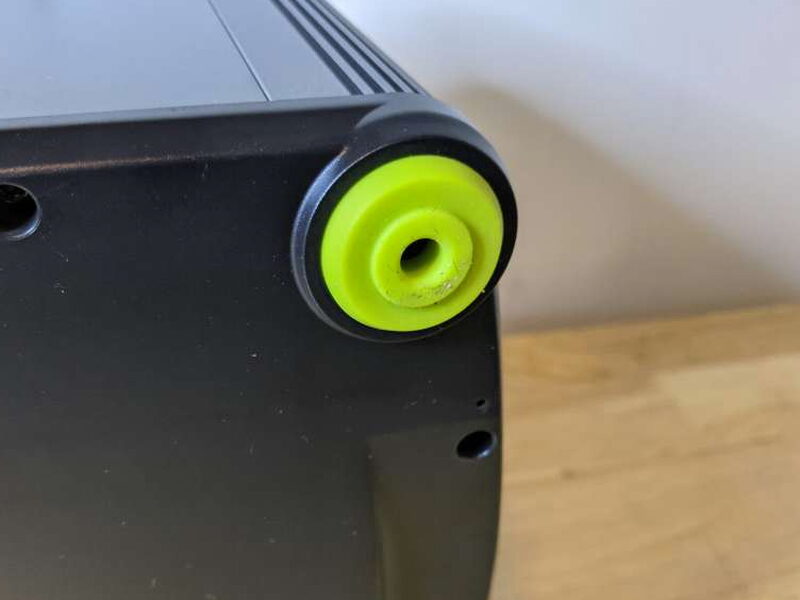
The corner details are simple, but they reinforce that this is designed as practical gear rather than delicate living room electronics.
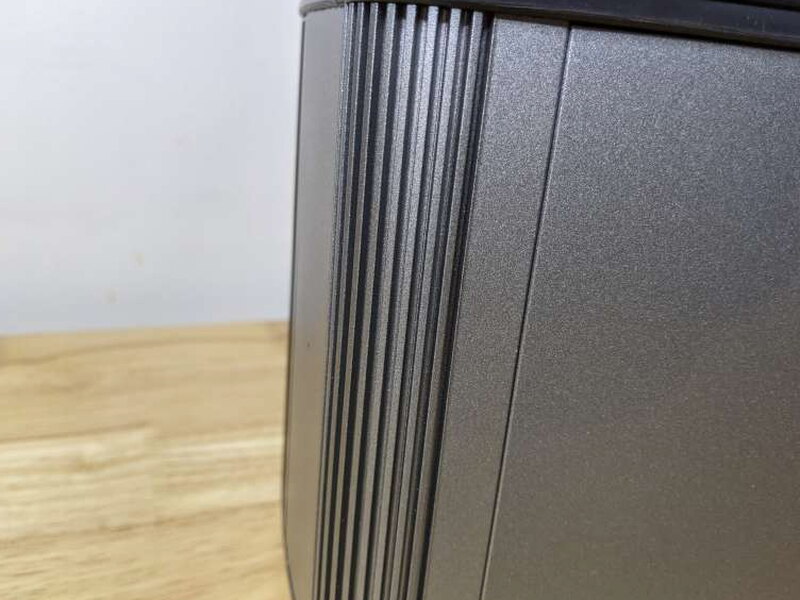
The ribbing in the aluminum frame is not only visual. It is part of how the Yeti manages heat when it is powering demanding loads.
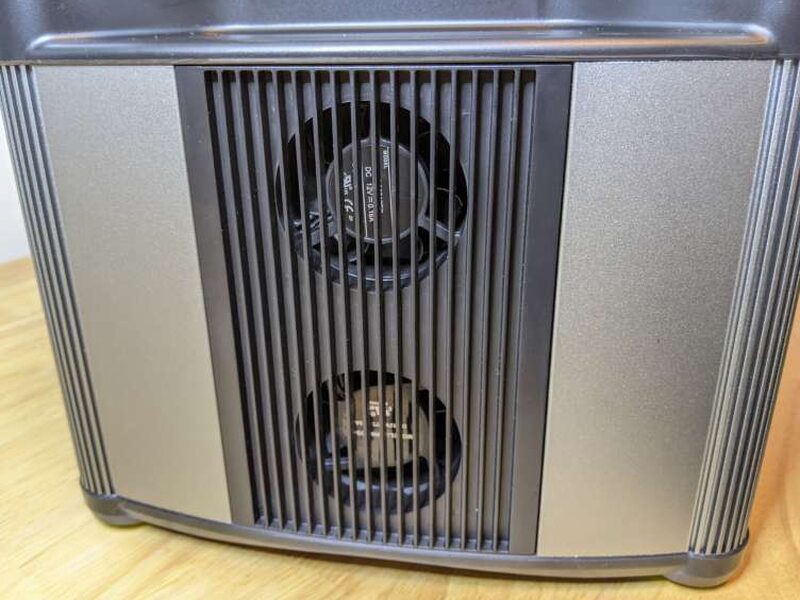
There are also two strong fans behind the side vent. During my test month, the unit stayed cool even when I was running several devices at once.
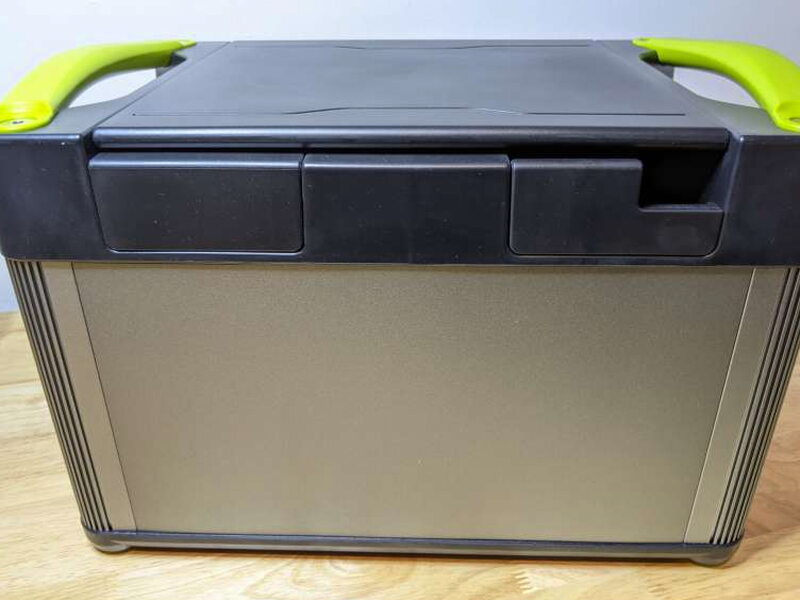
The back is black plastic and includes a notch for routing the power cable from the storage compartment. It is a small touch, but it makes charging cleaner when the cable is stored up top.
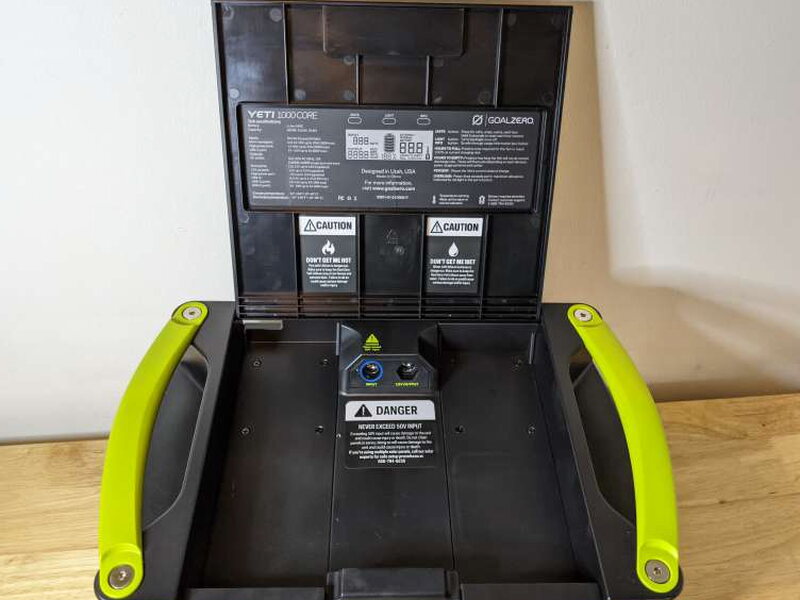
The storage lid is one of the most useful everyday features. Instead of wondering where the power brick went, you can keep the charging hardware with the power station.
There is enough space for the included power supply and cable, plus a few extra adapters. For a power station that may live in a closet or vehicle until needed, that kind of organization matters.
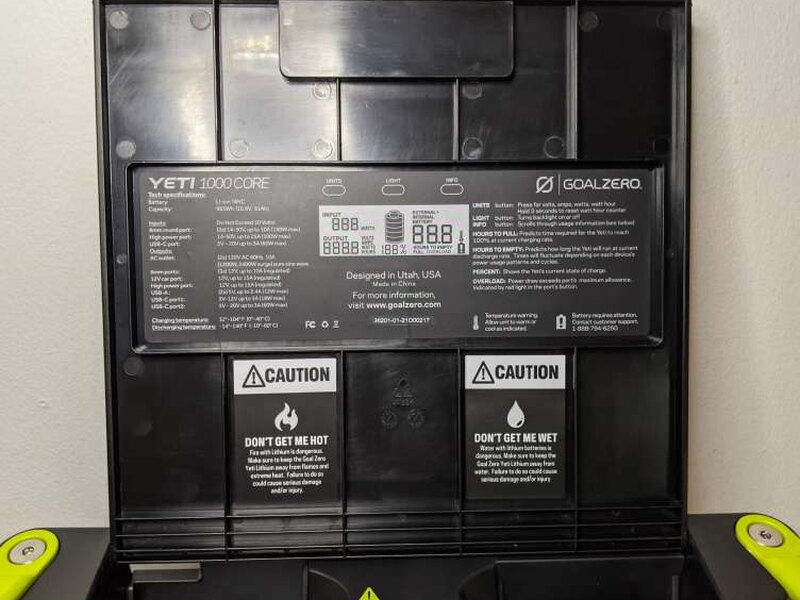
Goal Zero prints quick information inside the lid, including display guidance, port specs, and warnings. It is the sort of reference you want when you are using the unit away from the manual.
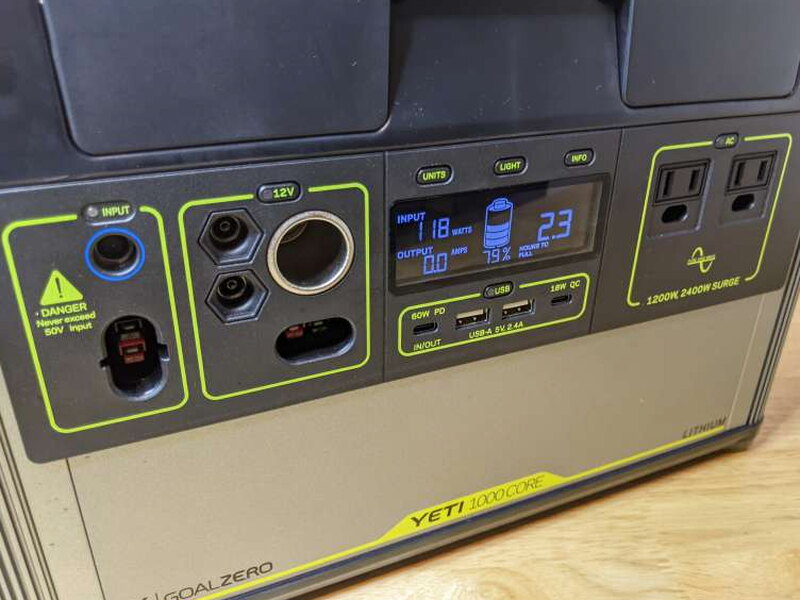
Port Layout and Controls
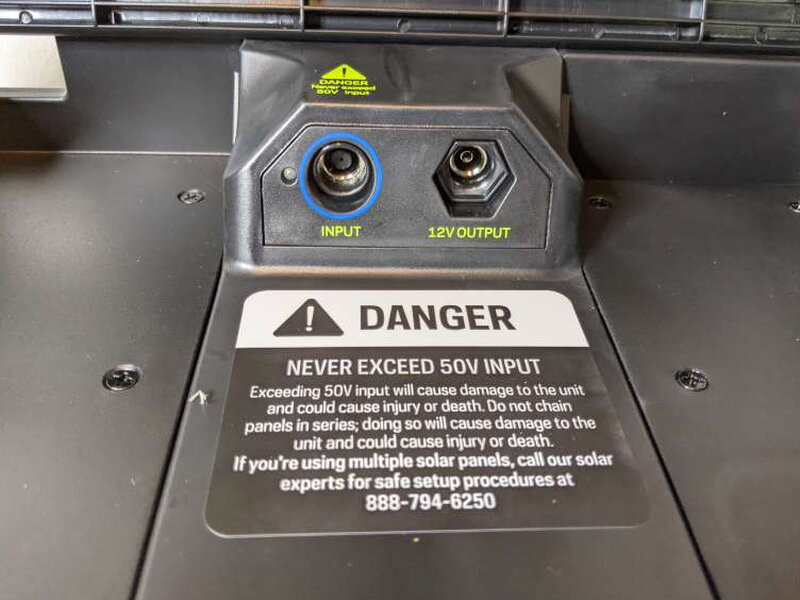
Inside the storage bay are two extra connections: an input for charging and a 6mm 12V output. I liked using the hidden input because it kept one cable off the front panel while the unit charged.
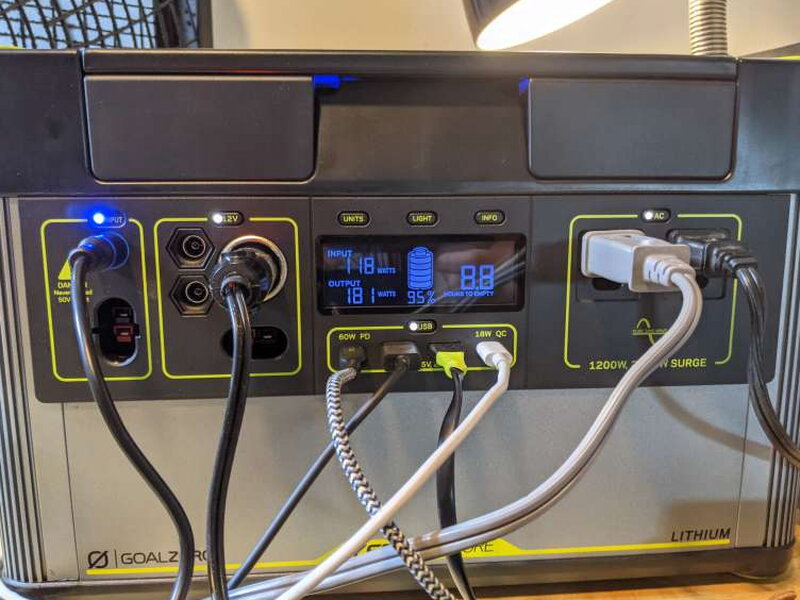
The main face has a second charging port, a 12V area with the car port and 6mm plugs, a USB area with two USB-A ports and two USB-C ports, and the two 120V AC outlets. One USB-C port can also work as an input if you need to charge from a USB-C laptop charger. I do wish Goal Zero had added a couple more USB-A ports because older cables are still everywhere.
My other port complaint is protection. The front openings are exposed, and when I used the Yeti outside I found myself checking for dirt and debris. Simple plugs for the larger connections, especially the 12V car port and HPP ports, would make sense.
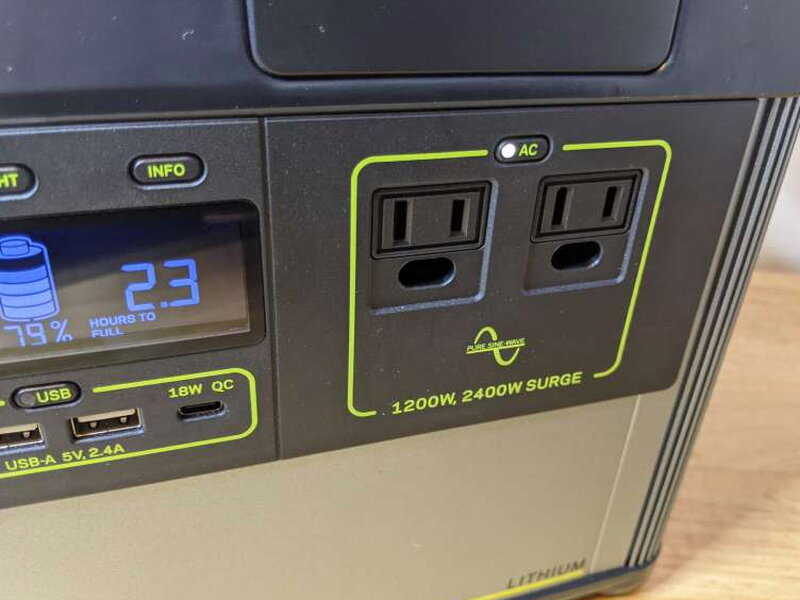
Each port group has its own small power button above it. The buttons light when that section is active, so you can leave devices connected and only turn on the outputs you want.
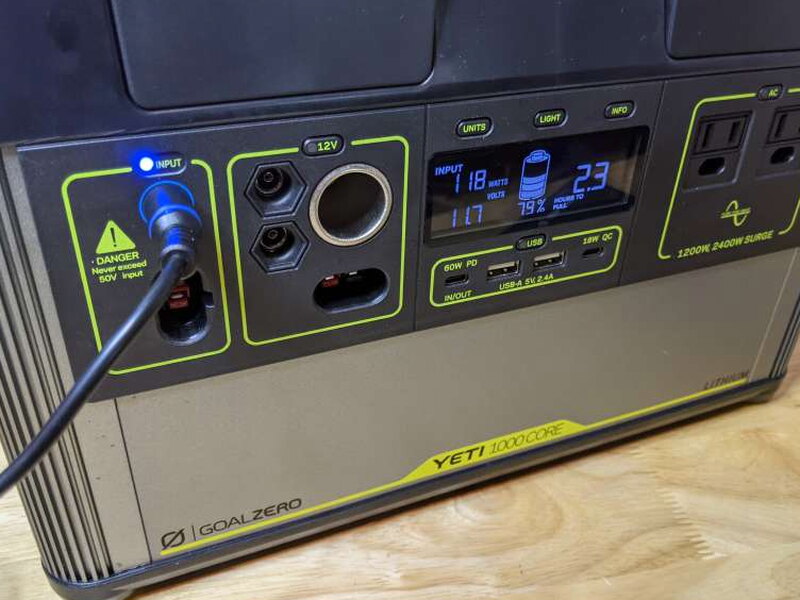
When the Yeti 1000 Core is charging, the blue Input LED turns on whether the power is coming through the front input or the input inside the storage area.
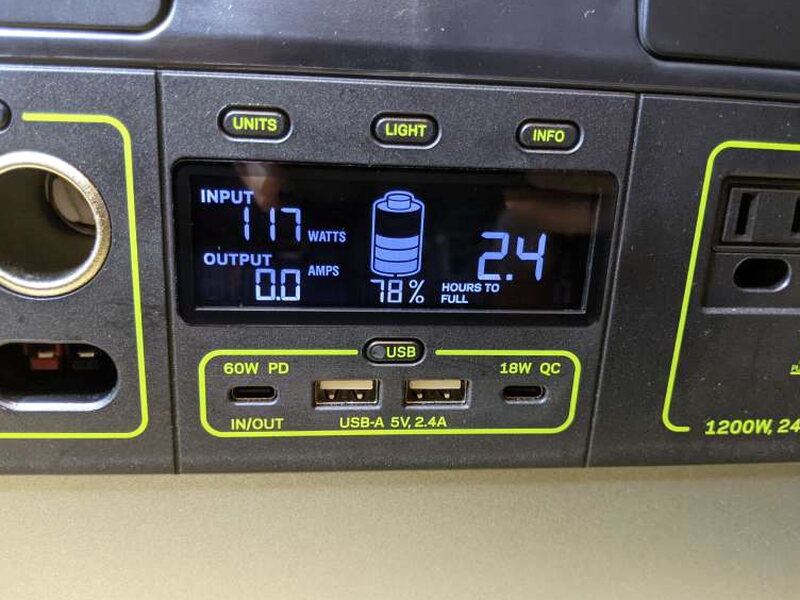
The display is one of the Yeti’s strengths. While charging, it shows incoming power, current battery state, and an estimate for how long it will take to reach full.
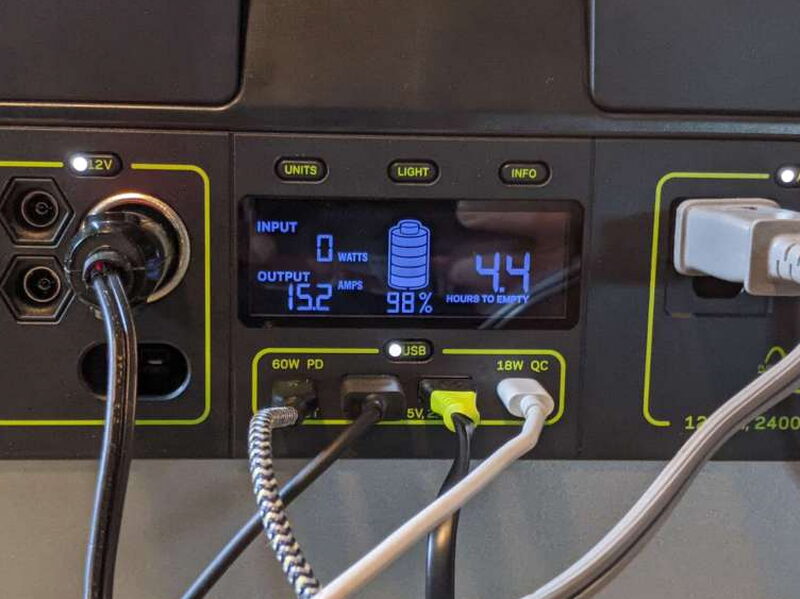
When the Yeti is discharging, the same screen adds outgoing wattage and changes the estimate to runtime remaining. The Units button cycles through watts, watt-hours, volts, and amps, and the Light button can turn the display off.
Charging and Solar Support
Setup is simple: charge the power station before using it. My unit arrived at about 78% battery, so topping it off with the included 120W wall charger did not take long. A full charge from the wall charger is rated at 9 hours, which matches the practical expectation for a battery this size with that charger.
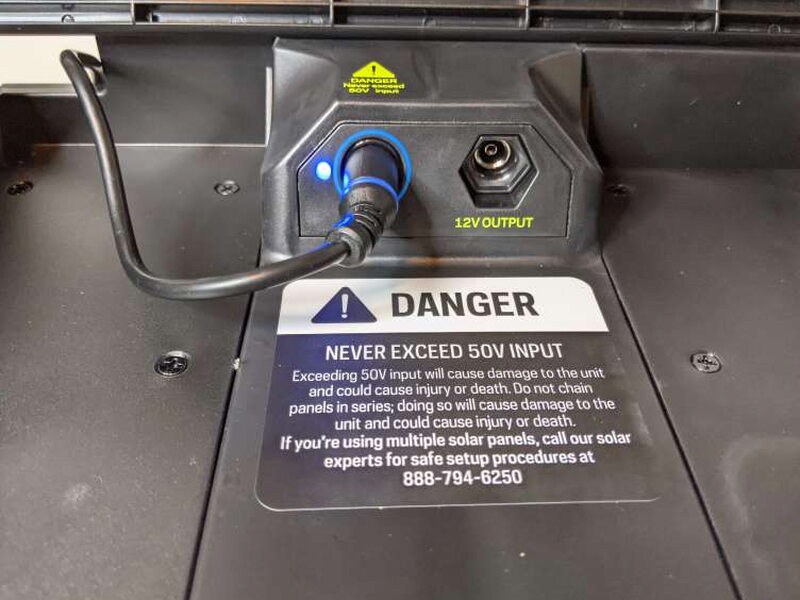
You can also charge it from a car charger rated at 120W in about 9 hours, or from Goal Zero solar panels. A Boulder 50 is rated at 24-48 hours, a Boulder 100 at 12-24 hours, and a Boulder 200 briefcase at 6-12 hours.
The built-in MPPT charge controller is a major plus for solar charging. Maximum Power Point Tracking helps the power station pull more efficient solar power, often boosting efficiency by up to 40%. For Goal Zero power stations without integrated MPPT, Goal Zero offers an external add-on, but it is already built into the Yeti 1000 Core.
Real-World Testing
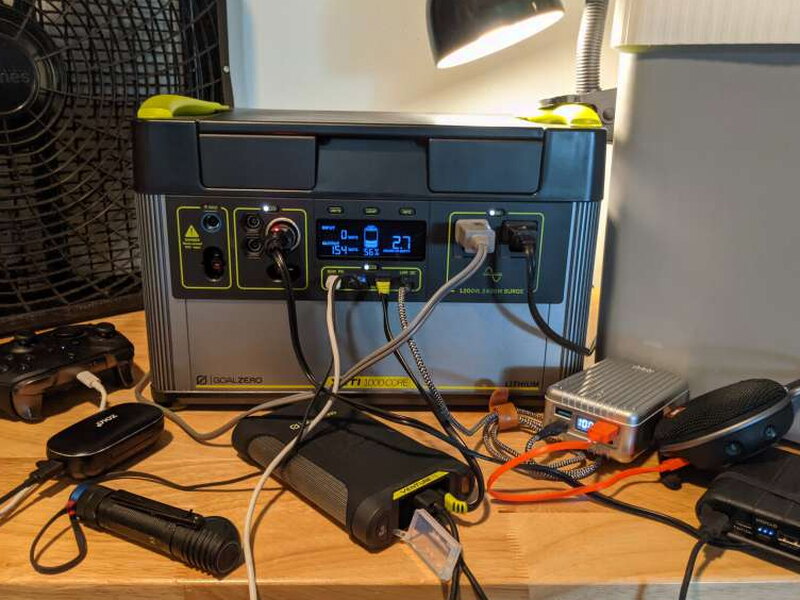
Once the Yeti was full, I started plugging in power-hungry gear to see how it handled a busy, realistic load. The setup included a large fan, a reading lamp, the AstroAI Electric Cooler I reviewed in July, and several smaller devices. I also had previously reviewed gear in the mix, including the Goal Zero Venture 75 Power Bank, Zendure SuperTank Portable Charger, Olight H2R Nova Flashlight, and my long-time favorite Nomad Tile Integrated PowerPack from April 2017.
The fan, lamp, and cooler were the biggest draws. The Yeti 1000 Core kept everything charged while running the fan and cooler nonstop for about 5 hours in that session. The part that impressed me most was the accuracy of the runtime estimate, which stayed within a few minutes of reality.
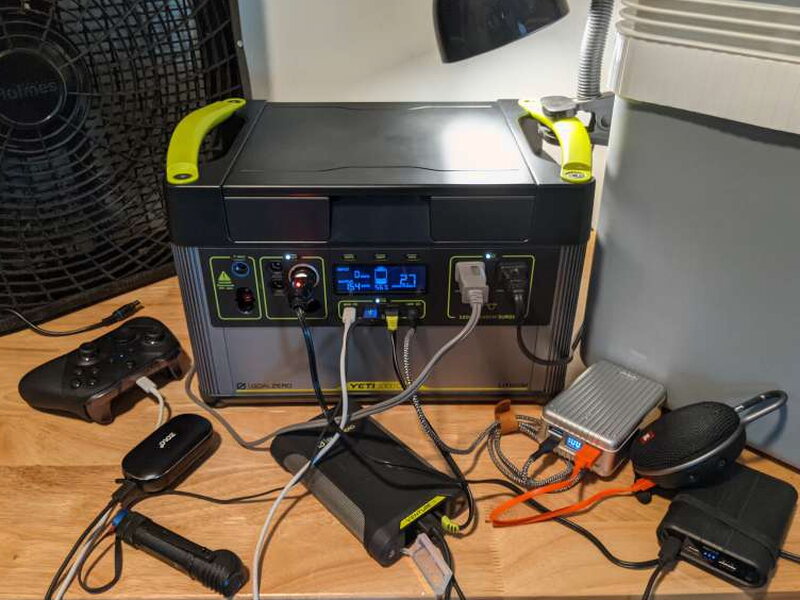
Over the next month, I carried the Yeti in the back of my FJ and used it for more than tabletop testing. It powered everything from a portable air compressor to the Vankyo Portable Projector I reviewed in 2018. The more I used it, the clearer the value became. A capable power station at a fair price is easy to justify when it solves so many small power problems.
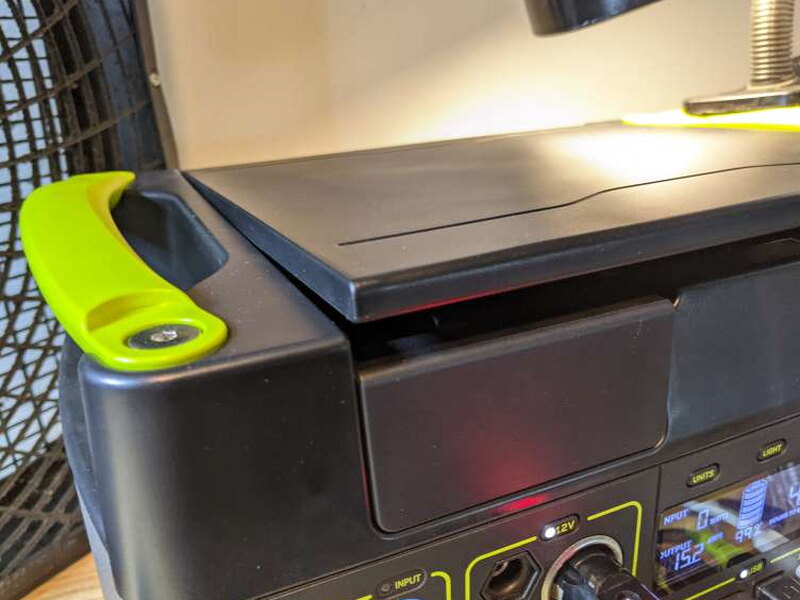
The lid was my most frequent annoyance. It is supposed to stay closed with an embedded magnet, but it popped open even when there were not many cords inside. A stronger magnet or a real latch would improve the design. That said, it is irritating rather than disqualifying.
What Works
- Great price for the feature set
- Outstanding design and usability
- Accurate power projections
What Could Be Better
- Lid should secure better
- Needs more USB-A ports
- Larger ports should have plugs
Quick Questions
Q: How does it compare to the Yeti 1000X?
A: It’s $300 cheaper and drops some advanced features – no Yeti Link expansion, no app support, lower max input (300W vs the 1000X’s 600W), and a slightly weaker AC inverter.
Q: Does it support solar charging?
A: Yes, with a built-in MPPT charge controller that can boost solar charging efficiency by up to 40%, compatible with Goal Zero’s Boulder solar panels.
Q: How many AC outlets does it have?
A: Two standard 120V AC outlets, rated for a 1200W inverter with 2400W surge.
Q: Does the lid stay closed securely?
A: Not always – it’s held by an embedded magnet that popped open even without many cords inside, one of the review’s noted complaints.
Final Verdict
The Yeti 1000 Core is an easy Goal Zero recommendation because it feels like the company trimmed in the right places. It keeps the sturdy build, useful display, generous port selection, MPPT solar charging, and reliable output, while dropping advanced features that would mostly matter to expert users. At $999.95, it no longer feels like you are paying extra just for the name. Thanks to the Amazon-exclusive version and its more sensible price, the Yeti 1000 Core is a powerful, practical portable power station that should exceed what many people expect from a home, travel, and emergency battery.
Curious how this compares to the competition? I break it down in The Best Portable Power Stations I’ve Tested.
Price: $999.95
Source: The sample of this product was provided by Goal Zero


