REVIEW – My end of summer cleanup always turns into a gear audit. As I pack away outdoor equipment, I notice what worked, what did not, and what would make next season easier. The Goal Zero Yeti 1000 Core Portable Power Station I reviewed about a year before writing this has become one of those pieces of gear I do not want to be without. I was not looking to replace it. I wanted another capable power station for home so the Goal Zero could stay ready for outdoor use all year.
Pairing the Goal Zero with the FlexSolar 120W Foldable Solar Panel Kit I covered in April made my summer setup much more useful. The problem was that I had also been using the Goal Zero indoors on my apartment workbench as a makeshift Uninterruptible Power Source. Carrying a heavy battery from the workbench to the outdoors and back again got old fast. That search led me to the Geneverse Solar Generator HomePower ONE PRO, a $2599 bundle that costs a lot, but in my experience delivers enough power, charging flexibility, and polish to justify the price.
What this system is
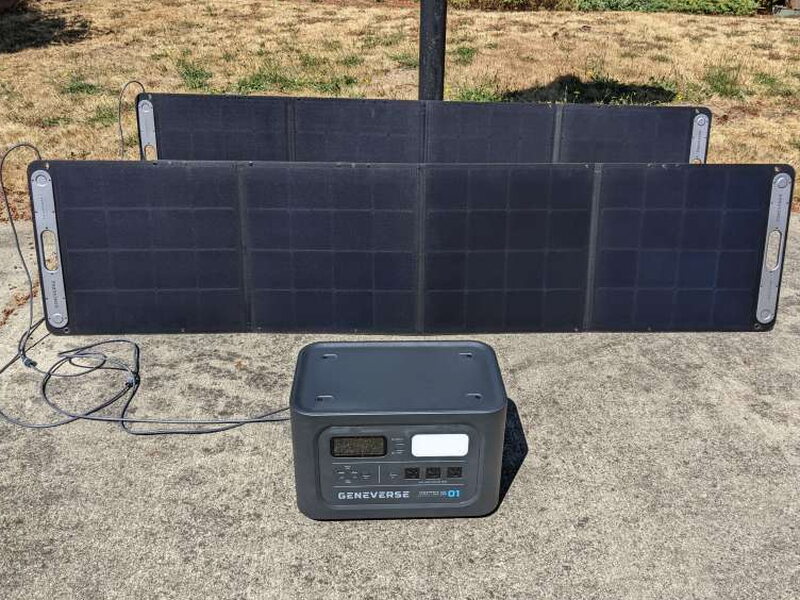
The Geneverse Solar Generator HomePower ONE PRO is not just a battery in a box. The package I tested combines the HomePower ONE PRO lithium iron phosphate power station, two 200W monocrystalline Geneverse SolarPower 2 portable panels, and an 8mm 2 to 1 converter that lets the panels feed the battery together.
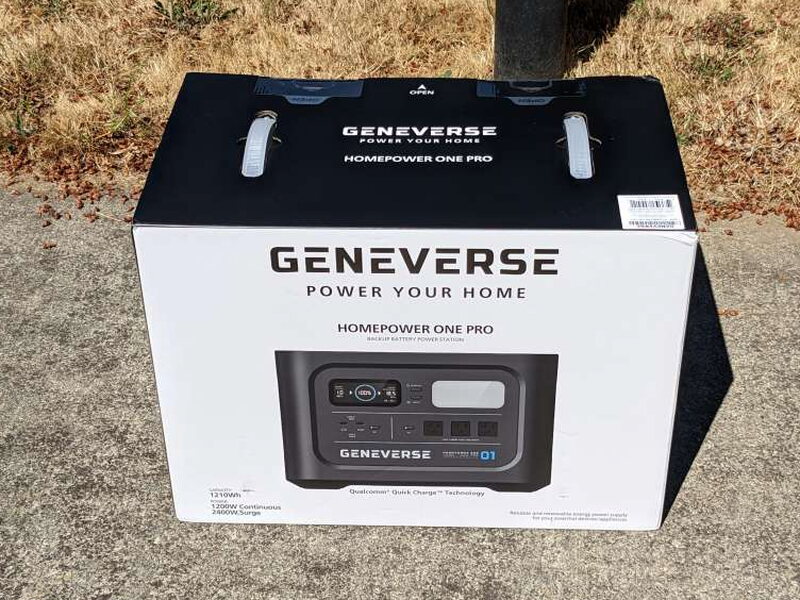
Geneverse sells the HomePower PRO Series in several configurations. This bundle included the HomePower ONE PRO Backup Battery Power Station, two SolarPower 2 Portable Solar Panels, and the Geneverse 2 to 1 Converter.
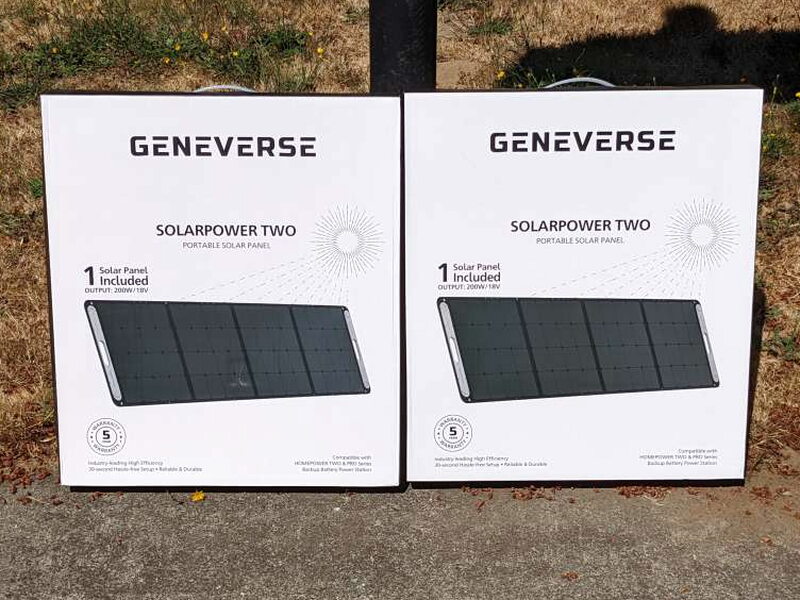
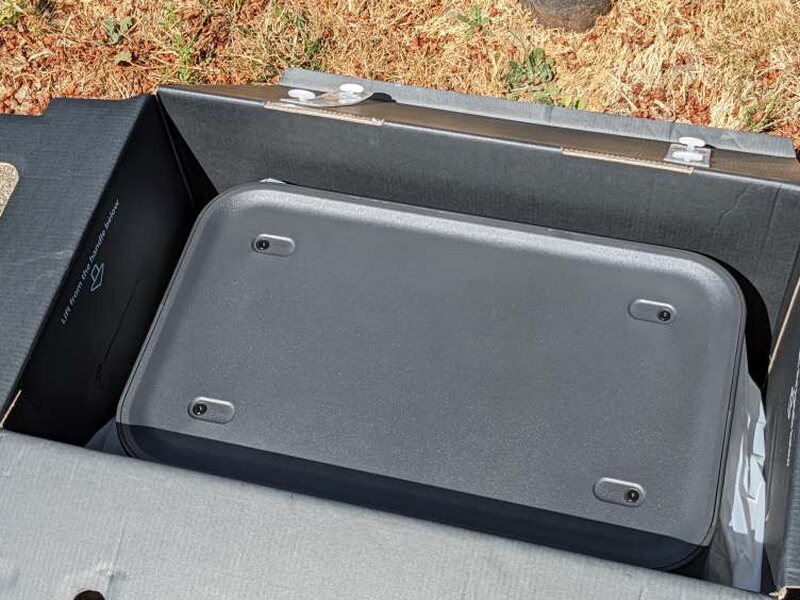
The power station box and the solar panel boxes are substantial, which fits the size and weight of this system.

The packaging is covered with product images and feature callouts, so you get a clear idea of the components before opening everything up.
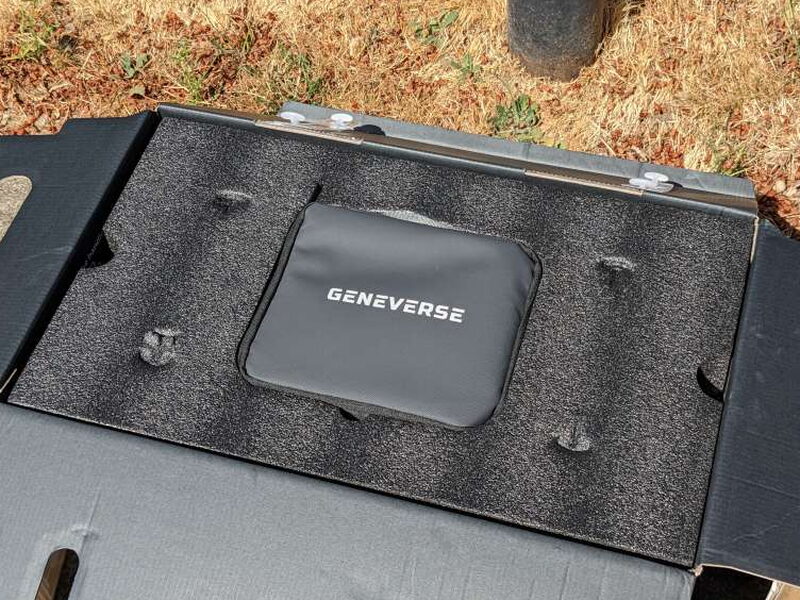
Geneverse did a good job protecting the heavier pieces. The delicate parts are held in thick foam and the retail packaging sits inside an outer shipping box.
In the box
- Geneverse HomePower ONE PRO Backup Battery Power Station
- AC charging cable
- Car charging cable
- Accessory case
- User manual
- Two Geneverse SolarPower 2 All-Weather Portable 200W Solar Panels
- User manuals
- Panel protection covers
- Output cables with 8mm ports
- Geneverse 2 to 1 Converter

Key specifications
- HomePower ONE PRO Backup Battery Power Station
- Capacity: 1210Wh
- Battery type: Lithium Iron Phosphate, LiFePO4/LFP
- Cycle life: ≥3000 cycles
- Charge controller: Built-in Maximum Power Point Tracking, MPPT
- AC input: 3-pin port, 120V~60Hz/9.5A, 800W max
- DC input: two 8mm charging ports
- Solar charge: supports 400W max each, 21A, 800W total
- Car charge: supports 8A max each, 16A max total
- AC output: three 120V, 60Hz outlets, 1200W rated, 2400W surge
- USB-C output: two 100W PD ports
- USB-A output: two 18W Qualcomm Quick Charge 3.0 ports
- Dimensions: 17.83 inches L x 11.02 inches W x 11.79 inches H, 45.3 x 28 x 29.95 cm
- Weight: 38.36 lbs, 17.4 kg
- Charging temperature: 32°F to 104°F, 0°C to 40°C
- Discharging temperature: 14°F to 104°F, -10°C to 40°C
- SolarPower 2 All-Weather Portable 200W Solar Panels
- Solar cell type: Monocrystalline
- Solar cells: 64 per panel
- Transformation efficiency: ≥23.4%
- Max power: 200W per panel
- Open circuit voltage: 23.2V
- Short circuit current: 11.76A
- Max power voltage: 18V
- Max power current: 11.12A
- Folded dimensions: 24.2 inches L x 21.3 inches W x 1.97 inches H, 61.5 x 54 x 5 cm
- Unfolded dimensions: 91.3 inches L x 21.3 inches W x 0.98 inches H, 232 x 54 x 2.5 cm
- Weight: 17.64 lbs, 8 kg
- Operating temperature while discharging: 14°F to 149°F, -10°C to 65°C
- Waterproof rating: IP67, fully protected against dust and protected against temporary immersion between 6 inches, 15 cm, and 3 ft., 1 m, of water

Hardware design
The SolarPower 2 panels and the HomePower ONE PRO have the same general design language: black, sturdy, simple, and more modern than most emergency power gear. The system looks like something that belongs in a home instead of something you would want to hide in a closet.

The power station has a clean front panel, a compact footprint, and enough visual polish that I had no problem leaving it out near my workbench.

The solar panels carry the same sleek look, with an integrated handle and a protective cover that makes each folded panel feel more like a portable case than a fragile sheet of cells.

The top of the power station is tough textured black molded plastic. It feels built for regular handling, not just occasional emergency storage.

Four recesses on top let multiple units stack more securely, which is a smart touch if you plan to expand or store more than one power station.
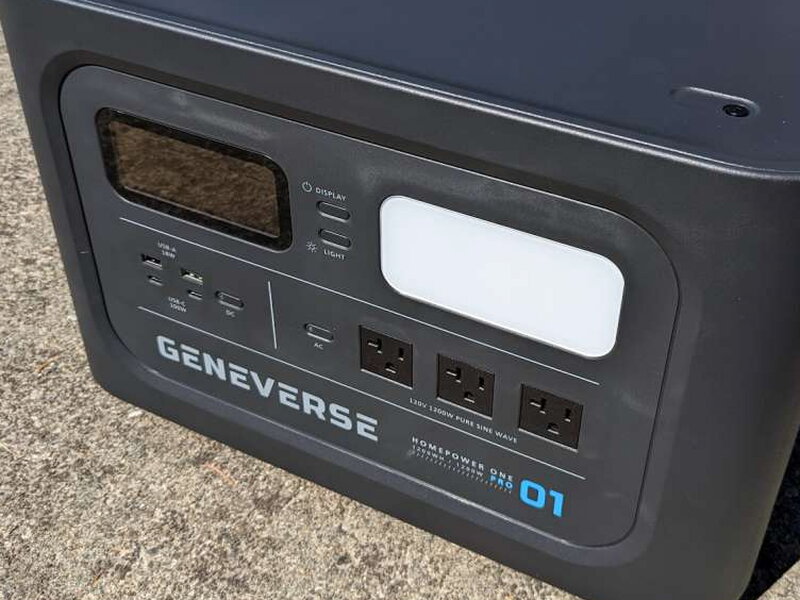
The front panel includes the display, an integrated LED light, and the controls for the light and display.
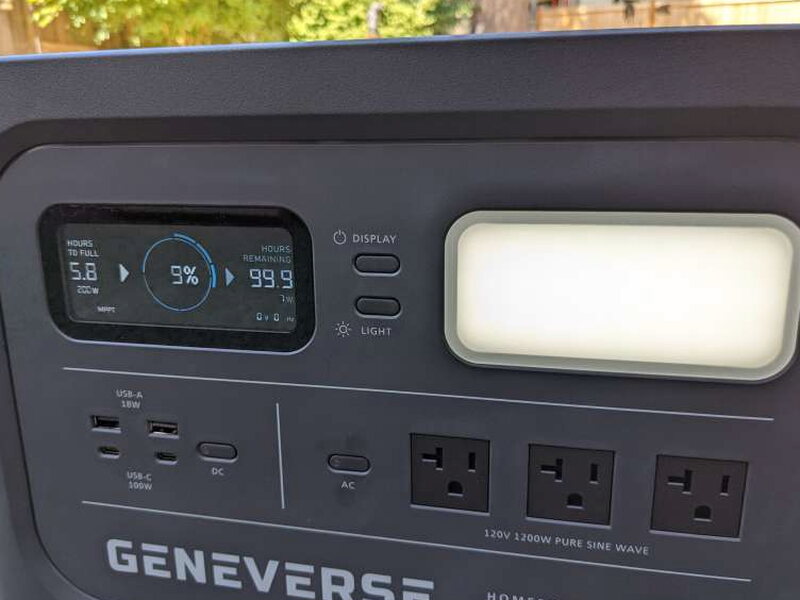
There are seven output ports on the front: three standard 120V AC outlets, two USB-C ports, and two USB-A ports. The AC and DC sections each have their own power button. The built-in Pure-Sine Wave inverter helps provide steady output for connected gear.
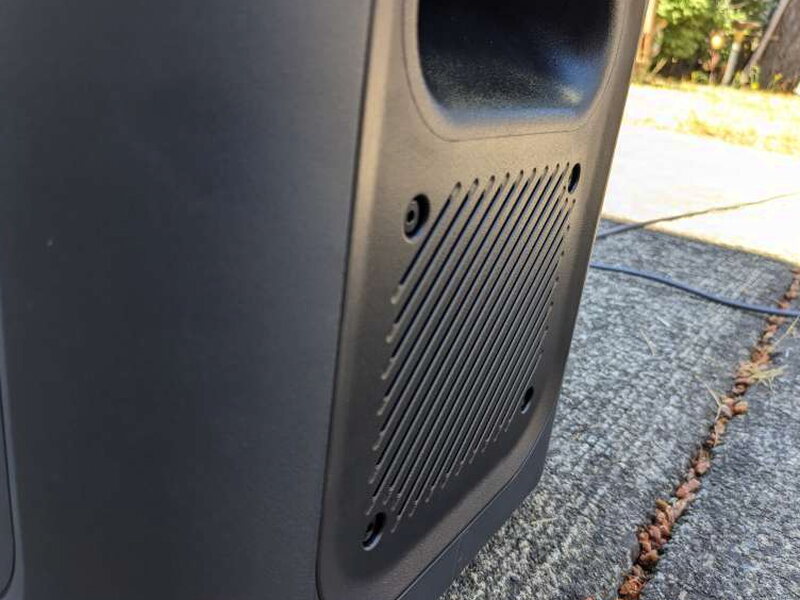
Each side has a built-in carry handle and venting for the internal fans, which matters on a unit that weighs 38.36 lbs.

A rubber cover on the back protects the input ports. One of my favorite practical features is that the HomePower ONE PRO can charge while it is also powering other devices.

Behind that cover are two 8mm charging ports for solar or car charging and a 3-pin 120V input for wall charging.

For vehicle charging, Geneverse includes an 8mm to 12V charging cable.
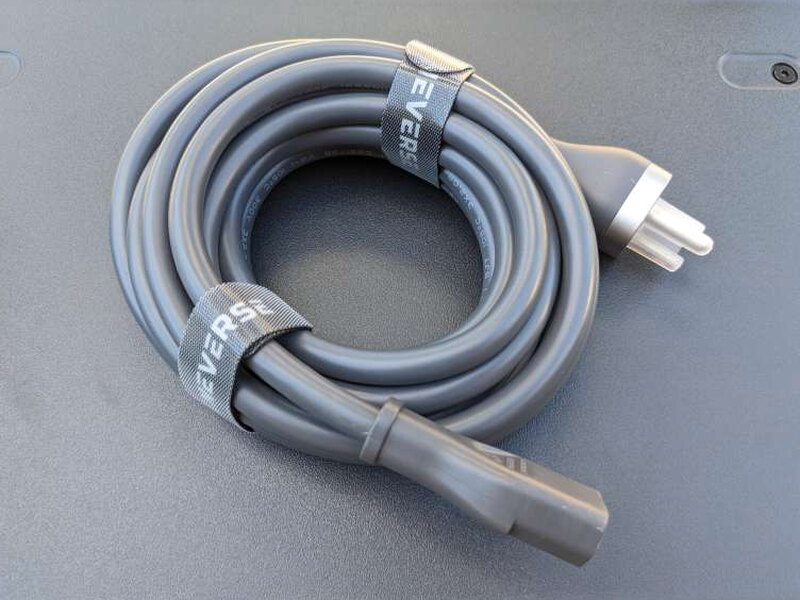
For charging from an outlet, the box includes a standard 120V to 3-pin power cable.
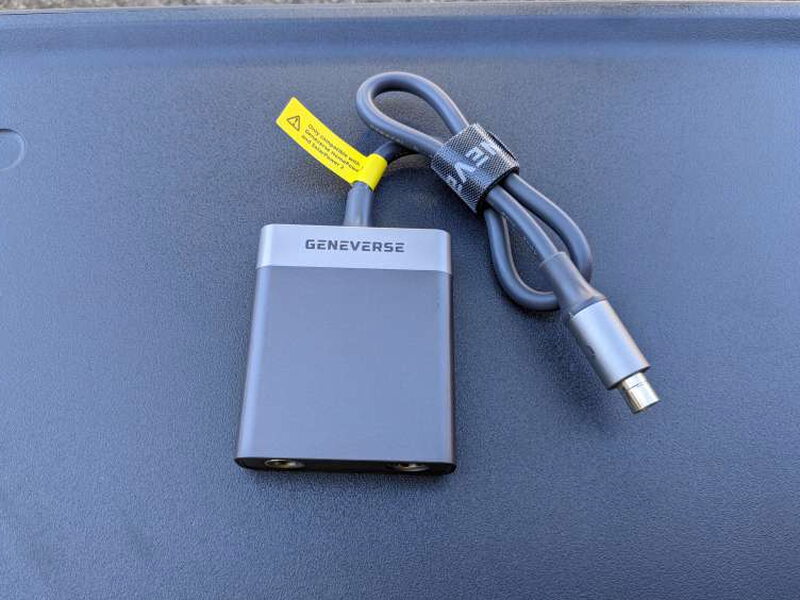
The 8mm 2 to 1 converter lets two solar panels feed one input on the back of the power station. With two converters, the HomePower ONE PRO can connect to as many as four panels. The built-in MPPT charge controller helps pull the most efficient charge possible from the panels.
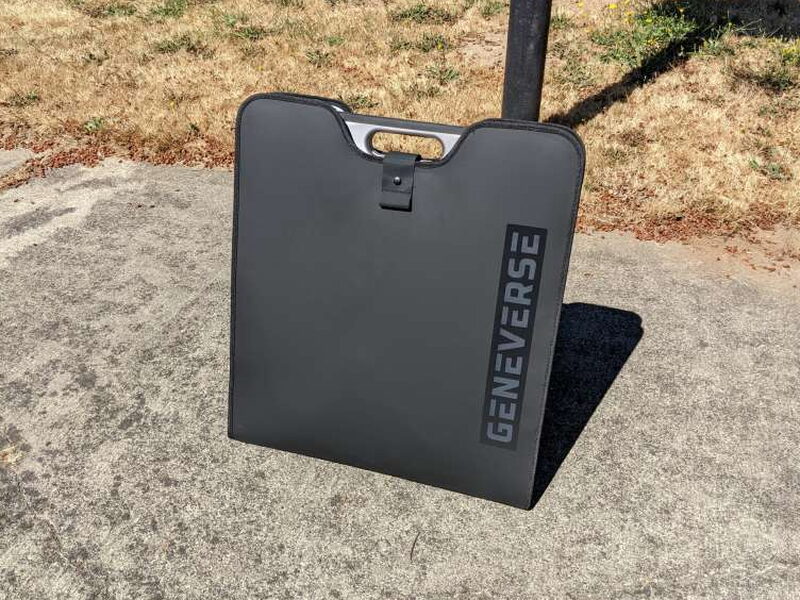
The SolarPower 2 panels are just as thoughtfully designed as the power station. The cover, handle, and folding layout make each panel easier to move and store than its unfolded size would suggest.
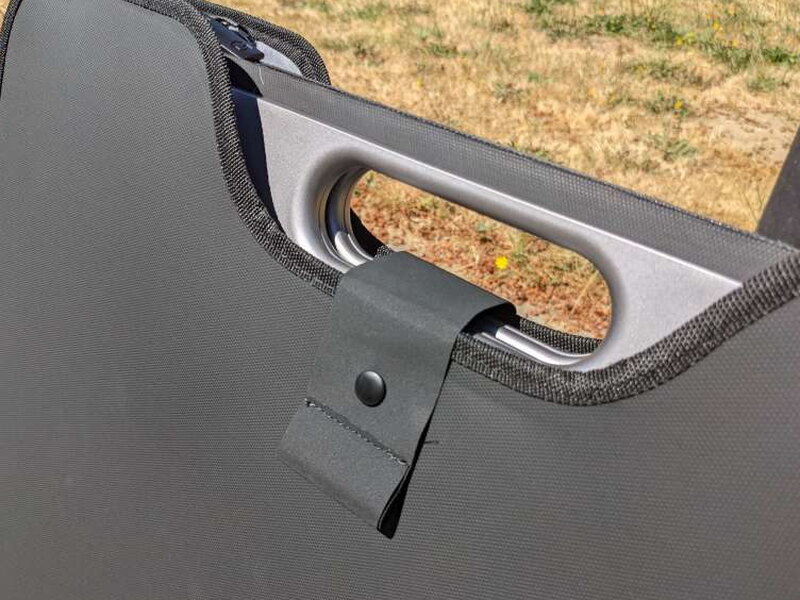
The case fastens around the molded handle, keeping the panel closed and easier to carry.
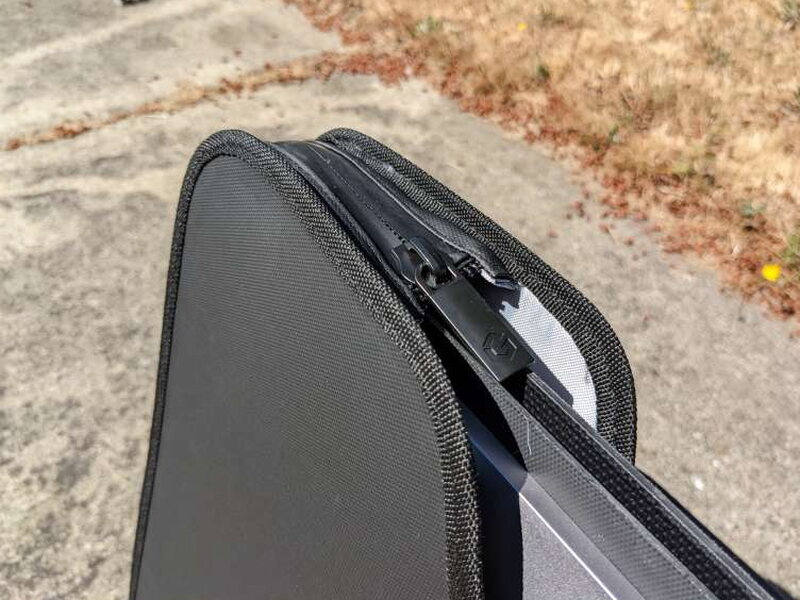
Rubberized zippers seal the cover around the panel and help protect it during storage or transport.
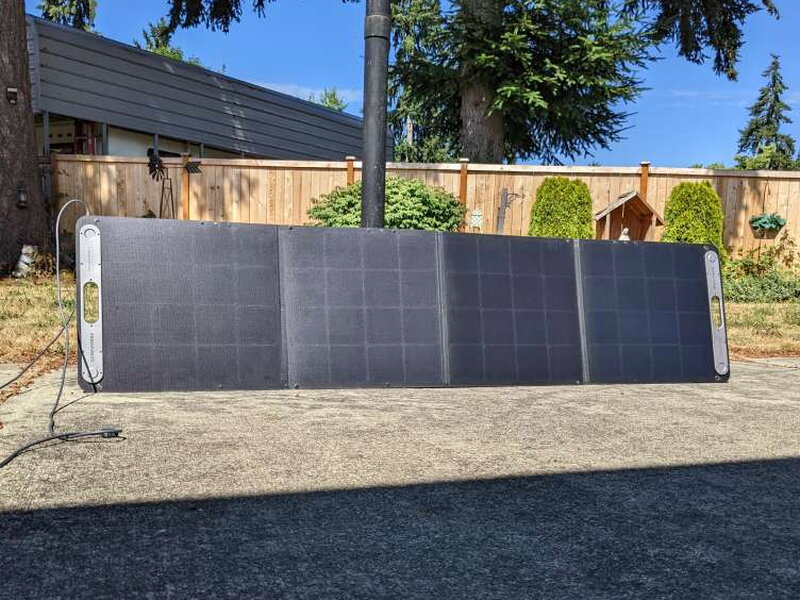
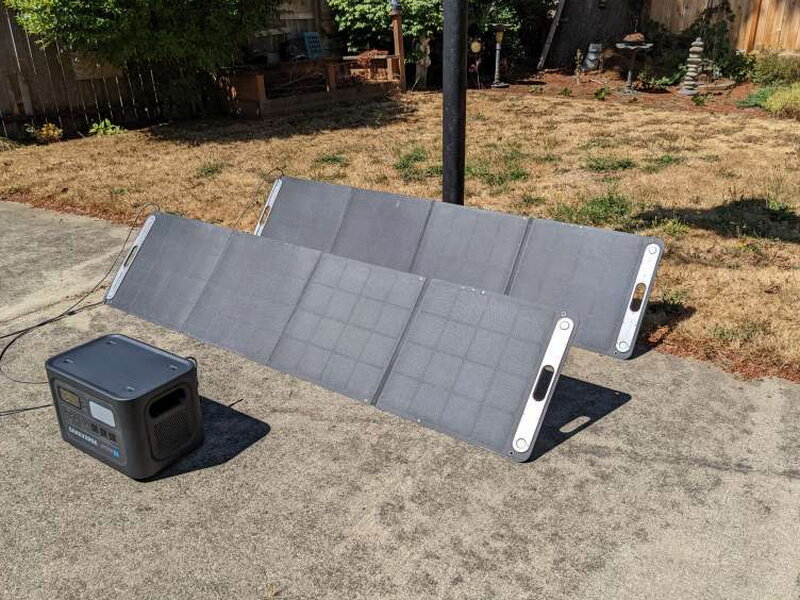
Folded, the panels look fairly compact. Opened up, each one becomes a long four-section solar panel that needs some space and good sun exposure.
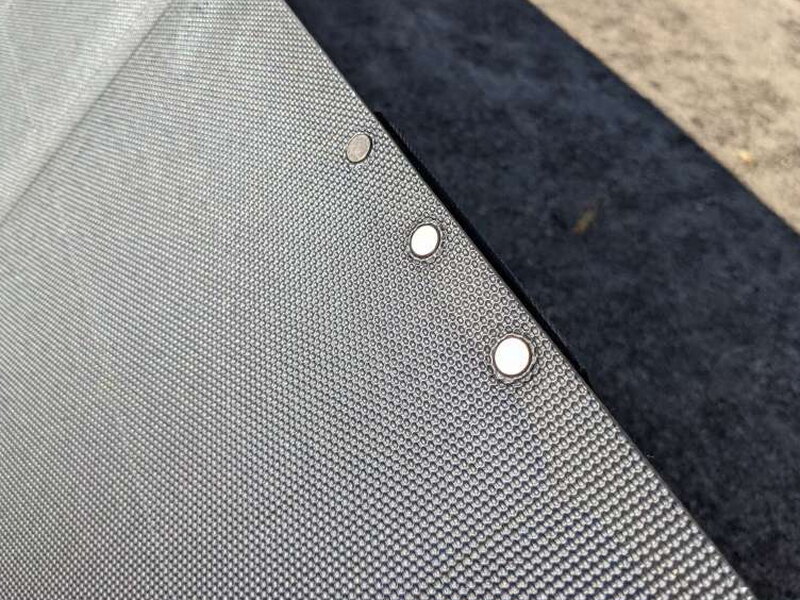
Small magnets along the edges help keep the sections together when the panel is folded, whether it is inside the case or not.

The edges also include sturdy grommets, giving you options if you want to hang the panels while they are collecting sunlight.

Each solar panel ships with its own 10-foot, 3 m, 8mm output cable.
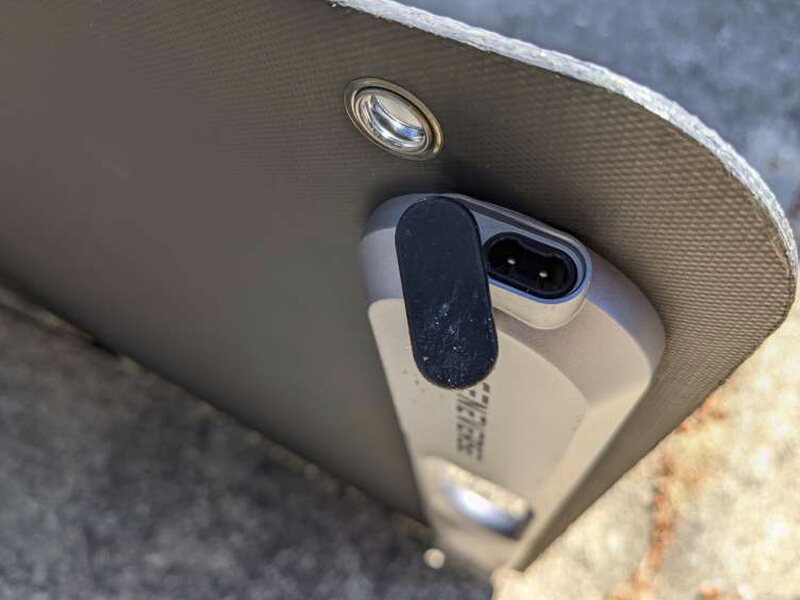
The output port sits on the back of the panel and has a small rubber plug to cover it when the cable is not connected.
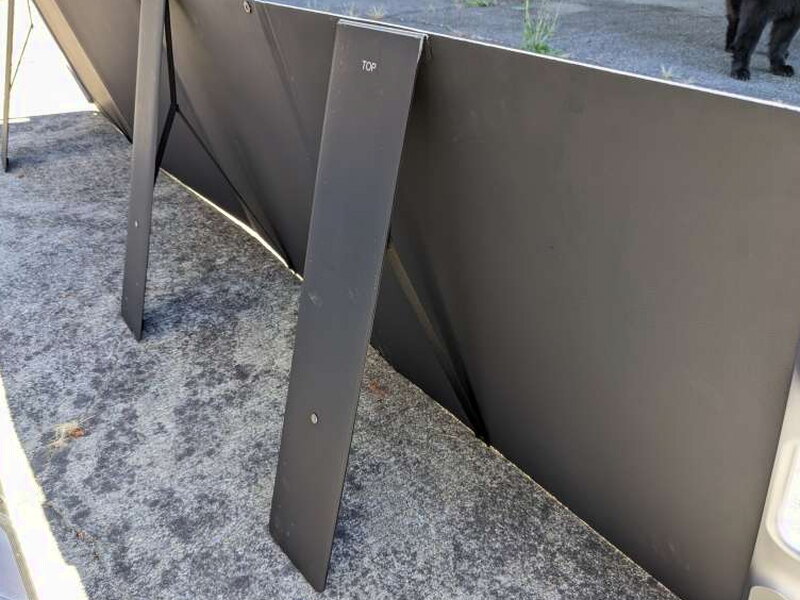
Three long adjustable legs support each panel from the rear. Elastic strips hold the legs against the panel when folded away.

Extending the legs changes the panel angle, which helps when you are trying to keep the cells aimed properly as the sun moves.
Setup
Getting started was as simple as choosing a charging source and plugging things in. I began with solar charging, using the two SolarPower 2 panels and the included 2 to 1 converter.

After attaching the converter to the power station, I connected the output cables from the panels.
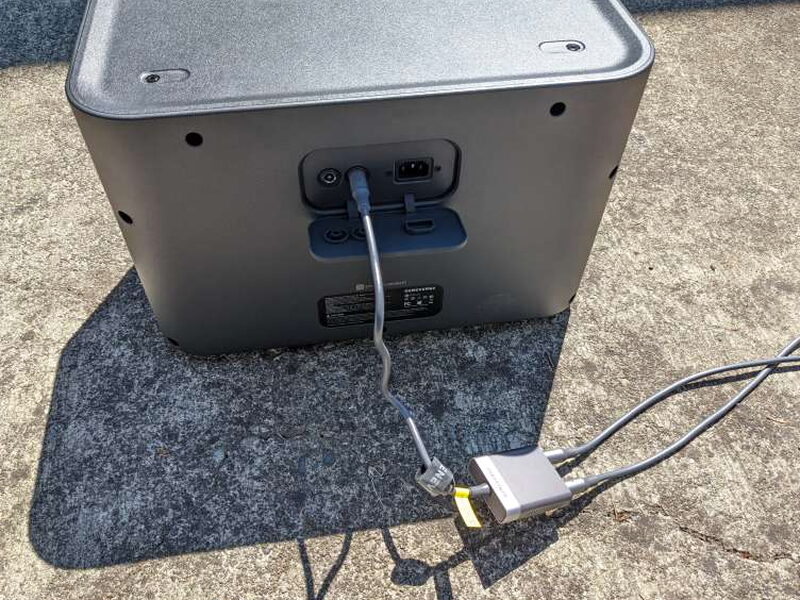
Then I set the panels in the sun and adjusted them for the best exposure I could get.
Real-world use
When I started the solar charge test, the power station was at 9 percent. The display estimated that a full charge would take roughly six hours.

I did have to move the panels from time to time to keep them lined up with the sunlight, but the process was straightforward.

The HomePower ONE PRO reached 100 percent in about four and a half hours, which was about ninety minutes sooner than the first estimate. That charging speed impressed me.

With the battery full, I moved straight to a tough test: running the portable AC unit in my apartment. I chose the AC because it is one of the most power-hungry appliances I own.

The power station display and the Geneverse app both estimated a little over an hour of runtime for the AC unit. The app also let me control inputs and outputs, including turning the AC output on and off, which helped stretch the runtime when I did not need continuous cooling.

The app is genuinely useful rather than just a bonus feature. It gives access to settings such as charging modes and Battery Saving Mode, which can help you tune the power station for efficiency and long-term battery health.
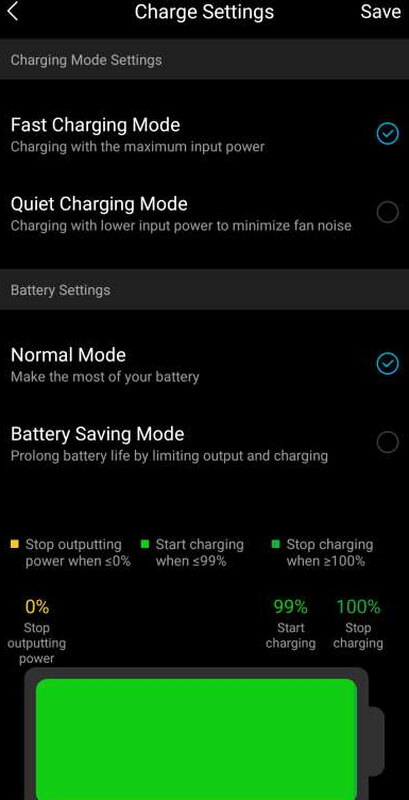
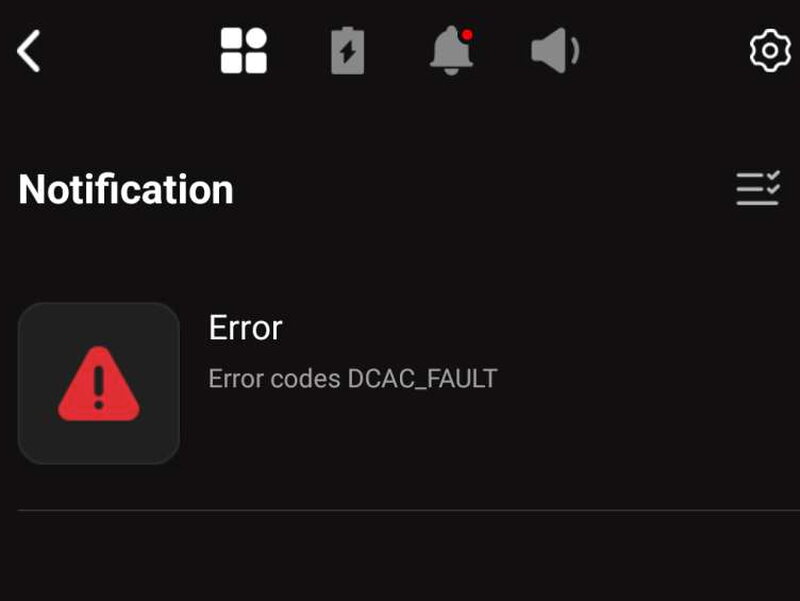
As the battery ran low during the AC test, the app began showing errors whenever the AC dropped power. I could not identify exactly what the code was trying to tell me, so once the power station reached 5 percent I recharged it from a normal wall outlet in my apartment.
Beyond the AC unit, I used the HomePower ONE PRO with the kinds of devices I would care about during an outage: my CPAP machine, a laptop, a cell phone, and a small weather radio. Used carefully, it kept that emergency set of devices charged and running.
With 1210Wh of capacity, Geneverse says the power station can keep certain devices and home appliances running for up to seven days in an emergency. Based on my testing with lower draw essentials, that claim feels believable. I also like that a fully charged HomePower ONE PRO can hold its power for a year or more, which makes it more trustworthy as standby emergency gear.

After about a month with the Geneverse Solar Generator HomePower ONE PRO, I think it is a real match for my Goal Zero Yeti 1000 Core. In some ways I like the Geneverse more, especially because of the app, the strong solar charging setup, and the compact modern design. I expect to use both systems regularly, with the Geneverse taking home backup duty and the Goal Zero staying ready for trips and outdoor use.
What worked well
- Easy setup
- Sleek, modern design
- App control
- Built-in charge controller for fast charging times
What could be better
- No tie-down handles or connection points
- Expensive
Quick Questions
Q: Can it charge while also powering devices?
A: Yes, the HomePower ONE PRO can charge and output power to connected devices at the same time.
Q: How many solar panels can it connect to?
A: Up to four, using two of the included 2-to-1 converters, each combining two panels into one input.
Q: What’s the actual charge time from solar?
A: About four and a half hours from 9% to full using two 200W panels, faster than the app’s own initial six-hour estimate.
Q: Does it come with tie-down points for securing it in a vehicle?
A: No, that’s one of the review’s noted gaps – no tie-down handles or connection points.
Verdict
The Geneverse Solar Generator HomePower ONE PRO is a powerful, flexible backup system that works with or without the SolarPower 2 panels. It fits home backup, disaster prep, RVing, camping, and overlanding use cases, although the $2599 price means it is not an impulse purchase. The bundle makes more sense when you consider the sturdy power station, two large 200W panels, app control, and the internal MPPT charge controller that noticeably shortens solar charging time. Most importantly, Geneverse puts all of that capability into a compact, thoughtful design that can live comfortably at home instead of feeling like industrial emergency equipment.
For a wider look at what else is out there, I rounded up more of these in The Best Portable Power Stations I’ve Tested.
Price: $2599
Product Link: Geneverse
Source: The sample of this product was provided by Geneverse


