
REVIEW – Camping season had me looking for better ways to stay out longer, and that led straight into the expensive world of overlanding. A powered fridge freezer is one of those upgrades that sounds excessive until you start planning real food, cold drinks, and supplies for both me and my pup away from a normal kitchen.
The EcoFlow Glacier is built for that job, but it is not just a plain portable refrigerator. It combines a 38L dual zone fridge freezer, a built in ice maker, app control, and support for several power sources. The version I tested also used the removable 298Wh battery and the detachable wheels and lever handle kit. With those extras, the package lands around $1,300, so expectations are understandably high.
My short version is that the Glacier is smart, quiet, efficient, and genuinely convenient. I also wish it felt tougher. The design work and app experience are excellent, while the thin ice maker lid, pop open ice tray, and ABS plastic shell make me hesitant to call it a hard use trail fridge.

What EcoFlow Sent
The Glacier itself arrived in a plain cardboard carton with a line drawing of the refrigerator on the outside. The plug in rechargeable battery and the Glacier wheels and handle kit came in separate black EcoFlow boxes.

Inside the boxes were the core pieces needed to run the Glacier from the wall, a vehicle, or its optional battery, plus the accessories that make it easier to move.

- EcoFlow Glacier Portable Refrigerator
- AC power adapter and cable
- Glacier Plug-in Rechargeable Battery
- Car charging cable
- Left zone basket
- Ice shovel
- Quick Start Guide
- Glacier Wheels and Handle Kit
Specs That Matter
The Glacier is a 38L portable fridge, freezer, and ice maker with a 120W compressor. It can be run as one large compartment or split into two zones, with the left zone rated at 23L and the right zone rated at 15L. The cooling range is 50 degrees F down to minus 13 degrees F, or 10 degrees C down to minus 25 degrees C.

- Operational volume: 38L or 40 qt. in single zone mode
- Dual zone volume: 23L left zone and 15L right zone
- Net weight: 51.4 lbs. or 23.3 kg
- Dimensions without wheels and handle: 30.6 x 15.2 x 17.5 in. or 776 x 385 x 445 mm
- Dimensions with wheels and handle: 33.6 x 15.2 x 17.5 in. or 852.4 x 385 x 445 mm
- IP rating: IPX4 for protection from splashing water from any direction
- Modes: Quick freezing mode and Eco mode
- Quick freezing claim: 86 degrees F to 32 degrees F in 15 minutes
- Compressor power rating: 120W
- Power consumption: 0.18 kWh per 24 h as a fridge and 0.38 kWh per 24 h as a freezer
- Refrigerant: R600a, 32 g
- Noise level: less than 52dB while making ice and less than 42dB while refrigerating
- Wireless: 2.4 GHz Wi-Fi only and Bluetooth supported
- AC input: 100 to 240V, 50/60Hz, 180W
- Solar charging input: 240W, 11 to 60V, 13A max
- DC car charging input: 12/24V, 10A max
- Battery pack power: 100W over USB-C
- Operating temperature: minus 4 degrees F to 122 degrees F, or minus 20 degrees C to 50 degrees C
- Storage temperature: minus 4 degrees F to 140 degrees F, or minus 20 degrees C to 60 degrees C
- Plug-in battery: 4 lbs., 298Wh, 800 cycles to 80 percent, 9.7 x 3.6 x 2.7 in. or 245.5 x 92 x 68 mm
Design And Interior
The Glacier looks polished right away. The black and gray finish, subtle EcoFlow branding, and clean lid design make it look more like premium outdoor tech than a beat up jobsite cooler.

The top surface is textured, which helps when you set small items on it at camp. I would still treat it as a convenient surface rather than a rugged table.

The main latch has a good feel and pops the lid open easily. That part of the design feels thoughtful and refined.

The 38L interior can look smaller than expected at first because the walls are thick and well insulated. The tradeoff is that the Glacier holds temperature well, and each side can be set independently when the divider is in place.

The removable divider is one of the smarter details. Pull it out and the Glacier automatically changes from dual zone control to single zone control.
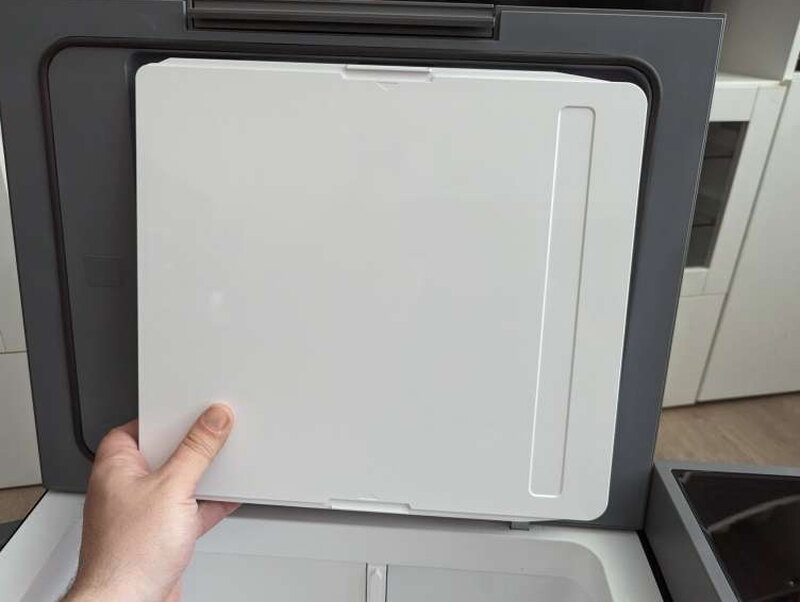
EcoFlow also gave the divider a storage slot inside the lid, so it is not left loose in the vehicle or garage when you want one big compartment.

With the divider stored, the full 38L space works well as either a premium drink cooler or a deep freezing compartment for food.

Interior lighting is another small thing that makes a big difference once you use it.

The LEDs on both sides are bright enough that I do not want to go back to digging through an unlit cooler in the dark.

A rubber drain plug sits in the bottom of the storage area.

I would prefer a tether on that plug so it cannot get lost. Since this is a fridge freezer rather than a traditional ice filled cooler, I hope I will not need to use the drain constantly.

Controls And Ice Maker
The physical controls live beside the main lid. There are six buttons covering power, zone selection, temperature up or next, temperature down or previous, ice making, and ice detaching or cancel.

The display is easy to read and shows both zone temperatures. When the battery is installed, it also shows battery level, and while ice is running it shows the remaining ice making time.

If the divider is removed, the display changes to a single temperature for the full compartment.

The built in ice maker is the Glacier feature that stands out most, but it also exposes the weakest piece of the whole build. The clear lid is thin plastic, and I do not trust it to survive much bouncing around on a rough trail. The Glacier already announces a finished ice cycle on the screen and with a loud chime, so the fragile clear lid feels unnecessary.

The button on that lid is also too easy to hit. It opened often enough when I reached around the Glacier that I eventually taped the lid shut.

Under the lid are 18 metal studs. Add water, start an ice cycle, and the compressor cools those studs to form cubes. While ice is being made, the compressor pauses the cooling of the main interior. In my use, a batch took about 12 to 18 minutes, and the insulation handled that short pause well.

The system works like a countertop ice maker, except you lift the basket up to break the cubes free instead of waiting for them to drop downward.

The basket has 18 holes in the bottom, a folding handle, and a corner opening that helps when scooping ice.

EcoFlow includes a small ice shovel, though I found it nearly useless in practice.

Power, Battery, And Drains
The Glacier has large side handles, and they can be removed if needed. Lifting an empty 51.4 lb. refrigerator is still not something I would call easy, so the optional rolling kit matters.

On the right side, a small door covers the drain tube for the ice maker water.

The main power connection sits low on the right side. It accepts AC power, DC power, or EcoFlow solar panels. The solar panels are sold separately, and they require the portable rechargeable battery, which is also sold separately.

The DC 12V cable is included, although I wish it were longer. On DC power, the Glacier charged fully in roughly four hours. The app includes battery protection so the Glacier can avoid draining your 12V supply. With that protection on and the portable battery installed, it can switch to the internal battery when the external voltage drops below the level you choose.

The AC adapter is a chunky brick, but it charged the Glacier fully in a little over two hours.

The left side has two vertical rails. Their main purpose, at least for my setup, was to come off so the telescoping handle could go on.

At the back, the compressor vent sits beside a small door labeled Power.

That door hides the slot for the 298Wh portable rechargeable battery.

The battery slides in smoothly and locks into place with a solid click.

A release button lets you pull the battery out, and the battery has its own small button for checking charge.

The 100W USB-C port on the battery lets it double as a power source for a phone, laptop, or other gear.

Underneath, four rubber feet help keep the Glacier from sliding on slick surfaces.

The underside also includes the outlet for the main compartment drain.

App Setup
Basic setup depends on which accessories you bought. If you only have the Glacier, the process is mostly downloading the EcoFlow app, connecting over 2.4 GHz Wi-Fi, naming the unit, and choosing preferences.

The app is one of the best parts of the Glacier. It exposes useful controls without feeling messy. During setup, it is worth checking firmware, especially because EcoFlow had recently released an update that improved the ice making system.

Installing The Wheels And Handle
The Glacier wheels and handle kit adds a little assembly work, but it changes the whole experience of moving the refrigerator.

The wheels bolt to the lower right side of the Glacier using four existing holes.
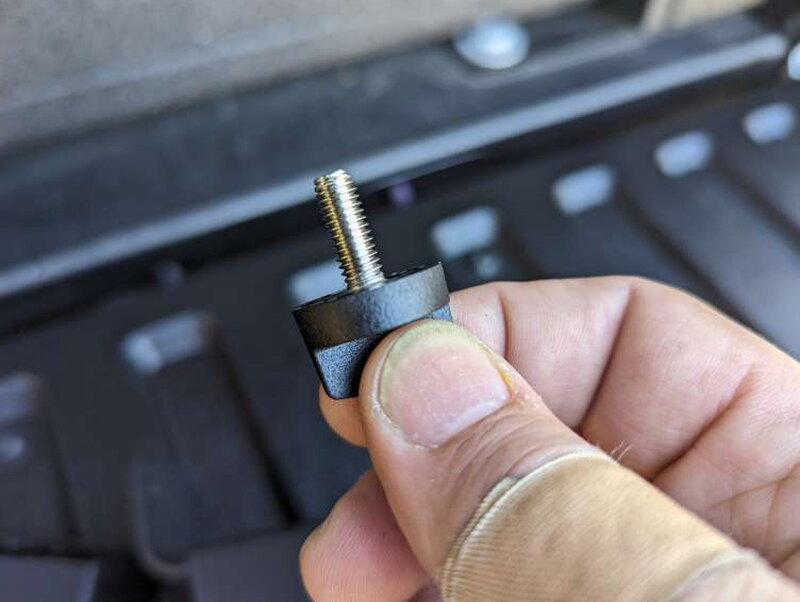
EcoFlow includes the four bolts, and they can be threaded and tightened by hand.

I added blue thread locker for peace of mind, although the bolts felt secure even hand tight.

The wheels add noticeable width, but they are sturdy and roll smoothly.

The wheel hardware is packaged cleanly, and nothing about the installation felt difficult.

The telescoping handle mounts where the left side rails were installed.

EcoFlow includes a small Phillips screwdriver for removing the two rail screws. Once the screws are out, the rails lift away from the Glacier.

Two additional small screws and lower brackets also need to come off before the handle can fit correctly.

After that prep, the rail mounting points and lower bracket locations line up with the handle assembly.

The handle frame sits flush against the side rather than looking like a clumsy add on.

Six front screws hold the handle in place once everything is aligned.
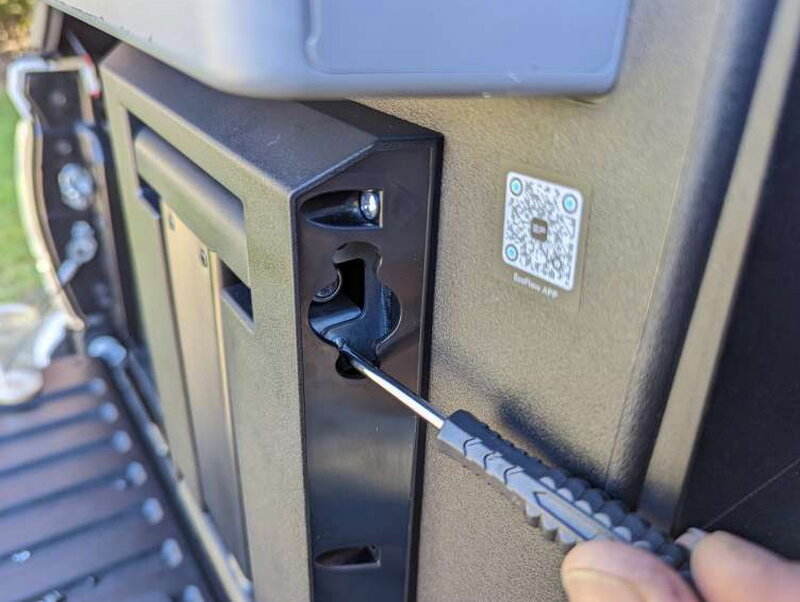
Four more screws, two on each side, make the handle feel more secure.

EcoFlow supplies two adhesive plastic strips to cover the handle screw holes.

The strips are side specific, so each one follows the shape of its matching handle channel.

Once the trim is pressed on, the handle looks like it belonged on the Glacier from day one.

The release button works like the button on rolling luggage.
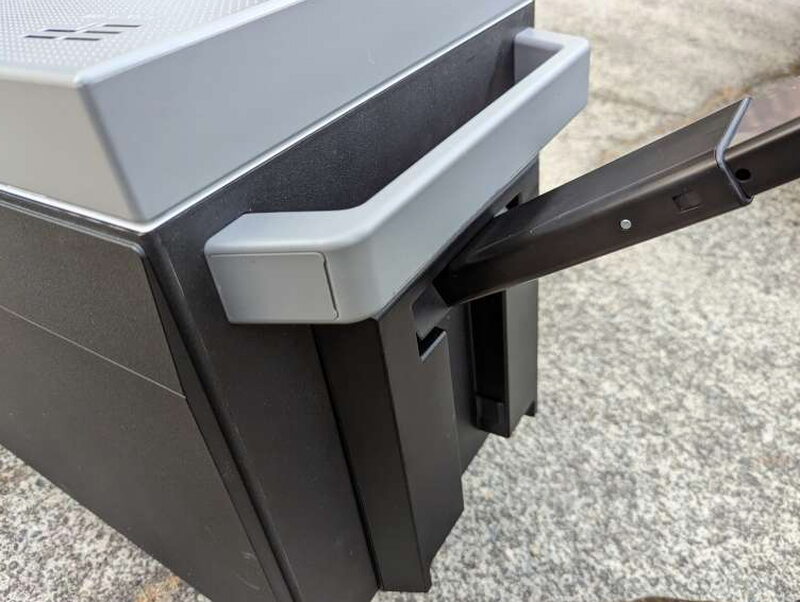
The extended handle feels solid, which is important for an empty refrigerator that weighs about 50 lbs.

I originally expected to remove the wheels and handle after testing. After moving the Glacier around with them installed, I left them on.
Using The Glacier
Performance is where the Glacier justifies a lot of its cost. It is fast, quiet, flexible, and easy to manage from the app.
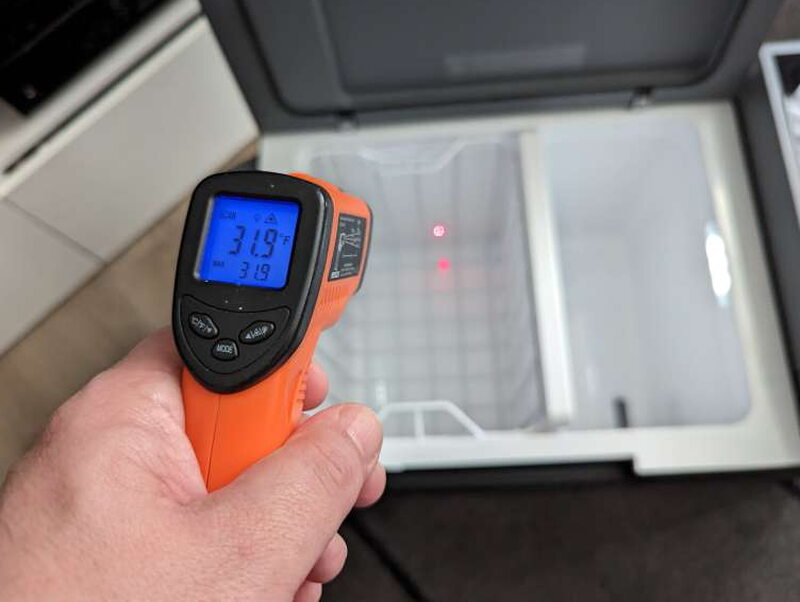
EcoFlow claims the Glacier can cool from 86 degrees F to 32 degrees F in 15 minutes, and my empty unit dropped from room temperature to about 30 degrees F on one side and minus 2 degrees F on the other in under 15 minutes.

In Quick freezing mode, it was so quiet that I kept checking whether it was actually running.

The app stayed reliable throughout testing. I could power the unit on or off, set each zone, check battery level and charge time, and start or stop the ice maker without crashes or glitches.

The ice maker won me over more than expected. I thought it might be a gimmick, but the first time it rescued a warm drink, I understood the appeal. Filling to the max line took about two and a half standard water bottles.

After the first fill, I left water in the reservoir between batches and topped it off whenever it dropped below the minimum mark.

Early batches sometimes left the basket stuck even when the app said it was ready. After several cycles, the basket loosened and released more easily.

The cubes are fairly small, which worked fine for drinks and water bottles. I would not count on them as the main way to keep a full weekend of food cold.

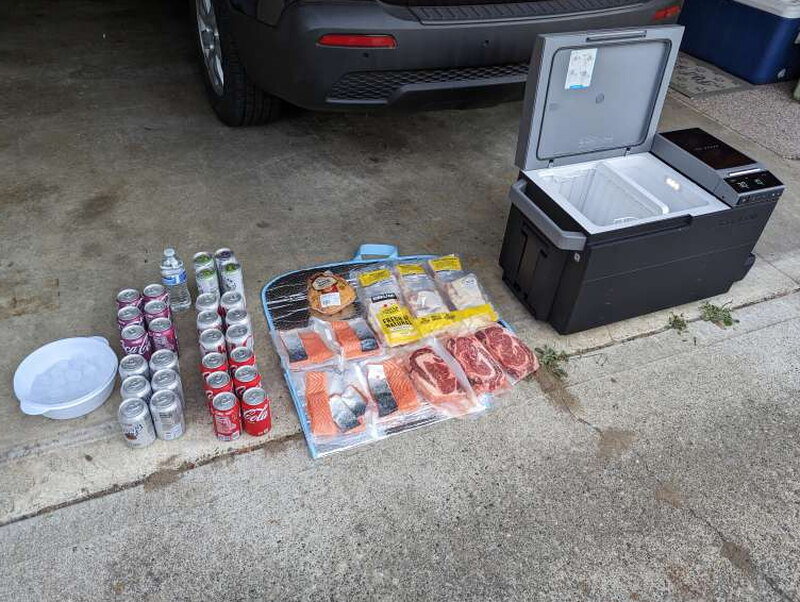
The Glacier capacity also surprised me. In dual zone mode, I packed drinks on one side and meat on the other, and the freezer side stayed below zero while keeping the food frozen solid.

The wheel kit made hauling a loaded Glacier around camp much easier. At this price, I think the wheels and handle should be standard rather than another accessory.

Once strapped into my overlanding setup, the Glacier felt like an upgrade I would actually use. I still worried about that ice maker lid, but the convenience of cold storage and on demand ice made trail life better.
The Good
- Excellent app design and reliable controls
- Single zone and dual zone modes make the storage flexible
- Can run from AC, DC, solar with the battery, or the removable rechargeable battery
- Fast cooling and impressively quiet operation
- Built in ice maker is more useful than I expected
The Not So Good
- The rechargeable battery, wheels, and carrying handle should be included at this price
- The ice maker lid feels fragile and opens too easily
- The overall shell does not feel as durable as I want for rough overlanding use
- The included ice shovel is not very helpful
Quick Questions
Q: Are the battery, wheels, and handle kit included with the Glacier?
A: No, they’re sold separately. With the rechargeable battery and wheel/handle kit added, the total price climbs to around $1,300.
Q: How fast does the Glacier cool down?
A: EcoFlow claims 86F to 32F in 15 minutes; in this test an empty unit dropped to about 30F on one side and -2F on the other in under 15 minutes.
Q: Is the built-in ice maker reliable?
A: Mostly, though the clear plastic ice maker lid feels thin and its button is easy to bump open accidentally, to the point the reviewer taped it shut.
Q: Can the Glacier run on solar power?
A: Yes, it supports solar charging input, though the solar panels are sold separately and require the portable rechargeable battery.
The Verdict
The EcoFlow Glacier is a feature packed portable refrigerator with real advantages over a basic fridge freezer. The built in ice maker, removable 298Wh battery, app control, dual zone layout, and support for AC, DC, and solar power make it an unusually capable camp cooler replacement.
My hesitation is value and durability. The rechargeable battery should be standard, and I feel the same way about the wheels and carrying handle. Once those pieces are added, the total sits near $1,300. At that price, I want a tougher body and a better ice maker lid. I also did not love needing tape to keep the ice tray from popping open when the unit was moved.
For gentle use such as car camping, boating, tailgating, or poolside drinks, the Glacier is excellent. For rougher trail duty, I would treat it carefully. Even with those reservations, there is no denying how much technology and thoughtful design EcoFlow packed into it, and I really liked using it.
Price: $1,199 for EcoFlow Glacier with Rechargeable Battery, $99 for Detachable Wheels and Lever
Product Link: EcoFlow
Source: The sample of this product was provided by EcoFlow.
RATING: 4 stars


