
REVIEW – I still hate mowing lawns. Allergies make it miserable, the work never feels finished, and my mom’s large Pacific Northwest yard can turn shaggy fast when the weather is right. That is the exact situation I had in mind when I agreed to test the Airseekers Tron 2400 Robotic Lawn Mower. I wanted to know if a premium robot mower could take over enough of the job to matter, not just look clever in a controlled demo.
The Tron 2400 is not a casual purchase. At $2,099, it sits in premium territory and promises AI vision, GPS assisted navigation, RTK positioning, VSLAM mapping, long runtime, and a six blade mulching system. I used it for several weeks in thick grass, on uneven ground, around yard clutter, and near the kind of holes and soft spots that make robot mowers earn their keep.
What the Airseekers Tron 2400 is
The Tron 2400 is a robotic lawn mower built around 360 degree AI vision, onboard GPS, Real Time Kinematic satellite positioning, and VSLAM, which stands for Visual Simultaneous Localization and Mapping. Airseekers rates it for up to 2,400 m² of total mowing area, or a little over half an acre. Per charge, it can cover up to 600 m², with runtime up to 180 minutes and a 120 minute charge time.
It can manage up to 30 independent zones, cut from 30 mm to 90 mm, climb up to a 65 percent, 33 degree slope, and connect through Bluetooth, Wi Fi, and 4G. The removable 15Ah battery, rear wheel dual hub motor drive, 220 mm cutting width, IPX6 hose cleanable body, and rated noise level of 60 dB or less all point to a mower designed for serious yard work rather than novelty use.
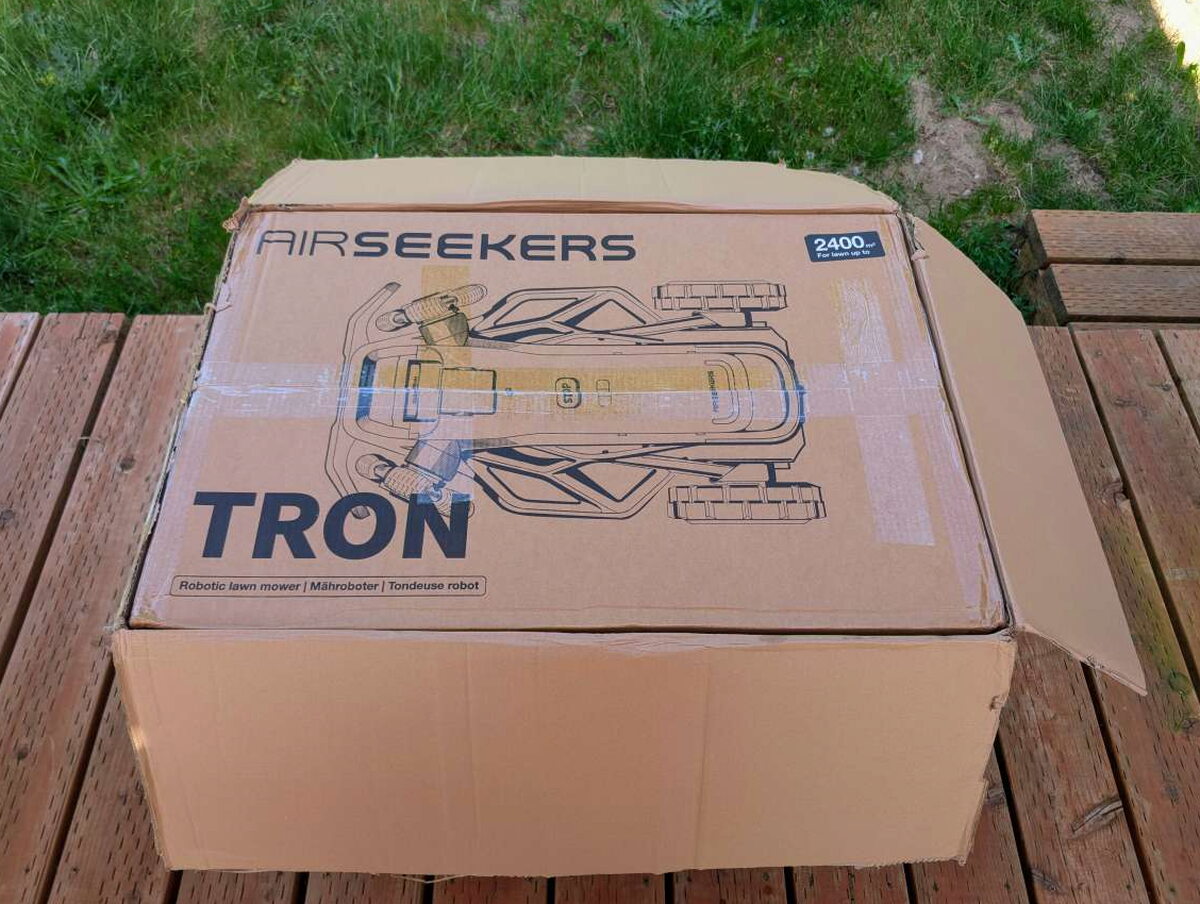
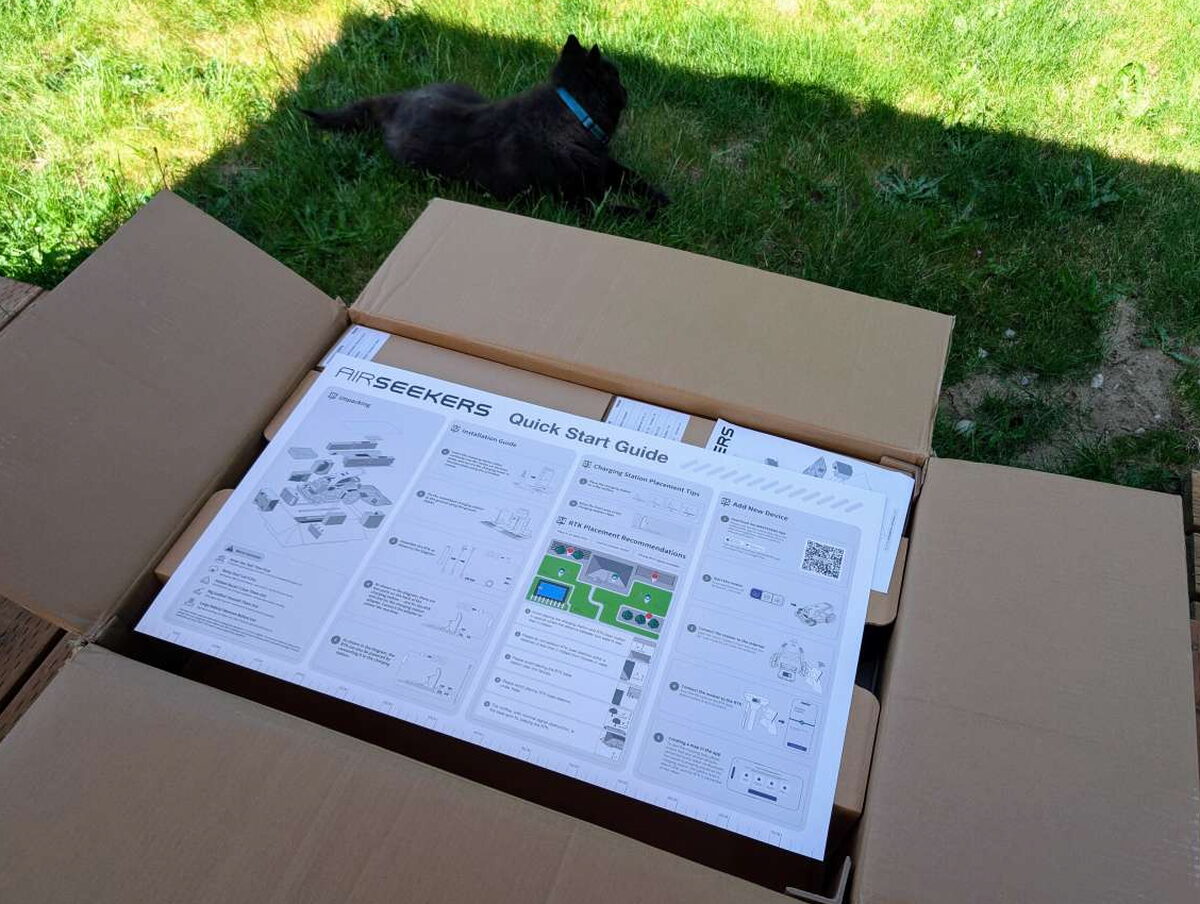
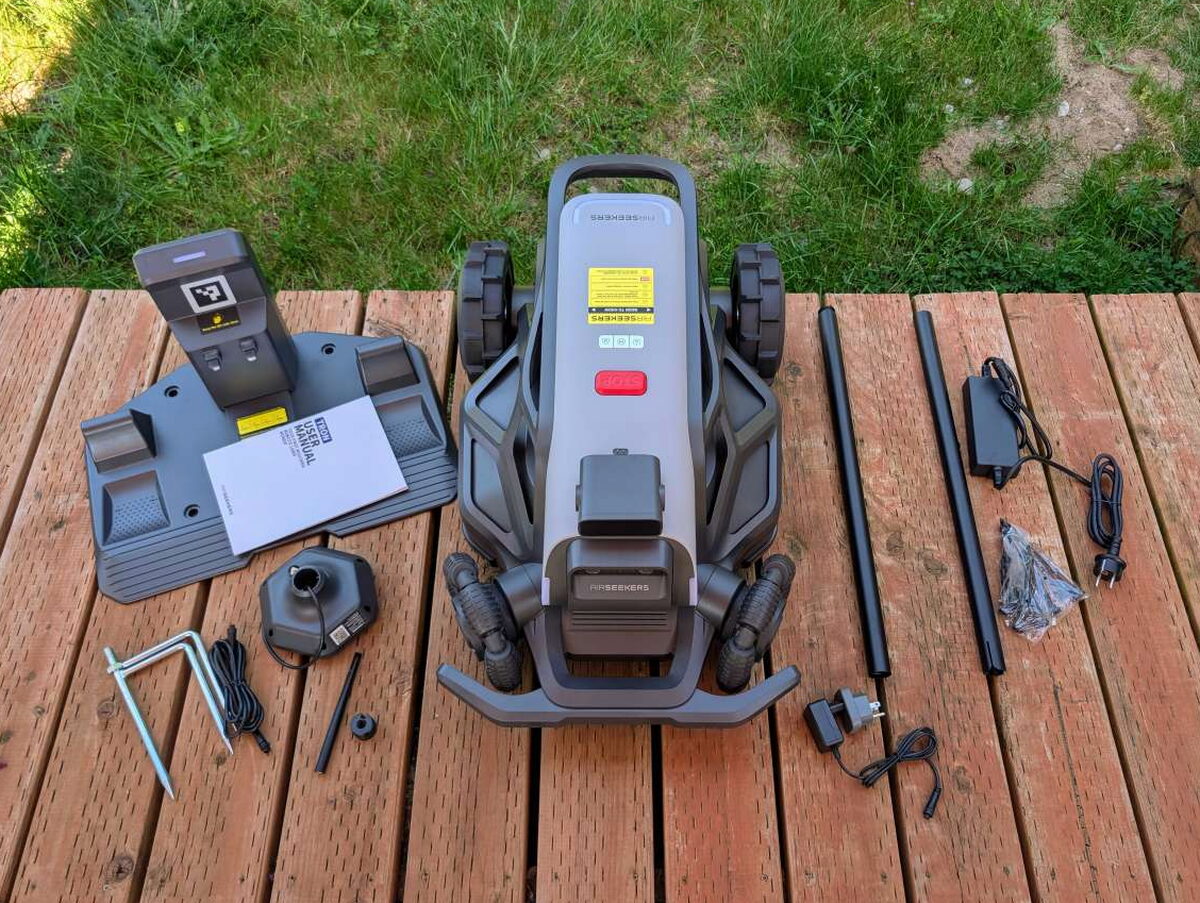
What comes in the box
Setup starts with a plain box and a big quick start sheet. Inside are the Tron 2400 mower, built in battery, RTK signal base station, RTK mounting pole, RTK ground stake, RTK antenna, RTK adapter, charging tower, charging base plate, charging station U.S. adapter, base plate screws, ground stakes, hex key screwdriver, special screwdriver, spare blades, mudguard, user manual, and quick start guide.
Specs that matter
- Max lawn area: up to 2,400 m², about 0.6 acre
- Recommended mowing area: less than 1000 m²
- Mowing area per charge: 600 m²
- Max zones: 30 independent areas
- Cutting width: 220 mm
- Cutting height: 30 to 90 mm, 1.18 to 3.54 inches
- Cutting system: dual layer six blade FlowCut mulching chamber
- Slope handling: up to 65 percent, 33 degree incline
- Battery: 15Ah removable
- Runtime: 180 minutes
- Charge time: 120 minutes
- Cutting disk motor power: 328.5 W
- Drive system: rear wheel dual hub motors
- Navigation: AI AirVision VSLAM plus RTK for under 10 cm accuracy
- Connectivity: Bluetooth, Wi Fi, 4G
- Noise: 60 dB or less
- Dimensions: 29.1 by 18.9 by 13.8 inches, 740 by 480 by 350 mm
- Chassis clearance: 65 mm
- Waterproofing: IPX6, hose cleanable
Design and build
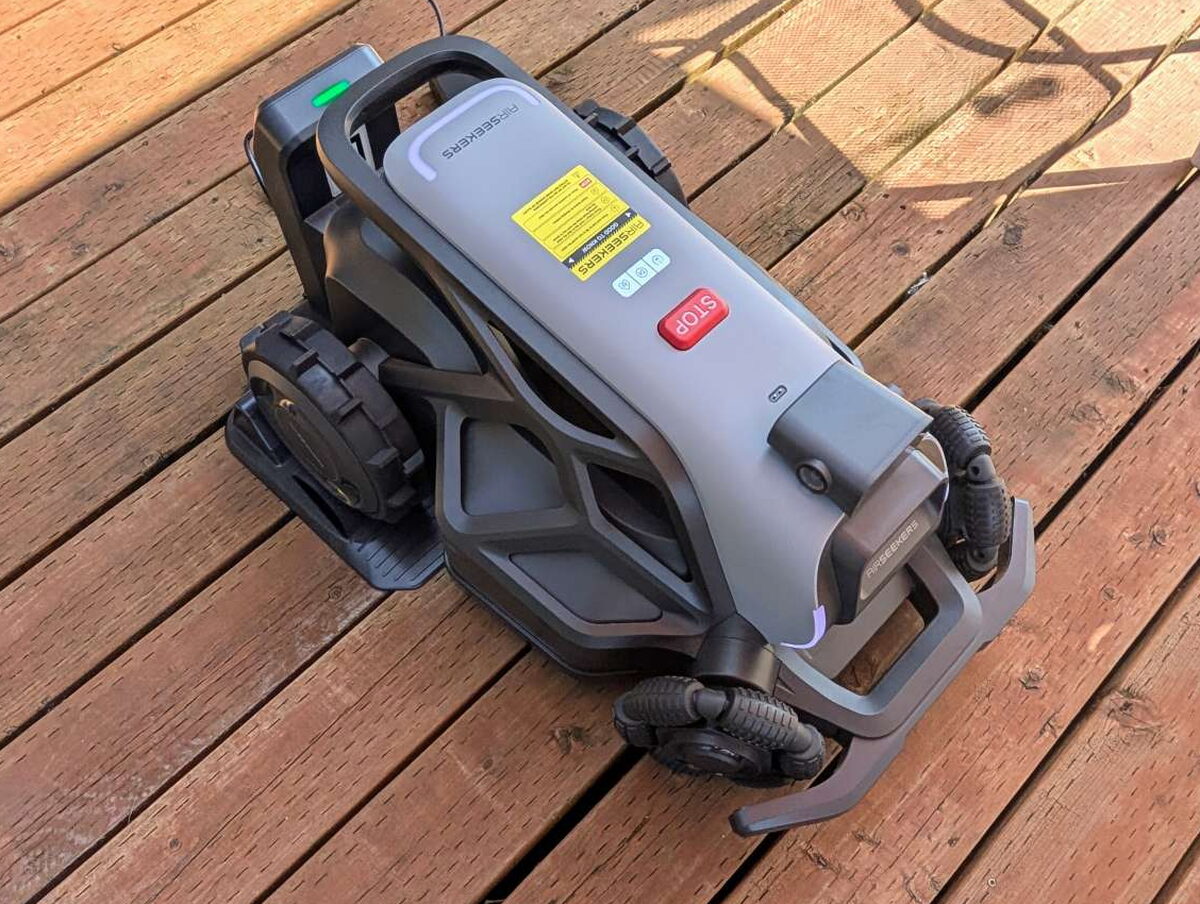
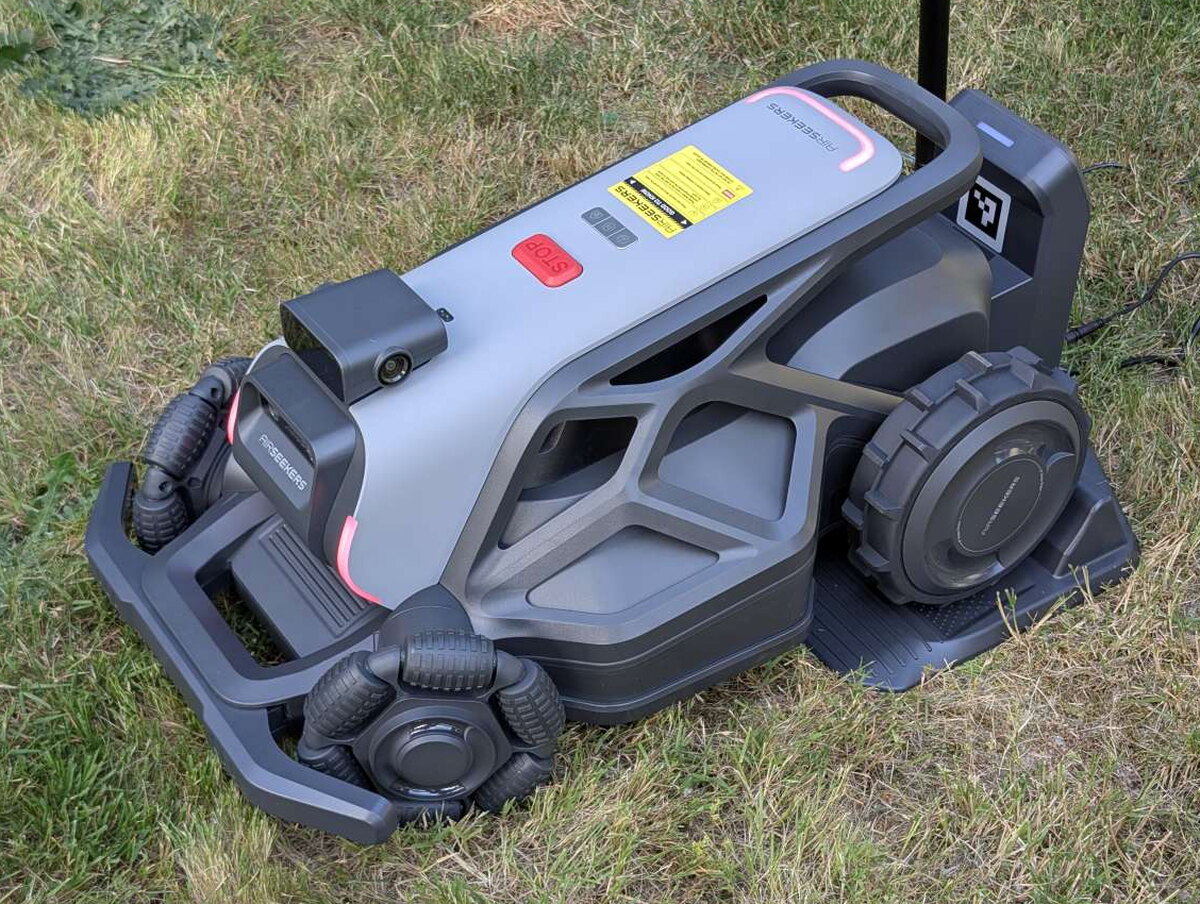
The Tron 2400 looks like a small science fiction rover, but most of the unusual shapes have a purpose. The gray textured plastic chassis feels sturdy, the open frame creates useful grab points, and the oversized rear wheels make more sense once the mower starts crawling through uneven grass.
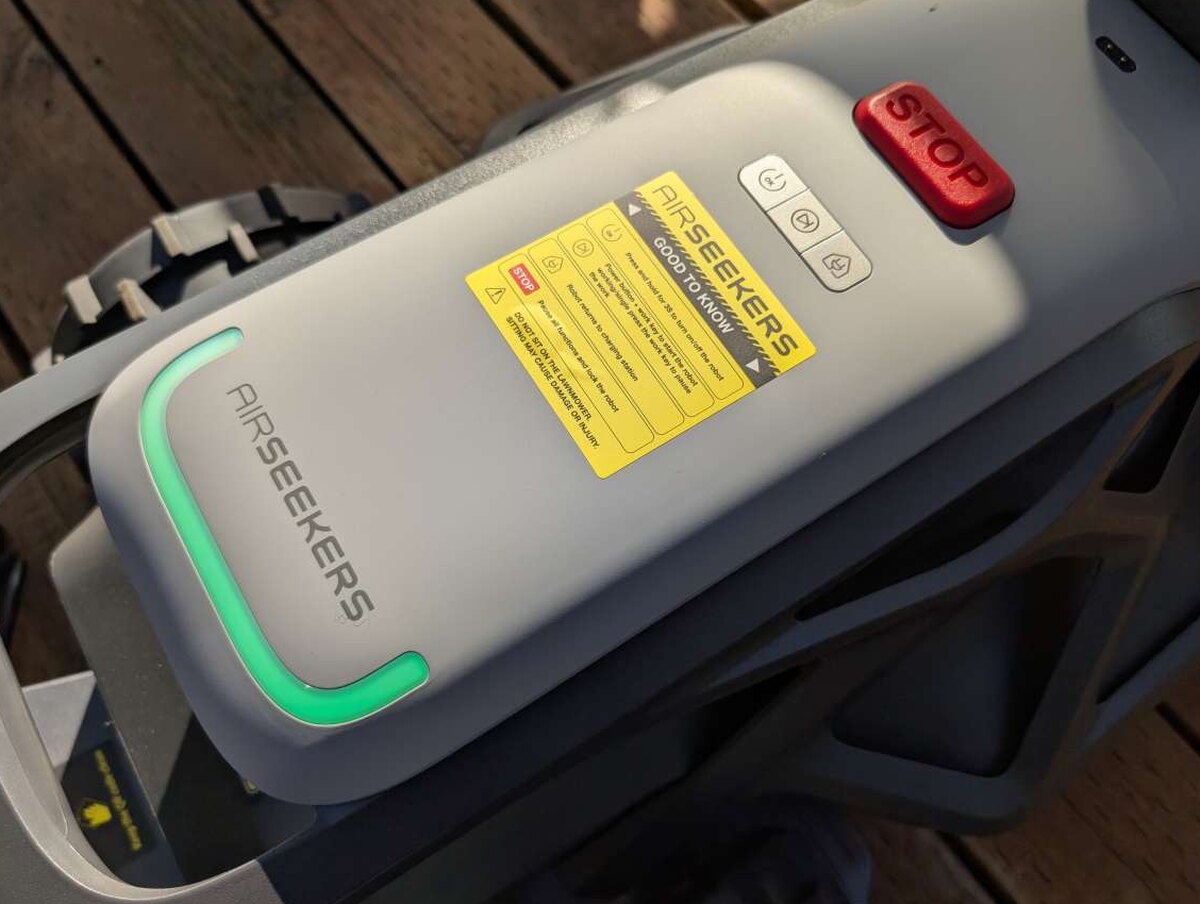
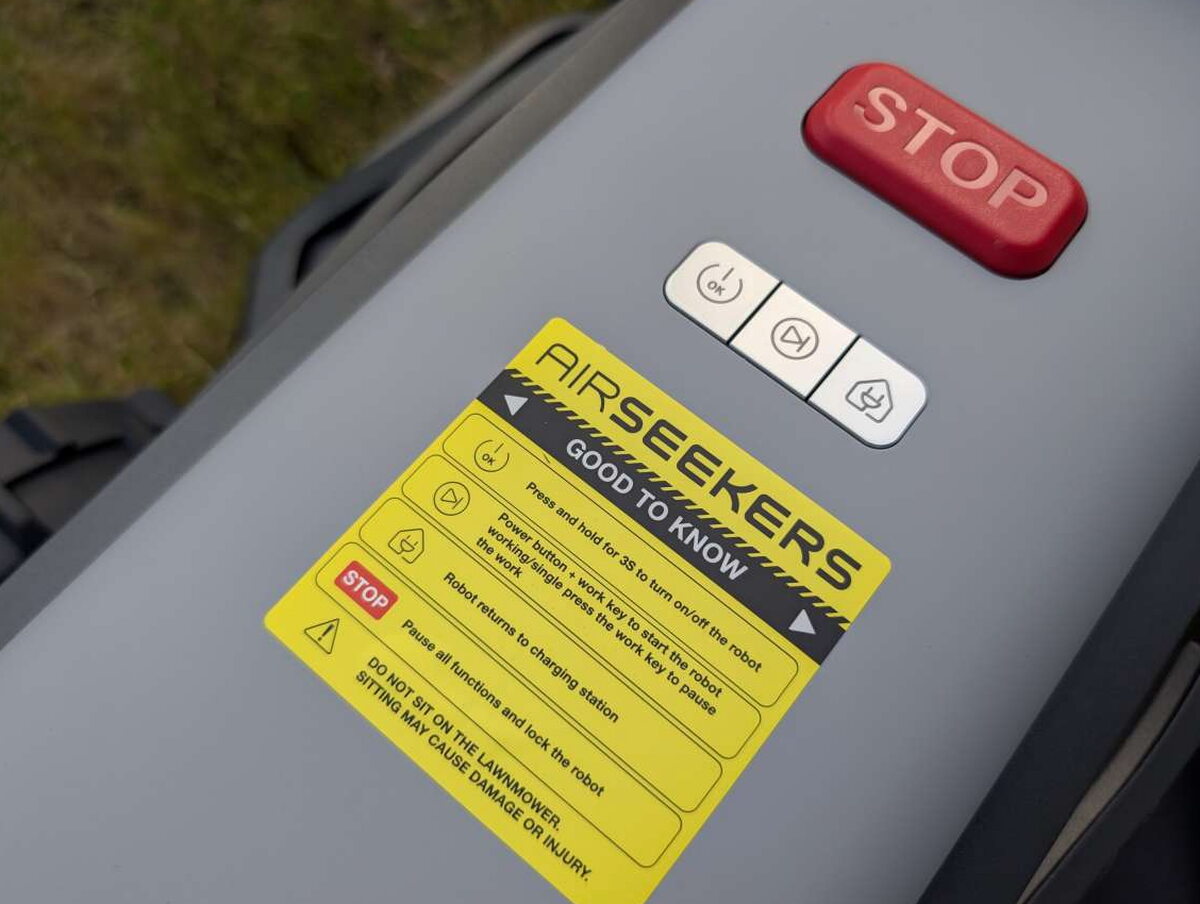
On the mower itself, Airseekers keeps the controls simple: a large emergency Stop button plus Power, Work, and Return to Charge buttons. Those are enough to start, pause, return, or shut down the mower without opening the app. My one complaint here is important: the power button was often fussy and usually needed several tries before the mower woke up.
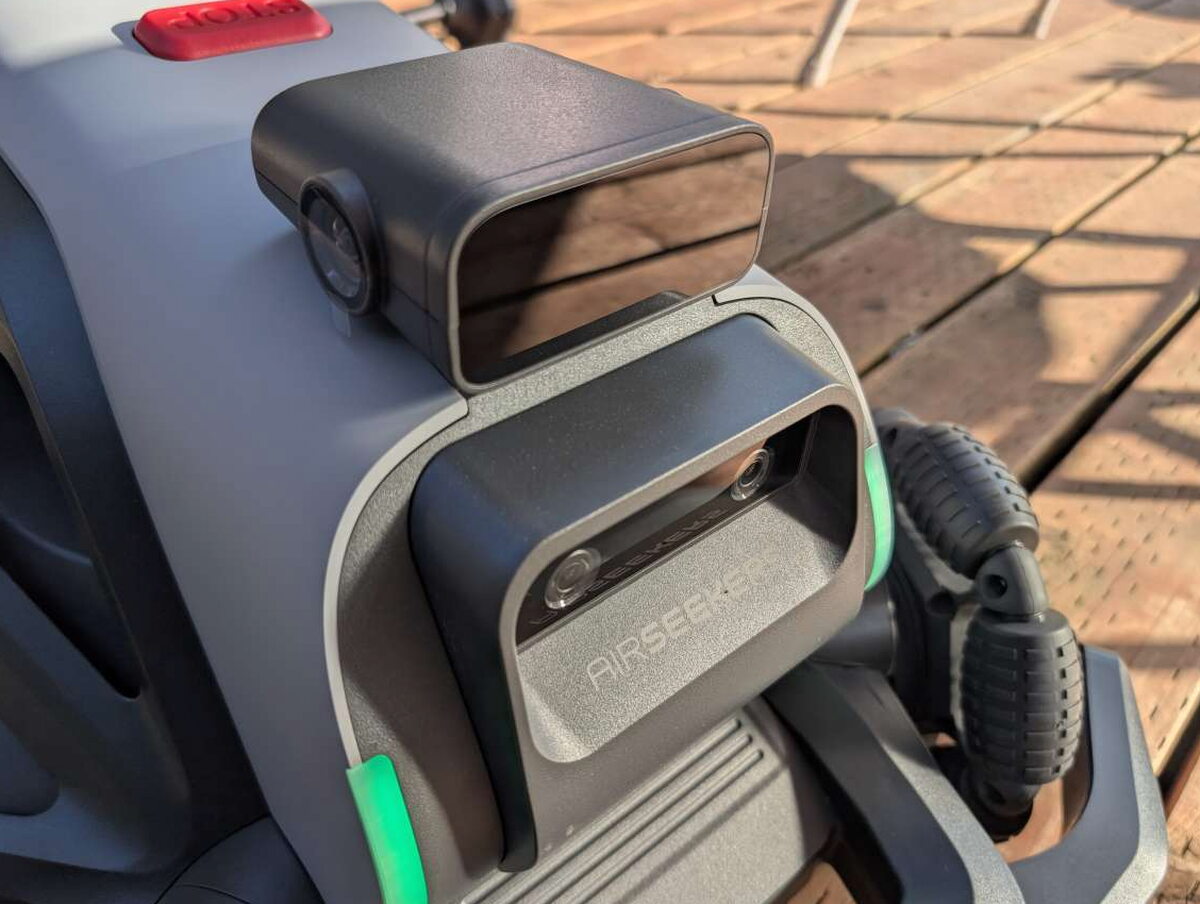

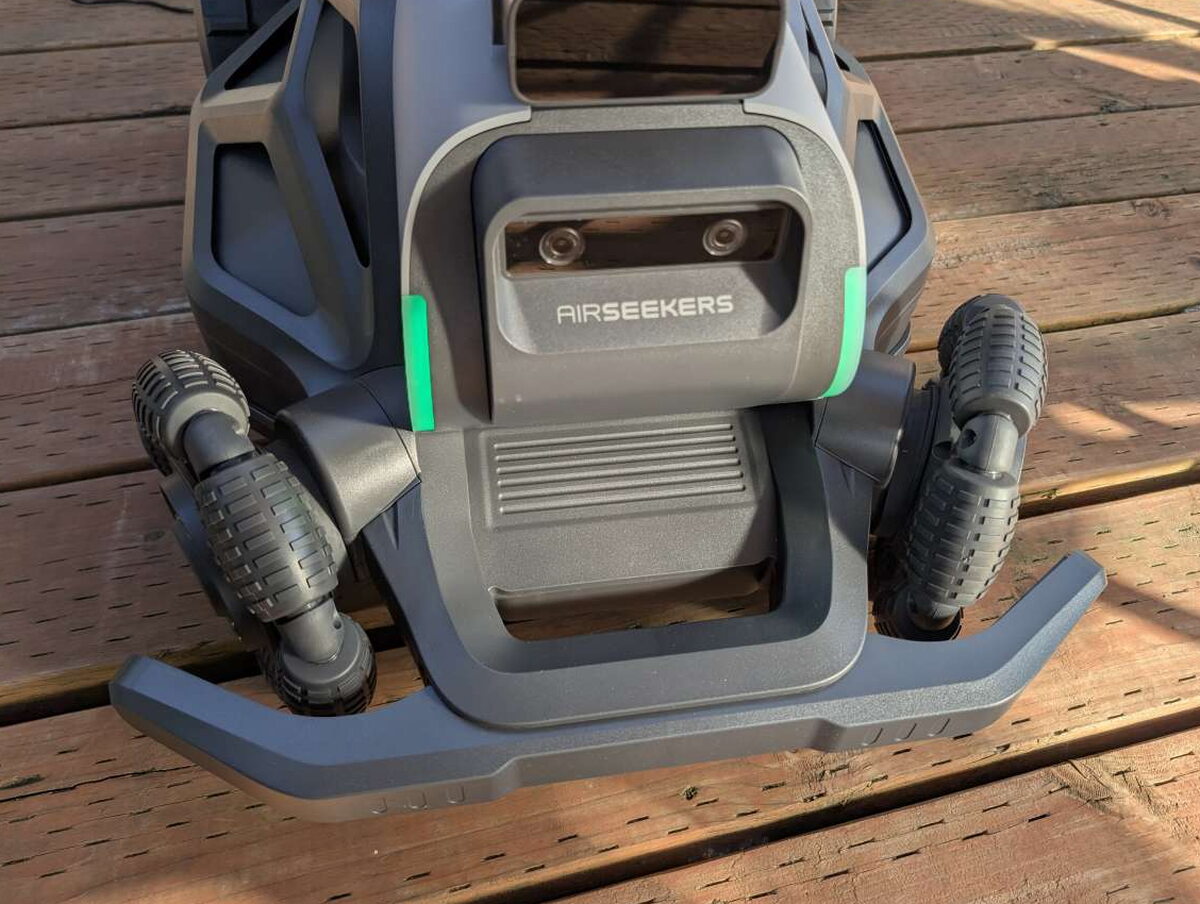
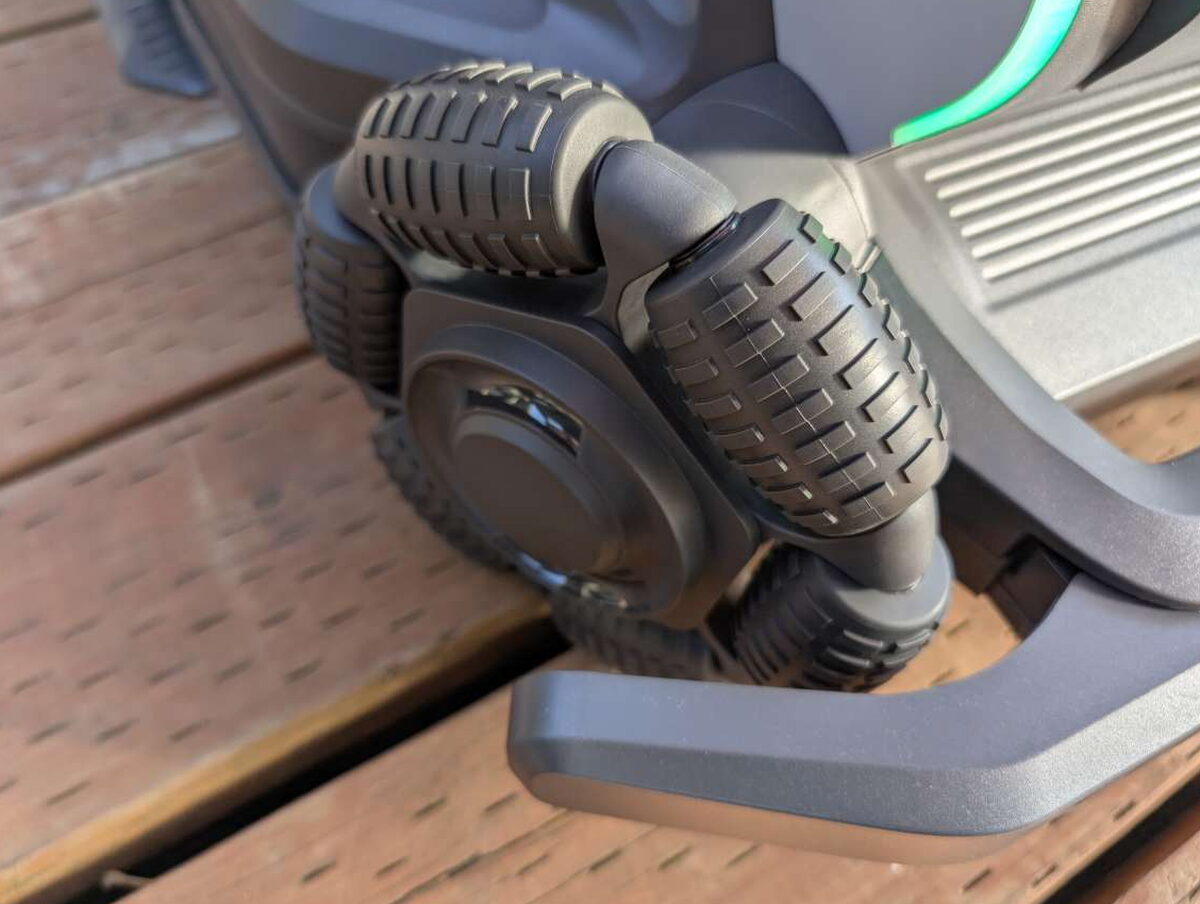

The Tron uses six cameras. Two front “eyes” under the nose help with depth perception, another camera faces forward above them, side views expand the field of vision, and a rear camera helps it dock. Small metal rain sensor contacts sit near the upper cameras. The front wheels are especially odd at first glance because they are fixed inward at about 30 degrees and made from segmented rollers. Since the rear hub motors do the driving, those front wheels let the mower turn tightly without tearing up the lawn.
The rear traction wheels were a major reason the Tron worked as well as it did in my yard. Their large fins helped the mower push through bumpy ground and taller grass, and it only rarely needed rescuing. The app lets you adjust cutting height from 30 mm to 90 mm, which was useful when I started with overgrown grass and wanted to avoid asking too much of the mower on the first run.

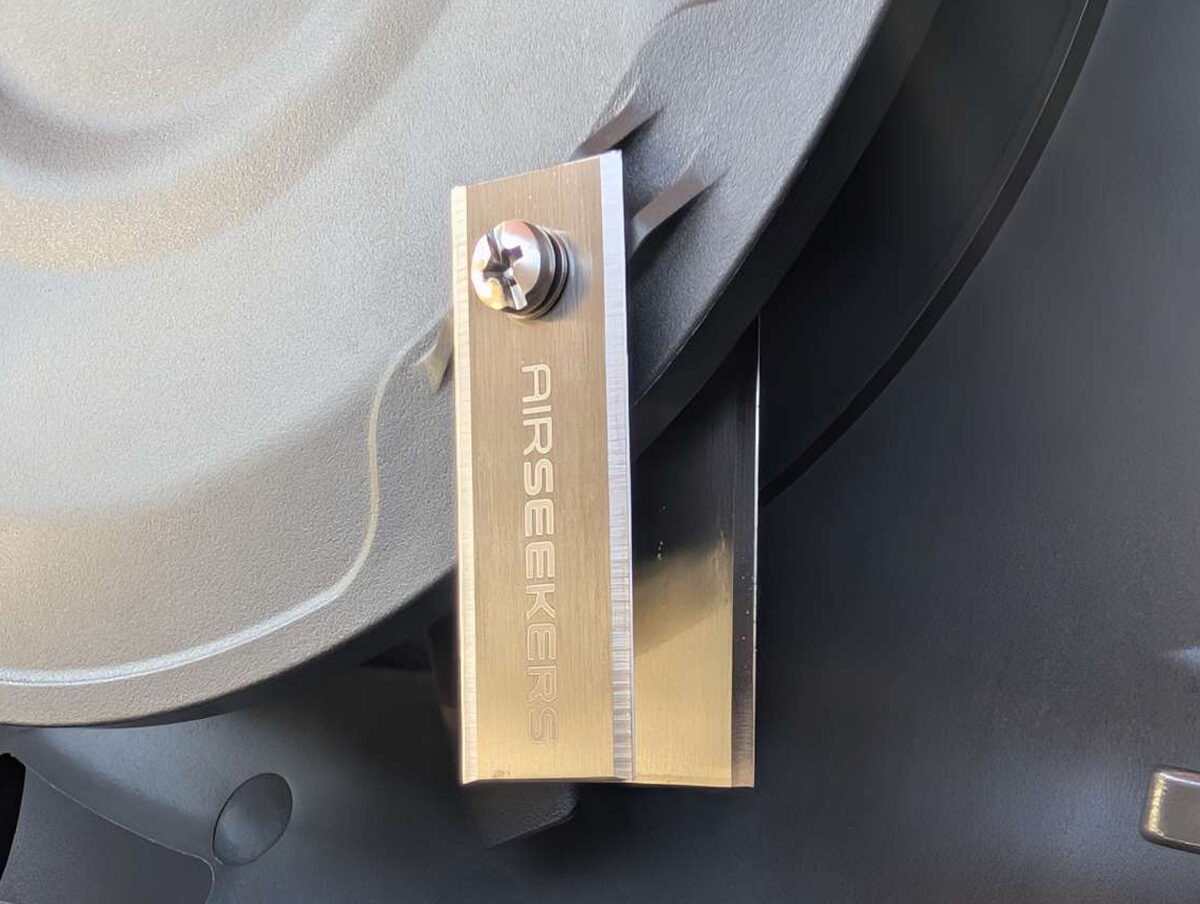

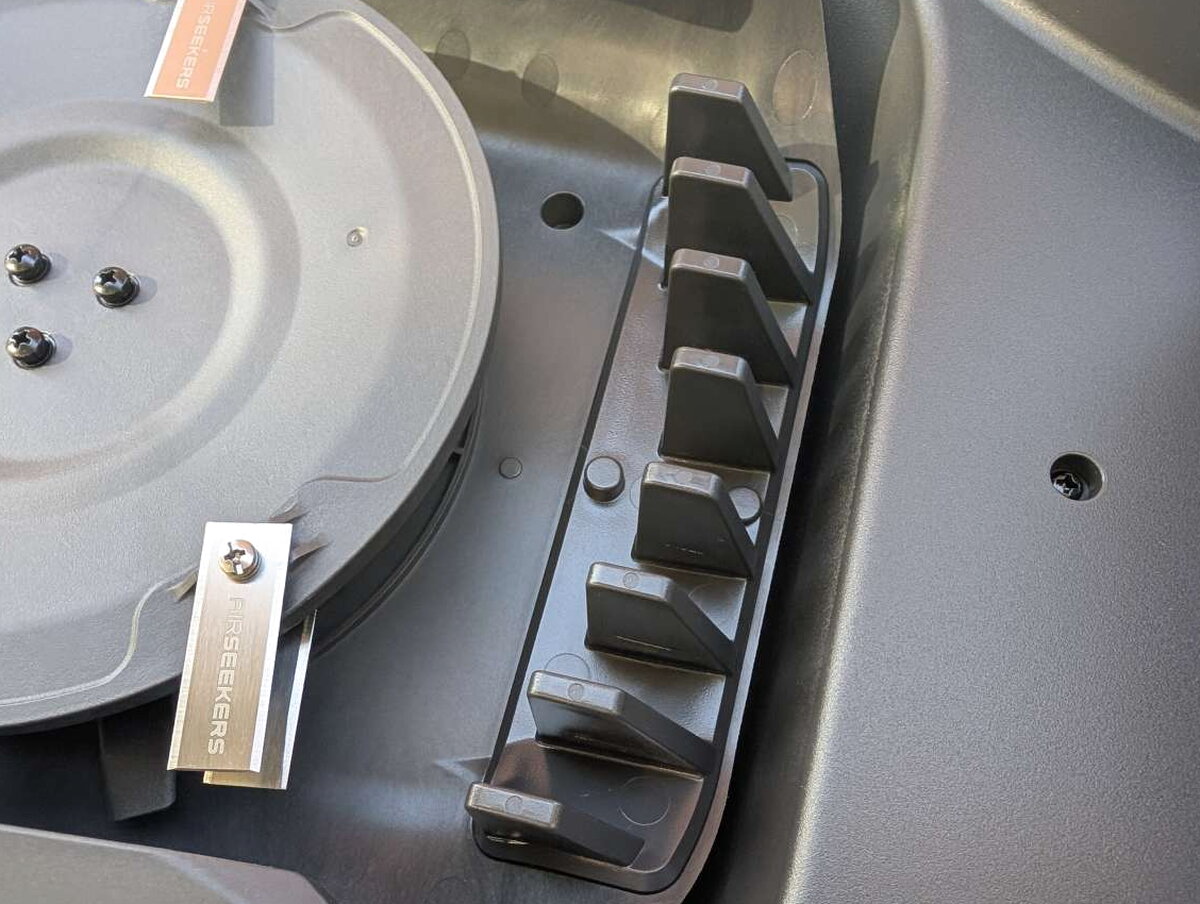

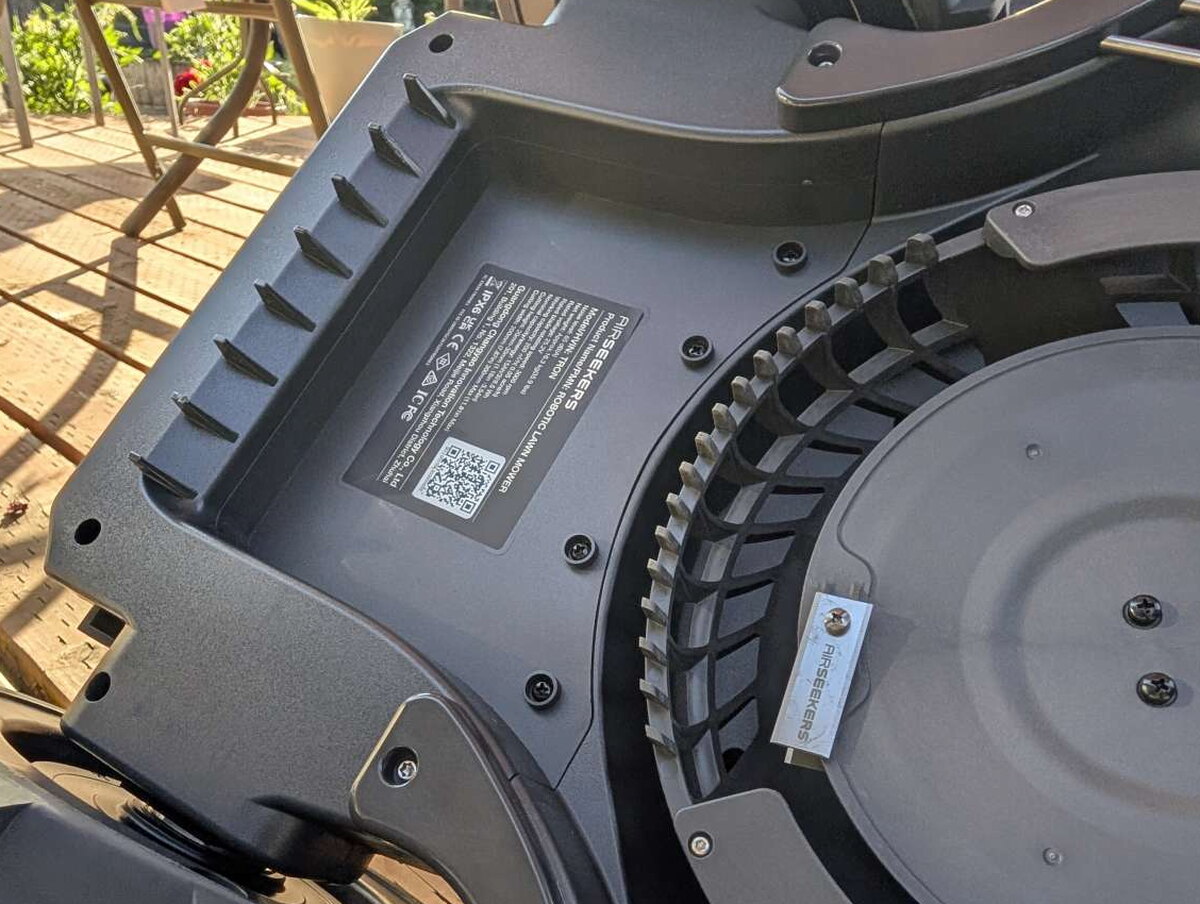

Underneath, the FlowCut system was not what I expected. Instead of one large mower blade, the Tron uses six small razor blades mounted on a spinning disc. Each blade can swing freely, and each has a matching blade behind it. Airseekers combines those blades with suction from a fan and the shaped cutting chamber to mulch clippings finely, so there is no bag to empty. For someone who already dislikes mowing, not dealing with clippings is a genuine benefit.
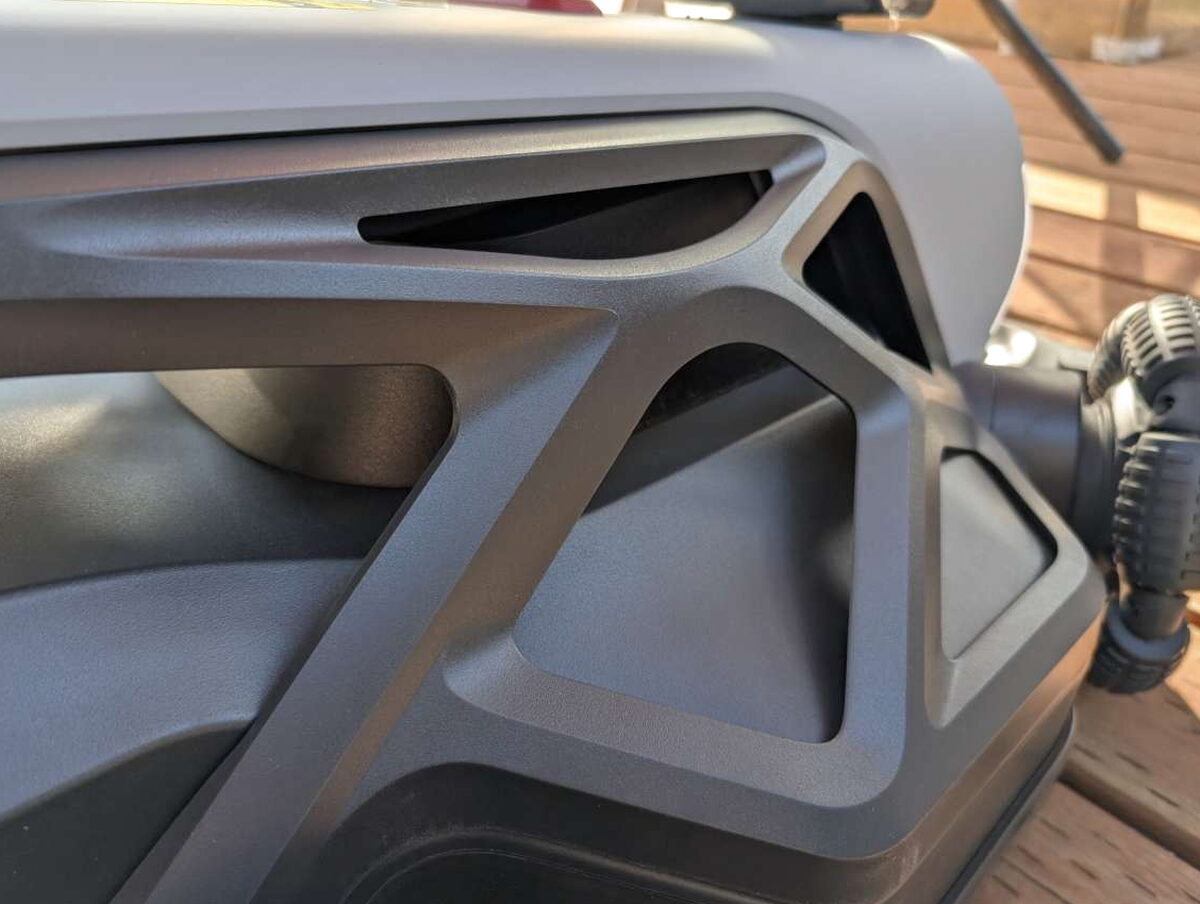

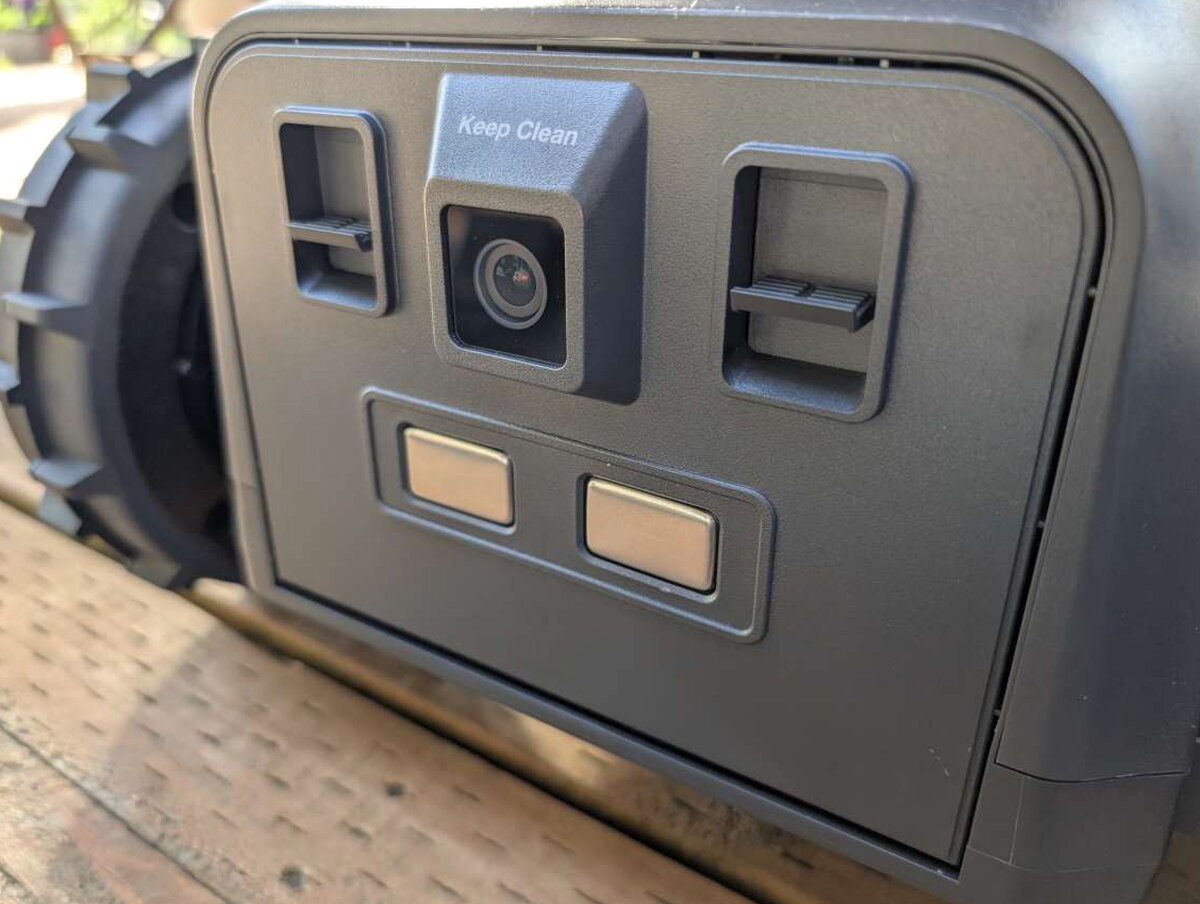
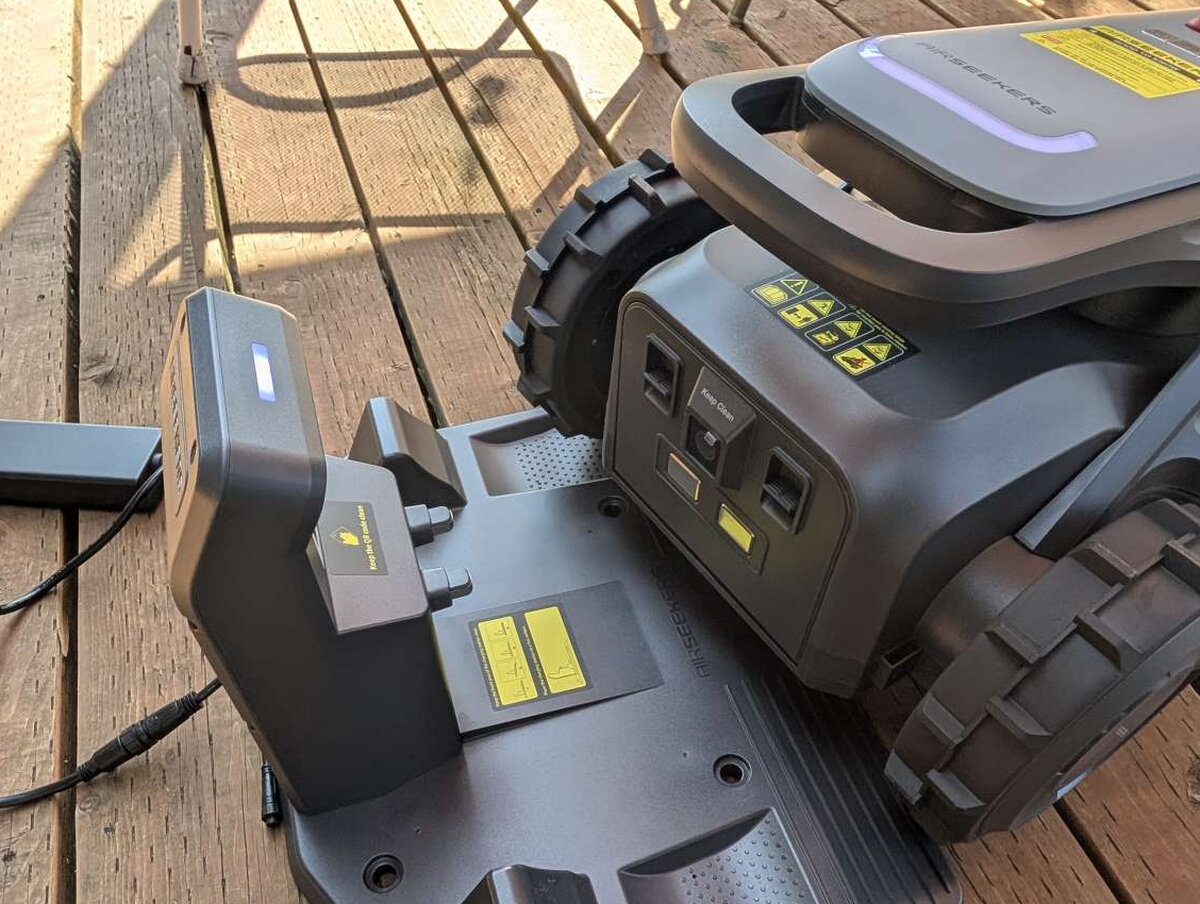
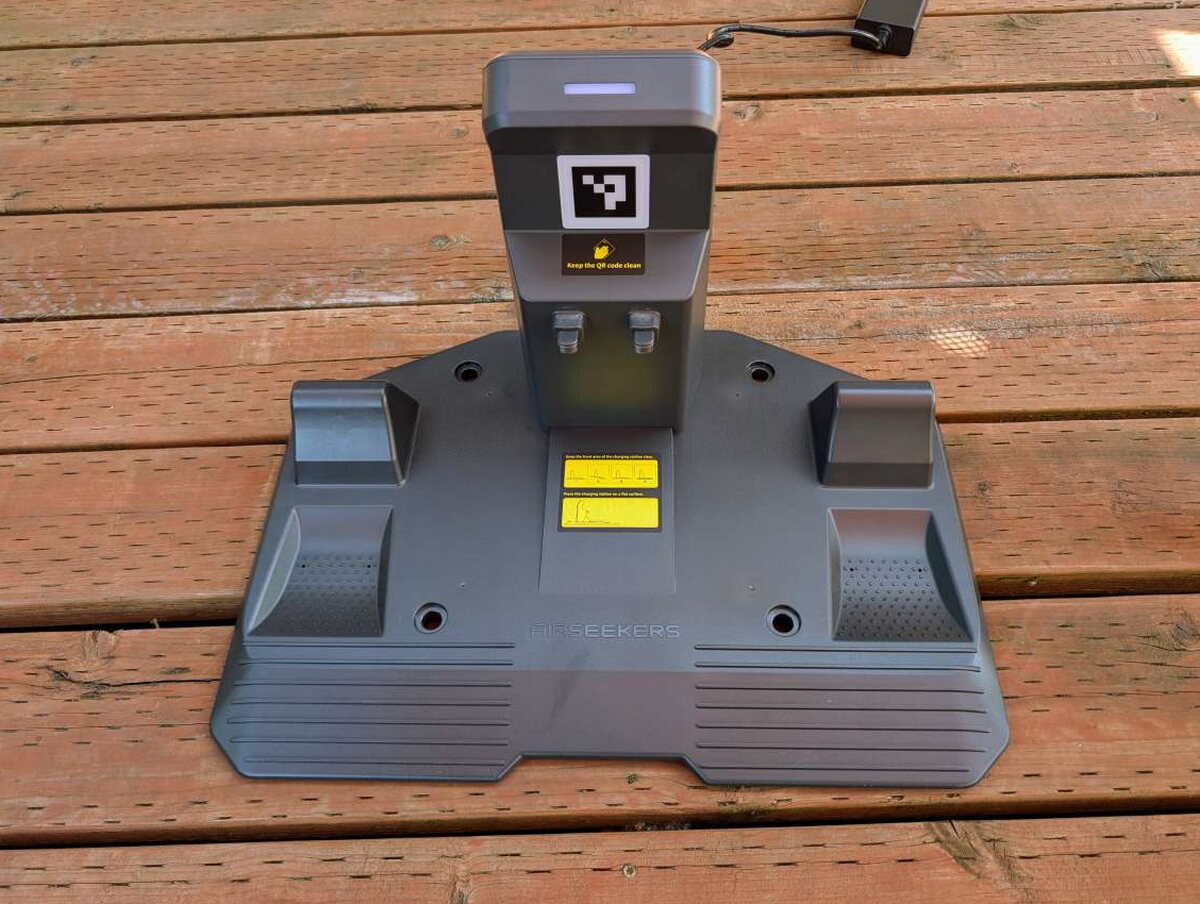
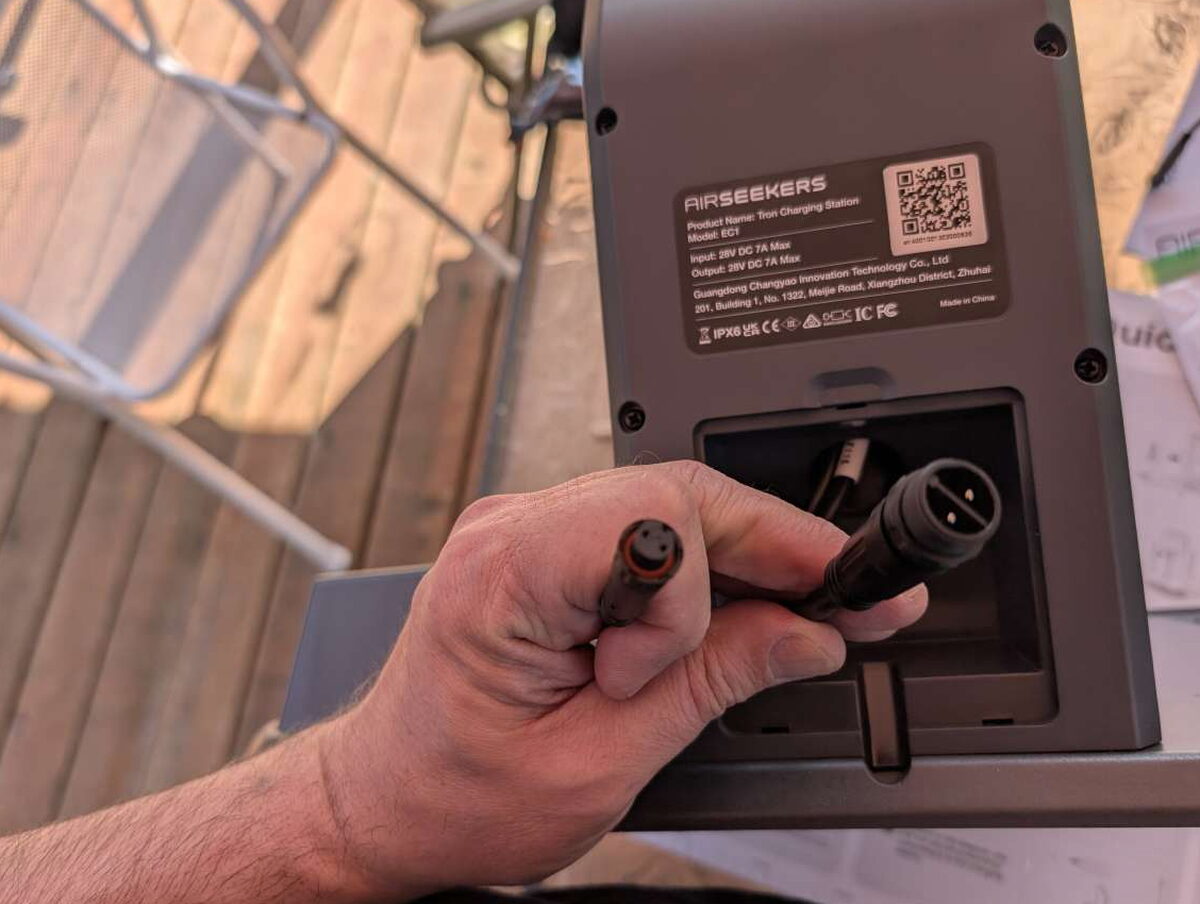

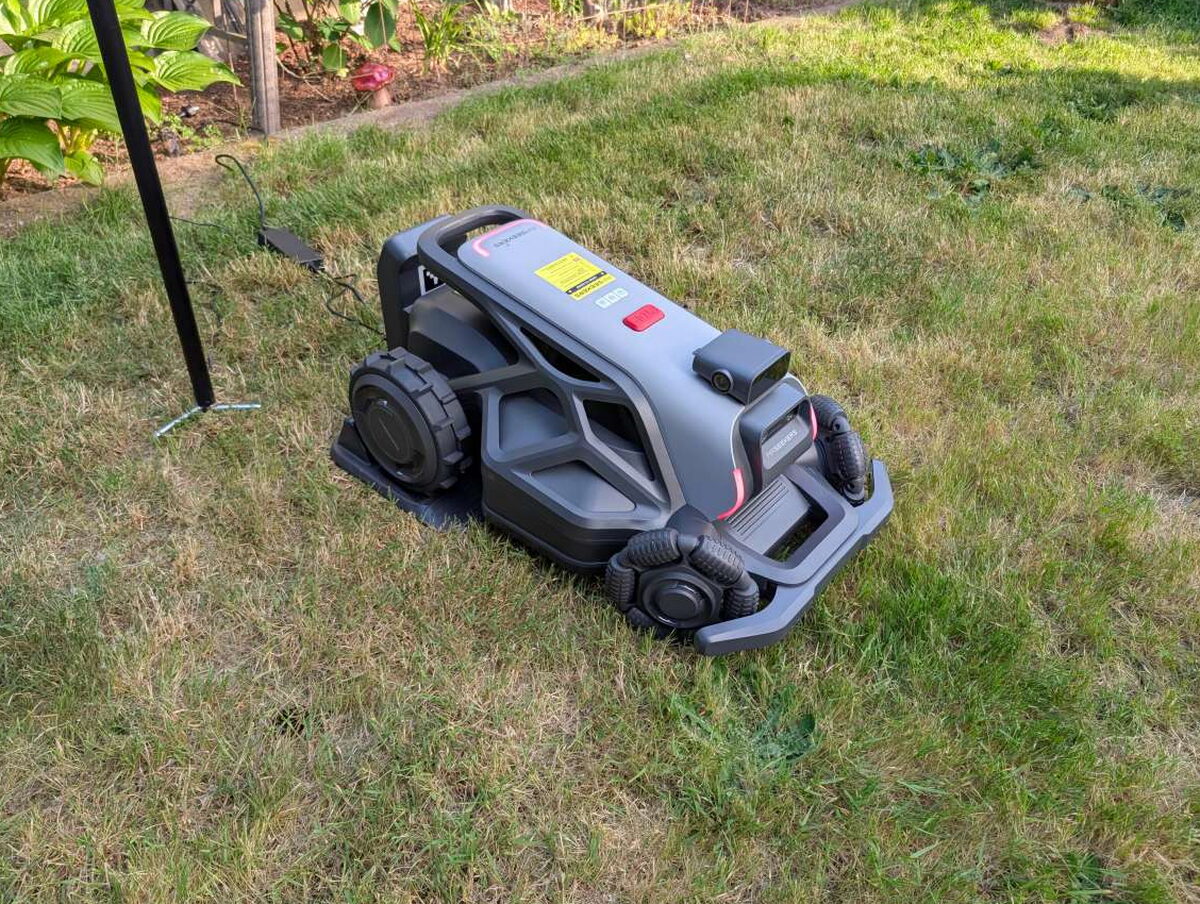
The rest of the hardware is practical. Protective bars and shields guard the underside. The open side frame and dedicated rear handle make the mower easy to lift when it does get stuck. The rear camera, charging plates, dock posts, wheel wells, QR code, and cable compartment all support the automated return to charge. The RTK module lives on a short pole, with its antenna underneath.
Setup and mapping
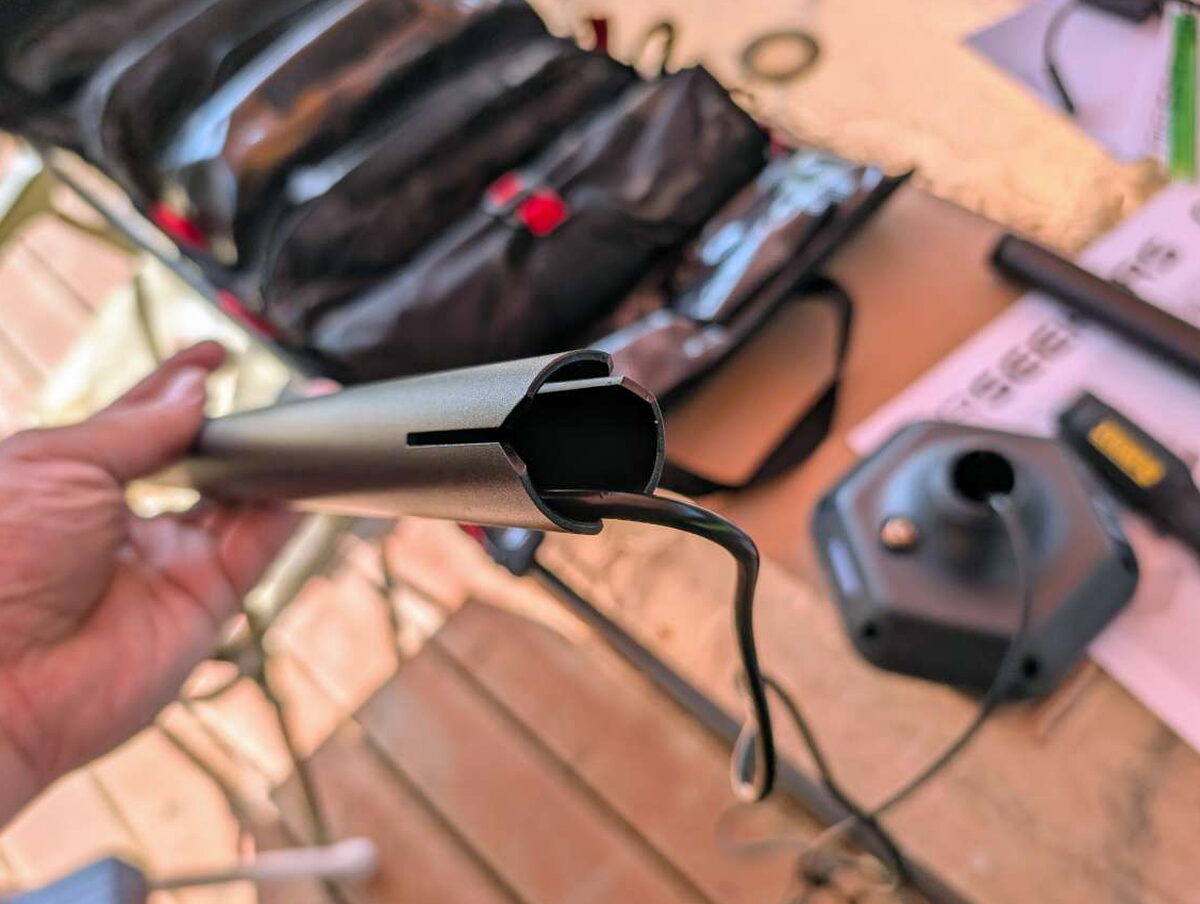
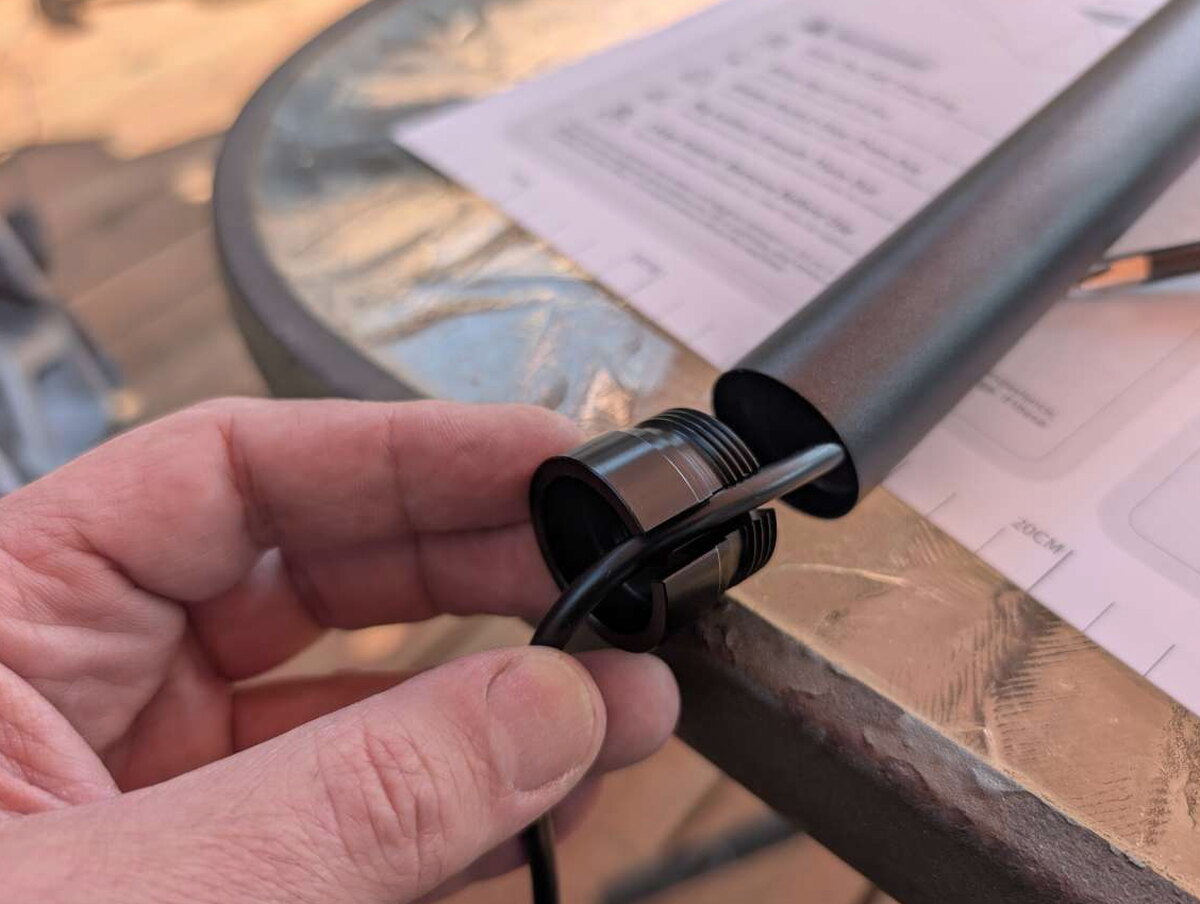
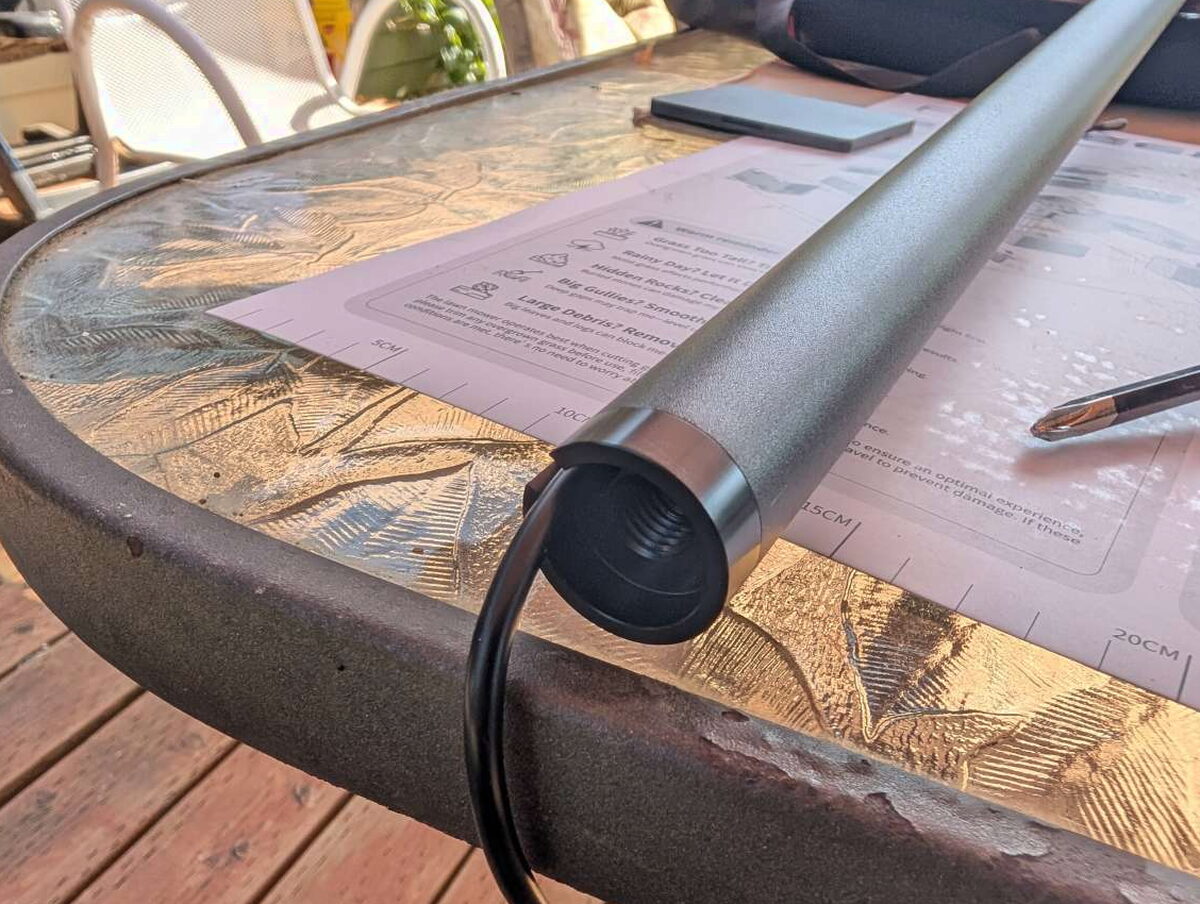
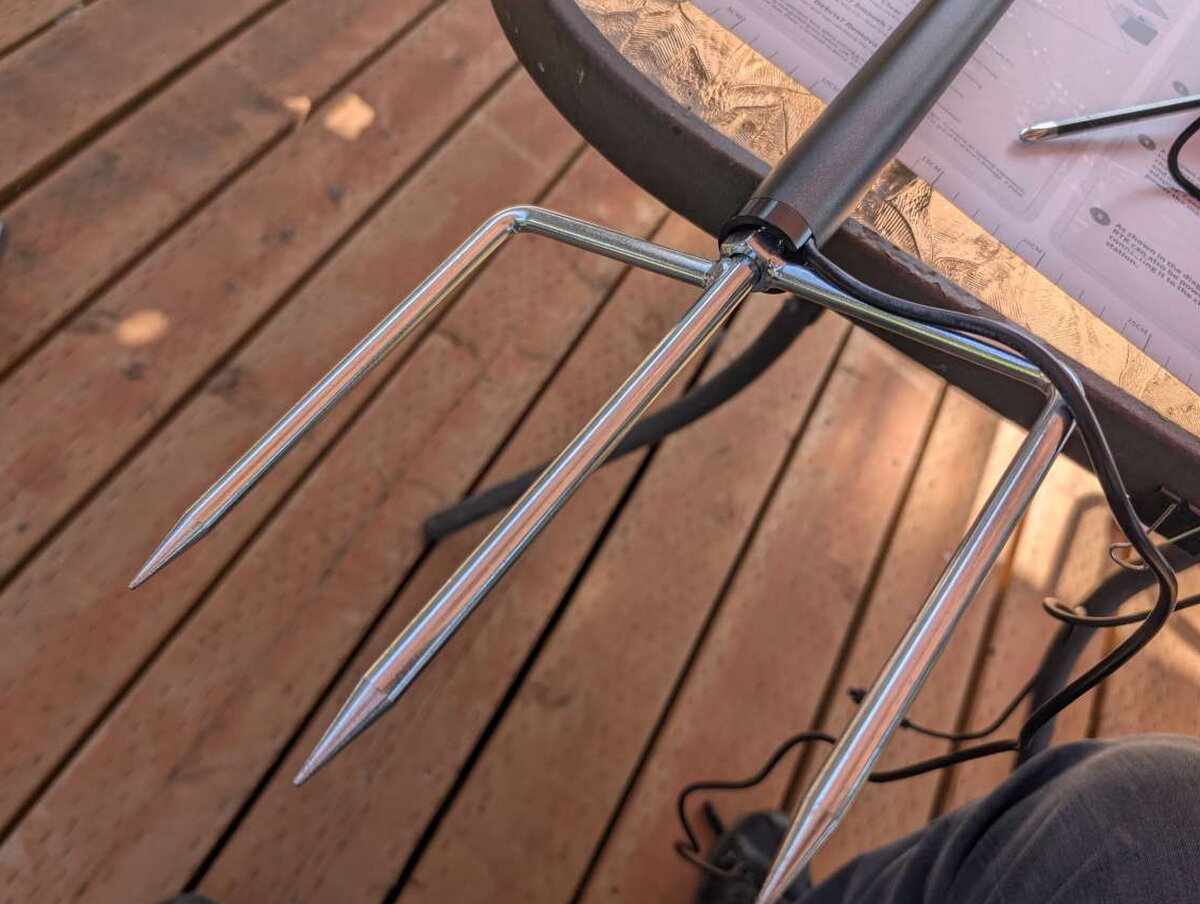
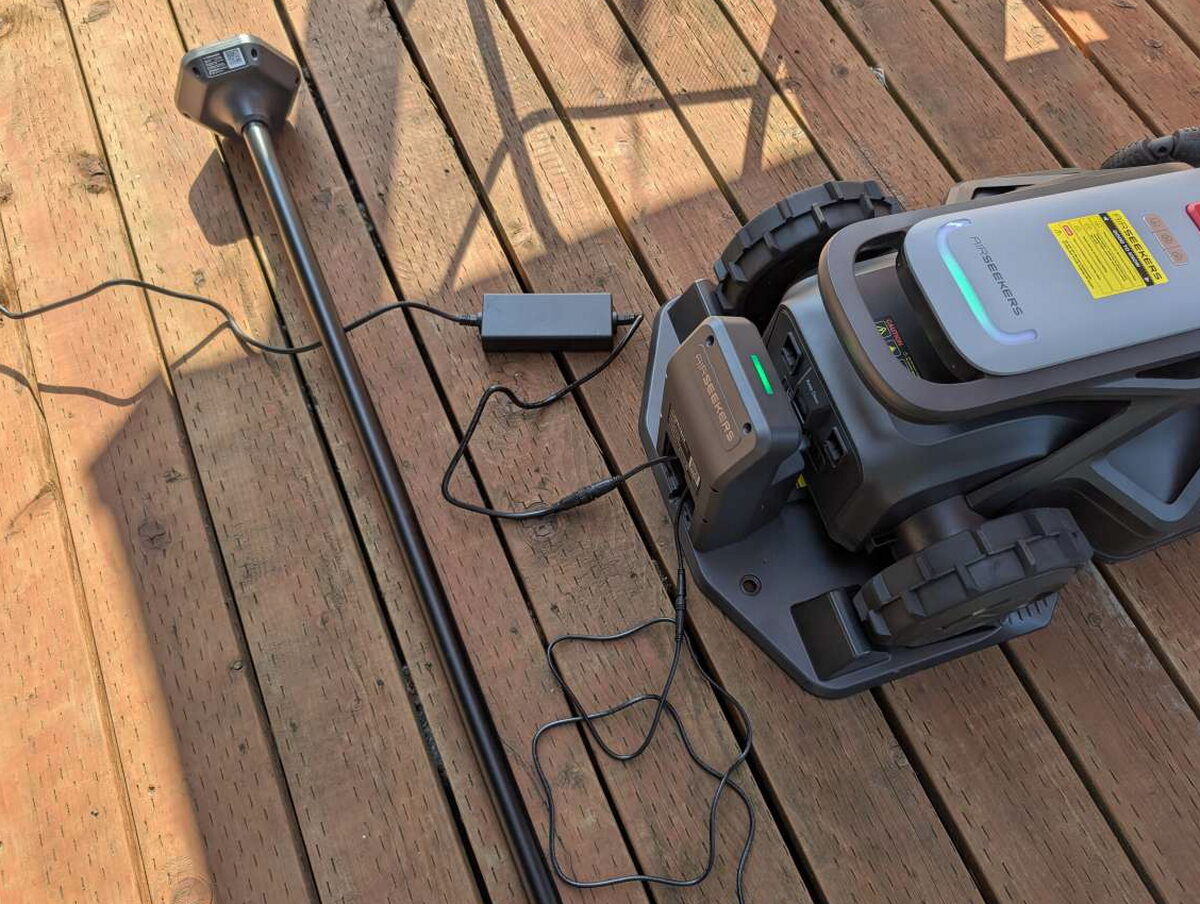


Assembly is straightforward. The main job is building the RTK pole, feeding the cable through it, threading the endcap into place, and staking the three pronged base into the ground. The dock is held by four long plastic screws. A single power supply feeds both the charging dock and RTK module. Airseekers says the RTK can be powered separately, but I could not test that because only one U.S. power adapter was included, and that setup would require two.

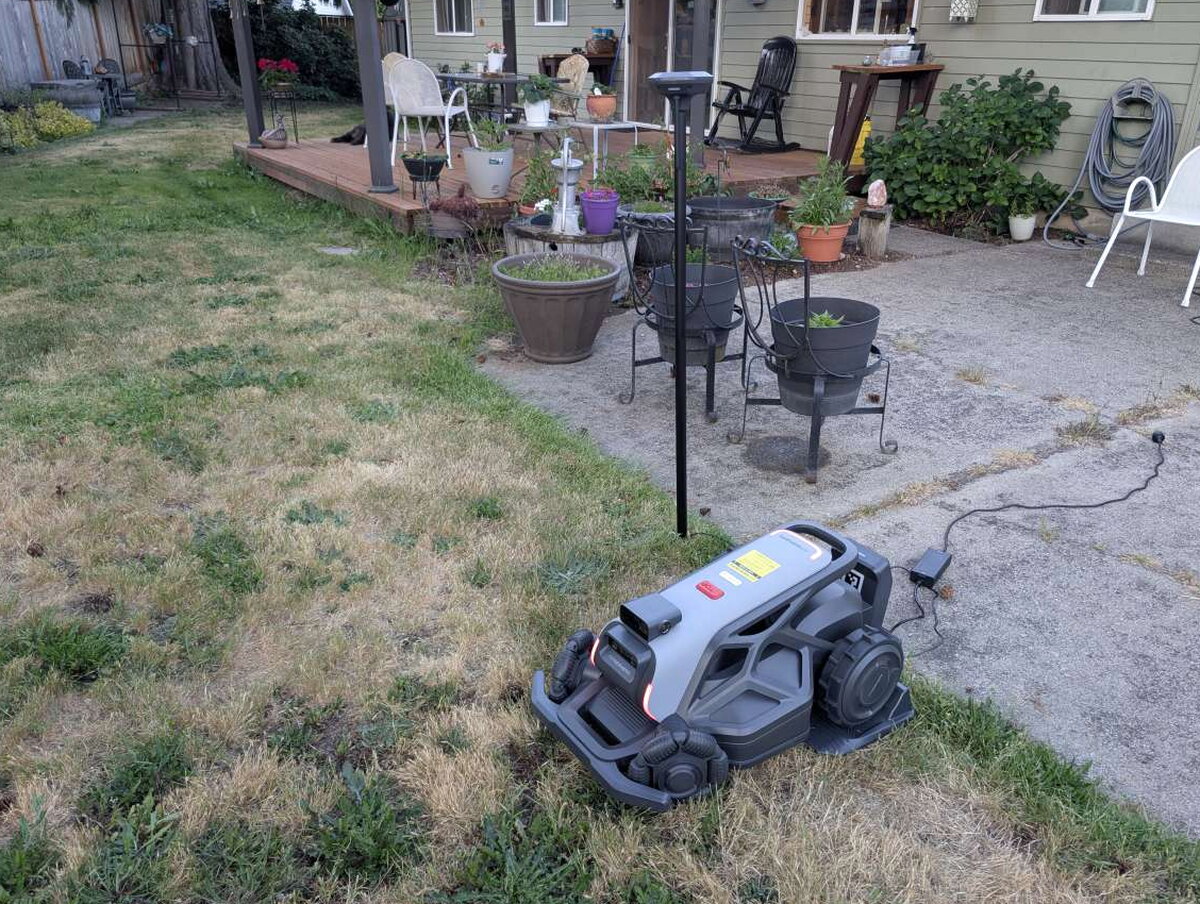
Bluetooth pairing was painless, and the Airseekers app did a good job walking me through firmware updates, mowing boundaries, no go areas, and cutting height settings. Mapping the yard felt like steering a slow remote controlled car with my phone. That part was more fun than I expected, and the instructions were clear enough that I never felt lost.
Mowing performance
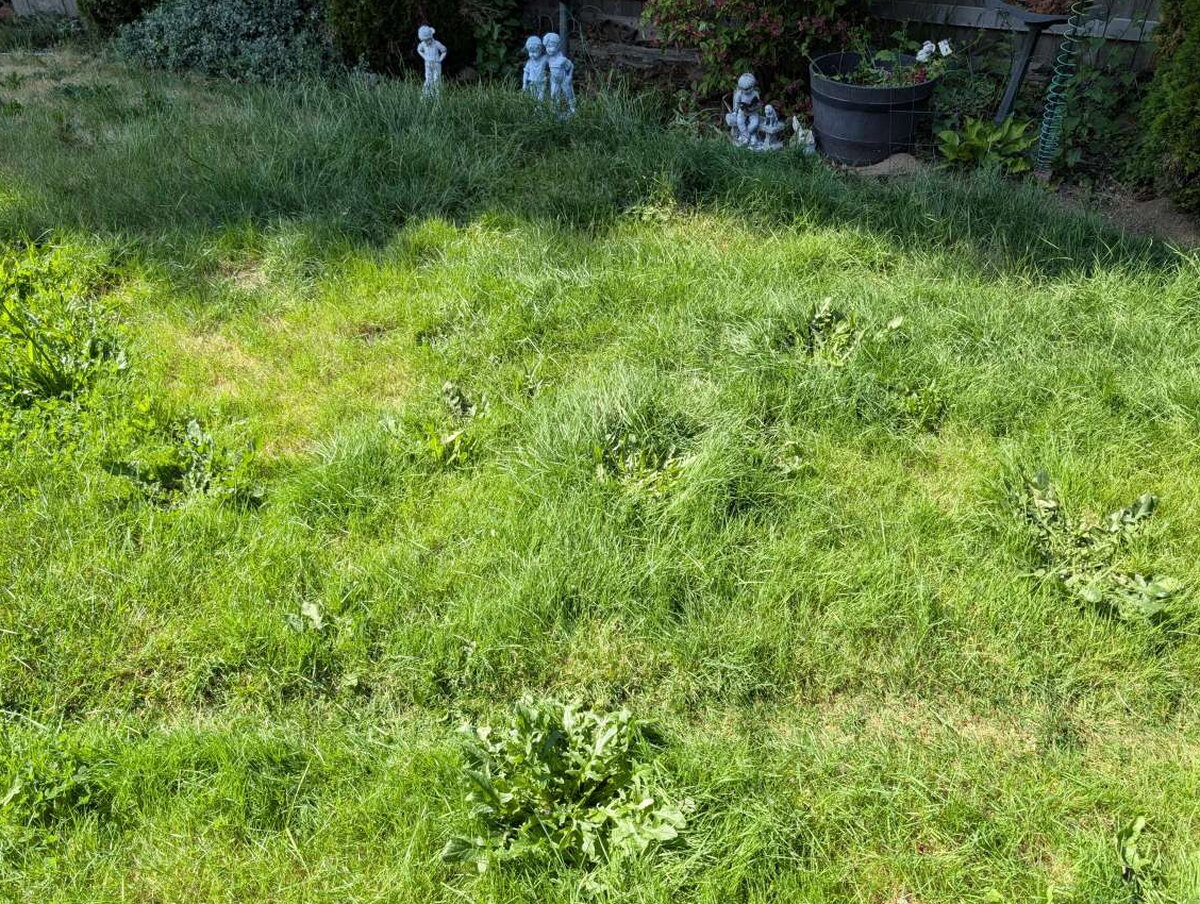


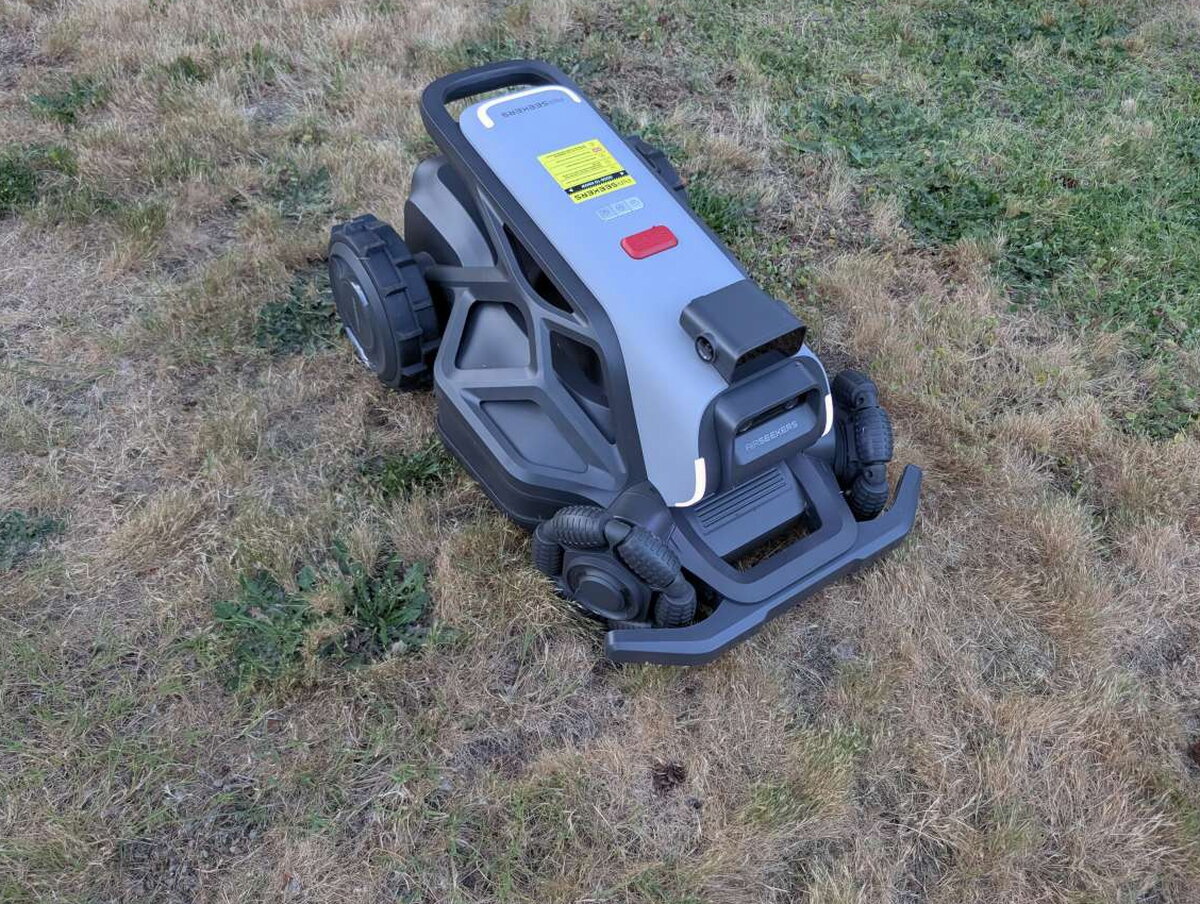
Once the boundary was mapped, the RTK module was planted, the dock was secured, and the battery was charged, I sent the Tron into the yard. My mom’s grass is thick, fast growing, and not especially kind to small machines, so I started with a higher cutting height to give the mower a fair chance.
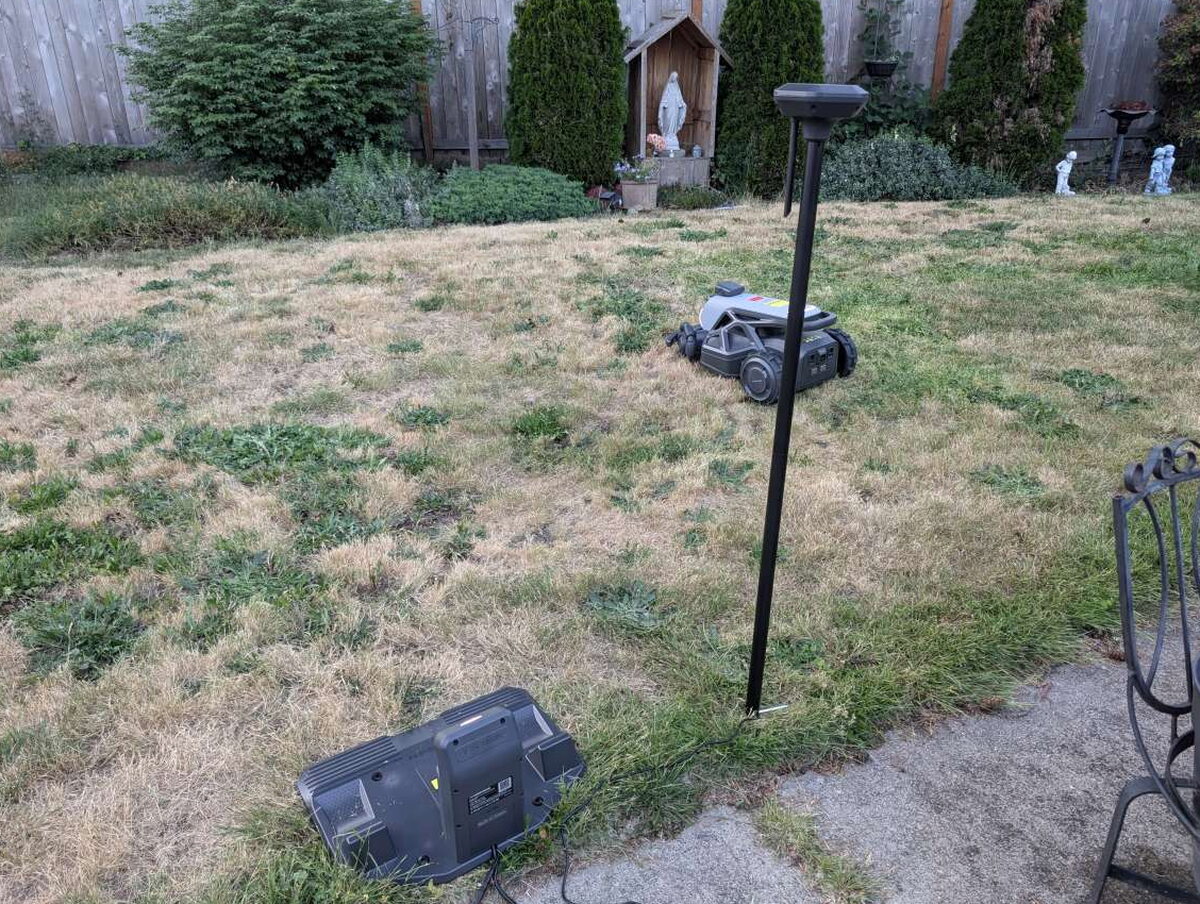

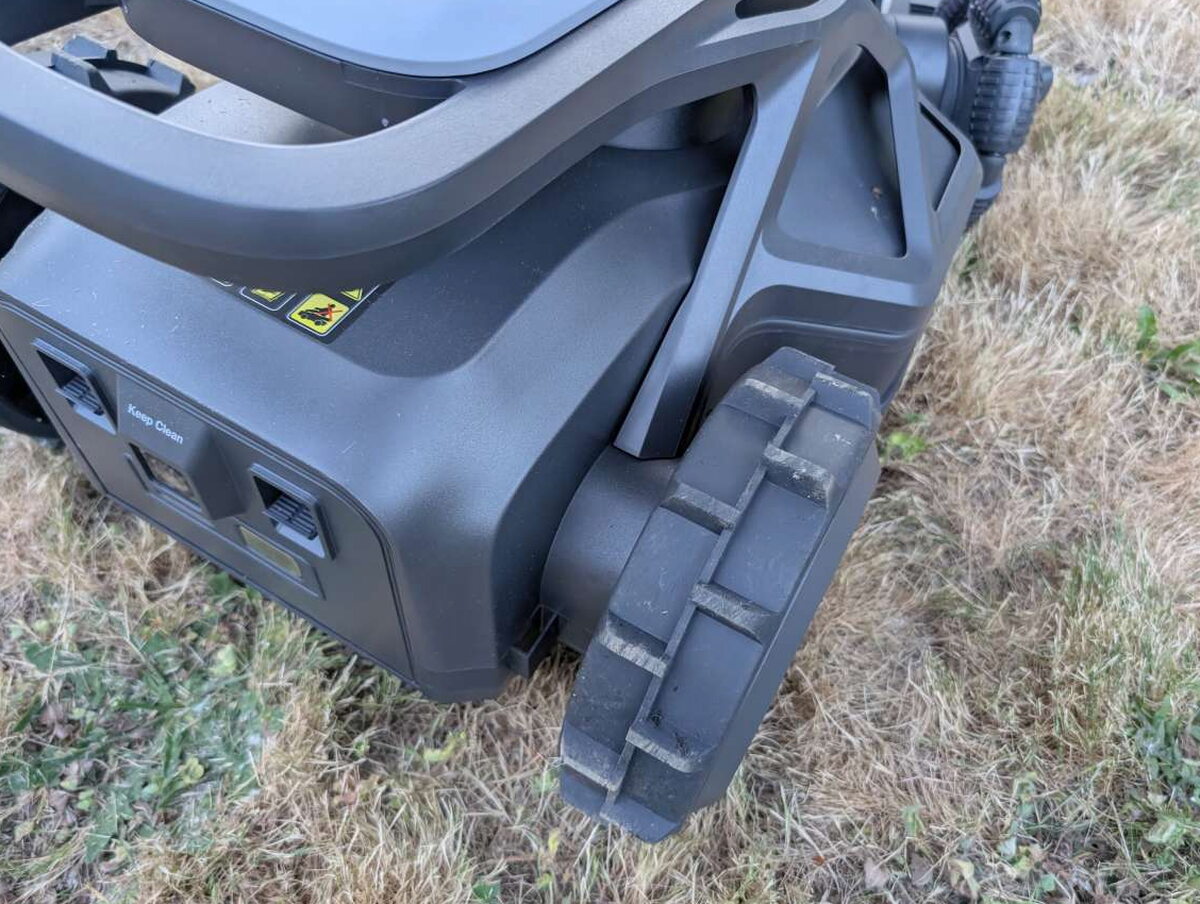
The Tron moved quietly and steadily. At 60 dB or less, the mowing itself is softer than a normal conversation. The beeping when the blades start or stop is much more noticeable, almost like the warning sound from a backing truck, but it was not loud enough that I worried about the neighbors.
Its route often looked random, and it reminded me of watching a Roomba work. Still, the results were better than the wandering pattern suggested. The mower avoided obstacles and also avoided my mom’s curious dog, Rosey. It climbed small slopes without much drama, although soft dirt could still cause problems.


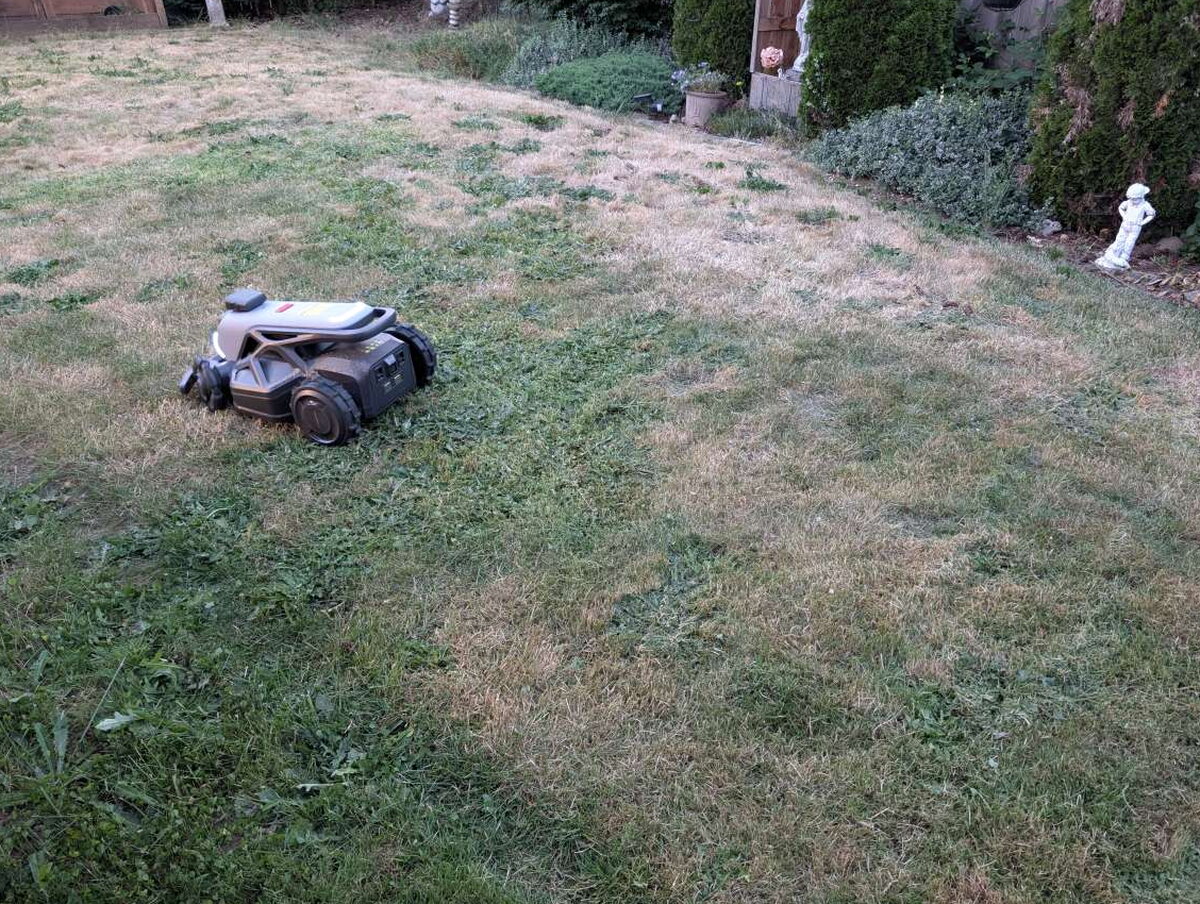


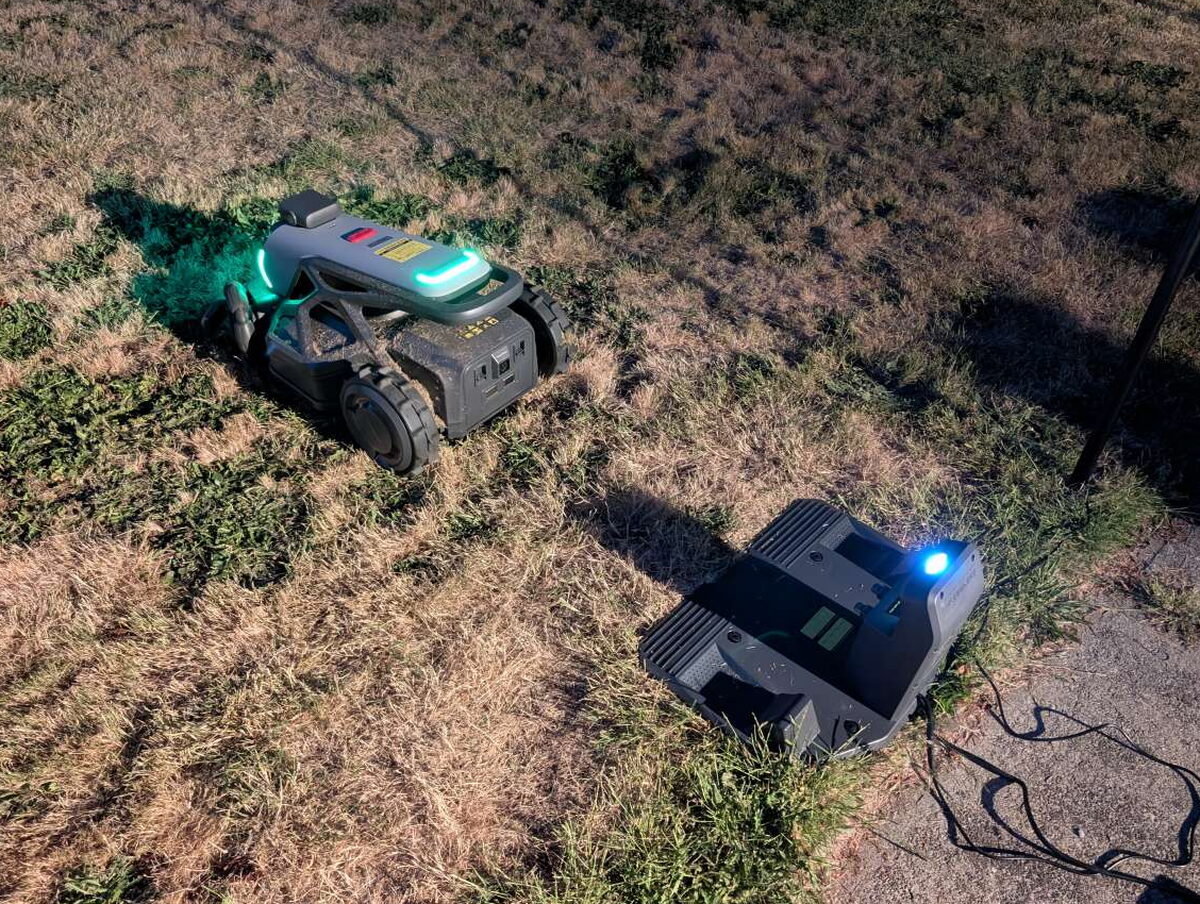

The app was excellent during mowing. I could see where the Tron was, what it had already cut, and what remained. More than once I thought it had missed a patch, only to watch it loop back and fill in the gap later. In a little over an hour, it finished roughly 87 m² of lawn and still had 68 percent battery remaining.
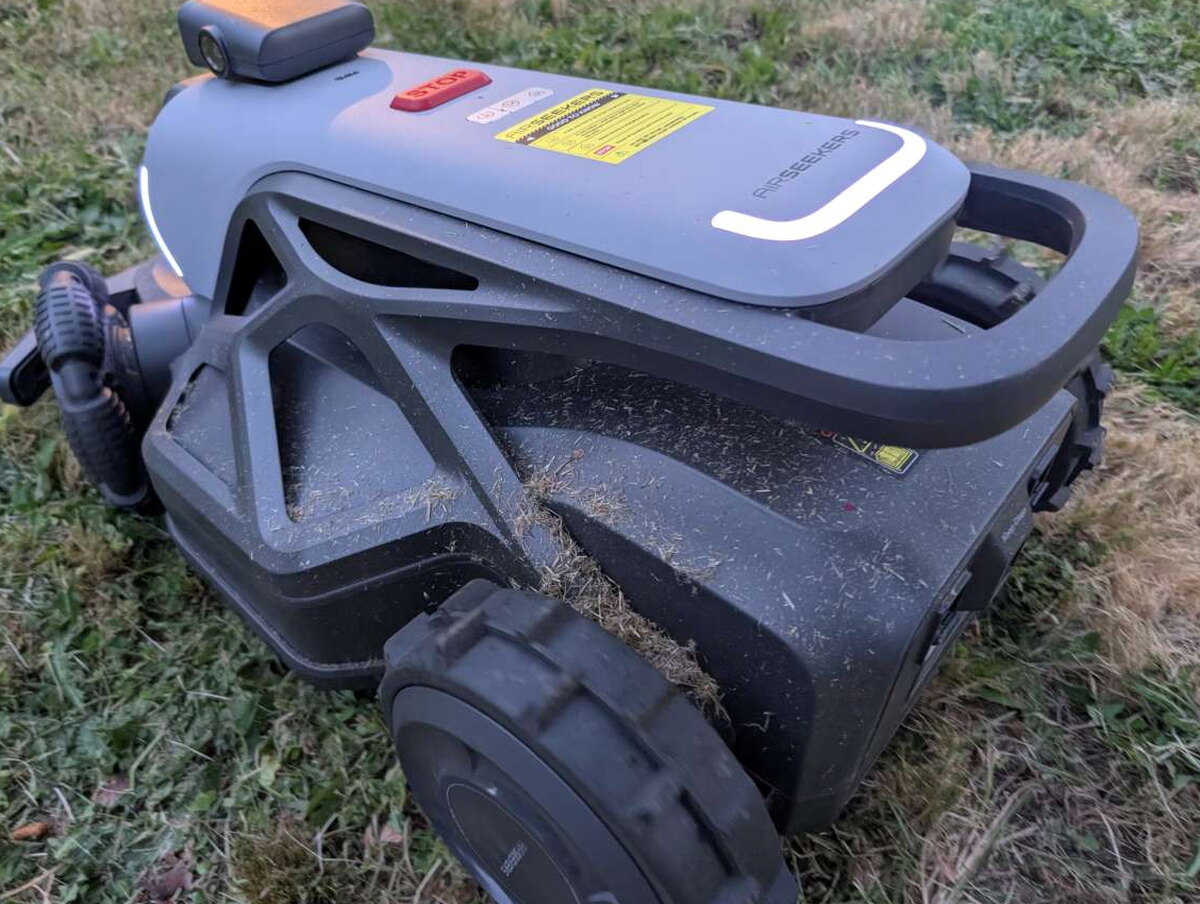

Cleanup was easy. After the run, the mower had some dirt and grass on it, but the IPX6 rating means it can be rinsed with a hose, and that was enough. The bigger win came after the first heavy cut. I scheduled it to mow three times a week, grabbed a cold iced tea, and let it keep the yard under control. I still had to trim edges by hand, but the main mowing chore became mostly hands off.
Final verdict
After several weeks, the Airseekers Tron 2400 gave me exactly the kind of relief I hoped for. It is not flawless. Startup from the onboard button was often frustrating, edges and tight corners still need attention, and some terrain or soil conditions can stop it. Even so, once it was running, it handled dense grass, uneven sections, obstacle avoidance, and repeated maintenance cuts with very little babysitting.
The $2,099 price is high, and I would never call this an affordable mower. For my situation, the value is less about gadget fun and more about removing a chore I genuinely dread. If you have a challenging yard, hate mowing, need help keeping grass under control, and can live with the price and limitations, the Airseekers Tron 2400 is worth a serious look.
What I liked
- Very effective under the right conditions
- Excellent battery life and strong mowing power
- Durable construction with useful traction
- Helpful app for mapping, monitoring, and scheduling
- Fine mulching means no clipping bag to empty
Quick Questions
Q: How much yard can the Airseekers Tron 2400 cover?
A: Up to 2,400 m2 (about 0.6 acre) total, with up to 600 m2 per charge.
Q: What was the most frustrating hardware issue?
A: The onboard power button was often unresponsive and usually needed several presses to wake the mower up.
Q: Does it need a bag for clippings?
A: No, it mulches finely using a six-blade FlowCut system, so there’s no bag to empty.
Q: Can it handle slopes?
A: Yes, up to a 65 percent (33 degree) incline, though soft dirt caused more trouble than slopes themselves.
What I don’t
- Very expensive
- Onboard startup was often unresponsive
- Edges, tight corners, soft dirt, and some terrain still need attention
Price: $2,099
Product Link: Airseekers and Kickstarter
Source: The sample of this product was provided for free by Airseekers. Airseekers did not have a final say on the review and did not preview the review before it was published.


