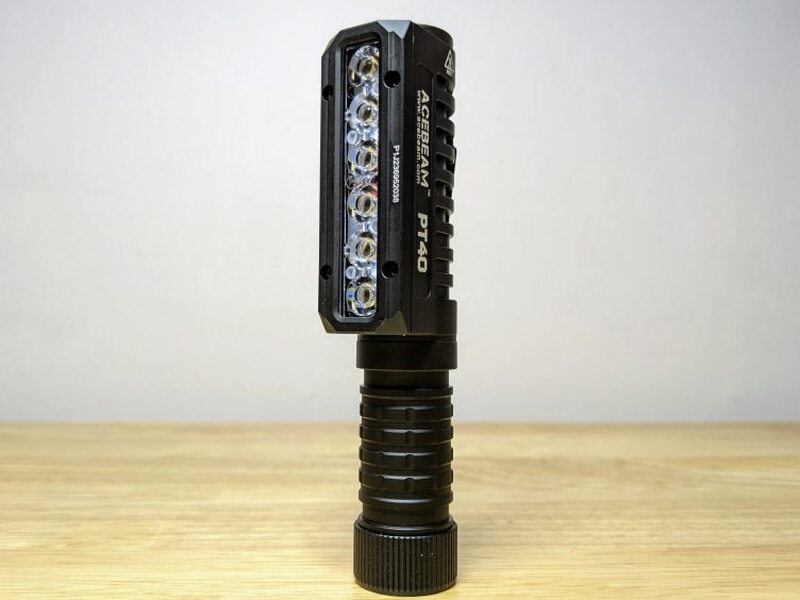
REVIEW – A flashlight earns its keep when the rest of your everyday carry depends on being able to see. I have collected plenty of lights over the years, from reliable little tanks to a few that were better left in drawers for power outages. The Acebeam PT40 Multipurpose Work Flashlight immediately looked like the kind of light that could move from backup duty to daily use. It is compact, bright, rechargeable if you choose that package, and flexible enough to work as a handheld, clipped work light, or headlamp. After several weeks with it, the PT40 delivered on the three things I care about most in a flashlight: build quality, power use, and usable output. At $100 to $133 depending on configuration, it is not cheap, but it feels like a strong value for what it includes.
What the PT40 is
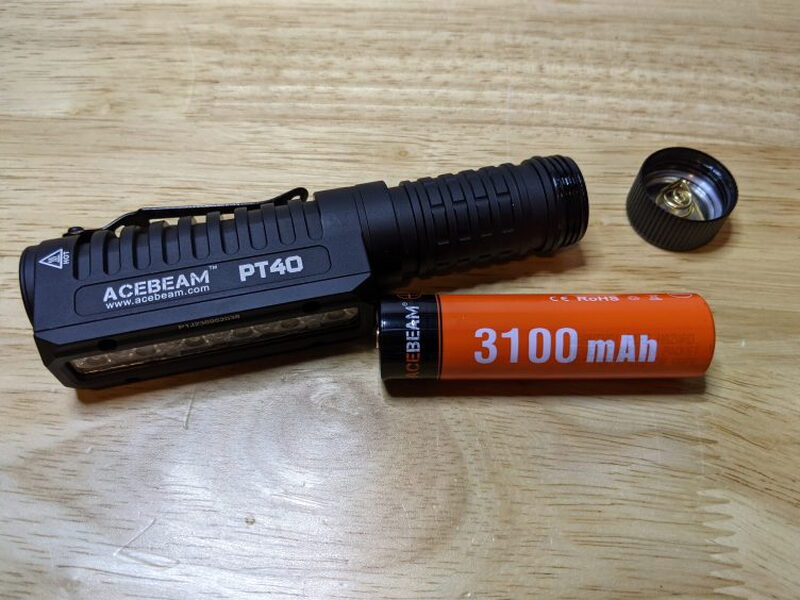
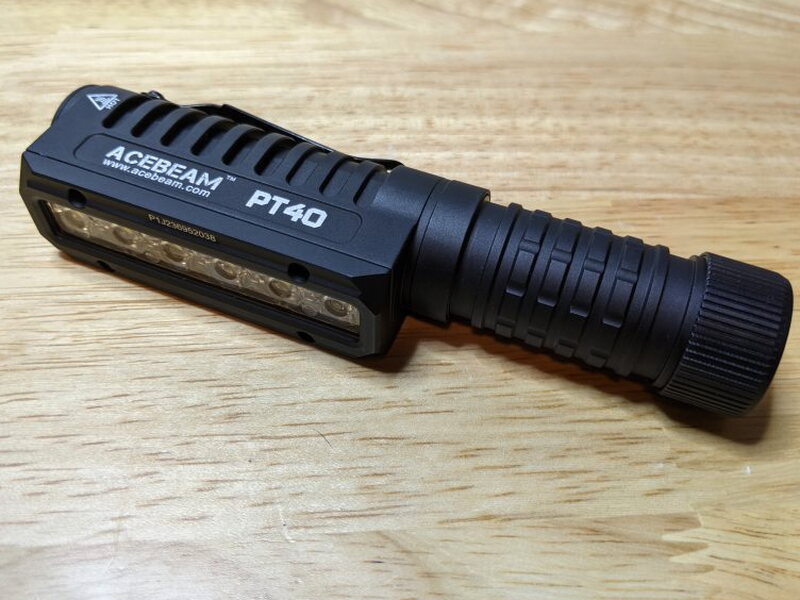
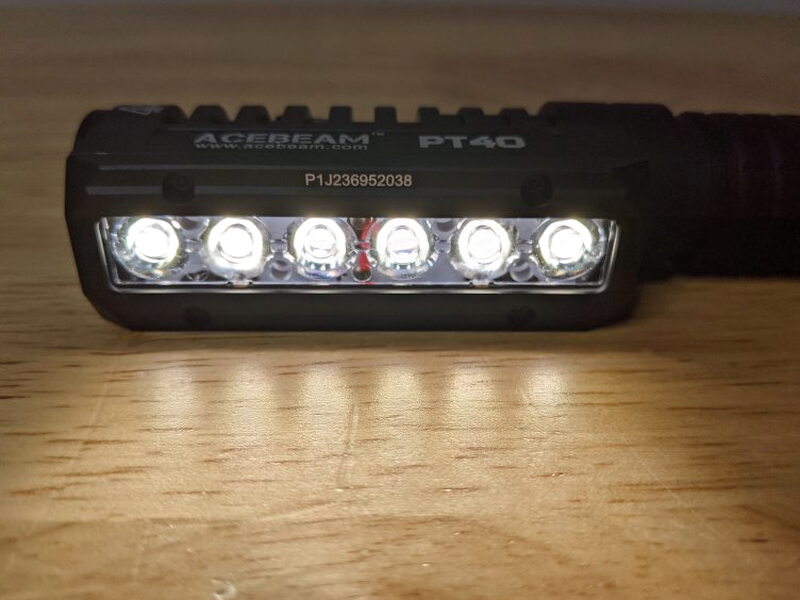
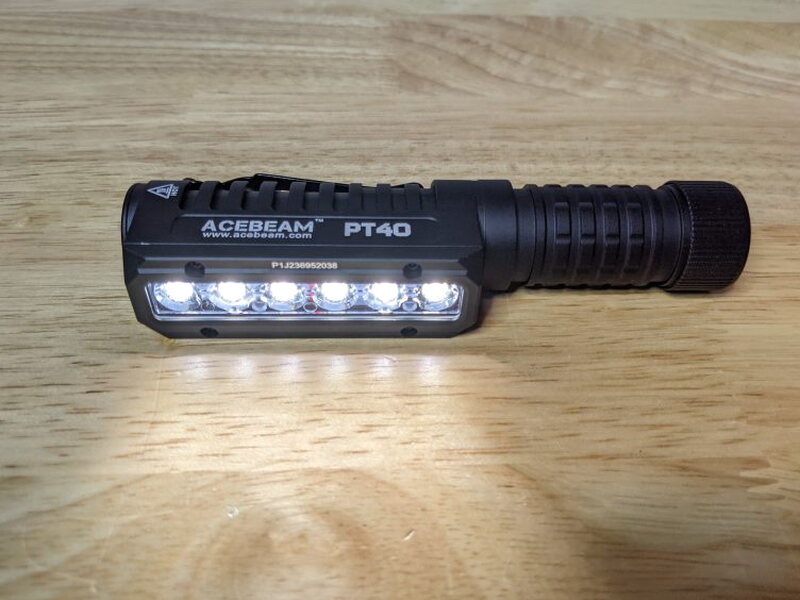
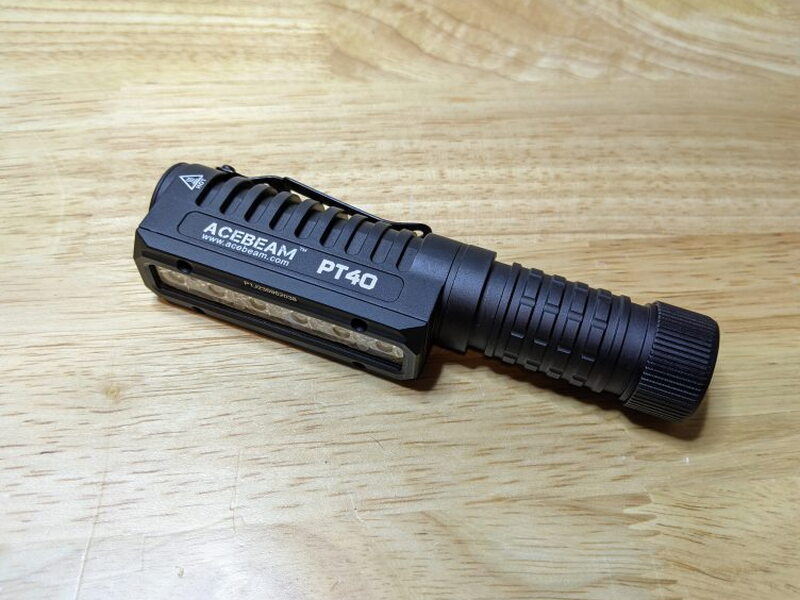
The PT40 is a multipurpose LED flashlight built around a right angle lighting head. That layout lets it act like a normal handheld light, but it also makes it useful when clipped to a strap, attached to metal with the magnetic tail cap, or mounted in the included headband. Acebeam sells it with different LED choices. My test unit used six Samsung LH351D LEDs and came with Acebeam’s USB rechargeable 3100 mAh Li-ion battery.
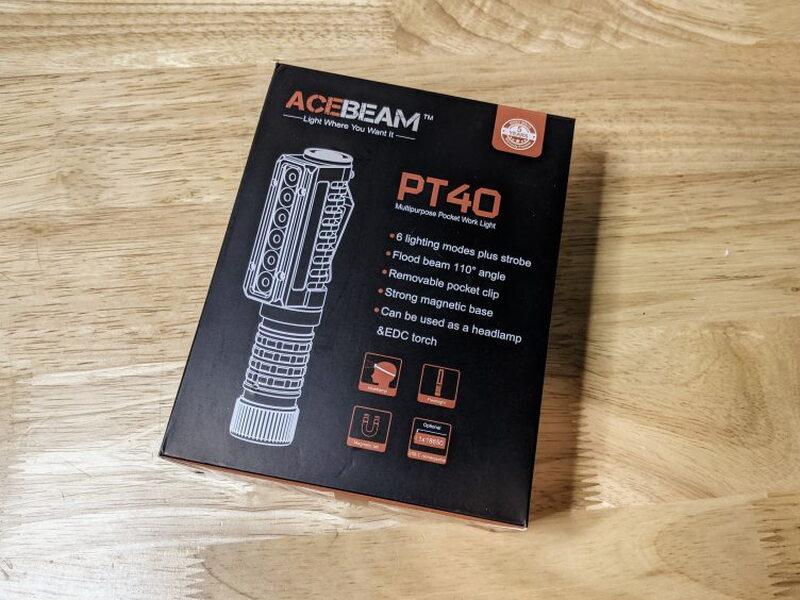
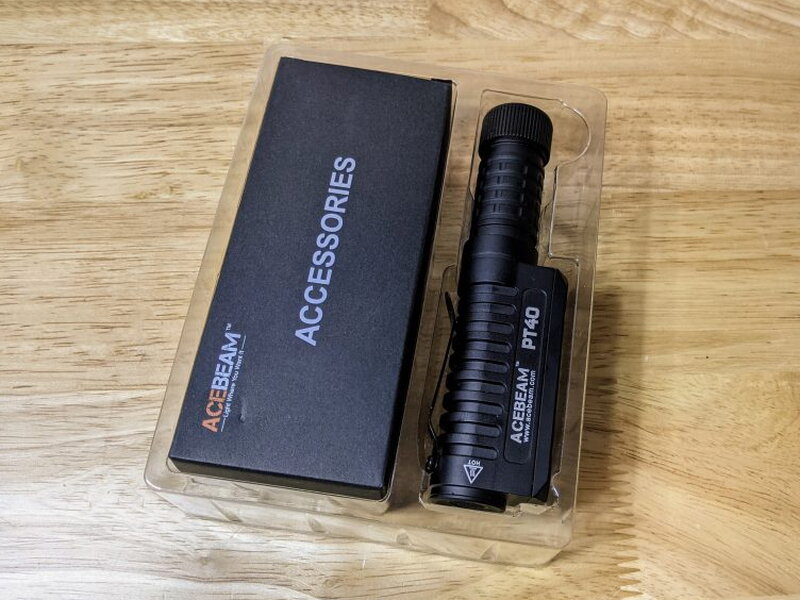
The packaging makes a good first impression. Acebeam uses an orange and black design that matches the product branding, and the outside of the box clearly marks the features and the included configuration. Inside, the light and accessories are held securely in a molded plastic tray.
In the box
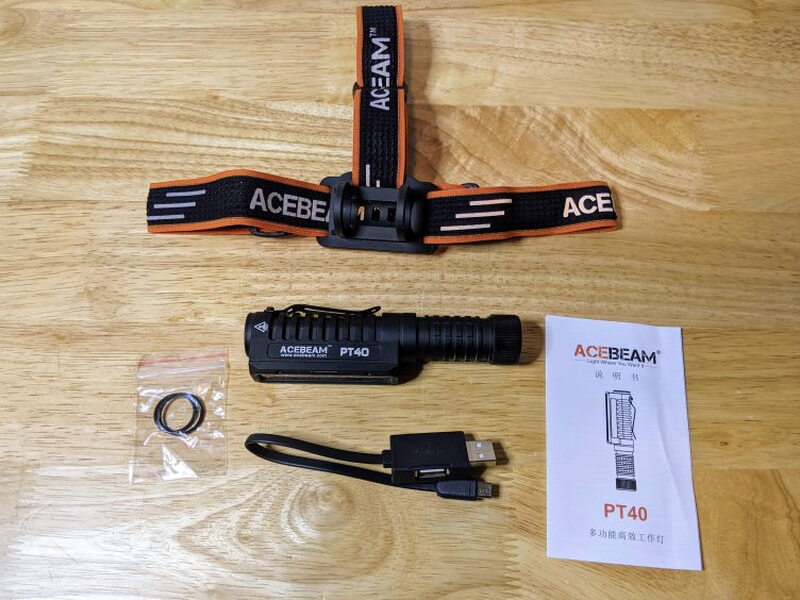
- Acebeam PT40 Flashlight
- Headband with silicone mount
- Acebeam USB rechargeable 3100 mAh Li-ion battery
- USB-A to Micro USB charging cable
- Extra battery compartment O-rings
- User manual
Key specifications
- Body: Aluminum
- Size: 126.8mm length x 32.8mm head diameter x 24mm tube diameter
- Weight: 95g, or 3.35oz, without battery; 145g, or 5.11oz, with battery
- Impact resistance: Up to 1 meter
- International Protection Rating: IP-68 waterproof, 2 meters submersible
- Battery: Acebeam USB rechargeable 3100 mAh Li-ion
- LED: 6 x Samsung LH351D
- Angle of range: 110°
- Maximum output: 3,000 lumens
- Maximum beam distance: 121 meters
- Maximum runtime: 80 hours
- Peak beam intensity: 3,680cd
Lighting modes
- Ultra-Low: 15 lumens
- Low: 80 lumens
- Mid 1: 220 lumens
- Mid 2: 580 lumens
- High: 1100 lumens
- Turbo: 3000 lumens
- Strobe: 1500 lumens
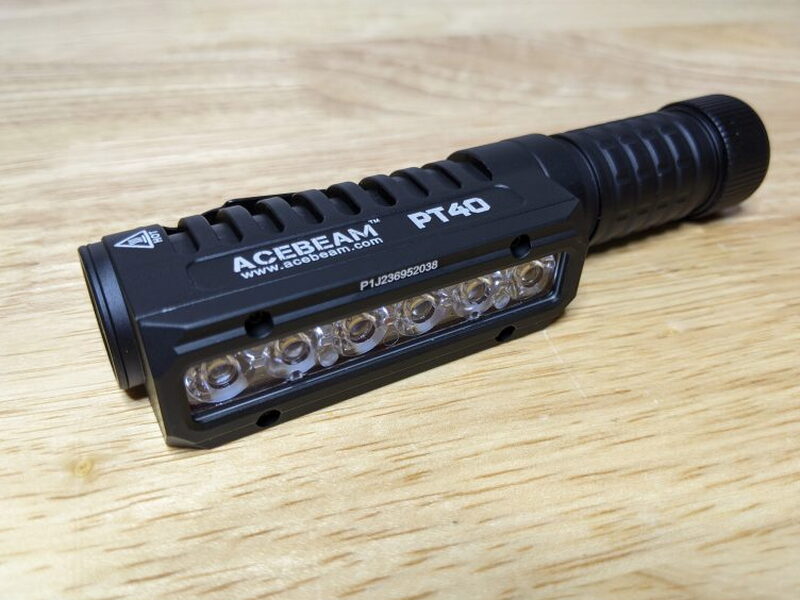
Body, clip, and controls
The PT40 feels like a serious tool the moment you pick it up. The aluminum body has enough machining and texture to keep it steady in hand, and the IP-68 rating gives confidence that dust and water are not going to stop it during normal use.
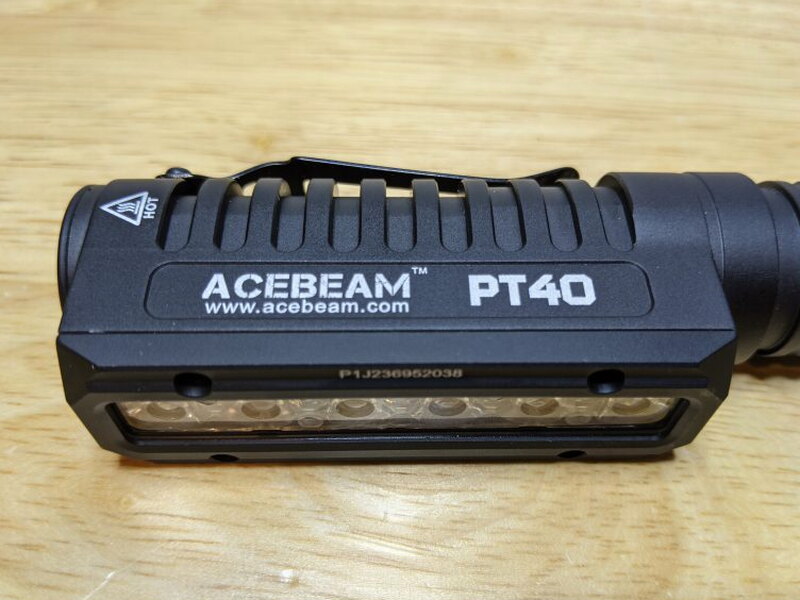
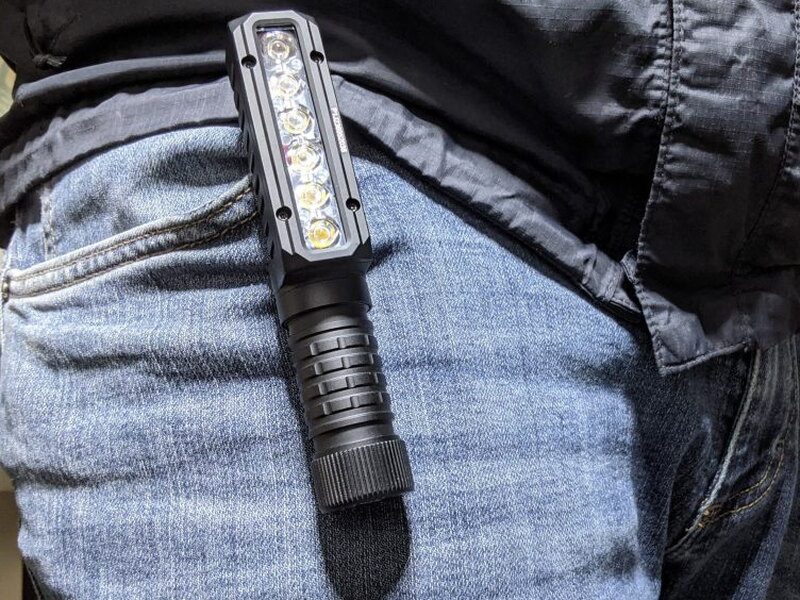
I like the right angle design because it makes the light useful in more situations than a standard tube flashlight. It can sit in your hand, point outward from a pocket, or ride on a pack strap without needing a separate mount.
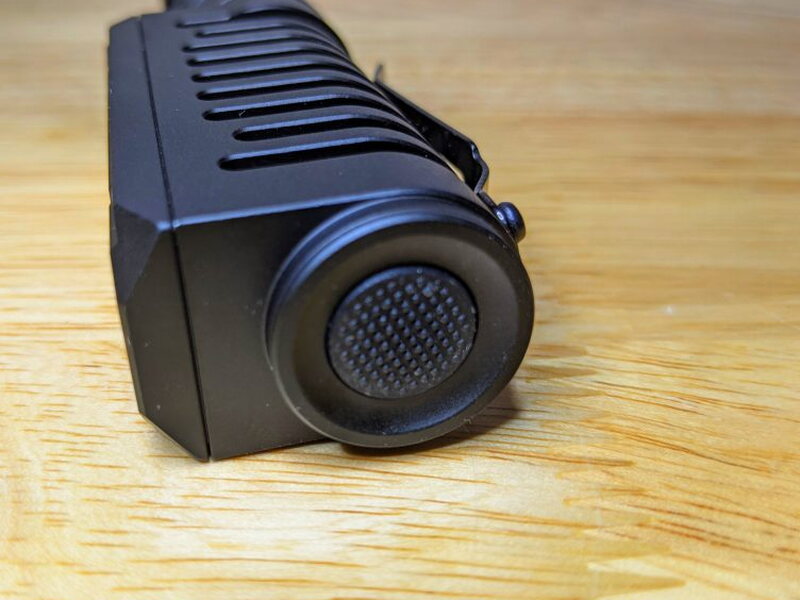
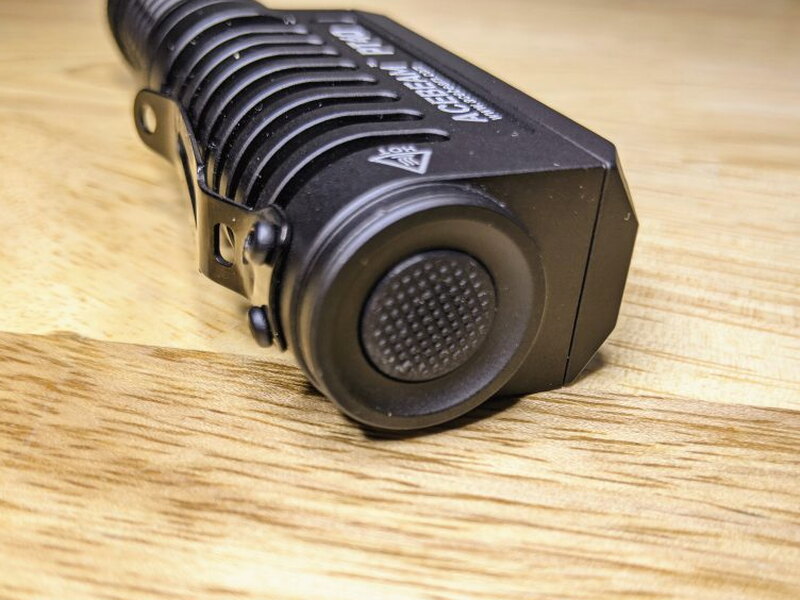
A single rubber textured button handles every control. It turns the light on and off, cycles brightness levels, triggers Turbo or Strobe, and locks the light for carry. That sounds like a lot for one switch, but the layout becomes natural after a little use.
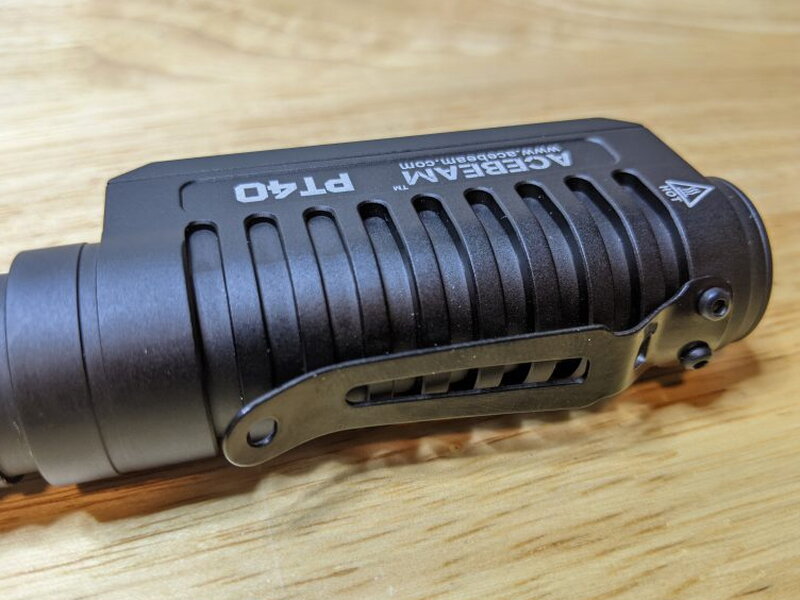
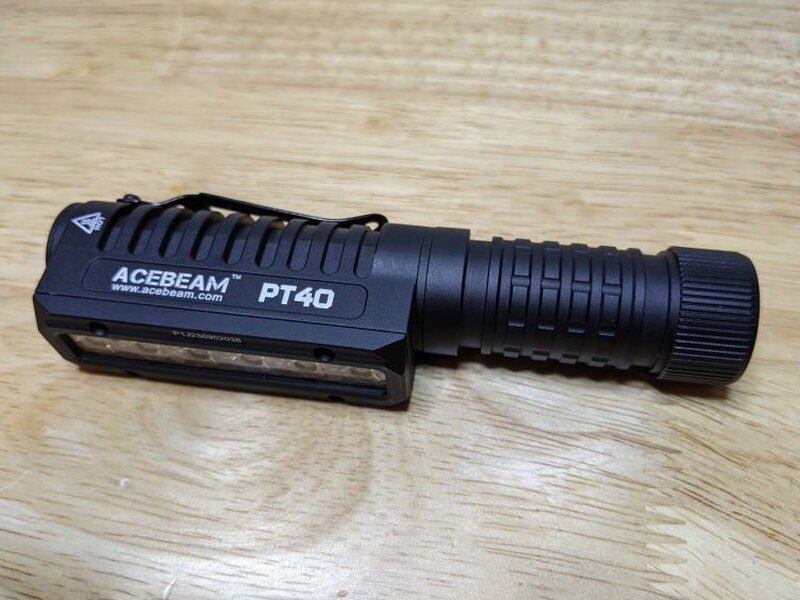
The belt clip is mounted behind the LED head and lines up well with the light’s shape. Clipped to a backpack strap or pocket, the LEDs face forward instead of down into the ground, which is exactly what you want from this style of work light.
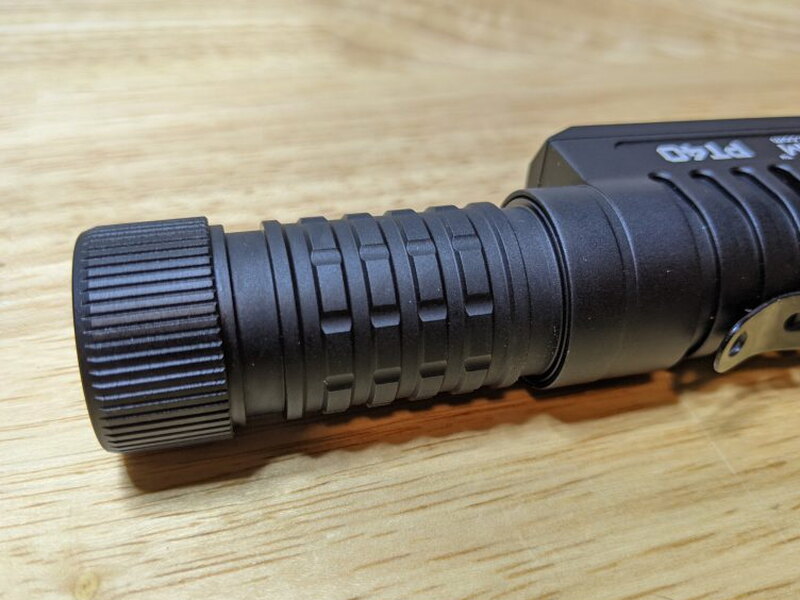
The tail cap unscrews to reach the battery, and it also hides one of the PT40’s most useful features.
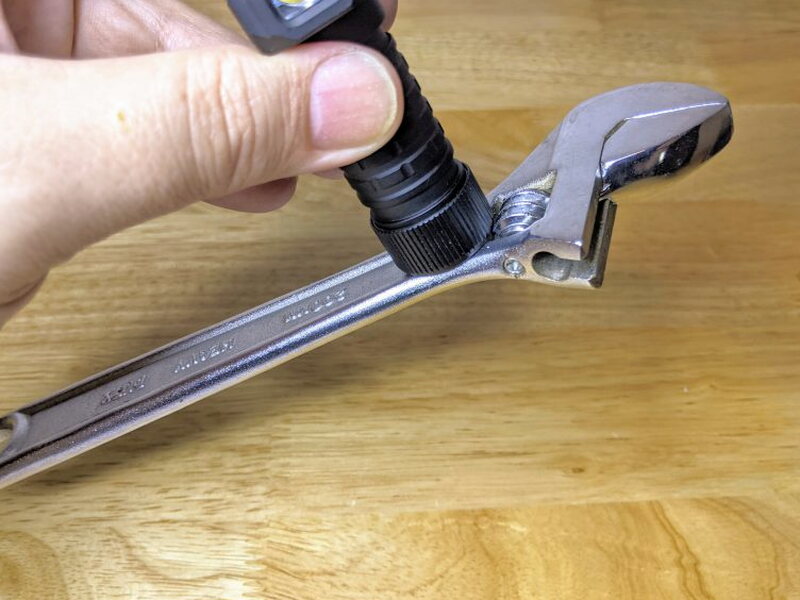
The cap is magnetic, so the PT40 can stick to metal surfaces or stand upright on something like a car hood. I appreciate having that option, although I wish the magnet were stronger.
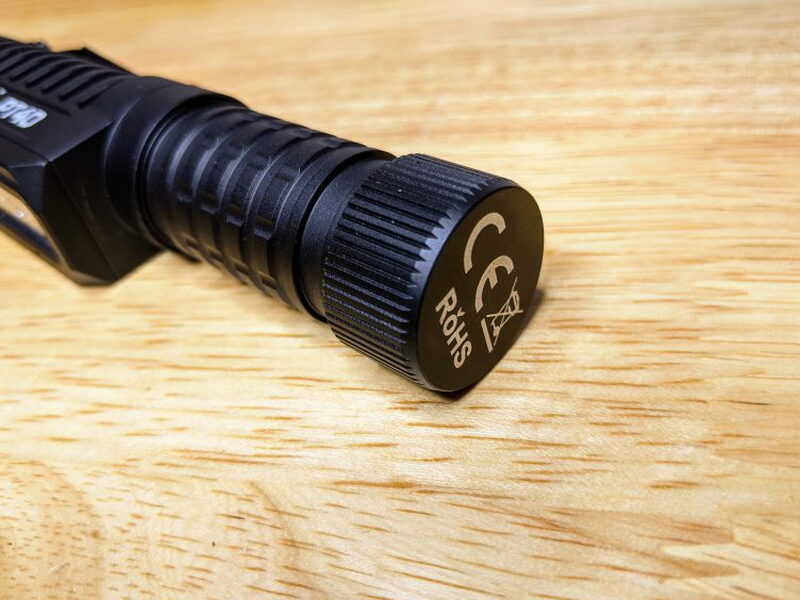
The magnet is strong enough for light positioning, but not strong enough that I would trust it after a hard bump. A stronger magnet would probably create its own annoyance by grabbing every piece of metal nearby, so Acebeam’s choice is understandable even if I wanted a little more hold.
Battery and charging
The rechargeable battery is one of the more interesting parts of this package. Instead of putting a charging port on the flashlight body, Acebeam put the port directly on the battery. This was the first time I had used a rechargeable cell designed that way.
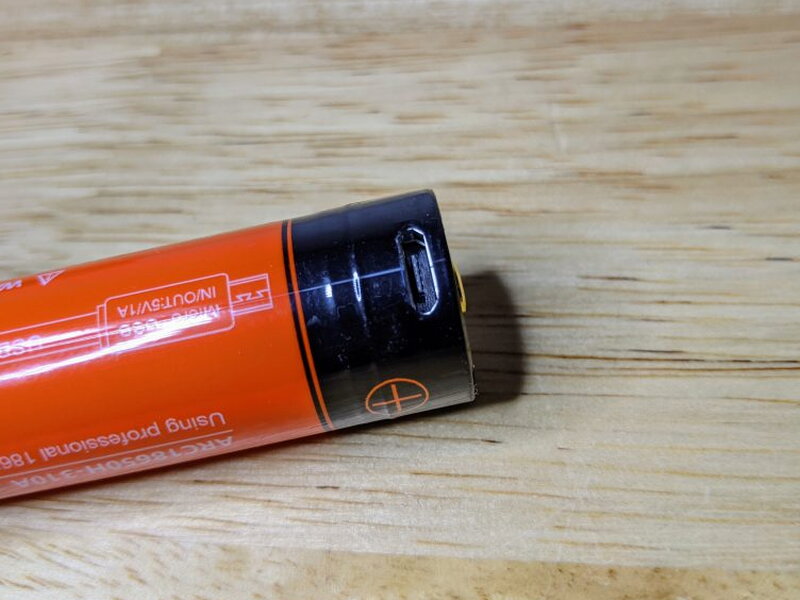
I am still split on the approach. On the positive side, you can charge one Acebeam 3100 mAh Li-ion battery while running another, and a spare battery sells for $21.90. On the other hand, there is real convenience in plugging a flashlight directly into a charger without opening it. The design does help explain the IP-68 rating, since there is no body charging port to seal. It also lets Acebeam sell the same light with or without the rechargeable battery.
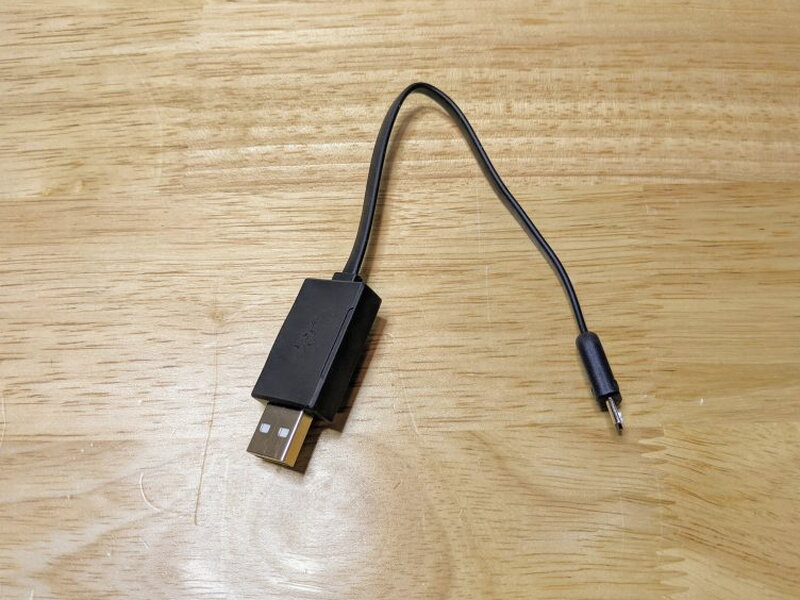
If you buy the PT40 with the rechargeable battery, the included cable is the piece that makes the setup work.
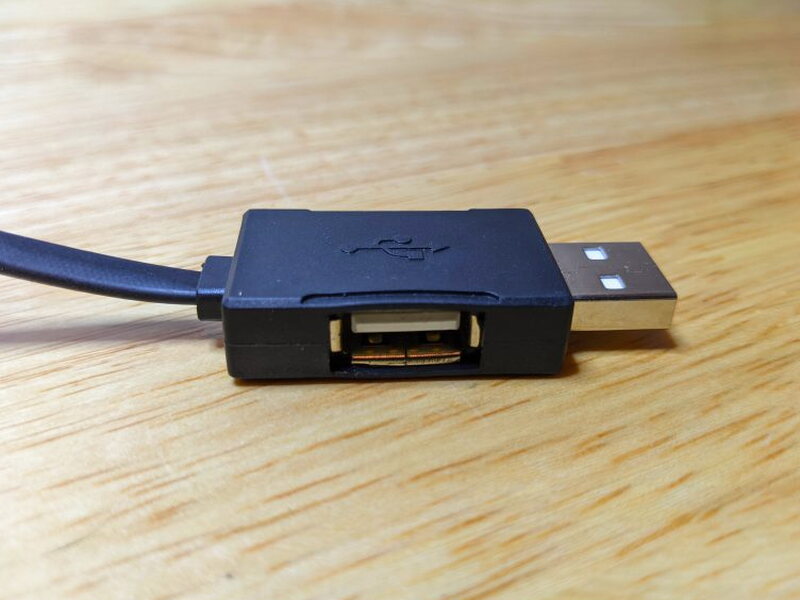
The charging cable has an extra USB-A input on its side, which is a thoughtful touch because it can daisy chain another cable from the same power source.
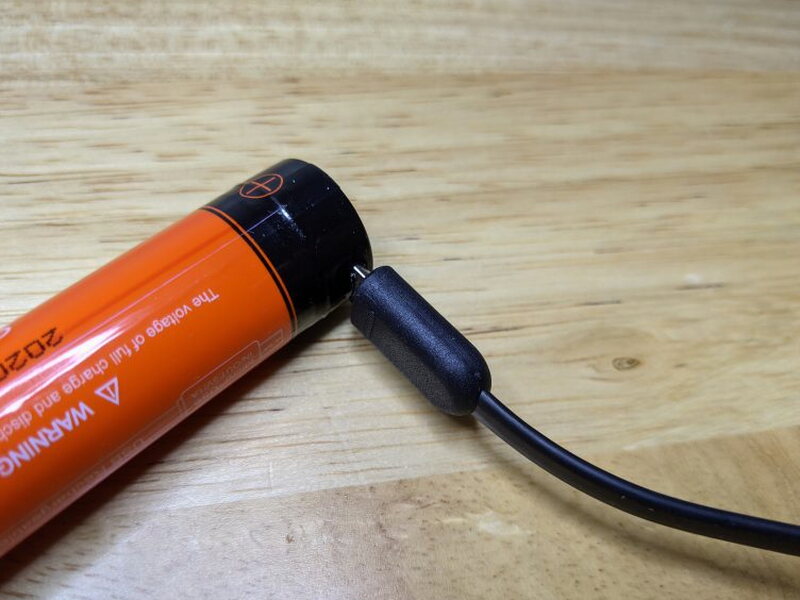
Charging is simple: plug Micro USB into the battery and plug USB-A into a charging port or power brick. For a flashlight in this price range, I would have liked to see a USB charging brick included too.
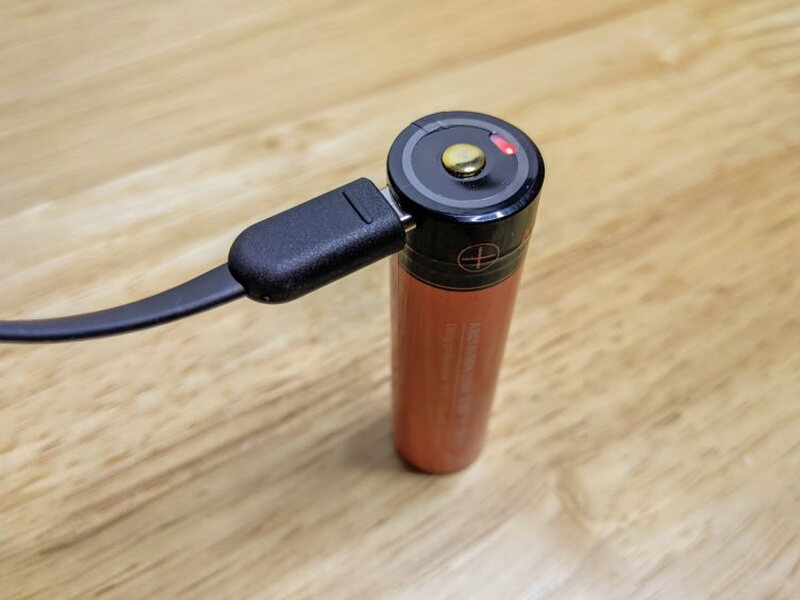
The small indicator on the battery glows red while charging and turns green once the battery is full.
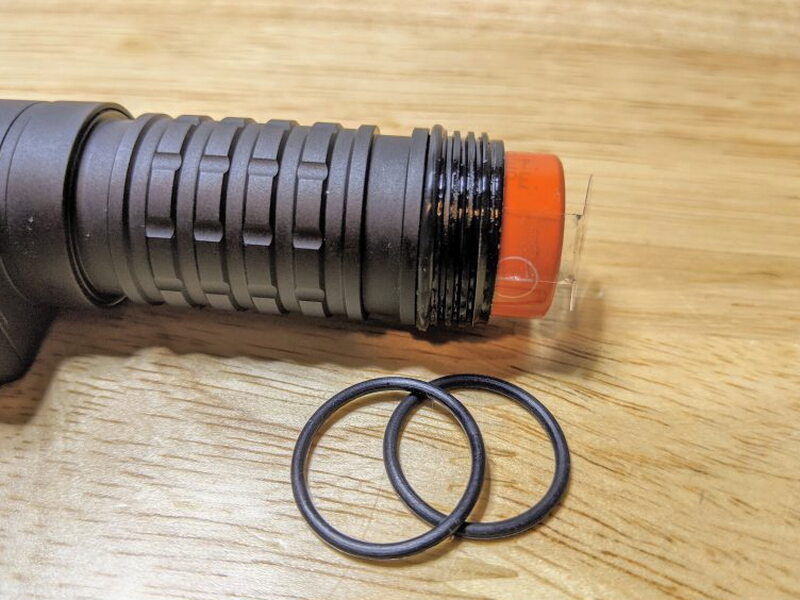
A rubber O-ring seals the battery compartment, and Acebeam includes two replacements. That is a small part, but it matters on a light that is meant to be trusted around water and dust.
Headband setup
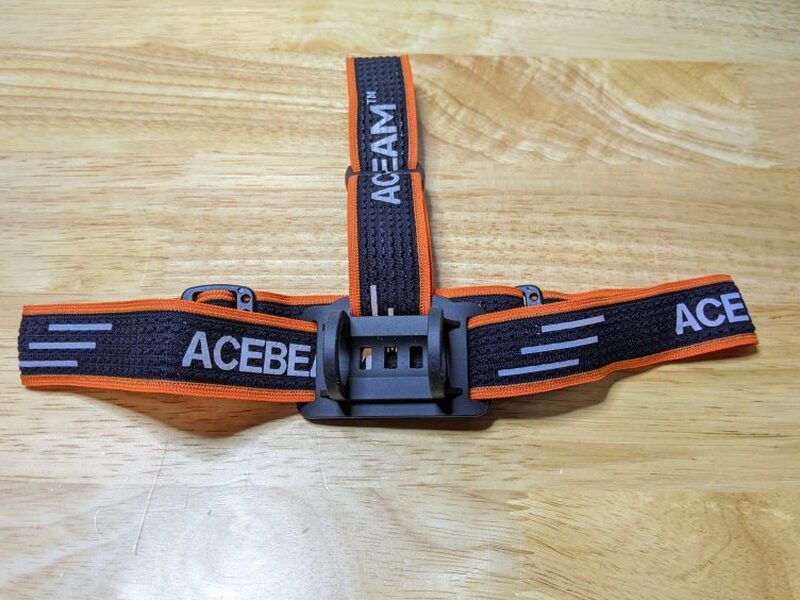
The PT40 can also serve as a headlamp. Acebeam includes an adjustable headband, and while the branding is not subtle, the band itself feels durable.
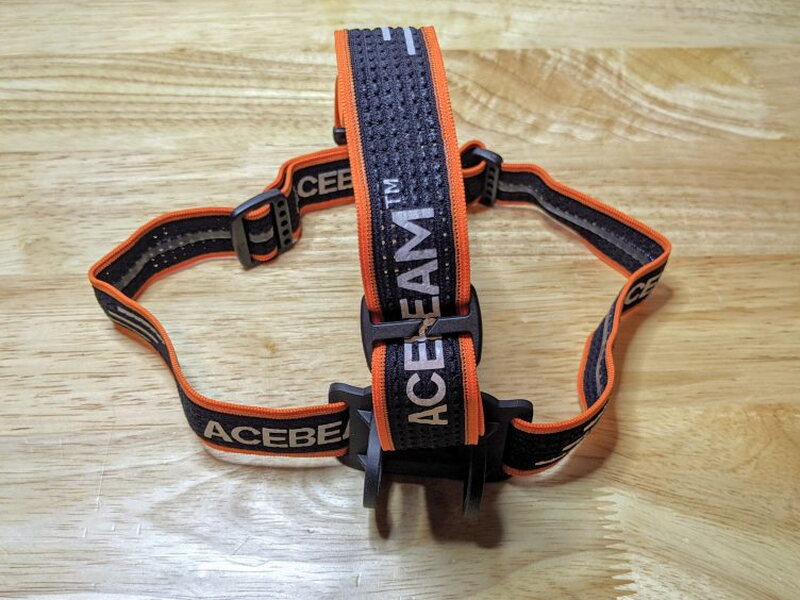
The strap system adjusts easily and holds its shape well enough for workshop or outdoor use.
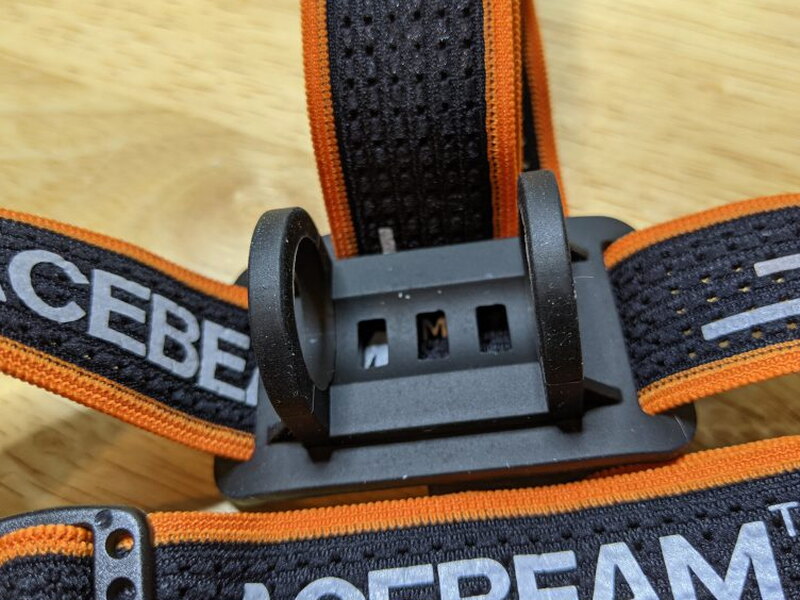
The flashlight is secured by a sturdy silicone mount at the front of the headband.
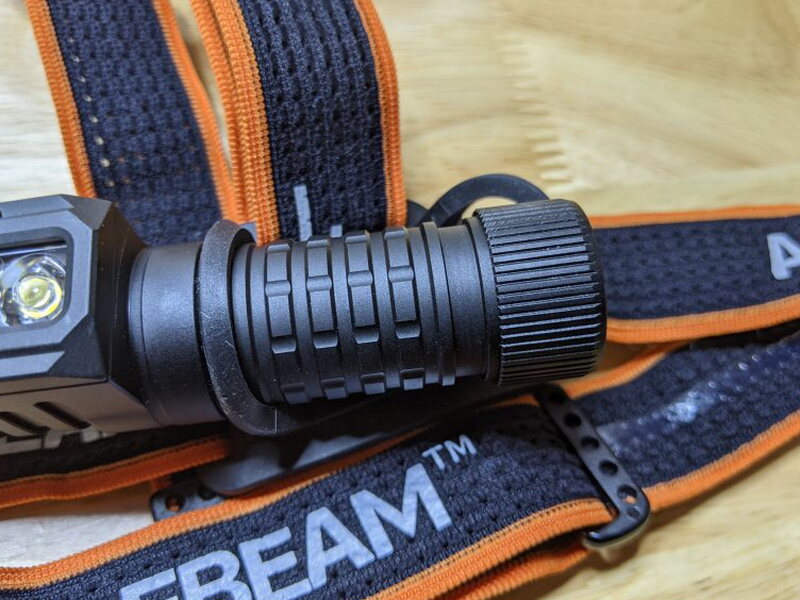
Two grooves on the flashlight body line up with the silicone loops, so the mount grips the PT40 in the right spot.
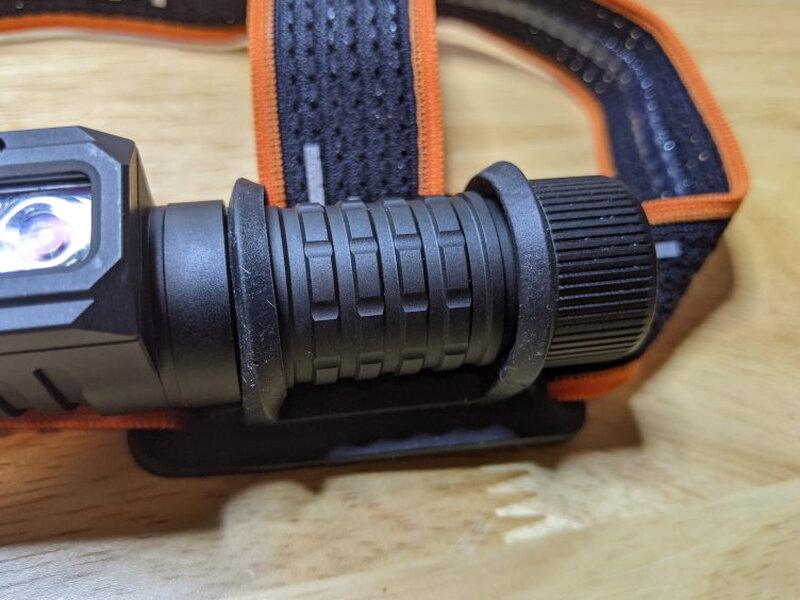
Getting the light into the loops takes some force. That is slightly annoying during setup, but it also means the light is unlikely to fall out while you are using it.
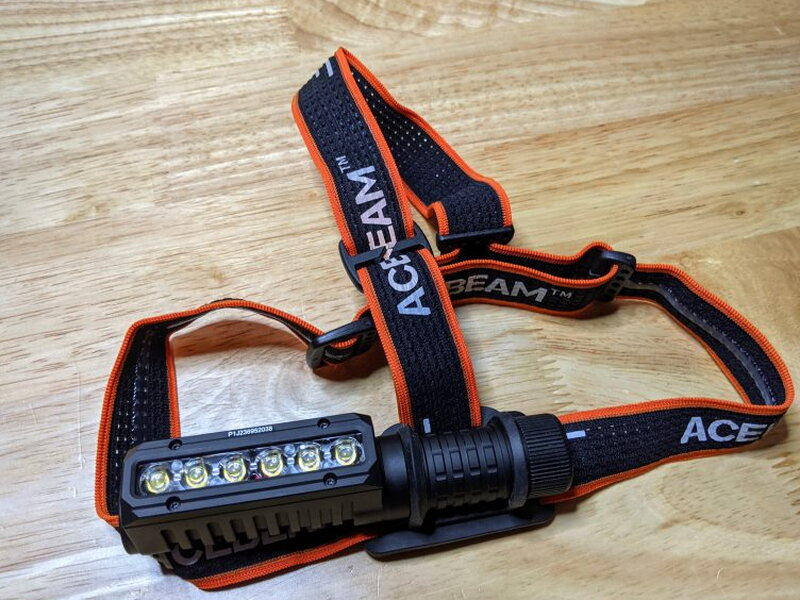
As a headlamp, the PT40 works, but it is not the most natural fit. Because the LEDs sit off center on the right angle body, the whole setup feels a little awkward on your forehead.
First setup
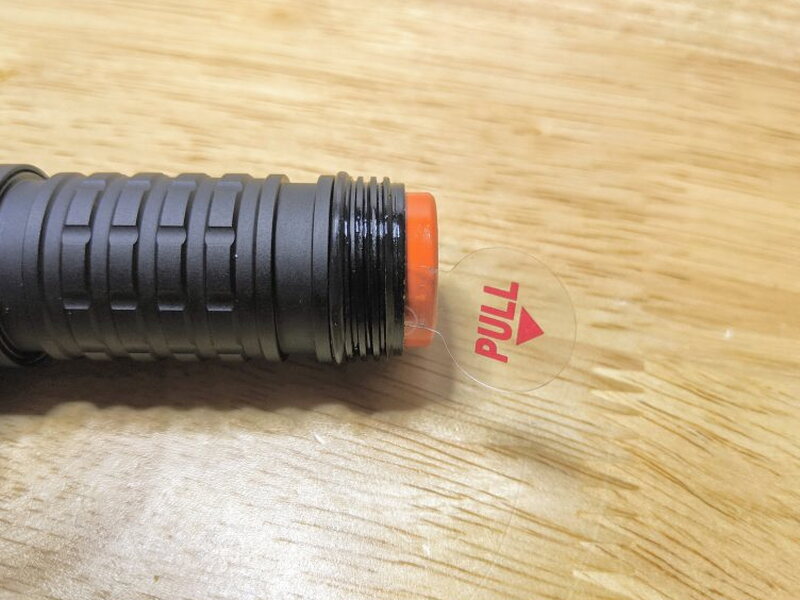
Setup depends on which PT40 package you buy. With my rechargeable version, the first step was opening the battery compartment and pulling out the small plastic tab that keeps the battery isolated during shipping.
After that, the battery needs a charge using the included cable.
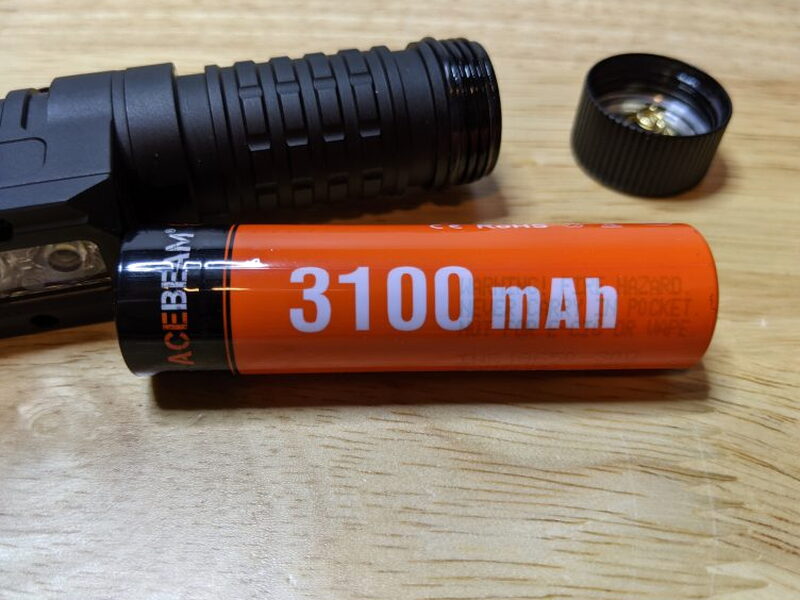
My battery arrived partially charged and took about 45 minutes to reach full. Once charged, the PT40 is ready unless you plan to use it on the headband, in which case you simply push it into the silicone mount.
Output and everyday use
The PT40’s biggest strength is versatility. It offers six brightness levels plus a strobe SOS function, so it can be dim enough for close work or bright enough to light up a large area.
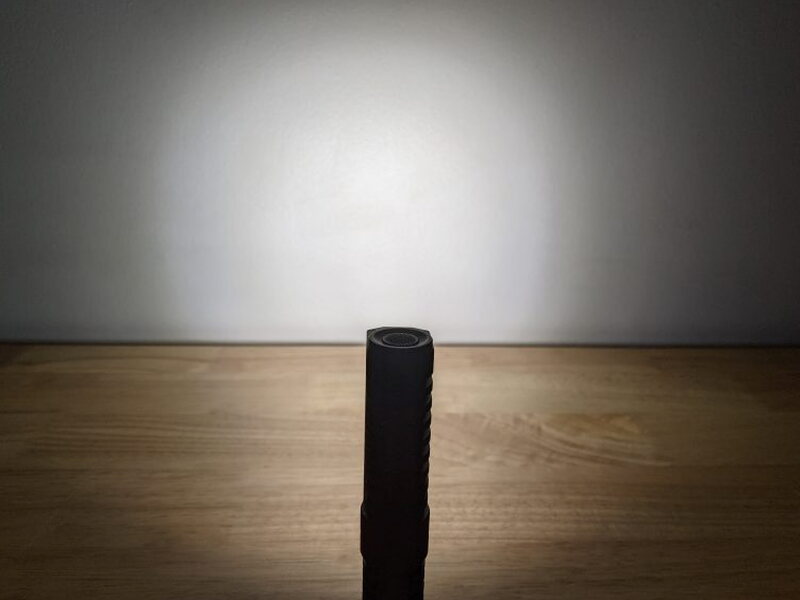
Turbo reaches 3000 lumens, while Ultra-Low drops to 15 lumens. That range made the PT40 useful in far more situations than a simple high and low flashlight.
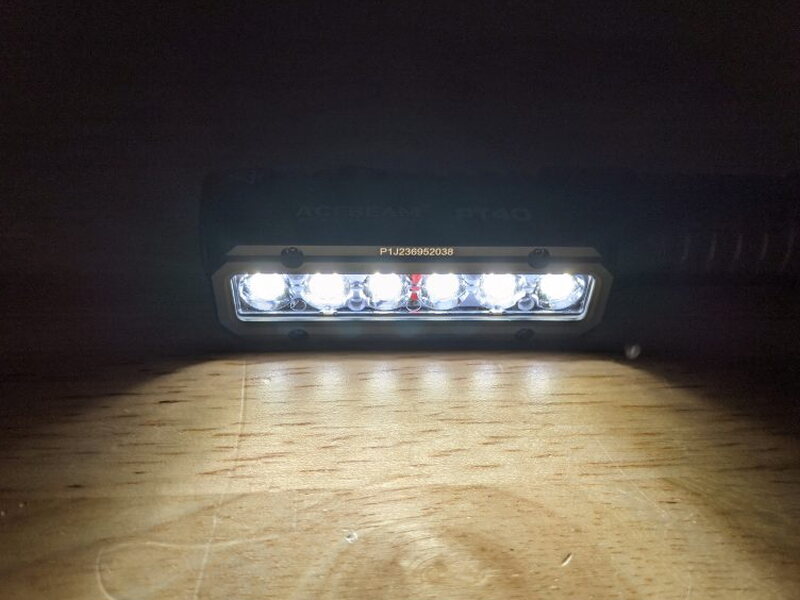
My review unit used the Samsung LH351D LED option. Acebeam also offers Luminus and Nichia LED configurations.
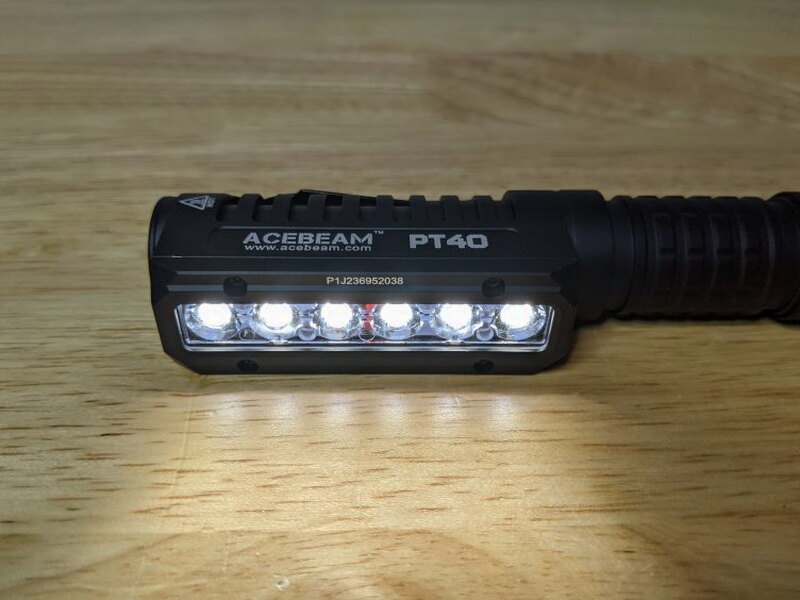
The LED choices mainly change brightness at each mode and the color temperature of the beam. In practical terms, that means choosing between different output levels and warmer or cooler looking light. Battery life is roughly similar across the LED options.
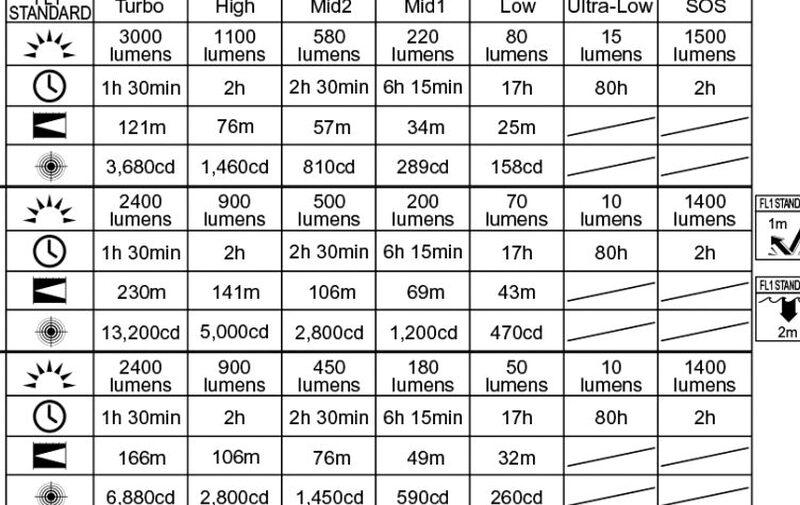
I rarely needed Turbo. It is impressively bright, but it drains the battery faster and heats the light quickly. Acebeam marks the head with heat warning symbols, and after extended use I understood why.
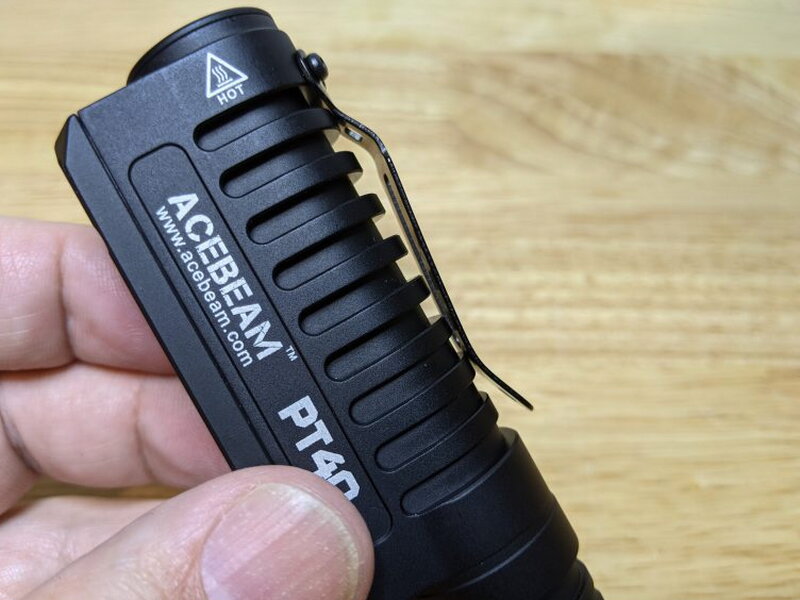
The dimmer modes stay much more comfortable, but the light can still become noticeably warm if it runs long enough. Acebeam includes thermal control that automatically lowers brightness to prevent overheating.
Switch functions
Everything runs through the one switch on the head. The PT40 remembers the last regular output you selected, but it does not memorize Turbo or Ultra-Low. It also warns you when the battery drops below 20% by blinking three times every ten seconds.
Acebeam PT40 Switch Functions
- ON/OFF: Single click of the switch.
- Output Selection: When the flashlight is on, press and hold the switch to cycle from Low to Med1 to Med2 to High.
- Memorize Mode: Release the switch at your selected output. When next powered on, the PT40 will memorize the last output you selected.
- Turbo: Double click the switch to access Turbo mode. Next time you double click the switch the PT40 will cycle between Turbo and the memorized output.
- Strobe: Triple click to access Strobe regardless if the PT40 is on or off. The PT40 will flash morse code for SOS repeatedly.
- Ultra-Low Mode: When the flashlight is off, press and hold the switch for 0.5 seconds to enter Ultra-Low mode.
- Lock: When the flashlight is off, press and hold the switch for 5 seconds, the flashlight will be locked after 3 flashes. When locked, the switch will not function.
- Unlock: When the flashlight is locked, press and hold the switch for 5 seconds. The flashlight will be unlocked and enter Low mode.
Carrying it
In hand, the PT40 is excellent. The aluminum body gives it a satisfying weight without making it feel oversized, and the shape is easy to grip.
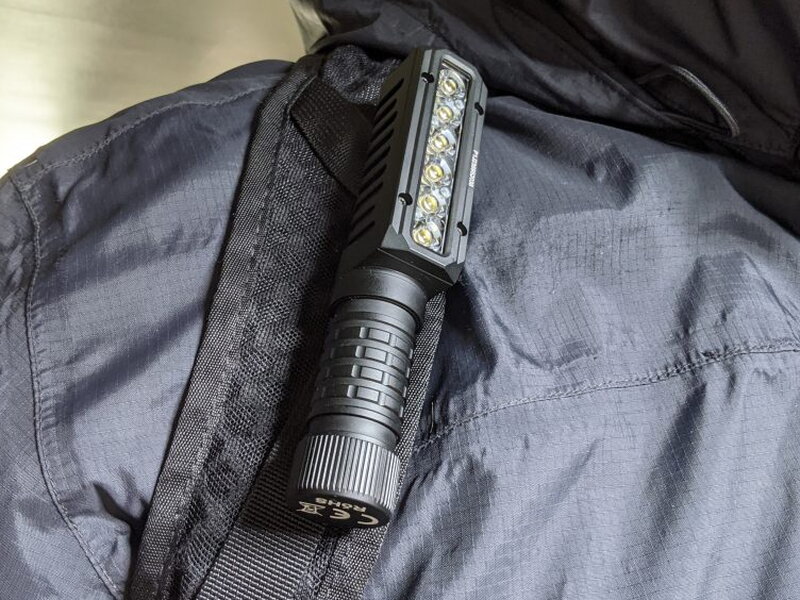
It is light enough that I did not notice it much on a backpack strap or pants pocket, but sturdy enough that I would not worry about normal bumps and drops.
That same weight becomes less ideal on the headband. I kept thinking about my Olight H2R Nova, which I reviewed in 2017 and still use as a headlamp. The Olight feels lighter and less awkward on the head, while the PT40 takes more adjustment.
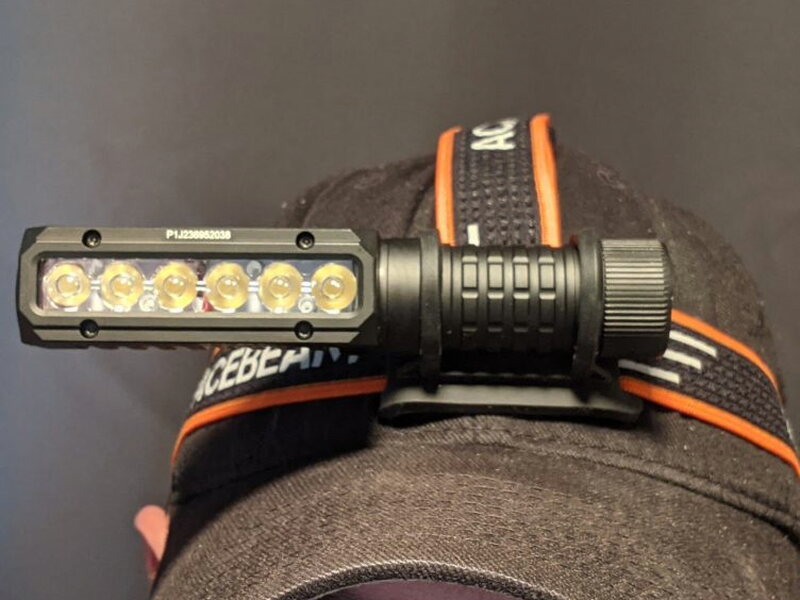
The silicone headband mount also caused discomfort. The edges pressed into my forehead after a while, so I preferred using the headband over a hat.
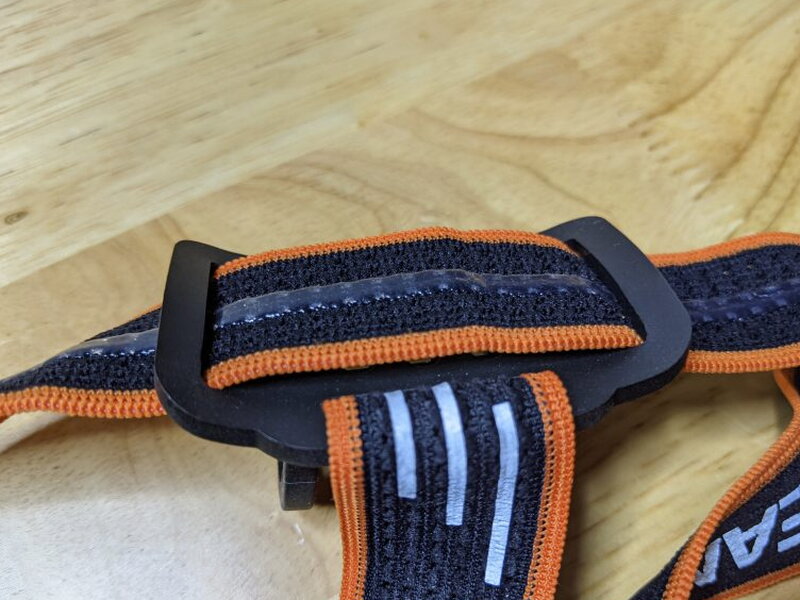
Once I wore a hat under the headband, most of my complaints faded. The PT40 kept finding its way into my hand instead of my other EDC flashlights because it is easy to carry, easy to change modes, and useful in several positions.
The good
- Strong aluminum body
- SOS strobe is a useful included feature
- Good battery life
- Flexible handheld, clipped, magnetic, and headlamp use
The not so good
- Headlamp mounting feels awkward and can become uncomfortable
- The body heats up during prolonged use
- Magnetic cap could be stronger
Quick Questions
Q: Where’s the charging port located?
A: On the battery itself, not the flashlight body – Acebeam put the Micro USB charging port directly on the removable battery cell.
Q: Is it waterproof?
A: Yes, IP-68 rated and submersible to 2 meters.
Q: How strong is the magnetic tail cap?
A: Strong enough for light positioning but not strong enough to trust after a hard bump, per the review’s own assessment.
Q: Is it comfortable as a headlamp?
A: Not especially – the off-center right angle body makes it feel a little awkward on the forehead, and the silicone mount edges could press uncomfortably until worn over a hat.
Final thoughts
I came away a big fan of the Acebeam PT40 Multipurpose Work Flashlight. The price is in line with many flashlights in this class, and while it may be more than some people want to spend, I do not mind paying for a dependable light that sits at the center of my EDC. The rugged aluminum body, broad output range, rechargeable battery option, and multiple mounting methods make it feel ready for real use. The headband is the weak spot for me, and I would welcome a stronger magnet, but those complaints do not erase how often I reached for the PT40 during testing.
I’ve tested a handful of these by now. See The Best Flashlights I’ve Tested for the full rundown.
Price: $100 to $133
Product Link: Acebeam
You can also grab it at eBay for $109.00, Walmart for $109.00.
Source: The sample of this product was provided by Acebeam.


