
REVIEW – Gas prices, recession worries, and the still painful cost of electric cars all make smaller electric transportation look more tempting. That is where utility e-bikes such as Rad Power Bikes’ RadRunner and Fiido’s T1 Pro fit in. The Fiido T1 Pro Utility Electric Bike I tested is not exactly cheap at $1699, but it promises the kind of power, range, and hauling ability that can make an e-bike feel like real transportation rather than just a weekend toy. After riding it around Seattle, I came away impressed by its strength and usefulness, while also wishing Fiido had polished a few rough edges before shipping it.
What the T1 Pro Is
The T1 Pro is a city focused utility electric bike built around a reinforced aluminum low step frame, a 750W brushless rear hub motor, hydraulic disc brakes, and a removable 960Wh lithium-ion battery. Fiido lists a top speed of 28mph and a power assisted range of up to 93 miles. The total load rating is 440lbs, split as 265lbs for the rider and 175lbs for the rear rack.
This model is also important because it followed the original Fiido T1, which was recalled and redesigned in October 2022 after welding defects caused frame failures. The Pro version I tested felt much more confidence inspiring, with heavy tubing, careful welds, and an overall build that leans hard into the utility side of e-bikes.

In the Box
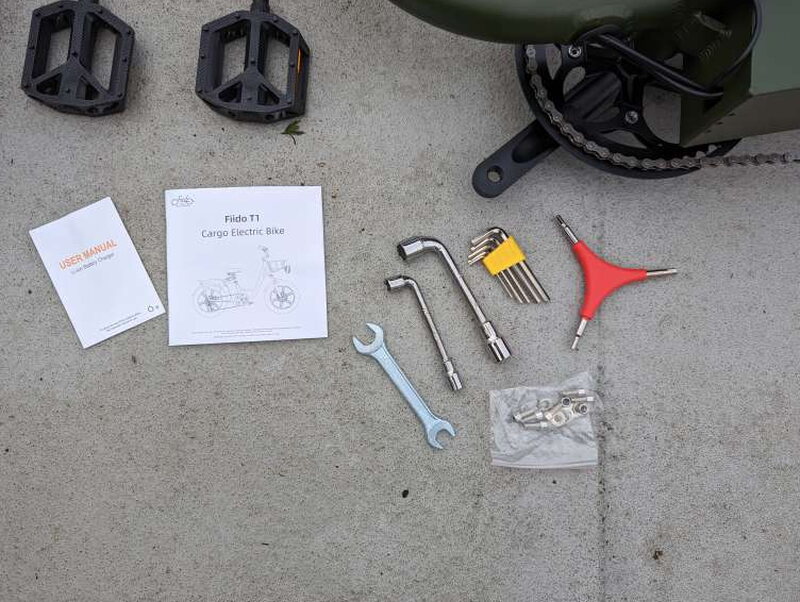
Fiido ships the T1 Pro partially assembled, so the box includes the main bike assembly plus the parts and tools needed to finish the job.
- Fiido T1 Pro Utility Electric Bike, partially assembled
- Battery
- Charger
- Keys
- Manual
- Front basket
- Front headlight
- Front fender
- Front wheel
- Pedals
- Tools
- Y-Type Allen Wrench
- Set of 5 Hex wrenches
- Open spanner
- 10# Socket wrench
- 15# Socket wrench

Key Specifications
- Model: Fiido T1 Pro
- Maximum Speed: 28mph (45km/h)
- Power-assisted range: 93mi (150km)
- Battery: 960Wh Removable Lithium-ion Battery
- Voltage: 48V
- Amps: 20Ah
- Charge Time: ~8 Hours
- Battery Cycle Times: 800 times
- Operating Temperature: -10°~50°
- Input voltage: 100~240V
- Display: LED
- Drive Type: Rear Drive
- Brake Type: Hydraulic
- Suspension: Hydraulic Coil Sprung Fork w/ Lockout
- Included accessories:
- Front and rear lights
- Front and rear racks
- Kickstand
- Electric horn
- Chainset: Steel 52 Tooth
- Gears: 7-Speed Shimano Gears
- Grips: Rubber
- Frame: Aluminum Alloy Low Step Frame
- Rims: Magnesium Alloy
- Motor: 750W Rear Hub Brushless Motor
- Power Assist System: 3-Level Pedal Assist System w/ Right Side Thumb Throttle
- Tires: 20” x 4” CST (Cheng Shin Tire) Puncture-Resistant Fat Tires
- Gross Weight: 99lbs (45kg)
- Size: 71″ x 27″ x 46.5″ (180cm x 69cm x 118cm)
- Saddle height: 36.2” to 46.5”
- Recommended Rider Height: 5′-0″ to 6′-5″
- Maximum total load: 440lbs (200kg)
- Riding seat: 265lbs (120kg)
- Rear Rack: 175lbs (80kg)

Frame, Controls, and Hardware
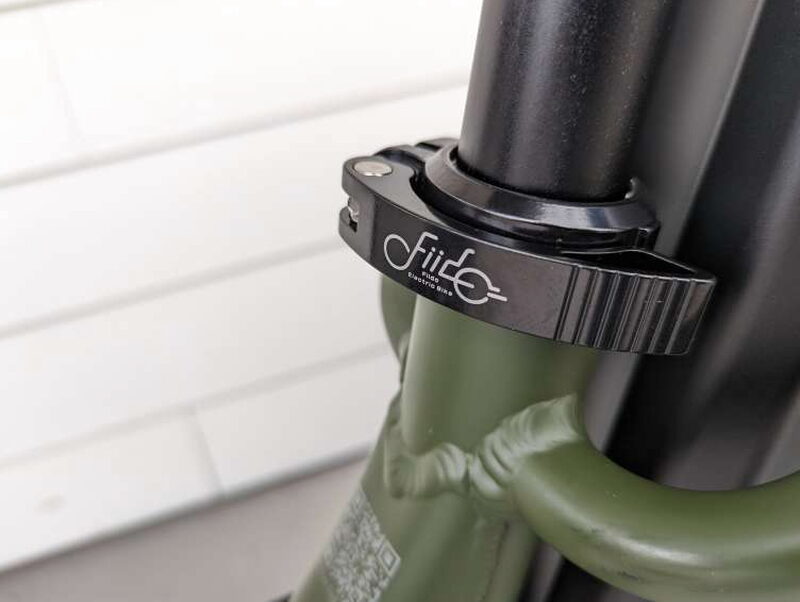
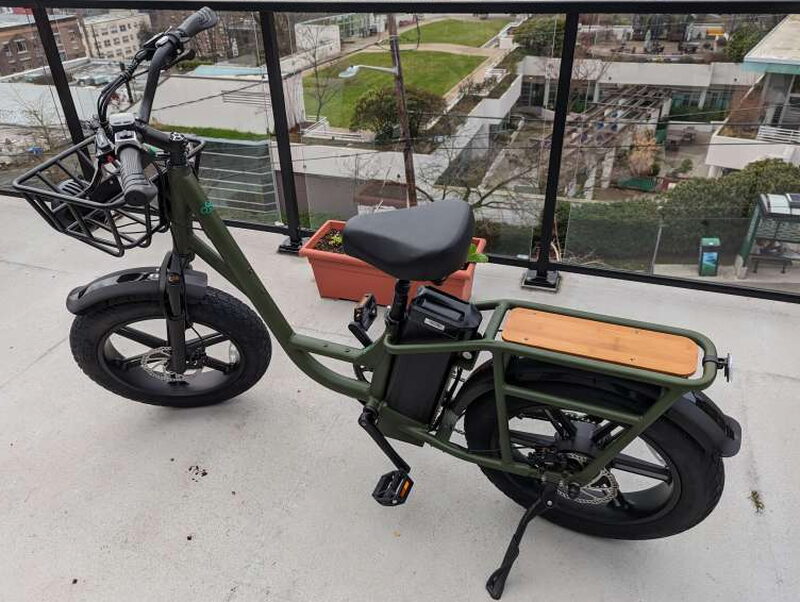
The T1 Pro has a tough, almost military look thanks to the olive paint, big wheels, oversized tubes, and long cargo section. Its overall layout is extremely close to Rad Power Bikes’ RadRunner, which is not surprising given the RadRunner’s popularity. Fiido does add meaningful upgrades, including hydraulic brakes, a suspension fork, larger battery capacity, wider tires, and a lower price than some comparable utility e-bikes.
The frame was the first thing I wanted to check because of the earlier T1 recall. On this Pro model, the reinforced oval aluminum tubes and welds looked clean and solid, and the bike felt sturdy during use.
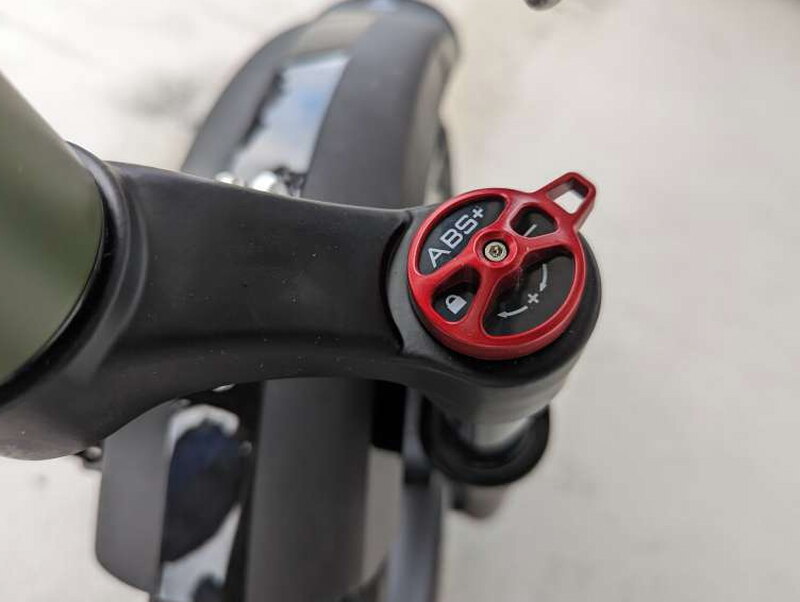
Up front, the adjustable long stroke suspension fork is one of the T1 Pro’s clear advantages over the RadRunner. The red dial lets you firm up the ride for quicker rebound or loosen it for more comfort.
The hydraulic disc brakes are another strong point. A 99lb e-bike that can approach 28mph needs real stopping power, and the T1 Pro has it.

The brake layout is conventional, with the rear brake controlled by the right lever and the front brake controlled by the left lever. The right side of the bar also carries the Shimano 7-speed shifter.

The thumb throttle sits beside the gear indicator and gives quick, responsive access to the 750W rear hub motor.
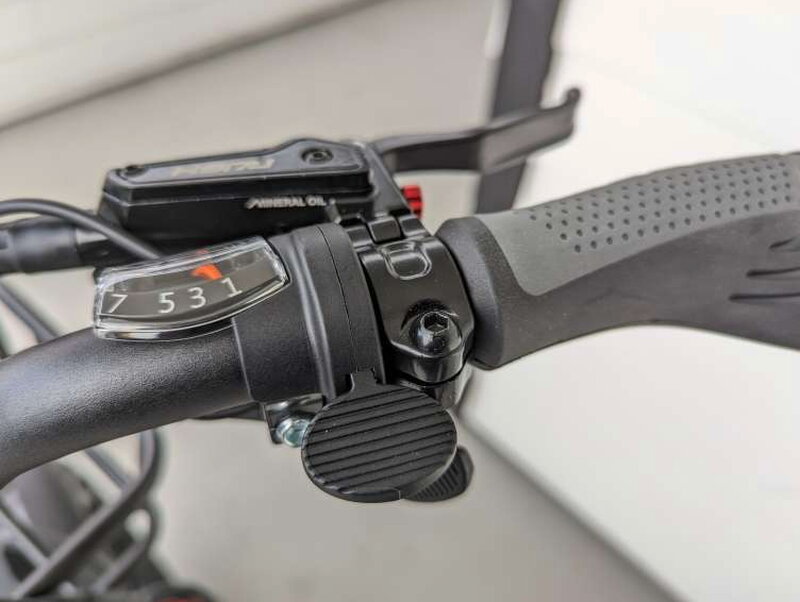
Below the throttle are the two shift paddles for moving up and down through the seven manual gears.

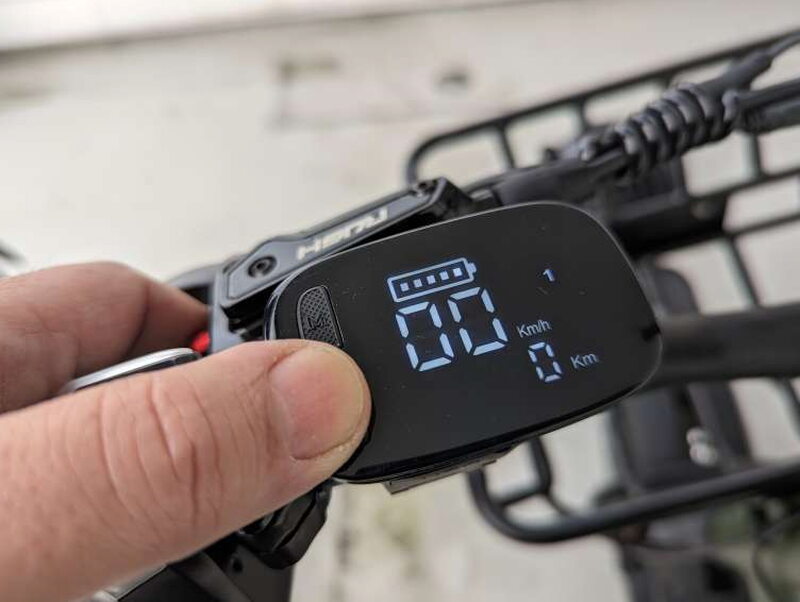
The left side is busier. It holds the front brake lever, hi and lo headlight switch, horn button, LED display, and the display controls. The green horn button was one of my least favorite parts of the whole bike because it was far too easy to bump while getting on or off, which meant the harsh horn went off constantly by accident.
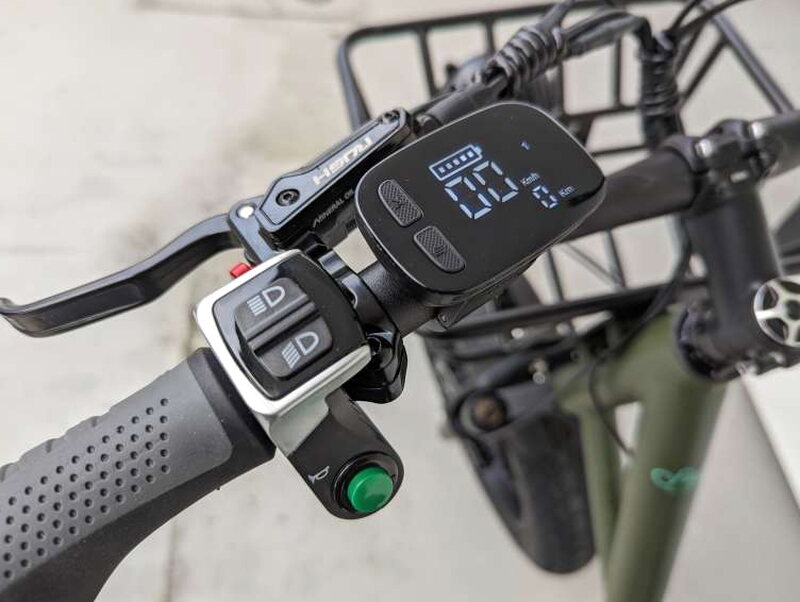
The LED display shows speed, battery level, light status, Power Assist System gear, and range. It is readable at night, but difficult to see in daylight while riding. The two display buttons are also poorly labeled. Holding the top button powers the bike on, tapping it turns the headlight on, tapping the bottom button cycles through the three PAS modes, and holding the bottom button turns on cruise control. You can also turn PAS off and pedal the T1 Pro like a regular bike.
Battery and Cargo Details
The key port sits on the left side of the frame just behind the battery. Turning the key to On wakes up the system, while turning it to Unlock releases the battery.
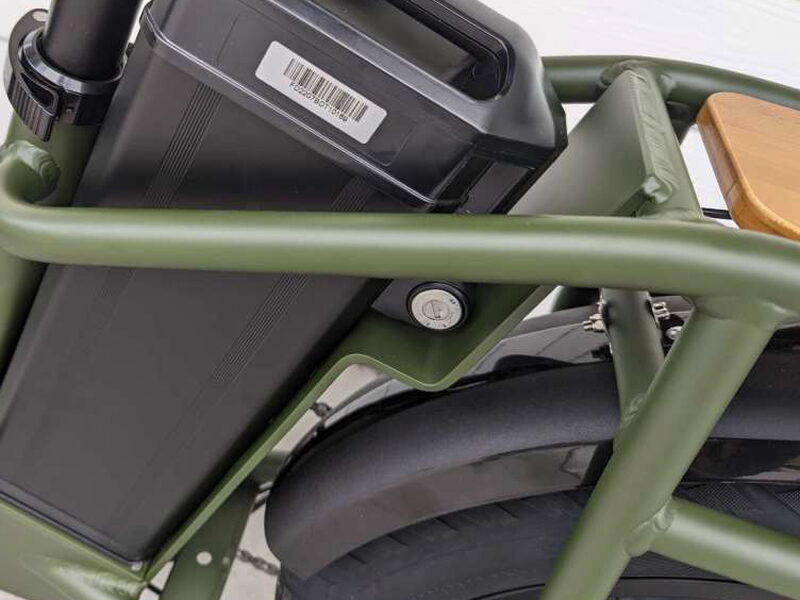

A small paddle behind the seat tips the saddle forward so the battery has room to slide out.

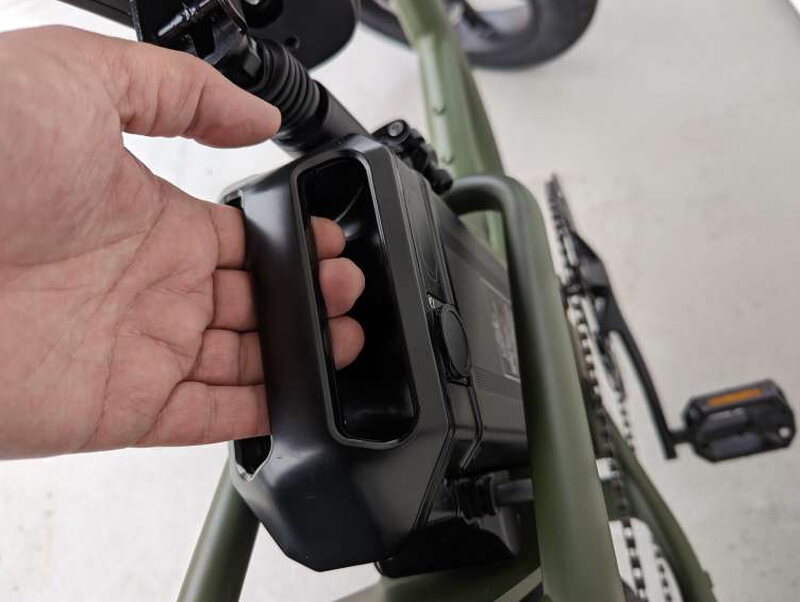
Once unlocked, the battery lifts out by its built in handle. The round top port accepts the included charger, and the two prong port under the handle connects to the red power plug on the bike.

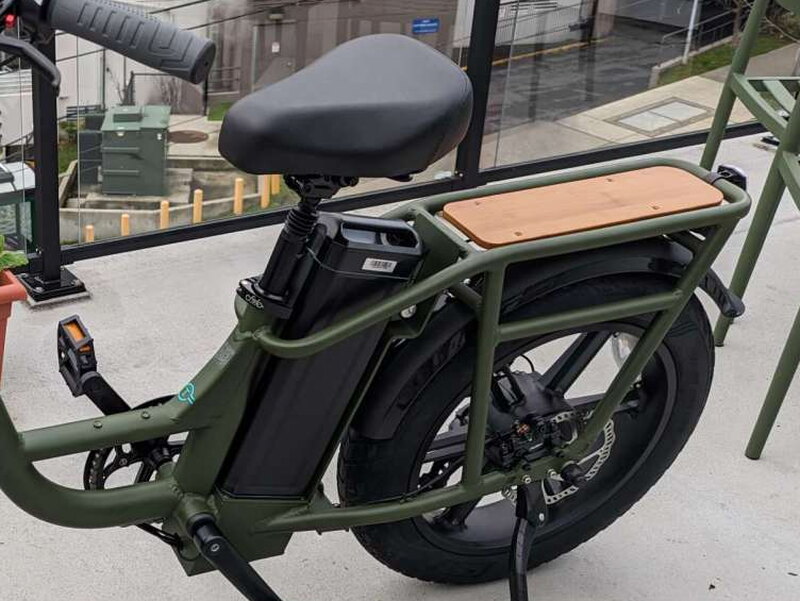
The seat itself is broad and comfortable, with a shock absorbing seat tube that works with the front suspension to smooth out the ride more than I expected. Behind it, the rear cargo deck uses a wooden base that gives the otherwise rugged bike a surprisingly nice design touch.
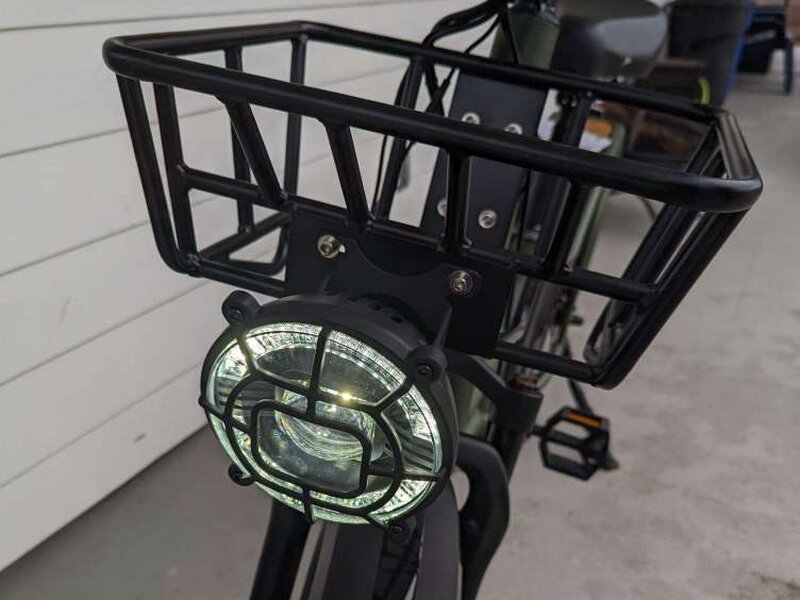
Fiido also includes a front basket, which gives the T1 Pro a cargo advantage right out of the box. The basket is roomy and doubles as the mounting point for the large headlight.

The 20” x 4” CST fat tires are huge, slightly larger than the RadRunner tires. The tread is not especially aggressive, so I would keep expectations realistic for loose off road surfaces, but they work well on pavement and hard surfaces.

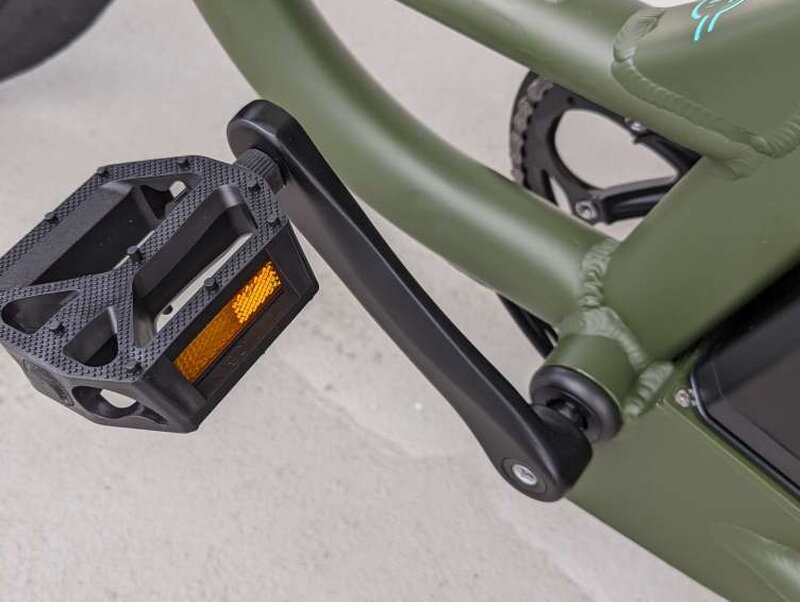
The kickstand is large and bolted directly to the frame, which is exactly what a heavy utility bike needs. The pedals, however, are ordinary and do not offer the grip I would expect on a $1699 e-bike.

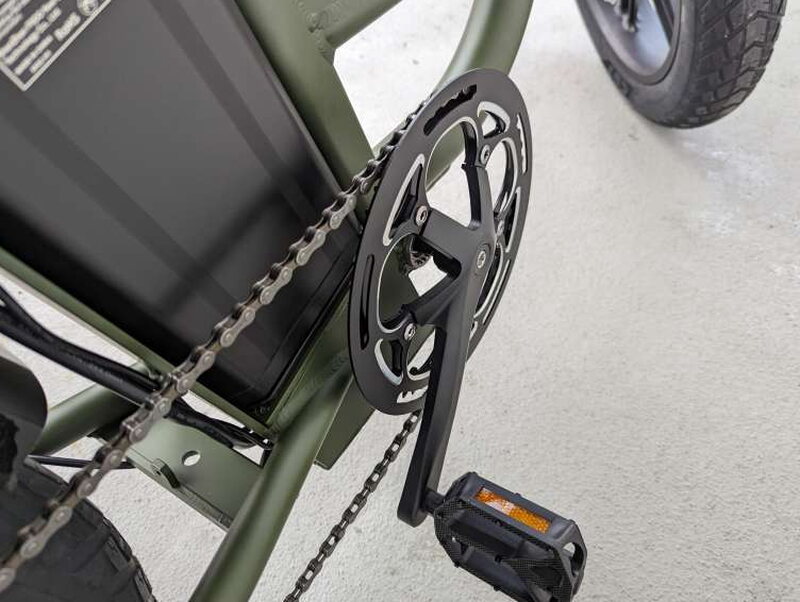
The steel 52 tooth chainset worked acceptably after adjustment, but not at first. During the early rides the chain kept dropping and the bike refused to shift cleanly. After a few hours spent tuning the derailleur, the drivetrain finally started behaving.

Assembly Experience
Setup takes real work because the T1 Pro arrives only partly assembled. Fiido includes the needed tools, and I recommend charging the battery while building the bike because a full charge takes about eight hours.
The remaining assembly includes mounting the front basket, headlight, front fender, handlebars, pedals, and front wheel.

The basket installs with Allen bolts and the included tools. The handlebar mount is trickier because all four bolts need to be tightened evenly so the bar stays straight and centered.


The pedals are simple once you identify left and right by checking the ends of the attachment points. Fiido includes an open wrench for tightening them to the chainset.

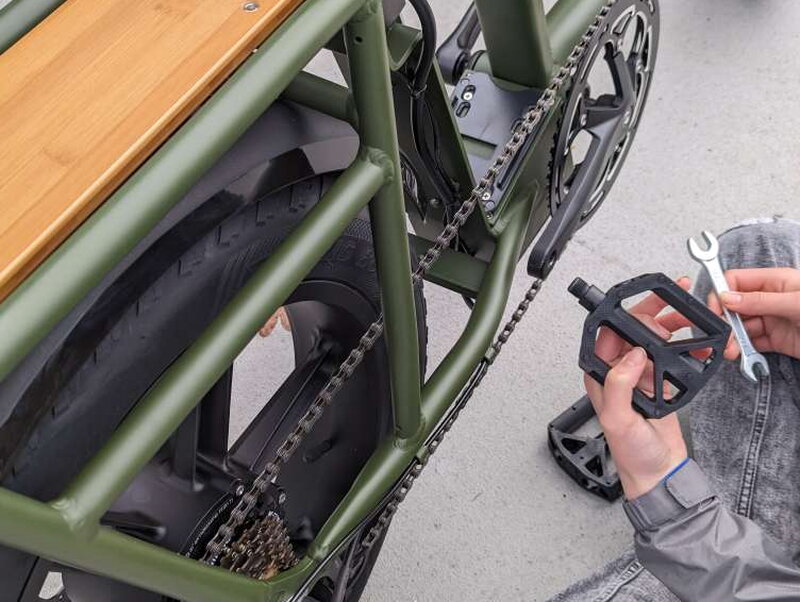
The front tire is large and awkward, and it took two people to hold it steady while tightening the axle hardware. Fiido’s custom socket wrenches worked well for locking the wheel down securely.


Once everything was tightened, aligned, and connected, the T1 Pro was ready for its first ride.

Ride Impressions
My first test rides happened on a rainy Seattle day, so I started in a nearby parking garage with my trusty test pilot. The T1 Pro felt stable, quick, and far more comfortable than its industrial styling might suggest.

The headlight was excellent. It threw a lot of usable light, and switching between high and low gave a broad, clear view ahead.


The rear red light activates with the front lights, adding welcome visibility for street riding.
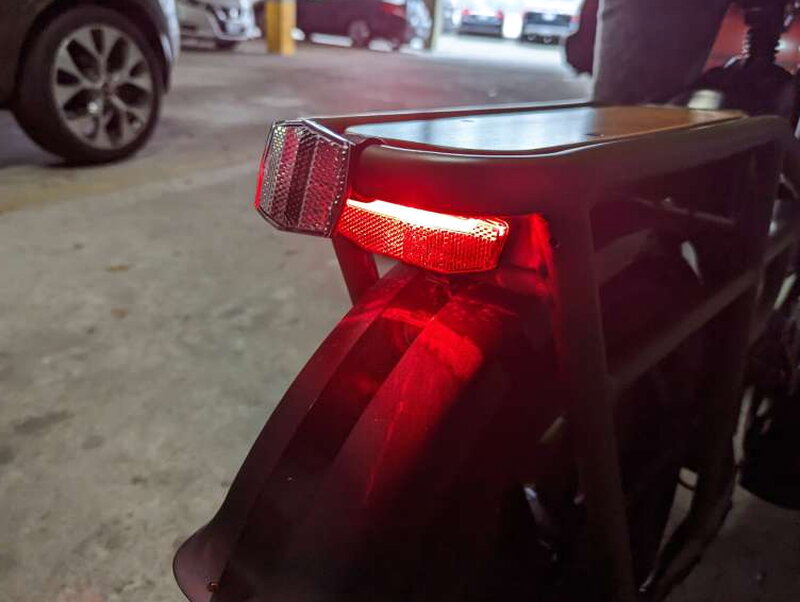
Out on Seattle streets, the T1 Pro made commuting feel easy. It had plenty of power for the steep hills near my neighborhood, and although I never quite hit the 28mph top speed, I came close. Battery life was also a highlight. Even hauling my husky frame around the city, the bike seemed to go a long time between charges. I doubt I will personally see the full claimed 93 mile pedal assisted range, but the capacity still felt generous.
Cargo carrying is another strength. The front basket, rear rack, wooden deck, and multiple tie down points make the T1 Pro useful for errands, work trips, and awkward loads. With bungee cords and a little creativity, it can carry a surprising amount.
The drivetrain remained the one mechanical annoyance. After the initial derailleur adjustment, it was mostly fine, but it still needed occasional fiddling. Combined with the overly sensitive horn and vague operating instructions, it kept the bike from feeling as polished as it should.
What Worked Well
- Very sturdy frame and overall construction
- Great battery life
- Powerful motor
- Strong hydraulic brakes
- Useful front and rear cargo areas
What Needs Work
- Chain and derailleur need significant adjustments
- Horn constantly triggered accidentally
- Poor operational instructions
- Display is hard to read in daylight
- Pedals feel underwhelming for the price
Quick Questions
Q: Does it arrive fully assembled?
A: No, it ships partially assembled – the front wheel, basket, headlight, fender, and pedals still need to be installed.
Q: What’s the claimed top speed and range?
A: Up to 28mph and up to 93 miles of power-assisted range, per Fiido’s specs.
Q: Did the drivetrain work correctly out of the box?
A: No, the chain kept dropping and shifting was rough until the derailleur was manually adjusted.
Q: What’s the maximum total weight capacity?
A: 440 lbs combined, split as 265 lbs for the rider and 175 lbs for the rear rack.
Final Take
Fiido has only been around since 2016, yet the T1 Pro feels like a serious utility e-bike. It is not especially original because its layout borrows so much from the RadRunner, but it adds enough real advantages to be interesting: wider tires, hydraulic brakes, a bigger battery, higher speed, included cargo hardware, and a $1699 price that gives it solid value. The chain and derailleur issues, touchy horn, and weak instructions are real drawbacks, but they did not erase what the bike does well. If you want a rugged electric utility bike that can commute, haul, and climb hills with confidence, the Fiido T1 Pro is worth a close look.
Price: $1,699
Product Link: Fido
Source: The sample of this product was provided by Fido.
RATING: 4 stars


